Wusthof knives are forged in Germany from hard stainless steel, so they keep an edge well but need proper care when they finally dull. A honing steel for upkeep and a good sharpener for restoring the edge covers most needs. Wusthof lines such as Classic and Ikon share a similar feel, but edge angles have changed over the years, so it is worth checking the current guidance for your own set before you pick a tool.
The six tools below include Wusthof-branded and compatible options. We have not used them ourselves, so confirm the edge angle, knife compatibility and warranty guidance on the current listing before buying. Maker claims about edge results are not tested by us. Treat the brand-matched tools as convenient options, not as the only correct answer, since good generic sharpeners also suit forged German steel when the angle is right.
As an Amazon Associate we earn from qualifying purchases. Links below are affiliate links, and they do not change the product information we give.
What to Look For
| Feature | Why it matters |
|---|---|
| Edge angle | Match the sharpener to the angle your Wusthof knives use |
| Method | Electric is quick; stones give a finer edge |
| Compatibility | Check that the sharpener fits forged blades |
| Upkeep | A steel keeps the edge aligned between sharpenings |
In this guide
Specs at a Glance
| Tool | Type | Use | Notes |
|---|---|---|---|
| Wusthof Sharpening Steel | Steel rod | Upkeep | Brand match |
| Wusthof Precision Edge | Hand-held | Quick sharpening | Two-stage |
| Wusthof Easy Edge | Electric | Home kitchens | Made for Wusthof angles |
| Chef’sChoice 130 Professional | Electric | Kitchen knives | Three-stage |
| Shun Combination Whetstone | Whetstone | Hand sharpening | Two grits |
| Messermeister Ceramic Honing Rod | Ceramic rod | Upkeep | Fine ceramic |
The 6 Best Sharpeners for Wusthof Knives
Top pickBest for everyday upkeep
1. Wusthof Classic Sharpening Steel
A brand-matched honing steel used to realign the edge between sharpenings. It does not replace a real sharpener, but it keeps forged blades cutting well for longer.
Suits: everyday upkeep. Strengths: a brand match and a simple routine. Weaknesses: it only realigns the edge. Skip it if your knives are badly dull.
View Wusthof Classic Sharpening Steel on Amazon
Best for quick maintenance
2. Wusthof Precision Edge Two-Stage Hand-Held Sharpener
A compact hand-held sharpener with a coarse and fine stage designed around Wusthof’s edge angle. It is easy to store and quick to use.
Suits: quick maintenance. Strengths: an angle designed around the brand. Weaknesses: less control than stones. Skip it if you want an electric unit.
View Wusthof Precision Edge Two-Stage Hand-Held Sharpener on Amazon
Best for busy cooks
3. Wusthof Easy Edge Electric Knife Sharpener
An electric sharpener built to suit Wusthof knives, with guided slots and a simple operation. It is quick and consistent, which suits cooks who dislike hand sharpening.
Suits: busy cooks. Strengths: a consistent edge with minimal skill. Weaknesses: it removes more metal than a stone. Skip it if you prefer a manual process.
Best for home cooks with several knives
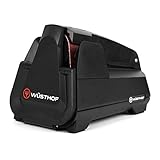
4. Chef’sChoice 130 Professional Electric Knife Sharpener
A three-stage electric sharpener that works on many kitchen knives. It uses diamond abrasives and guided slots, so it gives a sharp, consistent edge with little practice.
Suits: home cooks with several knives. Strengths: a three-stage edge and a long reputation. Weaknesses: counter space needed. Skip it if you want a gentle hand tool.
View Chef’sChoice 130 Professional Electric Knife Sharpener on Amazon
Best for hand sharpeners
5. Shun Combination Whetstone
A two-sided whetstone from a Japanese knife maker, with a coarse and a fine side. It suits users who want to learn hand sharpening, and it works on forged German knives too.
Suits: hand sharpeners. Strengths: a fine edge and good control. Weaknesses: it needs practice. Skip it if you want a quick fix.

Best for upkeep with a bit more bite
6. Messermeister Fine Ceramic Honing Rod
A ceramic rod used to refine the edge of a kitchen knife between sharpenings. It cuts a little more than steel, so it can bring back some bite.
Suits: upkeep with a bit more bite. Strengths: a fine abrasive and a firm handle. Weaknesses: it can chip if dropped. Skip it if you need to repair damage.
View Messermeister Fine Ceramic Honing Rod on Amazon
Care and Setup
- Follow Wusthof’s care notes for forged blades.
- Hone lightly before cooking.
- Dry knives right after sharpening.
- Keep the stone flat and clean, and store the tools where the abrasive surfaces will not be scratched or chipped by other utensils.
Mistakes to Avoid
- Using too coarse an abrasive on a lightly dull knife.
- Dropping a ceramic rod.
- Sharpening at the wrong angle.
- Skipping a honing step.
Forged Knives and What They Need From a Sharpener
Wusthof knives are known as forged German-style knives, with a bolster between the blade and the handle and a fairly sturdy blade. Because the steel is tough and the geometry is robust, they usually respond well to a range of sharpening methods, but the bolster has one practical effect: it can get in the way of a stone or sharpener at the heel of the blade. A good method reaches the full edge without leaving a small unsharpened notch near the handle.
Check the Wusthof care guide or packaging for the factory edge angle and any recommendations about sharpening, and use those as your starting point. Matching the angle preserves the intended geometry, and a mismatch means you remove extra steel while reshaping the edge. If you switch to a different angle on purpose, expect to spend more time on the first sharpening.
Think about how the knife is used. A chef’s knife that sees heavy daily use needs more frequent attention than a paring knife used occasionally. Decide on a regular routine: light honing often and a proper sharpening only when the edge no longer responds to honing. This keeps the knife performing and reduces the amount of metal you grind away.
Whetstones, Electric Units and Pull-Through Tools Compared
Whetstones give the most control and the finest finish. You set the angle yourself and can switch between coarse and fine surfaces. They take practice and patience but reward you with a keen edge and minimal metal loss. A combination stone with two grits is a flexible starting point, and a flat, stable base is essential.
Electric sharpeners are fast and consistent, with preset angle guides. They suit people who want results with little effort. The trade-offs are that they remove metal more quickly and that the angle guides may not match your knife unless the unit says it does. Check the listing for the supported angle and for guidance about heavy bolsters, since some guides do not reach the heel of a forged blade.
Pull-through sharpeners are compact and simple, using fixed slots to set the angle. They are good for quick touch-ups but can be rough on edges and may leave the heel unsharpened on knives with bolsters. They are best treated as a convenience tool rather than a primary sharpener. Each method can work, so decide how much time, space and skill you want to commit.
Handling the Bolster and Heel
The bolster on a forged knife is a thick collar of steel where the blade meets the handle. If a sharpener cannot reach past it, the edge near the heel remains dull, and over many sharpenings the rest of the edge wears back, leaving a small step. This can make the knife feel uneven, because the heel no longer touches the board.
To avoid this, use a method that accommodates the bolster. With a stone, you can angle the knife so the entire edge, including the heel, touches the stone. With machines, check whether the guide is open enough to let the heel enter. Some knife owners lightly relieve the bolster at the edge, but that is a modification you should only do if you are confident, and it may affect warranty or appearance.
If you see the heel area dulling or a step forming, take a little extra care to sharpen that part. Short strokes concentrated near the heel help, and regular honing prevents the problem from growing. If the knife already has a pronounced step, consider consulting a professional sharpening service to restore the geometry safely.
Honing Routine and Edge Maintenance
A honing steel straightens the edge between sharpenings and is part of normal care for forged knives. Use light pressure and the same angle as the edge, with a few strokes on each side. Ceramic or fine-cut rods can also be used, though they remove a little more metal than a smooth steel. Choose a rod long enough for the knife and keep it clean.
Technique is easy to learn. Hold the steel steady, place the heel of the knife against the top of the steel at the correct angle and draw the blade down and across so that the whole edge touches. Alternate sides and avoid pressing hard. Slow, deliberate strokes work better than fast ones.
Maintain the knife itself too. Hand wash it, dry it promptly and store it in a block, on a magnet or in a guard. Use a wood or plastic board and avoid hard surfaces. Do not use the knife on bones, frozen foods or as a pry bar. These habits extend the time between sharpenings and keep the blade in good shape.
Selecting and Using a Sharpener Sensibly
Ask a few questions before buying. Does it support the angle my knives use? Will it reach the full length of the edge including the heel? Is it suited to hard, forged steel? How much metal does it remove? How easy is it to learn, and how will I store it? What does the warranty cover? If the listing does not answer these, check the maker’s page or the manual.
Budget tiers are simple to describe. Basic pull-through tools cost little and are easy but crude. Mid-range options include decent stones and entry-level electric units. Higher-end options offer better abrasives, finer control or faster work. A mid-range stone and a good honing steel can handle most home needs, and they last for years.
Replace a sharpener when the abrasive wears smooth, the guide loosens or the results become uneven. If the knife itself is heavily damaged, consider professional sharpening. After sharpening, wash and dry the blade, test it on paper or a soft vegetable and hone lightly. Keep the knife in a guard or block to protect the new edge.
Sharpeners for Wusthof Knives FAQ
What angle do Wusthof knives use?
Check the maker’s current guidance for your line, since angles have varied between series.
Can I use a whetstone on Wusthof knives?
Yes, and it gives a fine edge if you hold the angle steady.
Is an electric sharpener safe for forged knives?
Yes, if it suits the angle and you use it as the maker directs.
How often should I sharpen?
When honing no longer restores the edge, which for most cooks is once or twice a year.
Do forged knives need a special sharpener?
Not necessarily, but the sharpener should match the knife's angle and be able to reach the full edge, including the area near the bolster.
Why is the heel of my knife not sharp?
The bolster may have kept the stone or sharpener from reaching it. Use a method that angles the knife so the heel touches the abrasive, and use short strokes there.
Is it safe to sharpen a knife without a guide?
Yes, with practice. A guided stone holder or a marker on the edge can help you keep a steady angle while you learn.
Should I sharpen the knife before or after honing?
Sharpen first when the edge is truly dull, then hone to align it. For routine care, hone often and sharpen only when honing no longer helps.
Can a dishwasher damage a forged knife?
Heat, detergent and bumping can dull the edge and damage the handle. Washing by hand is gentler.
When should I use a professional sharpening service?
Consider one if the knife has chips, a step at the heel or a badly damaged edge, or if you are not comfortable restoring the geometry yourself.
The Short Version
For upkeep, the Wusthof steel. For quick work, the Wusthof Precision Edge. For electric ease, the Wusthof Easy Edge. For an all-round electric, the Chef’sChoice 130. For hand work, the Shun whetstone. For a bit of bite, the Messermeister rod. Whichever you pick, keep strokes light and let the tool do the work, and test the edge on paper or a tomato skin before you start cooking.
Related Guides
- 6 Best Knife Sharpeners for Victorinox Knives (2026)
- 6 Best Knife Sharpeners for Japanese Knives (2026)
- 6 Best Electric Knife Sharpeners for German Knives (2026)
- 6 Best Electric Knife Sharpeners for Kitchen Knives (2026)
- 6 Best Knife Sharpeners for Kitchen Knives (Electric, Manual)
Checking Edge Angle Before You Buy Anything
The angle at which a blade is ground decides how well a sharpener will suit it. Western kitchen knives were traditionally ground at a wider angle per side, and many makers, Wusthof included, have since moved some lines to a narrower, keener angle. The result is that two knives from the same brand and a decade apart may not want the same setting.
Start with the paperwork or the maker’s website for your specific line and production period. If you cannot find it, look at the existing bevel under good light. A narrow, shiny strip along the edge points to a keener grind, while a broad bevel suggests a wider one. A sharpener with a fixed guide, such as a two-stage pull-through or an electric unit, locks you into whatever angle it was built with. A whetstone leaves the choice to you, which is flexible but demands a steady hand.
- If your knives share one angle and the sharpener matches it, a fixed-guide tool is an easy fit.
- If you own mixed knives from different eras, a whetstone or an adjustable-angle system avoids guesswork.
- If the sharpener’s angle is wider than your knife’s, it will slowly reshape the edge and remove more steel than necessary.
Mismatches are not always disastrous, but they cost metal. Over many years of sharpening, that adds up to a visibly narrower blade.
Signs the Knife Needs Honing, Sharpening or a Professional
People often reach for the wrong tool because they have not diagnosed the problem. Three different conditions can all feel like a dull knife.
The edge has rolled or folded
Use over time bends the very thin edge slightly to one side. The knife feels dull even though the metal is still keen. A honing steel or ceramic rod realigns it, which is why a few passes before use often revives performance. This is maintenance, not sharpening, and it removes almost no steel.
The edge has worn away
When honing no longer helps, the apex itself has rounded off. Tomatoes slide rather than cut, and the blade needs real material removed from both sides. This is the job for a stone, an electric unit or a pull-through sharpener.
The blade is chipped or badly damaged
A visible chip, a bent tip or a heavily worn heel usually calls for a professional with the right equipment. A small hand sharpener can make a deep chip worse by working at one narrow spot for too long. If the damage is minor, a coarse stone used patiently may suffice, but an expensive knife is worth a sensible second opinion.
Kitchen Habits That Keep the Edge Longer
Sharpening is half the story. How you use and store a forged knife determines how often you need to do it.
- Cut on wood or plastic boards. Glass, stone and ceramic surfaces dull an edge within a few strokes.
- Wash by hand and dry promptly. Detergents and movement in a dishwasher can knock edges against other items.
- Store knives in a block, on a magnetic strip or in a sheath so the blades do not rattle in a drawer.
- Avoid cutting through bone or frozen food with a general-purpose chef knife; use a cleaver or a heavy utility blade instead.
- Do not use the knife to scrape scraps off the board with the edge; flip it and use the spine.
These habits cost nothing and can stretch the time between full sharpenings considerably. They also protect the finish and the bolster of a forged blade.
Planning a Sharpening Kit on a Budget
You do not need to buy everything at once. The tools in this guide fall into maintenance, restoration and both, and a sensible approach is to build in that order.
First, get something for regular upkeep: a honing steel or fine ceramic rod. This is the cheapest item to own and the one you will use most. Second, add a way to restore the edge once or twice a year, either an electric unit or a pull-through sharpener for convenience, or a whetstone if you enjoy the process and want control. Third, only if you have fine Japanese-style knives or a taste for polished edges, consider a combination stone with a finer grit.
A kit made of one honing rod plus one restoring tool is enough for most households. Spending more is justified when you own many knives, use them heavily, or want to avoid sending them out. Spending less is fine if you only keep a couple of blades and are willing to use a professional service occasionally.
Whichever route you take, treat the first sharpening as a learning session. Practice on an older knife if you have one, work slowly, and check the result by slicing paper or a tomato. Confidence comes quickly, and the tool matters less than the habit of using it before the edge is completely gone.
Frequently Asked Questions
How can I test whether my Wusthof knife is sharp?
Hold a sheet of printer paper and slice downward with the knife. A sharp edge cuts cleanly without tearing. You can also try a ripe tomato, which a sharp knife will cut under its own weight. Avoid testing with your thumb. If the knife skates or crushes, it needs honing or sharpening.
How long does it take to sharpen a knife on a whetstone?
A beginner may need ten to twenty minutes for a moderately dull knife, including flattening the stone and rinsing the blade. With practice it becomes quicker. A chipped or very worn edge takes longer. Work at a steady angle and check progress often rather than rushing each side.
Does sharpening shorten the life of a forged knife?
Every sharpening removes some steel, but a well-matched tool removes very little. Frequent honing and correct angles reduce how often you need to grind. Careless or aggressive electric sharpening can wear a blade faster. Used sensibly, a quality knife can last for decades of home cooking.
Can the same sharpener handle serrated bread knives?
Most standard guides and whetstones are designed for straight edges. Serrated knives need a tapered rod or a tool made for scallops. Check the product description for serrated support before relying on it. Many people find that bread knives need sharpening far less often than chef knives.