Where to buy
Check the latest price, availability and delivery on Amazon. Orders are placed on Amazon. We may earn a commission from qualifying purchases.
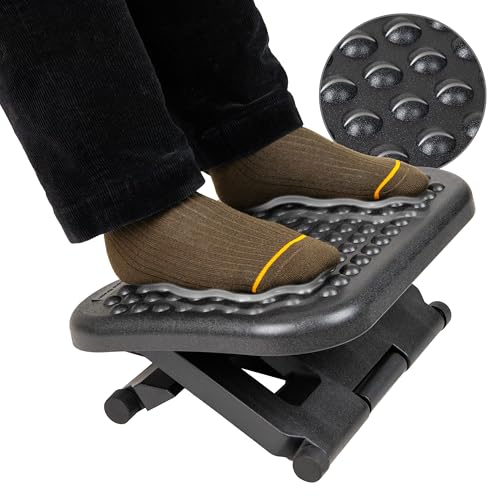
- Best overall under $50: Mind Reader Adjustable Footrest with Massage Surface — Check on Amazon
- HUANUO Adjustable Footrest HNFR3 with Free Tilt — Check on Amazon
- ErgoFoam Adjustable Foot Rest, High-Density Foam — Check on Amazon
See 3 more options below
- Everlasting Comfort Foot Rest, Memory Foam — Check on Amazon
- StrongTek Adjustable Wooden Footrest — Check on Amazon
- ErgoFoam Foot Rocker — Check on Amazon
Read the full guide ↓
Disclosure: As an Amazon Associate, umtsmarttool.com earns from qualifying purchases. Links to Amazon on this page are affiliate links; they cost you nothing extra. Listing details such as price and availability change often, so check the current Amazon listing before you buy.
The best footrest under $50 is decided by one number: the gap between your resting foot and the floor when your chair is set for your desk. The six rests in this guide were verified against the figures that close that gap — platform dimensions, height ranges from 3.25 inches to 6.7, tilt behavior, materials — across the class’s three designs: adjustable hard platforms, high-density foam, and rockers. The best footrest under $50 for most readers is the Mind Reader’s adjustable platform, but the right rest is the one whose height range covers your measured gap, and this guide publishes the numbers to let you check before you buy. Pair it with the right chair height using our Best Ergonomic Office Chair Under $50 guide and the seated system is complete.
In this guide
Quick Picks
Short on time, or comparing several options at once? Each row below names a buyer type and the footrest that suits it, with the key specification that separates it from the rest of the list.
| Buyer type | Pick | Why it stands out | Link |
|---|---|---|---|
| Best overall under $50 | Mind Reader Adjustable Footrest with Massage Surface | Adjustable plastic footrest, 17 x 13 in platform, height adjusts 3.25-6.25 in, textured massage surface, 5.5 lb | Check on Amazon |
| Best free-tilting platform | HUANUO Adjustable Footrest HNFR3 with Free Tilt | Adjustable plastic footrest, 17.13 x 13.19 in platform, three heights 4.3/5.5/6.7 in, tilts ±30 degrees and rocks freely, pre-assembled | Check on Amazon |
| Best adjustable foam rest | ErgoFoam Adjustable Foot Rest, High-Density Foam | Two-piece high-density foam foot rest: stacked for full height, single piece for lower; flips to a rocker; removable washable cover | Check on Amazon |
| Best pure cushion rest | Everlasting Comfort Foot Rest, Memory Foam | Memory-foam teardrop foot rest, firm supportive fill, flips to a rocker, removable washable cover; also serves as under-knee or back support | Check on Amazon |
| Best wooden rest | StrongTek Adjustable Wooden Footrest | Wooden footrest with three height/angle positions, anti-slip surface strips and anti-slip feet; the heaviest, most furniture-like build in the guide | Check on Amazon |
| Best dedicated rocker | ErgoFoam Foot Rocker | High-density foam rocker with a curved base for continuous gentle motion, removable washable cover; the fidgeter’s pick | Check on Amazon |
How These Picks Were Chosen
Every rest in this guide is a real, currently listed product whose key specifications were verified against the maker’s listing: platform dimensions, height range or positions, tilt behavior, material and weight. Those four numbers decide whether a footrest works — a rest that cannot reach the height your chair-and-desk geometry demands is furniture, not equipment — so listings that publish none of them were excluded, however soft their foam looked in photos.
We did not rest our feet on these for a month. The comparisons rest on published construction: hard adjustable platforms (plastic or wood) that hold a set height and angle, versus foam rests whose support is their density and shape, versus rockers that trade stillness for motion. Comfort language is framed as exactly that — what a design tends to feel like and for whom — never as a health claim. A footrest can make sitting more comfortable; this guide claims nothing more for any of them.
The budget was applied as a ceiling, and at this ceiling the class divides cleanly: adjustable hard platforms own the precise-fit brief, foam owns the cushion brief, and the step between them is smaller than the step between a good rest and a bad one. The reviews say plainly which brief each rest serves, and the comparison table puts the height figures side by side because height — not softness — is the specification that decides success.
One more filter shaped this list: published geometry. A footrest listing that will not state its platform size and height is asking you to buy a measurement blind, and in a product that is only a measurement, that is disqualifying. Every pick here publishes the numbers; where a maker publishes fewer (the foam rests’ fixed heights), the review says so and tells you how to check the fit before ordering.
Best Footrest Under $50 — The 6 Picks
1. Mind Reader Adjustable Footrest with Massage Surface — Best overall under $50
The Mind Reader is the adjustable-platform benchmark at this budget: a 17 by 13 inch platform — wide enough for a natural two-foot stance — whose height adjusts across a 3.25 to 6.25 inch range, with a textured massage-style surface and an angle that can be set to your chair geometry. At 5.5 lb it is light enough to move between desks, and its all-plastic construction wipes clean in seconds, which matters more in this dusty category than any feature on the box.
Its honest limits are a hard platform’s limits: there is no cushion, so bare-foot sitters who want softness should look at the foam picks, and the stepped adjustment, while genuinely useful, is coarser than a free-tilting design. For the standard brief — a rest that reaches the right height, holds it forever, and fits any desk — it is the pick the rest of this guide is measured against, and it has held that position in this category for years.
Ownership is where this rest quietly wins: there is nothing to wear out but the surface texture, nothing to deflate, and no cover to wash. Set the height once — most owners never touch it again — and the rest simply becomes part of the floor plan. In a category full of consumables, a buy-once platform at the friendly end of the budget is the value pick in the truest sense: the cheapest rest here is also, hour for hour, the cheapest rest to own.
For the base brief, judge this rest by the gap: does its height range cover your measured dangle with room to spare? That single check outranks every feature in this guide.
Pros
- Widest verified height range of the hard platforms here
- Full 17 in platform for a natural stance
- Wipes clean; nothing to compress or wear out
Honest limitation: Hard plastic surface — no cushion for bare-foot sitters who want softness.
Choose it if you want a set-and-forget adjustable rest that will hold its height for years.
Skip it if you sit barefoot and want cushion — the foam picks below serve you better.
2. HUANUO Adjustable Footrest HNFR3 with Free Tilt — Best free-tilting platform
The HUANUO HNFR3 adds motion to the hard-platform formula: three height settings (4.3, 5.5 and 6.7 inches — the tallest reach in this guide) on a 17.13 by 13.19 inch platform that also tilts freely through ±30 degrees, so your feet can rock and shift angle without the platform losing its place. It arrives pre-assembled, which in this category of snap-together plastic is a genuine mercy, and the textured surface keeps shoes and socks from sliding during the tilt.
The free tilt is the decision: restless sitters love it, still-sitters may find a platform that moves when leaned on takes a day to befriend — though the tilt can be left settled at an angle in practice. Its height steps are taller at the bottom than the Mind Reader’s (4.3 inches minimum), so sitters needing a low rest should check the geometry first. For fidgeters at fixed desks, it is the most accommodating hard platform here.
A practical note on the tilt: the free movement has a learning curve measured in days, and it rewards sitters who keep their weight centered. Lean hard on one foot and the platform answers — that responsiveness is the design working, not failing. If after a week the motion still distracts you, the honest conclusion is that you are a still-sitter, and the stepped Mind Reader above is your rest; the HUANUO will have taught you something true about your sitting for the price of a return.
Base-brief tiebreaker: permanence. A hard platform holds its height forever; foam trades a little lifespan for comfort. Prefer the failure mode you mind least.
Pros
- Tallest height reach in the guide (to 6.7 in)
- Free ±30° tilt turns fidgeting into motion
- Arrives pre-assembled
Honest limitation: Minimum height of 4.3 in is too tall for low-dangle setups; the moving platform takes a day to befriend.
Choose it if you are a restless sitter who wants height options and a platform that moves with your feet.
Skip it if you need a low rest (under 4 in) or absolute stillness — the Mind Reader starts lower and stays put.
3. ErgoFoam Adjustable Foot Rest, High-Density Foam — Best adjustable foam rest
ErgoFoam answers foam’s oldest weakness — fixed height — with a two-piece design: use both pieces stacked for full height, or one piece for a lower rest, and flip the rest over to turn it into a gentle rocker. The foam is high-density, the kind that supports rather than swallows, and the cover removes for washing, which in this category is a lifespan feature. It sits comfortably inside this tier for a branded, documented rest — check the current price on Amazon before you buy.
Foam’s honest costs apply: it will soften gradually over a year or two of daily use, and its two heights are two — not a range — so measure your dangle gap against both configurations before ordering. Within those truths, it is the foam pick for buyers who need height flexibility, and the only foam here that can change its mind about height after purchase.
The two-piece design has a second life worth noting: the single lower piece works as a modest rest for a shorter desk or a child’s setup, and the pair travels as two flat pieces that pack better than any platform here. Households with two desks at different heights sometimes split the set — one piece at each desk — which is not the maker’s intention but is the kind of flexibility that makes a product a household staple rather than a single-desk accessory.
For general desk work, prefer the rest you will forget: the correct height in the material that matches your sitting style disappears within a day, and forgotten is the goal.
Pros
- Two heights from one rest — rare in foam
- High-density foam supports instead of swallowing
- Flips to a rocker; washable cover
Honest limitation: Two heights are not a range, and all foam softens with age.
Choose it if your dangle gap matches one of its two heights and you want foam comfort with options.
Skip it if you need a precise in-between height — the stepped hard platforms adjust more finely.
4. Everlasting Comfort Foot Rest, Memory Foam — Best pure cushion rest
The Everlasting Comfort rest is the cushion brief in its purest form: a firm memory-foam teardrop that cradles the whole foot, flips over to become a rocker, and pulls double duty as an under-knee or lower-back support away from the desk. The cover removes for washing, the foam is firmer than the generic wedges it competes with, and the teardrop shape gives a larger contact area than flat-topped rests — the design detail that decides whether a foam rest feels supportive or merely soft.
It is a fixed-height rest, so the geometry check matters most here: if its height does not meet your dangle gap, no adjustment will save it, and the adjustable picks above are your answer. Memory foam also sleeps warm compared with hard platforms. For the sitter whose gap it fits and whose feet want cushion above all, it is the most comfortable object in this guide.
Positioning this rest in the foam family: it is the comfort maximalist’s pick, and its teardrop shape makes it the best in this guide for socked and bare feet, where its larger contact area spreads pressure the way flat foam cannot. Shod sitters gain less from the shape and should weigh the adjustable picks more heavily. Know your footwear, and this rest either becomes the obvious choice or an easy skip — both are good outcomes for a guide to produce.
For the base brief, judge this rest by the gap: does its height range cover your measured dangle with room to spare? That single check outranks every feature in this guide.
Pros
- The most cushioning feel in the guide
- Teardrop shape supports the whole foot
- Flips to a rocker; washable cover; multi-use around the house
Honest limitation: Fixed height — the geometry must match as delivered; memory foam sleeps warm.
Choose it if your dangle gap matches its height and cushion is your first priority.
Skip it if you need height adjustment — the ErgoFoam or the hard platforms adjust; this rests as built.
5. StrongTek Adjustable Wooden Footrest — Best wooden rest
StrongTek’s rest is the furniture answer: a wooden platform with three height/angle positions, anti-slip strips on the surface and anti-slip feet below, built with the solidity that plastic cannot imitate and foam cannot approach. Wood is the longest-lived material in this guide by a wide margin — nothing compresses, nothing softens, and the rest looks like it belongs in a study rather than under a desk in a data center. For buyers furnishing a room they care about, that matters daily.
Wood’s costs are weight and hardness: this is the heaviest rest here (it stays where you put it — a feature until you want it elsewhere), and its surface offers grip, not cushion. Its three positions are steps, not a range, so the geometry check applies as with every stepped design. For a permanent desk in a finished room, it is the most satisfying purchase in the guide.
Placement discipline for a heavy rest: decide its desk, set its position, and let it be — the anti-slip feet reward a settled home by gripping better over time as dust is wiped from beneath them monthly. Owners who drag it between rooms defeat its two best features (weight and grip) and should honestly buy the foam instead. This is the rest for the desk that does not move, in the room that does not change, for the sitter who values permanence over options.
Base-brief tiebreaker: permanence. A hard platform holds its height forever; foam trades a little lifespan for comfort. Prefer the failure mode you mind least.
Pros
- Wood build outlasts every other material here
- Three positions with anti-slip surface and feet
- Furniture looks for finished rooms
Honest limitation: Heaviest rest in the guide and a hard surface — grip, not cushion.
Choose it if your desk is permanent, your room is finished, and you want the rest to last indefinitely.
Skip it if you move your rest between rooms or want cushion — foam migrates and cushions better.
6. ErgoFoam Foot Rocker — Best dedicated rocker
The ErgoFoam Rocker commits fully to the third philosophy: a curved-base foam rest built to rock continuously, keeping feet and ankles in gentle motion through the working day. The foam is the brand’s high-density fill — supportive rather than sinky — and the cover removes for washing. For the sitter whose feet are never still, a dedicated rocker beats fighting a fixed platform all day: the motion is the support, and this is the most purposeful rocker at the budget.
Commitment is the caveat: a rocker never sits still, so still-sitters and anyone who braces their feet to push back from the desk will find it wrong-footed — literally. Its height is fixed by the curve, so the geometry check decides. Fidgeters, though, should start here rather than adapting: this rest was designed for exactly the sitting style the others tolerate.
A note on rocking range: the curve is tuned for a gentle arc, not a playground swing — your heels stay grounded through the motion, which keeps the geometry of your setup intact while the ankles work. That restraint is what makes it desk-compatible where a more dramatic rocker would wander. If your fidgeting is vigorous, pair it with a mat to keep the arc centered; the rest will handle the energy, and the floor will handle the rest.
For general desk work, prefer the rest you will forget: the correct height in the material that matches your sitting style disappears within a day, and forgotten is the goal.
Pros
- Purpose-built continuous rocking motion
- High-density foam, washable cover
- The fidgeter’s first choice in the guide
Honest limitation: Never sits still — wrong for bracing and still-sitting; fixed height.
Choose it if your feet fidget all day and you want a rest designed for motion.
Skip it if you brace your feet or sit still — the fixed platforms hold a posture; this one declines to.
Comparison Table
| Pick | Type | Height options | Platform | Surface |
|---|---|---|---|---|
| Mind Reader Adjustable Footrest with Massage Surface | Adjustable plastic | 3.25-6.25 in | 17 x 13 in | Textured massage surface |
| HUANUO Adjustable Footrest HNFR3 with Free Tilt | Adjustable plastic, free-tilt | 4.3 / 5.5 / 6.7 in | 17.13 x 13.19 in | Textured surface |
| ErgoFoam Adjustable Foot Rest, High-Density Foam | Foam, two-piece adjustable | Two heights (stacked or single) | Standard under-desk | Removable washable cover |
| Everlasting Comfort Foot Rest, Memory Foam | Memory foam, teardrop | Fixed (flip to rocker) | Standard under-desk | Removable washable cover |
| StrongTek Adjustable Wooden Footrest | Wood, adjustable | 3 positions | Wood platform | Anti-slip strips |
| ErgoFoam Foot Rocker | Foam rocker | Fixed rocker | Standard under-desk | Removable washable cover |
Heights are the makers’ published figures. ‘Adjustable’ means the platform height or angle changes by steps or tilt; foam rests are fixed-height by design and change feel — not height — when flipped to their rocker side. Platform size decides whether both feet rest naturally side by side; anything near 17 inches wide does.
How to Choose a Footrest That Fits Your Desk
Set the height by geometry, not by feel on day one: sit in your chair with your feet on the rest and aim for thighs roughly level or sloping very slightly down toward the knees, with your knees bent at about 90-110 degrees. If your chair is at its lowest and your feet still dangle, you need height — measure the gap between your resting foot and the floor, and choose a rest whose range covers it with room to spare. This is why every review in this guide leads with the height figures.
Choose your material by your sitting style. If you sit still and want a set-and-forget platform, a hard adjustable rest (plastic or wood) holds its angle all day. If you fidget, a rocker or a free-tilting platform turns the fidget into motion instead of wear. If you sit in socks or bare feet and want cushion, foam is the material — with the honest cost that foam compresses over months and its support softens with age.
Platform size is the quiet specification: about 17 inches wide lets both feet rest side by side in a natural stance; narrower rests force your feet together, which nobody maintains past the first hour. Depth matters less, but a platform deep enough for your whole foot (heel to ball) keeps the rest from becoming a toe perch. The reviews state platform dimensions wherever the maker publishes them.
Tilt behavior deserves one decision: fixed-angle platforms hold a posture; free-tilting platforms (one pick here tilts ±30 degrees and rocks) follow your feet and suit restless sitters; foam rests flipped to their curved side become rockers. There is no wrong answer — there is only the mismatch of a still-sitter buying a rocker or a fidgeter buying a fixed wedge, and the reviews flag each rest’s behavior so the match is yours to make.
Finally, the floor underneath: hard platforms with rubber feet stay put on hard floors and carpet alike; foam rests can creep on slick floors and appreciate a rug or mat. And keep the rest clean — the foam picks here have removable, washable covers for a reason, and the hard platforms wipe down in seconds. A footrest lives in the dustiest square foot of your home; buy the one whose cleaning matches your habits.
One more fit variable hides in your shoes: heel height changes your effective leg length, so a rest set perfectly for flat shoes sits slightly low in boots and slightly high in heels. Regular wearers of one style can ignore this; people who rotate footwear should set the rest for their most-worn pair and prefer stepped designs, whose one-inch increments absorb the difference without tools or thought.
Base-brief measurement, once more with feeling: chair at working height, feet where they naturally rest, tape measure from sole to floor. Write the number down. Every height figure in this guide is then either a match or not, and the shopping is finished in minutes.
And buy for the desk you have: if a standing desk or a taller chair is coming next year, choose a rest whose range reaches upward — the HUANUO’s 6.7 inch top step is the guide’s headroom champion for exactly that reason.
Footrest Heights, Decoded: What the Numbers Mean for Your Legs
Height figures describe the platform’s top surface above the floor at each setting. What your legs feel is the resulting thigh angle: level thighs at the ideal, a slight downward slope toward the knees acceptable, knees pushed above hip level — a rest set too high — a new problem in a helpful costume. The stepped rests here move in roughly one-inch increments, which is fine enough granularity for the geometry involved.
If your gap falls between two rests’ ranges, choose the taller range: a rest can serve slightly below its middle settings happily, but a rest at its maximum with your feet still short is a failed purchase. Our Best Ergonomic Office Chair For Remote Work Under $50 guide covers the chair side of the same geometry — chair height and rest height are one equation with two unknowns, and both guides solve it together.
The Footrest and the Rest of the Setup
A footrest is the last piece of the standard seated triangle: chair fitted to desk, screen at eye level, feet supported. Bought in that order, it is also the cheapest piece — and the one whose absence is felt hourly. Readers completing a budget setup should read our Best Dual Monitor Arm Under $50 guide next for the screen side, and Best Ergonomic Office Chair For Home Office Under $50 for the chair side if the current seat is a dining chair pressed into service.
Do not let the rest substitute for a chair that is fundamentally wrong: if your seat is too deep or your back unsupported, a footrest improves the geometry without fixing the seat. It is the system’s cheapest member, not its savior — which is exactly why it is such good value bought in the right order.
The Footrest as Part of the Seated System
For the general reader, the footrest’s place in the seated system is the whole story — here is the system view:
A footrest exists because of a mismatch: the chair height that puts your elbows at desk level often leaves your feet short of the floor, especially for shorter sitters and higher desks. Dangling feet pull on the backs of the thighs and tilt the pelvis; a rest at the right height closes the system — feet supported, thighs level, the chair’s backrest finally able to do its job. That is the whole mechanism, and it is why the rest’s height range matters more than its cushion.
This is also why a footrest pairs with a chair purchase rather than replacing one: if your feet dangle, no chair adjustment fixes it, because the chair’s height is spoken for by the desk. The rest is the independent adjustment the system was missing — the cheapest one in the entire ergonomic catalog, and frequently the one that makes a budget chair feel finished.
Set it once, properly: chair first (elbows at desk height), then the rest to meet your feet, then check the thigh angle. Sitters who set the rest by ‘whatever feels nice’ on day one often set it too high, which pushes the knees up and the pelvis under — a new discomfort wearing the old one’s clothes. The geometry check takes one minute and is in this guide’s how-to section.
Then let it disappear. A correctly set footrest is noticed for a day and forgotten for a year, which is the fate of all good ergonomic equipment. If you are still aware of yours after a week, the height or the material is wrong for you — and at this budget, exchanging a rest is the cheapest ergonomic experiment there is.
There is a posture dividend beyond the feet themselves: with the feet supported, sitters stop hunting for footrests that were never designed as such — chair bases, desk legs, the wall, their own other foot. Each of those improvisations twists the pelvis a little; removing the need for them is the footrest’s quietest contribution, and the one sitters describe, weeks later, as simply being more comfortable without knowing why.
Footrests Beyond the Desk: Reading, Gaming and Shared Spaces
The same rest that serves a desk serves a reading chair, a couch and a gaming setup — anywhere feet meet a floor at the wrong height. Foam rests migrate best (light, soft-edged, furniture-friendly); hard platforms serve best where they can stay put. Households often find the first footrest becomes the contested one, and the second purchase is the same model — the surest review this category gets.
For standing-desk users, a rest still earns its place for the seated hours — and a rocker-style rest doubles as something to shift weight on during standing spells, though that is a bonus, not a design brief. Buy for the sitting; let the standing be pleasantly surprised.
Travel and hybrid work argue for the lightest foam picks: a rest that weighs ounces can move between a home desk and an office desk weekly. Hard platforms are stay-at-home equipment. If your work splits locations, the foam picks’ portability is a specification, not a convenience.
One caution for heated floors and radiators: foam rests stored against heat age faster, and plastic platforms can warp in extreme heat. Keep the rest under the desk, not against the heat source, and every material in this guide will serve its expected life.
Height humility is the last lesson: the correct height for your rest is the one your measured gap dictates, which may be the lowest setting of the tallest rest or the highest setting of the shortest. Buyers who choose by the middle of a range — leaving adjustment in both directions — are insured against the new chair, the new desk and the new shoes. Ranges are insurance; fixed rests are bets. Both have their buyers, and this guide has labeled them.
And a word for the second footrest: households and hybrid workers routinely buy the same model twice once the first proves itself, because a matched pair ends the nightly migration of the good rest between desks and rooms. If your first rest earns a twin, that is the category’s highest review — and the cheapest possible end to the shopping.
Consider, finally, the rest as a diagnostic: if a properly measured, properly set footrest does not improve your sitting within a week, the problem was never your feet — it is the chair’s seat depth, the desk’s height or the screen’s position, and the money you did not waste on a premium rest is now available for the actual fault. A cheap, honest footrest is therefore also the cheapest diagnostic in ergonomics: buy it early in any setup overhaul, let it acquit or indict the rest of the furniture, and proceed with evidence instead of guesses. Few objects at this price return that much information along with their comfort.
A note on buying for someone else: a footrest is a quietly excellent gift for a desk worker, precisely because its fit is measurable from outside — you need only the recipient’s desk type and a guess at their chair height to choose a stepped platform whose range forgives the guesswork. Adjustable rests are the giftable kind; fixed foam is the kind you buy yourself, after measuring. Every rest in this guide publishes its range, which is what makes any of them safe to give.
And the last word on value: this category’s most expensive mistake is not buying the wrong rest — returns are cheap and rests are light — it is buying no rest while spending hundreds elsewhere in the setup, leaving the one gap that geometry guarantees. If your feet dangle, the correct order of operations is measure, match, buy the documented rest, and only then return to admiring the expensive parts of your desk. The cheapest component is the one that completes the system.
Revisit the fit once a season: chair cushions settle, shoes rotate, and a rest set in January can sit a half-inch wrong by June. The stepped and two-piece designs here re-adjust in seconds — use the feature you paid for.
Before You Order: The Five-Minute Footrest Check
A footrest succeeds or fails on measurements you can take in five minutes. Run these before ordering any rest in this guide.
- Measure the dangle gap. Sit in your chair at working height with shoes on. Measure from the floor to the sole of your foot where it naturally rests. Your rest’s height range must cover that gap — check it against each review’s published figures.
- Decide still or moving. Still-sitter: fixed or stepped platform. Fidgeter: rocker or free-tilt. This single decision narrows the guide to two or three picks immediately.
- Check the platform width. About 17 inches lets both feet rest side by side naturally. Narrower rests are toe perches — fine for some, a deal-breaker for most. Dimensions are in every review that publishes them.
- Match material to footwear. Bare feet and socks love foam and textured surfaces; hard-soled shoes are indifferent; heels argue for hard platforms. Your footwear is a specification.
- Plan the floor interface. Foam can creep on slick floors — a rug or mat fixes it. Hard platforms with rubber feet stay put anywhere. Know your floor before the rest arrives.
- Check the cover. Foam lives in dust: a removable, washable cover (both foam brands here have one) doubles a rest’s presentable life. Hard platforms wipe clean — no cover needed.
Foam, Plastic and Wood: What Footrest Materials Really Trade
The general reader faces the class’s full material menu, so here is the honest trade study before you choose:
Foam rests sell comfort and deliver it — for a while. High-density foam (the ErgoFoam picks) holds its shape far longer than the soft memory foam of generic wedges, and the two-piece adjustable design answers foam’s traditional fixed-height weakness. But all foam compresses: expect the support to soften gradually over a year or two of daily use. Buy foam for its feel and its washable covers, with open eyes about its lifespan.
Hard platforms — plastic (Mind Reader, HUANUO) or wood (StrongTek) — trade cushion for permanence: the height you set in January is the height you get in December, the surface wipes clean, and nothing compresses. Their comfort comes from geometry and texture (massage-style surfaces, anti-slip strips) rather than softness, and for still-sitters at fixed desks they are the more durable answer at this budget.
Rockers are the third philosophy: support through motion. A rocking rest (the foam rocker pick, the free-tilting HUANUO, flipped foam rests) keeps feet and ankles moving gently through the day, which restless sitters experience as comfort and still-sitters experience as distraction. Neither reaction is wrong; know which sitter you are before the material chooses for you.
The budget consequence: at under $50, no material is premium, so choose by failure mode. Foam fails soft, plastic fails never but feels hard, wood fails heaviest and lasts longest. The reviews state each rest’s material and construction plainly, because at this tier the material decision is the purchase decision.
A final material note on sourcing: the rests in this guide come from makers who publish dimensions because they expect to be measured. That expectation disciplines everything else about the product — the foam density is what the listing implies, the steps are where the listing says, the cover actually removes. In a category where the alternative is an anonymous wedge, documented mediocrity beats mysterious excellence every time, and nothing in this guide is even mediocre.
Common Buying Mistakes
Buying without measuring the gap. A footrest is a height with a platform attached. Measure your dangle first; every review’s figures then sort themselves.
Choosing foam for a tall gap. Foam rests are fixed or two-height designs. Tall gaps belong to the stepped platforms — the HUANUO reaches 6.7 inches for a reason.
Setting the rest too high. Knees above hips is a new discomfort, not support. Aim for level thighs; the how-to section’s geometry check takes one minute.
Ignoring platform width. A narrow rest forces your feet together and gets abandoned by Friday. The 17-inch platforms here fit a natural stance; check dimensions before ordering.
Final Recommendation
For the general buyer, start with the Mind Reader: the widest verified height range of the hard platforms, a full-size 17-inch platform, and a build that holds its setting for years at the class’s friendliest price. Start with the Mind Reader Adjustable Footrest with Massage Surface — it is the pick that fits the widest range of anyone whose feet dangle, perch or brace at their desk at this budget, and the one we would buy first with our own money. Check on Amazon
If its particular trade-off does not suit your desk, the runner-up is the HUANUO Adjustable Footrest HNFR3 with Free Tilt, which answers the next most common need in this category. Check on Amazon Choose the HUANUO if your gap is tall or your feet fidget; the ErgoFoam adjustable if you want foam with height options; the StrongTek if the desk is permanent and the room is finished. Whichever you choose, measure first — the Best Ergonomic Office Chair For Small Spaces Under $30 guide is the natural next step for the chair above the rest.
Frequently Asked Questions
How high should a footrest be?
High enough that, with your chair set for your desk, your feet rest flat with thighs roughly level. Measure the gap between your resting foot’s sole and the floor — that number, covered by a rest’s range with room to spare, is your specification. This guide’s rests span 3.25 to 6.7 inches across their settings.
Are foam or hard footrests better?
Hard platforms hold a precise height forever and wipe clean; foam cushions and suits bare feet but softens over a year or two. Still-sitters at fixed desks usually prefer hard platforms; comfort-first and barefoot sitters prefer foam. The reviews state each rest’s material and trade plainly.
What is a footrest rocker for?
Restless feet. A rocker keeps feet and ankles in gentle continuous motion, which fidgeters experience as comfort. Still-sitters and people who brace their feet to push back should choose a fixed platform instead — the guide includes both philosophies and labels them.
Can a footrest help if my chair is too high for my desk?
It solves the feet half: chair high for the desk, rest meeting your feet below. It cannot fix a seat that is too deep or a back that does not support — those are chair problems. Our Best Ergonomic Office Chair For Gaming Under $50 guide covers the chair side; the rest completes the system once the chair is right.
Do footrests work with standing desks?
For the seated hours, yes — the same geometry applies. Choose a rest whose range covers your chair-at-standing-desk height, which is often taller than at a fixed desk; the HUANUO’s 6.7 inch top setting is the guide’s headroom pick. Our Best Electric Standing Desk Under $50 guide covers the standing side of the setup.
How do I keep a footrest from sliding away?
Hard platforms here have anti-slip feet or textured builds and stay put on most floors. Foam rests can creep on slick floors — a rug or mat underneath fixes it. If your rest migrates daily, the floor interface, not the rest, is the problem to solve.
Measure the gap, pick the material that matches your sitting, and let the rest disappear under your desk and your attention. Our Best Computer Desk Under $30 guide covers the desk that completes the setup.