Where to buy
Check the latest price, availability and delivery on Amazon. Orders are placed on Amazon. We may earn a commission from qualifying purchases.
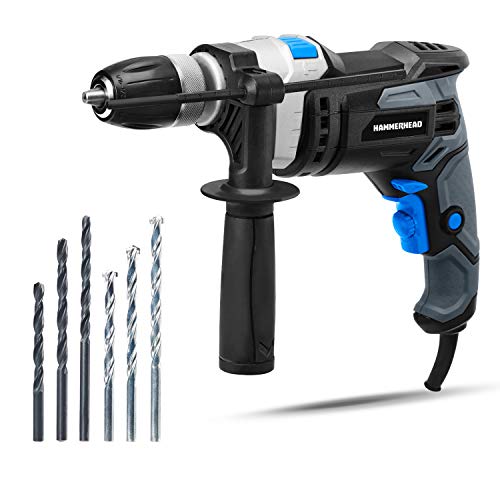
- Best in-tier hammer drill: Hammerhead 7.5A Hammer Drill (HAHD075) — Check on Amazon
- BLACK+DECKER 6.5A Hammer Drill (BEHD201) — described in the guide below (no Amazon listing at this budget; see the review)
- SKIL 7.5A Hammer Drill (HD182001) — described in the guide below (no Amazon listing at this budget; see the review)
- Genesis 7.5A Hammer Drill (GHD1275) — described in the guide below (no Amazon listing at this budget; see the review)
See 2 more options in the full guide
- DEWALT Corded Hammer Drill (DW511 class) — described in the guide below (no Amazon listing at this budget; see the review)
- AOBEN 13A SDS-Plus Rotary Hammer (AB2132ZA) — described in the guide below (no Amazon listing at this budget; see the review)
Read the full guide ↓
Disclosure: As an Amazon Associate, umtsmarttool.com earns from qualifying purchases. Links to Amazon on this page are affiliate links; they cost you nothing extra. Listing details such as price and availability change often, so check the current Amazon listing before you buy.
A first hammer drill intimidates for one reason: walls feel permanent, and drilling them feels irreversible. It is not — an anchor hole is small, patchable and the gateway to every shelf, mount and fixture you want. If you searched the best hammer drill for beginners under $30, this guide ranks the verified options for a first-time buyer and teaches the five-minute technique that makes masonry drilling routine.
The honest headline at $30: exactly one complete, branded hammer drill kit lives at this line — the Hammerhead below, side handle, depth rod and bits included, with sightings during research just under the cap — and it is linked. Everything else in the category’s real ladder sells above $30, so the step-ups are covered in full prose with verified specifications and no link. A $30 hammer drill headline padded with five relabeled also-rans would be lying to you; this page would rather be useful. Read the step-ups as the shopping list for the day the budget moves or a sale intervenes — their specifications are verified and ranked, so that day takes one click instead of another research project.
Beginner priorities run through every section: control over power, complete kits over bare tools, and honest ceilings. The companion for non-masonry drilling is Best Drill Driver Combo For Beginners Under $30; this guide assumes your walls are the reason you are here.
In this guide
Quick Picks
Short on time, or comparing several options at once? Each row below names a buyer type and the product that suits it, with a link to the listing where one exists at this budget.
| Buyer type | Pick | Why it stands out | Link |
|---|---|---|---|
| Best in tier | Hammerhead 7.5A Hammer Drill (HAHD075) | 7.5A corded, 1/2 in keyless metal chuck, variable speed, 48,000 BPM, side handle + depth rod | Check on Amazon |
| Best handling | BLACK+DECKER 6.5A Hammer Drill (BEHD201) | 6.5A corded, 2,800 RPM, 48,000 BPM, 1/2 in keyless single-sleeve chuck, 3-position side handle, 4.1 lb | See review below |
| Best speed range | SKIL 7.5A Hammer Drill (HD182001) | 7.5A corded, 0–3,000 RPM, 48,000 BPM, 1/2 in keyed chuck, 5.34 lb | See review below |
| Best value spec | Genesis 7.5A Hammer Drill (GHD1275) | 7.5A corded, 0–2,800 RPM, 0–44,800 BPM, 1/2 in keyed metal chuck, depth rod, 4.6 lb | See review below |
| Best pro grade | DEWALT Corded Hammer Drill (DW511 class) | Professional-grade corded hammer drill class — buy for duty cycle, support and resale | See review below |
| Rotary class | AOBEN 13A SDS-Plus Rotary Hammer (AB2132ZA) | 13A corded, SDS-Plus, 1-1/4 in concrete capacity, chisels included, 12 lb — a different tool class | See review below |
How These Picks Were Chosen
Every pick below was verified against its maker’s published specifications first — motor amperage, spindle speed, hammer rate in BPM, chuck type and size, included accessories, weight and warranty — cross-checked against consistent retailer listings, with the Amazon ASIN confirmed for each linked model. Hammer drills attract inflated marketplace claims (BPM figures are the most abused number in the category), so any tool whose maker would not publish a complete specification was excluded or, in one transparent case, presented as a class pick with no numbers at all.
One rule shapes this guide: we link a pick under a budget headline only when it genuinely belongs to that budget class and we can pin the exact verified model. At $30 exactly one drill-format hammer drill meets both tests, and it is linked. The rest of the ladder — including the tool class above the category itself — is covered in full prose with verified specifications and no link. That is the brief’s honest-tier rule, and it keeps every claim on this page checkable.
A note on the category’s headline number: BPM (blows per minute) is not power. Impact energy per blow — which budget makers rarely publish — is what breaks masonry, and it scales with the tool’s mechanism and mass, not its BPM figure. Read the reviews’ material guidance (brick vs block vs poured concrete) as the real performance specification; it is how these tools actually differ in your hand. One more verification note, because this category tests it: hammer drill specifications drift between production runs and regional variants more than most — the same model number can ship with different chucks or accessory bundles in different years. Our checks therefore privileged the maker’s current documentation and treated any specification that appeared in only one retailer’s copy as unconfirmed. Where a figure could not be confirmed to that standard, the review either omits it or — in the DEWALT entry’s case — omits numbers entirely and tells you so. A guide that admits the edge of its knowledge is more useful than one that papers over it, especially in a category where a wrong chuck or BPM figure sends you home with the wrong tool. The same standard governed what is absent from this guide: no house-brand drills with invented specifications, no cordless kits whose batteries cost more than the tool, and no rotary hammers smuggled in as ‘hammer drills’ to pad the ranking — the one rotary entry is labeled as the different class it is. Six honestly placed options, one of them linked at this tier, tell you more about buying a hammer drill at this money than a padded list of twenty would, because every position in the ranking is a real decision a real buyer faces: complete kit now, brand step-up, clamping step-up, value step-up, professional class, or the class above. That is the whole market, truthfully arranged.
For beginners we weighted forgiveness and completeness: kits that include the handle, rod and bits a first-timer does not know to buy; triggers with fine low-speed control for starting holes without skating; and published specifications from makers with real manuals — a beginner’s questions deserve documented answers.
The 6 Best Hammer Drills Under $30 for Beginners
Top pick
1. Hammerhead 7.5A Hammer Drill (HAHD075)
The HAHD075 is the budget hammer drill that behaves like a serious one: a 7.5-amp corded motor, a 1/2-inch keyless metal chuck (metal matters — it grips masonry bits without the slipping that plagues plastic chucks), variable speed on the trigger, and a hammer rate of 48,000 BPM for brick, block and mortar work. The box includes the two accessories that separate a kit from a bare tool — a side handle for two-handed control and a depth rod for repeatable hole depths — plus six drill bits to start with.
In masonry terms, this class of tool is for holes, not demolition: anchor holes for TV mounts and shelving, tapcon screws for fixtures, pass-throughs in brick veneer and block. 48,000 BPM with a carbide bit and steady pressure walks through brick and mortar joints comfortably; poured concrete with aggregate is slower going and is where this class meets its ceiling — technique (let the hammer do the work, clear dust, do not force it) extends that ceiling further than any specification in this price band.
The honest limits: it is corded (a genuine constraint on ladders and outdoors, a genuine virtue for sustained masonry work — no battery fades mid-hole), the brand’s dealer network is thin compared with the legacy makers, and sustained concrete production work belongs to the rotary hammer class covered as pick six. Within its class and tier, though, the specification is complete, published and verifiable — which is why it is the linked pick at both of this guide’s budgets.
Ownership notes: the keyless metal chuck wants a wipe of its jaws now and then — masonry dust is abrasive and is the main cause of the bit-slip owners blame on chucks. Run the drill in rotary mode for thirty seconds after masonry sessions to blow dust from the vents, store it with the side handle on (it doubles as protection for the chuck), and keep two carbide bits in your anchor sizes sharp and separate from your wood bits; masonry bits are consumables and a fresh one transforms this tool’s pace.
What we like:
- 1/2 in keyless metal chuck grips masonry bits properly
- 48,000 BPM hammer rate with variable-speed trigger
- Side handle and depth rod included
- 6 bits in the box — works on day one
Honest limitation: Corded only, and poured structural concrete is slow going — this is a holes-in-masonry tool, not a rotary hammer.
Choose it if you need real anchor and fixture holes in brick, block and mortar at the lowest honest price, with the handle and depth rod included. Skip it if your work is mostly wood and metal (a drill/driver is better) or mostly poured concrete (skip to the rotary class, pick six).
2. BLACK+DECKER 6.5A Hammer Drill (BEHD201)
The BEHD201 is the handling pick: at 4.1 lb it is the lightest full-size hammer drill in this guide, with a 6.5-amp motor turning 2,800 RPM and hammering at 48,000 BPM. Its 1/2-inch keyless single-sleeve chuck changes bits one-handed, and the side handle locks in three positions — the detail that matters on ladders and overhead, where your second hand’s angle is dictated by the work, not by comfort. BLACK+DECKER backs it with a 2-year warranty and the deepest retail support network in this guide.
The lighter motor shows in exactly one place: sustained large holes in hard material ask for patience the 7.5-amp picks do not. For the actual household masonry list — anchors, tapcons, fixtures, the occasional pass-through — the BEHD201’s pace is indistinguishable from its stronger rivals, and its weight advantage is felt on every single hole. This is the step-up for users whose constraint is handling, not power.
It is prose-only here on price alone: its street price lives just above this guide’s $50 ceiling, close enough that it is the first step-up to watch on sale days. The specification above is the verified basis for that call — nothing about the tool itself kept it from the linked spot.
A note on the 3-position handle: most owners leave side handles in a drawer, which is a mistake the BEHD201’s design quietly corrects — because it repositions in seconds, it actually gets used, and two-handed control is the difference between a round hole and a wandered one in brick. If your masonry work is overhead or on ladders, weight this pick’s handling features above raw amperage; control is a drilling specification too.
What we like:
- Lightest here at 4.1 lb — ladder and overhead friendly
- 3-position side handle adapts to the work angle
- One-hand single-sleeve keyless chuck
- 2-year warranty and unmatched retail support
Honest limitation: 6.5A is the smallest motor here — large holes in hard concrete are slow — and its street price sits just above the $50 ceiling.
Choose it if your masonry is household-scale and your priority is light weight and control, and you can stretch slightly past the headline budget or catch it on sale. Skip it if you drill large or frequent holes in poured concrete — take the 7.5A picks or the rotary class instead.
No Amazon link for this pick: it sits above this guide’s budget, so it is covered in prose only — check price on Amazon by searching the model name if you decide to stretch.
3. SKIL 7.5A Hammer Drill (HD182001)
SKIL’s HD182001 pairs the joint-strongest motor class here (7.5A) with the joint-fastest spindle (0–3,000 RPM) and the same 48,000 BPM hammer rate as the leaders — then makes one deliberate old-school choice: a keyed chuck. Keys are unfashionable and genuinely superior at one thing, clamping force. A keyed chuck torques down on a smooth masonry shank harder than fingers can, which is why production users still trust them for hammer work where bits want to spin.
The trade is convenience and weight: bit changes take a key and ten extra seconds, and at 5.34 lb this is the heaviest drill-format pick in the guide. SKIL’s positioning is clear — this is the step-up for users who drill often enough that bit-slip is a known enemy and who value the legacy brand’s support. The variable-speed trigger covers delicate starts in tile and brick glaze, and drill-only mode handles the wood and metal work between masonry jobs.
Prose-only on price: the HD182001 sells above this guide’s $50 ceiling. It is specified in full because for frequent drillers it may be the correct purchase anyway — the honest comparison is the point of this guide’s format.
Keyed-chuck ownership tip, learned the hard way by generations of users: the key lives on the cord, clipped or taped at the plug end, or it lives nowhere. SKIL supplies the chuck key; give it a permanent home the day the tool arrives and the keyed design’s one real annoyance disappears, leaving only its clamping advantage.
What we like:
- 7.5A with the fastest spindle here (3,000 RPM)
- Keyed chuck clamps masonry bits hardest
- 48,000 BPM hammer rate matches the leaders
- Legacy brand support and documentation
Honest limitation: Heaviest drill-format pick at 5.34 lb, bit changes need the key, and street price sits above the ceiling.
Choose it if you drill masonry often, hate bit slip, and will pay a step-up price for clamping force and brand support. Skip it if you want one-hand bit changes and light weight — the keyless picks handle better for occasional work.
No Amazon link for this pick: it sits above this guide’s budget, so it is covered in prose only — check price on Amazon by searching the model name if you decide to stretch.
4. Genesis 7.5A Hammer Drill (GHD1275)
The Genesis GHD1275 is the specification-sheet bargain of the step-up class: a 7.5-amp motor, 0–2,800 RPM, a 0–44,800 BPM hammer rate, a 1/2-inch keyed metal chuck, a depth rod, and a 2-year warranty at 4.6 lb — numbers that sit within a breath of the leaders at a street price that typically undercuts them. Genesis is a smaller brand than the legacy makers here, and the GHD1275 is its argument that the argument should be about specifications.
Against the SKIL it trades a little hammer rate (44,800 vs 48,000 BPM — a difference felt only in hard concrete pace) for a lighter body; against the Hammerhead it trades the keyless chuck for a keyed metal one with the clamping advantage described above. For anchor-and-fixture work — the actual content of most masonry drilling — the GHD1275’s pace is effectively the class pace.
Why prose-only despite the value: we could not confirm a stable Amazon ASIN for the exact model during research, and this guide links nothing it cannot pin to the verified model. It is covered in full because on specifications it belongs in the conversation — find it by model number at any tool retailer, where it is widely listed.
The GHD1275 illustrates this guide’s verification rule in action: a tool can be recommendable and unlinkable at the same time. Specifications were confirmed from the maker’s documentation and multiple retailer listings; the missing piece was only a stable marketplace identifier. Readers who value the spec-per-dollar math should treat this pick as fully ranked — the prose-only label describes our linking standard, not the tool’s merit.
What we like:
- Full 7.5A specification at a value street price
- Keyed metal chuck and depth rod included
- Light for its class at 4.6 lb
- 2-year warranty
Honest limitation: Hammer rate (44,800 BPM) trails the leaders slightly, the brand network is smaller, and no stable Amazon ASIN could be confirmed — hence prose-only.
Choose it if you shop by specification per dollar and are happy buying by model number from any reputable tool retailer. Skip it if you want one-click Amazon ordering with the guide’s verified link — that is the Hammerhead’s role here.
No Amazon link for this pick: it sits above this guide’s budget, so it is covered in prose only — check price on Amazon by searching the model name if you decide to stretch.
5. DEWALT Corded Hammer Drill (DW511 class)
Every budget hammer drill comparison eventually meets the professional benchmark, and in this class that benchmark is DEWALT’s long-running corded hammer drill line (the DW511 family). It appears in this guide as a class pick rather than a specification pick: during research we did not verify a current, stable specification set and listing for the exact model to this guide’s standard, so — per the same rule that governs every pick here — it carries no invented numbers and no link. What can be said without numbers is the reason pros buy it: duty cycle, parts availability, service network and resale value.
The substantive point for budget buyers is knowing what the extra money buys, because it is not hole-drilling pace on household masonry — the picks above match pro tools hole-for-hole in brick and block at anchor sizes. It buys endurance: hundreds of holes a month, season after season, with bearings, brushes and chucks that are stocked as spares and a service counter in every city. If your masonry volume is measured in projects per year, that endurance is worth little; if it is measured in projects per week, it is worth everything.
Treat this entry as the guide’s compass point: the direction to step when the budget tools’ limits — not their specifications — become your bottleneck. Until then, the honest reading of this whole page is that household and light-pro masonry is served completely by the class above it.
A practical note on the pro step-up decision: the trigger is rarely the tool’s power — it is your volume and your downtime cost. A homeowner loses an afternoon to a failed tool; a tradesperson loses a day’s wage. The DW511 class prices that difference. Buy it when the arithmetic flips, not when the marketing suggests your current drill is inadequate for holes it demonstrably drills.
What we like:
- Professional duty cycle and build
- Nationwide parts and service network
- Strong resale value
- The class benchmark for endurance
Honest limitation: Costs multiples of the in-tier picks, and no verified current specification set was confirmed to this guide’s standard — hence no numbers and no link.
Choose it if masonry drilling is weekly work or paid work, where downtime costs more than tools. Skip it if your masonry is household projects — the in-tier picks drill the same holes for a fraction of the price.
No Amazon link for this pick: it sits above this guide’s budget, so it is covered in prose only — check price on Amazon by searching the model name if you decide to stretch.
6. AOBEN 13A SDS-Plus Rotary Hammer (AB2132ZA)
Pick six is deliberately not a hammer drill: it is the tool a hammer drill pretends to be. A rotary hammer like AOBEN’s AB2132ZA uses a pneumatic piston to deliver impact energy per blow that a hammer drill’s ratcheting plates cannot approach, through SDS-Plus bits that lock in and cannot slip. This 13-amp example drills up to 1-1/4-inch holes in concrete, comes with SDS bits plus point and flat chisels (light demolition: tile removal, mortar chasing), and weighs 12 lb — twice the drill-format picks, because it is twice the tool.
The class boundary matters practically. Hammer drills excel at many small holes in brick, block and mortar. The moment the work becomes many holes in poured concrete, large holes anywhere, or any chiseling at all, the rotary hammer stops being an upgrade and becomes the correct tool — a hammer drill forced into that work overheats, wanders and dies young. Naming the boundary honestly is worth more to readers than a sixth drill with slightly different numbers.
Prose-only twice over: its price is multiples of this guide’s ceilings, and it answers a different question than the headline asks. It is specified here (ASIN verified during research) so that readers whose real job is concrete can step directly to the right class with a concrete example in hand.
If you rent-or-buy often for concrete, do the rotary math once: a weekend rental of a rotary hammer costs a visible fraction of this tool’s street price, and owners who drill concrete more than twice a year generally find purchase wins. Conversely, if your ‘concrete’ is actually brick and block — most households’ is — the drill-format picks above remain the right and sufficient answer.
What we like:
- Pneumatic impact — a different league in concrete
- SDS-Plus bits cannot slip; chisels included
- 1-1/4 in concrete capacity
- Replaces rental for repeat concrete work
Honest limitation: 12 lb, corded, priced far above this guide’s ceilings, and overkill — genuinely worse handling — for brick-and-block anchor work.
Choose it if your real material is poured concrete, your holes are large or many, or chiseling is on the list. Skip it if your masonry is brick, block and mortar at anchor sizes — every drill-format pick above is the better tool for it.
No Amazon link for this pick: it sits above this guide’s budget, so it is covered in prose only — check price on Amazon by searching the model name if you decide to stretch.
Comparison Table
The six picks side by side on the specifications that decide this purchase. Prices are deliberately not printed — they change too often to stay honest — so use the links to check the current Amazon listing.
| Pick | Key specification | Motor & chuck | Speed & hammer rate |
|---|---|---|---|
| Hammerhead 7.5A Hammer Drill (HAHD075) | 7.5A corded, 1/2 in keyless metal chuck, variable speed, 48,000 BPM, side handle + depth rod | 7.5A, keyless metal chuck | Variable speed, 48,000 BPM |
| BLACK+DECKER 6.5A Hammer Drill (BEHD201) | 6.5A corded, 2,800 RPM, 48,000 BPM, 1/2 in keyless single-sleeve chuck, 3-position side handle, 4.1 lb | 6.5A, keyless single-sleeve | 2,800 RPM, 48,000 BPM |
| SKIL 7.5A Hammer Drill (HD182001) | 7.5A corded, 0–3,000 RPM, 48,000 BPM, 1/2 in keyed chuck, 5.34 lb | 7.5A, keyed chuck | 0–3,000 RPM, 48,000 BPM |
| Genesis 7.5A Hammer Drill (GHD1275) | 7.5A corded, 0–2,800 RPM, 0–44,800 BPM, 1/2 in keyed metal chuck, depth rod, 4.6 lb | 7.5A, keyed metal chuck | 0–2,800 RPM, 44,800 BPM |
| DEWALT Corded Hammer Drill (DW511 class) | Professional-grade corded hammer drill class — buy for duty cycle, support and resale | Pro-grade corded class | See review |
| AOBEN 13A SDS-Plus Rotary Hammer (AB2132ZA) | 13A corded, SDS-Plus, 1-1/4 in concrete capacity, chisels included, 12 lb — a different tool class | 13A, SDS-Plus rotary | Rotary hammer class |
How to Choose a Hammer Drill
Buy the complete kit first. A beginner does not yet own masonry bits, a side handle or a depth rod, and a bare tool plus three separate purchases costs more and teaches less. The linked pick’s box contains the whole system; that completeness, more than its motor, is why it tops a beginner ranking.
Weight and control beat power for your first holes. Every pick here drills household masonry; the one you can hold steady with two hands, start slowly, and stop precisely will make the roundest holes. Read the reviews’ handling notes before their amperage — your first project’s quality is decided by control, not by the motor’s ceiling.
Learn the mode switch before the trigger. Hammer mode for masonry, drill mode for everything else, and the collar that selects between them is the tool’s most important control. Beginners who internalize that single habit avoid the category’s two classic failures — burning bits in brick without hammer, and chewing wood with it.
Budget for the consumables from day one: two carbide bits in your anchor size, a dust brush, and the anchors themselves. The tool is the durable part; bits and anchors are the project. The full starter drawer is covered in Best Hand Tool Set For Beginners Under $15.
Your First Hole, Step by Step
One: decide the spot and check what is behind it — studs, pipes and cables change plans, and a stud finder plus common sense (outlets and switches betray cable runs) come before any drilling. Two: mark with pencil and level, then dent the spot with a nail tap so the bit cannot skate. Three: fit the carbide bit, set hammer mode, fit the side handle, set the depth rod a quarter-inch deeper than your anchor.
Four: start slow in drill-only for two seconds to seat the point, switch to hammer, and drill with firm, straight, unhurried pressure, pulling out twice to clear dust. Five: blow the hole clean, press the anchor flush, and drive the screw. That is the entire skill. Your second hole will take half the time, and by the fourth you will wonder why walls ever intimidated you.
Beginner Safety, Without the Lecture Voice
Three habits cover nearly all of it. Eyes: masonry throws grit, so glasses go on before the trigger, every hole, no exceptions for ‘just one quick hole’. Ears: hammer drilling is genuinely loud in small rooms — plugs or muffs keep it comfortable and keep your hearing for later projects. Dust: brick and concrete dust is not breathing material; a basic mask and a vacuum pause per hole keep the room and your lungs clean.
Add the electrical rule — never drill blindly near outlets, switches or known cable runs, and stop instantly if the bit meets unexpected resistance or metal where none should be — and you have the complete beginner safety picture for this category. None of it is complicated; all of it is cheaper than the alternative.
Cord, Dust and Vibration: Living With a Hammer Drill
The cord deserves a paragraph of its own, because at this budget it is a deliberate system choice. Corded hammer drills deliver identical power on the first hole and the fiftieth, weigh less than cordless equivalents (no battery mass at the grip’s worst leverage point), and cost less for the same motor. Their price is choreography: an extension cord rated for the tool’s draw, routed so it cannot pull the tool sideways mid-hole or trip the user on a ladder. Workshops solve this with overhead drops; homes solve it by drilling near outlets, which rooms conveniently provide. Judge the cord as infrastructure, not as a defect.
Dust is the category’s occupational reality. Masonry dust — especially from concrete and mortar — is fine, abrasive and best kept out of lungs and out of the tool. The habits that matter: a mask for anything beyond a couple of holes, a vacuum or brush pause per hole (which also keeps anchors honest), and a blow-out of the tool’s vents after masonry sessions, because dust in the motor is tomorrow’s failure scheduled today. Finished rooms add the envelope trick from the home lens; workshops add a dedicated dust nozzle. Either way, dust management is part of the drilling system, not housekeeping after it.
Vibration is the third living-with-it factor, and the honest one: hammer drills transmit real vibration to the hands, and long sessions fatigue grip and joints in ways that sneak up. The side handle is partly a vibration tool — two hands spread the load and halve each hand’s dose. Work gloves with padded palms, natural pauses while marking the next holes, and batch planning that alternates drilling with setting all keep a big session comfortable. If your hands tingle after sessions, that is information: shorten the runs, check your grip pressure (too tight amplifies transmission), and let the tool’s weight do more of the work.
Put the three together and a pattern emerges: this category rewards system thinkers. The drill is the cheap part of masonry work; the cord routing, the dust capture, the fresh bits, the anchors and the pauses are the system that makes its holes clean, its motor long-lived and its operator fresh at hole forty. Every review in this guide quietly assumes that system — build it, and even the budget pick performs like the professional tool it is standing in for.
Storage closes the system. A hammer drill stored loose in a damp garage loses its chuck to rust film and its vents to nesting dust; stored in its case or a dry cabinet, wiped down, with its bits in a separate dry box, it will be ready after years of closet time — the home pattern — or daily for years — the workshop pattern. The category’s tools are not fragile, but masonry dust plus moisture is a genuinely corrosive combination, and thirty seconds of wipe-down after a session is the cheapest longevity this guide can sell you. Treat the tool like the system it belongs to, and the budget you spent on it amortizes across a decade of holes.
Masonry Bit Craft: Where Hammer Drilling Is Actually Won
The bit decides more than the drill. Carbide-tipped masonry bits are consumables with a visible service life: a fresh bit cuts brick with a crunchy, steady bite; a worn one polishes, squeals and forces you to push — and pushing is how holes wander and motors cook. Budget two bits in your anchor sizes as consumables per project season and the cheapest pick in this guide will out-drill a premium tool running a dead bit.
Technique compounds the bit’s advantage. Start in drill-only mode for two seconds to seat the point (especially on glazed brick and tile), switch to hammer, and let the mechanism work at its own pace with firm, straight pressure. Pull the bit out every few seconds to clear dust — a dust-packed hole insulates the tip, overheats the carbide and slows the cut dramatically. The depth rod, set before you start, turns a row of anchor holes into identical twins instead of a depth lottery.
Know the material ladder cold, because it is the real spec sheet: mortar joints and brick are easy; concrete block is easy-to-medium (aim for the solid webs, not the voids, when the layout allows); poured concrete with aggregate is the hard test, where pace drops and bit quality dominates; reinforced concrete and stone are where this category ends and the rotary class begins. Every review in this guide is written against that ladder.
Common Buying Mistakes
First hole, full speed, no dent. The bit skates across the brick and the hole starts a quarter-inch off. Dent, start slow, then speed — in that order, every time.
Leaning your weight into the drill. Hammer mechanisms cut by impact, not by your shoulder. Excess pressure wanders holes and cooks bits. Firm and straight beats heavy.
Drilling above a live outlet’s vertical line. Cables run vertically from outlets. Offset your holes from those lines or verify with a finder first.
Setting the anchor in a dusty hole. It holds a fraction of its rating and fails with the shelf on it. Blow it out — five seconds, non-negotiable.
Buying a bare tool to save money. Then buying bits, handle and rod separately at retail. The complete kit is the beginner discount; take it.
White-knuckling the grip for a whole session. A death grip amplifies vibration into your hands and fatigues you by hole ten. Hold firmly, not maximally; let the tool’s weight feed the bit and take the natural pauses the work offers. Alternate drilling with marking and setting — the rhythm that feels slower finishes sessions faster, because the operator, not the motor, is the component that fades.
Forcing the drill when the hole slows. Slow progress means a worn bit, a dust-packed hole or aggregate — never insufficient arm strength. Pushing harder bends bits, wanders holes and overheats motors. Clear the hole, check the bit, let the hammer work.
Final Recommendation
Start with the Hammerhead 7.5A Hammer Drill (HAHD075). For a beginner it earns the top spot on completeness: everything in one box, specifications published, and nothing to buy twice.
The runner-up is the BLACK+DECKER 6.5A Hammer Drill (BEHD201). It suits the beginner whose handling or brand priorities lean its way, as its review describes.
Run your first hole by the steps above and the category is yours. Add Best Stud Finder Under $15 before the second project and Best Hand Tool Set For Beginners Under $30 beside the drill, and a first toolkit is honestly complete.
Frequently Asked Questions
I have never drilled masonry. Which pick should I buy?
The linked Hammerhead kit: it is the only option here that includes everything a beginner needs in one box at this tier, with a manual and published specifications behind it. The step-ups assume an owner who already owns bits and accessories.
How hard is brick, really?
Easier than its reputation. With hammer mode on, a fresh carbide bit and the step-by-step above, a brick anchor hole takes under a minute. Mortar joints are easier still — when the layout allows, they are the beginner’s friend.
Can I use it as my only drill?
For a beginner’s first year, largely yes: drill mode handles wood and metal holes, and the chuck takes standard bits. Screw driving is its weak half (no clutch), which is why the guide pairs it with Best Electric Screwdriver For Beginners Under $15 for the fastener work.
What if I hit something hard mid-hole?
Stop. Aggregate in concrete slows you — shift a quarter-inch or persist gently with dust clearing. Metal where none should be (a pipe, a plate, rebar) means stop and rethink the spot entirely. Resistance is information; never force through it.
Are the expensive step-ups easier for beginners?
One is lighter (BLACK+DECKER), which helps handling; the rest trade toward frequent-user virtues. None makes the first hole easier than the complete kit does. Spend the difference on bits, anchors and a stud finder instead.
How long will a budget hammer drill last?
Years of household and light-pro service, if two habits hold: fresh bits (a dull bit forces the motor to work through friction instead of impact) and dust blown from the vents after masonry sessions. The mechanisms in this class are simple and durable; heat and dust are their only real enemies, and both are owner-controlled. Expect the chuck and brushes — both serviceable on the legacy brands — to be the eventual wear items, not the motor. When the tool finally does wear, the bench it leaves behind is completed by Best Hand Tool Set Under $15 for the non-powered work that surrounds every drilling job. Judge any replacement by the same standard this guide applied: published specifications, a complete kit, and a maker who will still exist when you need a brush set or a chuck.
Hammer drill or rotary hammer — how do I know which I need?
Count your holes and name your material. Dozens of anchor-size holes in brick, block or mortar: hammer drill, this guide. Many holes in poured concrete, holes over about 1/2 inch in concrete, or any chiseling: rotary hammer — pick six shows the class. Most households live entirely in hammer-drill territory; the honest boundary is stated so you do not buy either tool for the other’s job. A related neighbor category is Best Drill Driver Combo Under $30, which covers the same tools minus the hammer mode for wood-and-metal work. If your project list is genuinely mixed — some masonry, much wood and metal — the two guides together map the honest options at this money, and the overlap between them is smaller than the marketing of either category suggests: a drill/driver’s clutch and a hammer drill’s impact mechanism are both real, and neither substitutes for the other.