Where to buy
Check the latest price, availability and delivery on Amazon. Orders are placed on Amazon. We may earn a commission from qualifying purchases.
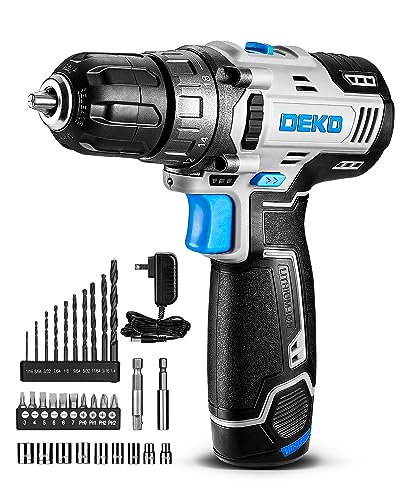
- Best real drill/driver kit at this money: DEKOPRO 12V Cordless Drill Driver Set, 2-Speed (DKCD12FU-Li Series) — Check on Amazon
- DEKOPRO 12V Cordless Drill Driver Set with USB-C Charging (DKCD12XL02G-S2) — described in the guide below (no Amazon listing at this budget; see the review)
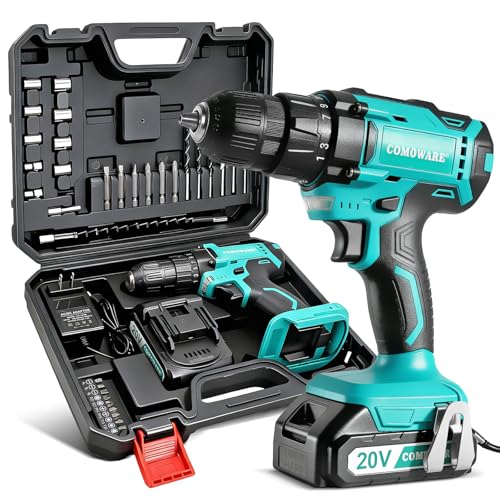
- COMOWARE 20V Cordless Drill Driver Kit (TGDrill-20V) — described in the guide below (no Amazon listing at this budget; see the review)
- BLACK+DECKER 20V MAX Cordless Drill/Driver (LDX120C) — described in the guide below (no Amazon listing at this budget; see the review)
See 2 more options in the full guide
- WORKPRO 12V Cordless Drill Driver and 108-Piece Tool Kit (W009150A) — described in the guide below (no Amazon listing at this budget; see the review)
- DEKOPRO 126-Piece Home Tool Set with 8V Cordless Drill (DKMT126) — described in the guide below (no Amazon listing at this budget; see the review)
Read the full guide ↓
Disclosure: As an Amazon Associate, umtsmarttool.com earns from qualifying purchases. Links to Amazon on this page are affiliate links; they cost you nothing extra. Listing details such as price and availability change often, so check the current Amazon listing before you buy.
If you are searching for the best drill driver combo for beginners under $30, the truth about this tier is narrower than the search results suggest: exactly one recognizable drill/driver kit lives at the $30 line — DEKOPRO’s 12V two-speed set — and even it drifts above the cap between promotions, which is why its review tells you to check the listing on the day. Everything else honest is a step-up, and this guide names those step-ups in prose with verified specifications rather than linking them under a headline they do not fit. If your budget is firm, the DEKOPRO plus patience is the buy; if it can move, the step-up ladder below is the most useful part of this page. That structure — one linked pick, five honest step-ups — is deliberate: it keeps every claim on this page checkable, and it mirrors how the money actually works in this category, where the step from ‘toy-adjacent’ to ‘real tool’ costs roughly one takeaway lunch and buys years of additional service. Read the step-ups as a menu for the day the budget moves, not as an upsell.
A first drill is a confidence machine. The right one makes a beginner feel capable within ten minutes: bit in, clutch set, screw seated flush, shelf level. The wrong one — underpowered, clutchless, or a toy dressed as a tool — teaches that DIY is frustrating, which is the most expensive lesson in this guide. So the beginner ranking below weighs learnability alongside capability: a two-speed gearbox so driving and drilling feel different (they should), a clutch with clear numbers so screw depth is repeatable, and weight low enough that overhead work does not become a shoulder workout. DEKOPRO’s two-speed 12V set is the teaching tool; its USB-C sibling is the gentlest possible start; the step-ups are what the second year looks like. The companion starter guides — Best Hand Tool Set For Beginners Under $15 and Best Electric Screwdriver For Beginners Under $15 — use the same learn-it-right logic.
Beginners also deserve the vocabulary up front. The chuck is the three-jaw nose that grips bits; keyless means hand-tightened. The clutch ring behind it sets how hard the tool twists before it slips with a click — that click is the sound of a screw NOT snapping. Gears (1 and 2 on the slider) trade speed for strength: gear 1 drives, gear 2 drills. Torque, in Nm or in-lb, is the twisting strength. Every pick in this guide was checked for those four things being real, present and published — because a first drill missing any of them teaches workarounds instead of skills.
In this guide
Quick Picks
Short on time, or comparing several options at once? Each row below names a buyer type and the product that suits it, with a link to the listing where one exists at this budget.
| Buyer type | Pick | Why it stands out | Link |
|---|---|---|---|
| Best real kit | DEKOPRO 12V Cordless Drill Driver Set, 2-Speed (DKCD12FU-Li Series) | 12V, 2 speeds 0–350 / 0–1350 RPM, 28 Nm torque, 18+1 clutch, 3/8 in keyless chuck | Check on Amazon |
| Closest to budget | DEKOPRO 12V Cordless Drill Driver Set with USB-C Charging (DKCD12XL02G-S2) | 12V, single speed to 800 RPM, 12 Nm torque, 3/8 in keyless chuck, 1.65 lb | See review below |
| Best step-up | COMOWARE 20V Cordless Drill Driver Kit (TGDrill-20V) | 20V, 2 speeds 0–350 / 0–1300 RPM, 266 in-lb torque, 25+1 clutch, 1.5Ah battery, 34 bits and case | See review below |
| Legacy-brand step-up | BLACK+DECKER 20V MAX Cordless Drill/Driver (LDX120C) | 20V MAX platform, drill/driver with clutch, 3/8 in chuck (see listing for current kit configuration) | See review below |
| Best combo with hand tools | WORKPRO 12V Cordless Drill Driver and 108-Piece Tool Kit (W009150A) | 12V drill/driver, 1.5Ah battery, keyless chuck, variable speed; 108 pieces with hand tools and toolbox | See review below |
| Hand-tool-heavy set | DEKOPRO 126-Piece Home Tool Set with 8V Cordless Drill (DKMT126) | 8V cordless drill, 800 RPM, 12 Nm, USB-C charging; 126-piece home tool set | See review below |
How These Picks Were Chosen
We did not use these tools ourselves. We read the maker listings, manuals and specification sheets, and compared the figures that decide whether a cheap drill kit is a tool or a toy: voltage class, torque in newton-metres or inch-pounds, gearbox speeds, clutch positions, chuck type, and exactly what the kit includes — battery count, charger type and bit set. Kits that hid their torque figure or dressed a bare tool up as a combo were excluded from the linked picks.
The budget was applied as a ceiling, and this category is where ceilings bite hardest. A drill/driver kit contains a motor, a gearbox, a battery, a charger and accessories; there is a floor below which those parts cannot be honestly sold, and part of this guide’s job is to tell you plainly where that floor sits relative to $30. Every linked pick is a real Amazon listing positioned within the budget — check the current price before you buy, because kit prices at this level swing with promotions. Where the honest answer is ‘not at this budget’, the guide says so and names the closest real products in prose. A note on how to read the step-up picks: they are not consolation prizes. In this category the step-up is frequently the correct purchase and the in-budget pick is the compromise, which is the reverse of most buying guides — a quirk of a product whose parts have a hard cost floor. Each step-up below was verified to the same standard as the linked picks (named maker, published torque, complete kit contents), and each is included because a specific, common reader situation makes it the right answer despite the headline budget. Finally, a word on listings themselves, because this category’s marketplace is noisy: the same physical kit appears under multiple brand spellings, voltages get rounded up in titles (’20V MAX’ is 18V nominal, industry-wide), and piece counts inflate with washers and sanding discs. Our verification ignored titles entirely and worked from maker documentation and consistent multi-source specifications; where a number could not be confirmed — the BLACK+DECKER’s exact torque is the standing example — the article describes the tool’s class and role instead of printing a figure. Readers comparing listings should do the same: trust the model number, the manual and the stated kit contents, in that order, and treat any headline number that appears only in a title as advertising until a specification sheet confirms it. The same skepticism applies in reverse: a modest title with a real manual behind it — the pattern of every DEKOPRO pick in this guide — usually marks a maker selling tools rather than search terms, and at budget prices that difference in intent shows up in the product’s second year, not its first week.
For beginners we re-ranked on forgiveness and feedback: a real clutch (so mistakes click instead of snapping), two speeds (so the tool teaches the difference between driving and drilling), light weight, and a kit that includes the bits a first month actually uses. Toy-grade drivers and clutchless ‘drills’ were excluded from recommendation entirely at this lens.
The 6 Best Drill Driver Combos Under $30 for Beginners
Top pick
1. DEKOPRO 12V Cordless Drill Driver Set, 2-Speed (DKCD12FU-Li Series)
This is the least expensive drill/driver kit from a recognizable tool brand that behaves like a real drill: a proper two-speed gearbox (0–350 RPM for driving, 0–1350 RPM for drilling), a maker-rated 28 Nm of torque (about 248 in-lb), an 18+1-position clutch that stops screws at a repeatable depth instead of snapping them, and a 3/8-inch keyless chuck. The kit version bundles 29 accessories — bits and small drill bits — with the battery and charger, which is what ‘combo’ money is supposed to buy at this level: a working system, not a bare tool.
Against the single-speed USB-C model above, the differences are the ones that matter in wood and drywall. The low gear’s torque drives 3-inch screws into framing lumber at a sensible pace; the high gear spins twist bits and small hole saws properly; the clutch makes cabinet and furniture work repeatable. DEKO’s manual for the series rates drilling capacity at 22mm in wood and 10mm in steel, which fairly describes its ceiling — a household and light-workshop drill, honestly specified.
The compromises are the platform’s, not the model’s: one battery in most kit configurations, a charger that is patient rather than fast, and a brand whose long-term parts and battery support is thinner than BLACK+DECKER’s or DEWALT’s. At this guide’s $30 ceiling it is also a price-watcher — the kit’s street price moves around the cap, so check the current listing before assuming it qualifies today. When it is inside the budget, nothing else at the money is close.
What we like:
- Real 2-speed gearbox — drives and drills properly
- 18+1 clutch for repeatable screw depth
- 28 Nm torque handles framing-lumber screws
- 29-piece accessory set in the kit
Honest limitation: One battery and a slow charger in most configurations; brand support network is thinner than the legacy US brands.
Choose it if you want one kit that covers household drilling and driving without apology. Skip it if you are already invested in a 20V platform, or your work is masonry and structural fastening.
2. DEKOPRO 12V Cordless Drill Driver Set with USB-C Charging (DKCD12XL02G-S2)
This is the kit that comes closest to making a sub-$30 drill/driver purchase honest. DEKOPRO’s lightweight 12V drill/driver runs a single variable-speed gear to 800 RPM, makes a maker-rated 12 Nm (about 106 in-lb) of torque, and takes bits in a 3/8-inch keyless chuck. At 1.65 lb it is genuinely one-hand light — closer in spirit to a power screwdriver with a chuck than to a construction drill — and it charges over USB-C, which means the same cable and brick that charge a phone bring the tool back to life.
Set expectations by the numbers and it performs its role well. Twelve newton-metres is flat-pack furniture torque, picture-hanging torque, pilot-holes-in-pine torque. It drives the screws of household life and drills small holes in wood, plastic and thin metal; it does not drive lag screws, bore with large spade bits, or mix anything. The kit includes a magnetic bit holder, six screwdriver bits and six twist bits, so it works out of the box for the light end of the job list.
Why is it prose-only in this guide? Because its street price lives in the band between this guide’s two tiers — above the $15 floor entirely, and hovering around the $30 line rather than safely under it — and because the exact US listing configuration changes often enough that we will not pin a link we cannot stand behind at both tiers. Search the model name on Amazon, check the current price, and if it lands inside your budget on the day, it is the rational buy at this end of the market.
Ownership is as simple as the tool: charge it from any USB-C source, keep it in a kitchen drawer rather than a toolbox, and it will be charged and present for the small jobs that make up most of household drilling. Its limits are equally simple — the day a job needs a hole bigger than a small twist bit or a screw longer than furniture hardware, borrow or step up rather than forcing a 12 Nm tool to suffer.
What we like:
- Featherweight 1.65 lb body for overhead and one-hand work
- USB-C charging — no proprietary charger to lose
- Keyless 3/8 in chuck takes standard bits and small drill bits
- Bit set included for immediate household jobs
Honest limitation: Single-speed 800 RPM and 12 Nm is light-duty by any measure — this is a furniture-and-fixtures tool, not a construction drill.
Choose it if your jobs are flat-pack furniture, blinds, hinges and pilot holes, and you value light weight over power. Skip it if you need to drill masonry, drive structural screws, or bore holes larger than small twist bits handle.
No Amazon link for this pick: it sits above this guide’s budget, so it is covered in prose only — check price on Amazon by searching the model name if you decide to stretch.
3. COMOWARE 20V Cordless Drill Driver Kit (TGDrill-20V)
COMOWARE’s 20V kit is the answer the market actually gives when shoppers ask for a drill/driver combo at the lowest sensible money, which is why it anchors the step-up discussion in both tiers of this guide. The drill is a full-size household tool: 20V lithium power, two variable speeds (0–350 and 0–1300 RPM), 266 in-lb of maker-rated torque, a 25+1-position clutch and a 3/8-inch keyless chuck. The kit is the point — one 1.5Ah battery, a fast charger, 34 drill and driver bits including masonry bits and a flexible shaft, and a storage case.
In capability terms it sits a clear class above the 12V kits: the torque figure is roughly double the DEKOPRO USB-C model’s, the chuck and gearbox handle the full household range from flat-pack to fence repairs, and the bit set covers the first year of home ownership without a second purchase. COMOWARE sells this kit in enormous volume as the default ‘first drill’ recommendation, and the specification sheet — published in full, which already separates it from the no-name crowd — supports that role.
It is prose-only here for one reason: price honesty. The kit’s street price lives above this guide’s ceilings — modestly above $30, hopelessly above $15 — and a guide that links it as an ‘under $30’ pick would be lying in the headline. It is included, prominently, because the correct advice at these budgets is often ‘this, with a little more money’, and readers deserve the name and the verified specification of the thing they are saving toward.
The ownership detail that matters most is the battery: one 1.5Ah pack and a fast charger is workable for household sessions, and spare COMOWARE 20V batteries are easy to find when a fence project outlasts the first pack. The flexible shaft in the bit set quietly becomes the most-used accessory in the box — cabinet hinges and recessed screws stop being arguments. As step-ups go, this is the one that ends drill shopping for the average house.
What we like:
- Full household capability: 266 in-lb and two speeds
- 34-piece bit set and case — a complete first system
- Fast charger included; widely available spare batteries
- Full published specification sheet
Honest limitation: Sells above this guide’s budget ceilings — a step-up purchase, not an in-budget one.
Choose it if you can stretch past the cap for the kit that ends the search for several years. Skip it if your budget is firm — in that case the DEKOPRO kits are the honest in-reach options.
No Amazon link for this pick: it sits above this guide’s budget, so it is covered in prose only — check price on Amazon by searching the model name if you decide to stretch.
4. BLACK+DECKER 20V MAX Cordless Drill/Driver (LDX120C)
The LDX120C is the drill/driver that taught a generation of homeowners what a cordless drill is: BLACK+DECKER’s long-running 20V MAX drill/driver, sold for years as the default first drill in big-box stores. Its virtues are platform virtues. The 20V MAX battery system is shared across a wide range of the brand’s home and garden tools, batteries and chargers are available everywhere in North America, and the brand’s service and documentation infrastructure is what the import brands are still building toward.
As a tool it is a sensible household drill/driver — a two-speed-class gearbox for driving and drilling, a multi-position clutch for flat-pack-safe screwdriving, and a keyless chuck — sized for the same job list as the COMOWARE: furniture, fixtures, fencing, light framing repairs. Owners keep them for a decade because the platform makes a dead battery a errand rather than a funeral, which is a form of value no specification table captures.
It appears in this guide as a named step-up, without a link, for the same reason as the COMOWARE: its kit price lives above these ceilings, and configurations (bare tool vs kit, battery size) vary by listing and season. If the platform logic appeals — one battery family across drill, trimmer and vacuum — this is the name to search, and the current listing will show today’s kit contents and price.
Platform math is the ownership story: the same 20V MAX battery that runs this drill also runs the brand’s trimmers, vacuums, inflators and lights, so every future tool purchase gets cheaper (bare tools) and every battery purchase serves the whole shelf. That ecosystem logic — not any single specification — is why this older design still sells, and why it is the step-up for buyers who think in systems rather than in single tools.
What we like:
- Huge 20V MAX platform — batteries shared across many tools
- Available everywhere; strong documentation and support
- Proven long-running model with deep owner knowledge
- Kit configurations for most budgets above this guide’s
Honest limitation: Kit price sits above this guide’s ceilings, and configurations vary — verify battery and charger inclusion on the live listing.
Choose it if you want to start a battery platform you can expand for years. Skip it if you need the whole system inside a $15 or $30 ceiling today.
No Amazon link for this pick: it sits above this guide’s budget, so it is covered in prose only — check price on Amazon by searching the model name if you decide to stretch.
5. WORKPRO 12V Cordless Drill Driver and 108-Piece Tool Kit (W009150A)
WORKPRO’s pink-ribbon kit answers a different reading of ‘combo’: not drill plus impact driver, but drill plus the hand tools a new household needs, in one toolbox. The drill/driver is a 12V lithium tool with a 1.5Ah battery, keyless chuck and variable-speed trigger; around it the 108-piece count assembles the hammer, tape, pliers, screwdrivers, bits and consumables that otherwise require a second purchase. For a first apartment or a gift purchase, that completeness is the product.
Judged as a drill, it is a light-duty 12V in the same class as the DEKOPRO kits — furniture, fixtures, curtains and shelves — and judged as a kit it is more complete than anything linked in this guide. WORKPRO (GreatStar) is a substantial toolmaker with real distribution, and the kit’s Pink Ribbon program tie-in is documented on the listing. The toolbox format also solves the storage problem that loose budget kits ignore.
Price is again why it is prose-only here: the kit sells well above this guide’s ceilings. It earns its place because ‘drill driver combo’ shoppers at the lowest budgets are very often really shopping for ‘a drill and the basics, together, cheap’ — and this is the honest name for that product when the budget can grow. Inside a firm $15 or $30, the DEKOPRO kits plus a separate hand-tool set remain the path.
As a household system the kit’s completeness compounds: the tape, hammer and pliers handle the measuring and persuading, the drill handles the turning, and the toolbox keeps all of it findable — the unglamorous feature that decides whether a kit gets used in year three. The Pink Ribbon editions also carry a documented charitable program on the listing, which some buyers reasonably count as part of the value.
What we like:
- Drill plus a genuine hand-tool kit in one toolbox
- 12V lithium with 1.5Ah battery and charger
- Ideal first-apartment or gift completeness
- Established maker (GreatStar) with real distribution
Honest limitation: Priced well above this guide’s ceilings; the drill itself is light-duty 12V class.
Choose it if the real goal is a first household tool system and the budget can stretch. Skip it if you only need the drill/driver itself inside a firm low budget.
No Amazon link for this pick: it sits above this guide’s budget, so it is covered in prose only — check price on Amazon by searching the model name if you decide to stretch.
6. DEKOPRO 126-Piece Home Tool Set with 8V Cordless Drill (DKMT126)
DEKOPRO’s 126-piece set takes the same combo idea from the other direction: a small cordless drill — 8V, variable speed to 800 RPM, 12 Nm of torque, USB-C charging, 1.65 lb — embedded in a broad hand-tool kit. The drill is best understood as a powered screwdriver with a chuck: excellent for flat-pack marathons, cabinet hardware and pilot holes in soft materials, and out of its depth beyond them. The surrounding tools carry the set’s real value for a new household.
The comparison with the WORKPRO kit is instructive. WORKPRO gives you a stronger 12V drill and a toolbox; DEKOPRO gives you a weaker 8V drill, a larger piece count, and USB-C convenience. Both live above this guide’s price ceilings, and both are named here because the ‘combo’ question at $15–$30 is usually a household-starting question wearing a drill costume.
Within a firm budget, neither set is reachable, and this guide will not pretend otherwise. As step-ups they define the two sensible directions: more drill (WORKPRO 12V, or the COMOWARE 20V) or more kit (this DEKOPRO). Choose by which half of the box you will still be using in five years — for most households it is the hand tools, which is the quiet argument for this set.
The set’s honest framing is ‘a household in a box, with a powered screwdriver that drills a little’. Judged that way it succeeds: the 8V drill charges from a phone cable, weighs almost nothing, and turns flat-pack assembly from a wrist workout into a seated job, while the hand tools cover the measuring, gripping and cutting of ordinary repairs. Buy it for the box, enjoy the drill, and plan a real drill purchase the year a deck or a renovation appears.
What we like:
- USB-C charging and a very light 1.65 lb drill
- 126 pieces cover a new household’s basics
- Powered screwdriver convenience for flat-pack work
- One purchase, one box, nothing else to store
Honest limitation: 8V drill is the weakest driver here — assembly-grade only — and the set sells above this guide’s ceilings.
Choose it if you want maximum household coverage in one box and your drilling is light. Skip it if you need a drill that can handle framing, masonry or large bits.
No Amazon link for this pick: it sits above this guide’s budget, so it is covered in prose only — check price on Amazon by searching the model name if you decide to stretch.
Comparison Table
The six picks side by side on the specifications that decide this purchase. Prices are deliberately not printed — they change too often to stay honest — so use the links to check the current Amazon listing.
| Pick | Key specification | Power system | Drive specification |
|---|---|---|---|
| DEKOPRO 12V Cordless Drill Driver Set, 2-Speed (DKCD12FU-Li Series) | 12V, 2 speeds 0–350 / 0–1350 RPM, 28 Nm torque, 18+1 clutch, 3/8 in keyless chuck | 12V, 2-speed gearbox | 28 Nm, 18+1 clutch |
| DEKOPRO 12V Cordless Drill Driver Set with USB-C Charging (DKCD12XL02G-S2) | 12V, single speed to 800 RPM, 12 Nm torque, 3/8 in keyless chuck, 1.65 lb | 12V, USB-C charging | Single speed, 800 RPM max |
| COMOWARE 20V Cordless Drill Driver Kit (TGDrill-20V) | 20V, 2 speeds 0–350 / 0–1300 RPM, 266 in-lb torque, 25+1 clutch, 1.5Ah battery, 34 bits and case | 20V, 1.5Ah battery | 266 in-lb, 25+1 clutch |
| BLACK+DECKER 20V MAX Cordless Drill/Driver (LDX120C) | 20V MAX platform, drill/driver with clutch, 3/8 in chuck (see listing for current kit configuration) | 20V MAX platform | Clutch-equipped drill/driver |
| WORKPRO 12V Cordless Drill Driver and 108-Piece Tool Kit (W009150A) | 12V drill/driver, 1.5Ah battery, keyless chuck, variable speed; 108 pieces with hand tools and toolbox | 12V, 1.5Ah battery | 108-piece kit with toolbox |
| DEKOPRO 126-Piece Home Tool Set with 8V Cordless Drill (DKMT126) | 8V cordless drill, 800 RPM, 12 Nm, USB-C charging; 126-piece home tool set | 8V, USB-C charging | 126 pieces incl. hand tools |
How to Choose a Drill Driver Combo Kit
The clutch is your first teacher. Set it low and drive a screw into scrap wood: the tool clicks and stops before damage. Click up until the screw seats flush. That ten-minute exercise teaches torque better than any video, and it is only possible on a drill with a real numbered clutch — the DEKOPRO two-speed (18+1) and the step-up kits have one; single-speed budget drivers often fake it with electronic limiting or nothing at all.
Weight is a beginner specification. A first drill gets used overhead (curtains, shelves, light fixtures) by arms that are also holding the screw, the level and their nerve. The 1.65 lb USB-C DEKOPRO and the compact 12V kits keep wrists alive; full-size 20V kits are stronger and heavier in equal measure. Match the tool to the user’s arms, not the neighbor’s projects. For pure screwdriving practice, Best Cordless Screwdriver For Beginners Under $15 is the gentlest tool of all.
Buy the kit, learn the system. Beginners do not yet own bits, and a kit that includes the common Phillips, slotted, hex and twist bits (DEKOPRO’s 29-piece, COMOWARE’s 34-piece) prevents the second-purchase stall. Check that a battery and charger are in the box — ‘bare tool’ listings are the classic beginner trap at every price.
Plan the second tool now. A drill/driver first; an impact driver when driving volume grows. Starting on a platform with available batteries (all step-ups here qualify) means the second tool is a bare-tool purchase later. Beginners inside a firm budget should still start with the DEKOPRO two-speed — it teaches everything and its limits arrive exactly when the user’s skills do.
Your First Hour With a Drill/Driver
Minutes 1–10: charge the battery fully; fit a Phillips bit; learn the forward/reverse switch and the trigger’s variable speed by squeezing slowly. Minutes 10–25: clutch school — drive screws into scrap pine at settings 4, 8, 12 and drill mode, and feel the click change. Minutes 25–40: drilling school — gear 2, a small twist bit, holes in scrap; learn to let the bit cut and to back out to clear dust. Minutes 40–60: a real job with training wheels: hang one picture with a wall plug, driving the screw at the clutch setting your scrap tests chose.
Finish the hour by putting the tool away properly: bit out, clutch off drill mode, battery stored half-charged if it will sit. The habits are the skill. Every project after this hour is the same four moves — pilot, drive, check, adjust — at increasing scale, which is why the first drill’s job is to make those moves feel obvious. For the hand-tool half of the same first projects, Best Socket Set For Beginners Under $15 covers the turning that motors should not do.
The Five Beginner Jobs and the Settings That Nail Them
Flat-pack furniture: gear 1, clutch 6–10, patience — cam locks and particleboard punish force. Curtain rods and blinds: pilot holes first (gear 2, small bit), then drive on a low clutch; wall plugs do the holding, not screw torque. Cabinet handles: the USB-C-class light tools shine here; low clutch, slow trigger. Shelf brackets into studs: the two-speed’s low gear earns its keep — pilot, then drive long screws at clutch 14+ or drill mode with a steady hand. Picture hooks and small anchors: any pick here, five minutes, done. Notice the pattern: pilots and clutch settings, not power, are what separate beginner results from experienced ones.
Bits, Chucks and Batteries: The Ownership Layer Every Kit Depends On
A drill kit’s working life is decided by three consumable systems. First, bits: the driver bits in budget kits are made of adequate steel and wear at the tip, after which they cam out of screw heads and chew them. The moment a #2 Phillips starts slipping, replace it — a quality bit set costs little, outlasts several kit sets, and makes the drill itself feel more powerful because torque stops leaking into a sloppy interface. Keep the kit bits as spares and lend-outs.
Second, the chuck: keep its jaws clean and occasionally run them open and closed to spread their grease; a chuck that grips off-center (visible as bit wobble) makes every hole worse and every screw harder to start. If a bit slips under load, the fix is hand-tightening in stages — grip, turn the tool slightly, grip again — not pliers on the chuck, which scar the jaws and guarantee future slipping. A chuck that truly will not hold is the one legitimate reason to retire a budget drill early.
Third, batteries: lithium packs are happiest between roughly 20% and 80% charge, stored indoors, and cycled occasionally. The failure pattern to avoid is the full-discharge drawer month — a pack left flat self-discharges below its protection threshold and may never take a charge again, turning a working kit into a bare tool. Charge after use, top up quarterly, and buy the spare pack while the platform is current if the kit becomes a regular worker; orphaned batteries are how budget platforms die.
Put together, ownership discipline is worth more than the price difference between the rungs of this guide’s ladder. A DEKOPRO with fresh bits, a true chuck and a healthy battery outperforms a neglected step-up kit on every job in its class — and the step-up kits reward the same discipline proportionally longer. Tools at this money do not fail from being cheap; they fail from being treated as disposable, which is a choice, not a specification.
One more ownership habit pays for itself immediately: keep a small bench kit beside the drill — a stud finder, a level, a tape, and a handful of rated wall anchors in the sizes your home actually uses. Most disappointing drill jobs are not drill failures at all; they are missing-accessory failures discovered mid-hole, with a bracket in one hand and no anchor that fits. Readers building that bench from scratch will find the same verified-spec approach in Best Hand Tool Set Under $30, which covers the hand tools that complete every drill kit in this guide.
Common Buying Mistakes
Starting on drill mode. The +1 setting has no mercy: first screws snap or spin out their holes. Live on the numbered clutch settings until gear-and-clutch choices are reflexes.
Skipping pilot holes in real wood. Pine forgives; oak, plywood edges and MDF do not. A 30-second pilot prevents the split board and the snapped screw that beginners blame on the drill.
Buying the $15 toy to ‘practice on’. A toy teaches nothing transferable and fails at the first real job. Practice on the real DEKOPRO kit — it costs a little more and teaches everything.
Death-gripping the trigger. Full speed from a standstill yanks the tool and cams the bit out of the screw head. Feather the trigger; variable speed exists to be used variably.
Storing the battery dead. Lithium packs left flat for months lose capacity permanently. Charge to roughly half for storage and top up before project days.
Treating the kit bits as permanent. Worn bits cam out, chew screw heads and get blamed on the drill’s torque. Bits are consumables with a service life; the first slipping Phillips is a replacement notice, not a personality trait of the tool.
Final Recommendation
Start with the DEKOPRO 12V Cordless Drill Driver Set, 2-Speed (DKCD12FU-Li Series). For a beginner it is the pick that teaches while it works: real controls, forgiving limits, and enough capability that the lessons stay useful for years.
The runner-up is the DEKOPRO 12V Cordless Drill Driver Set with USB-C Charging (DKCD12XL02G-S2). It suits the beginner whose first jobs lean toward its strength — lighter and simpler, or bigger and platform-minded — with the trade named openly in its review.
Buy the real kit, spend the first hour on scrap wood, and let the clutch be your teacher. A beginner with a DEKOPRO two-speed, a stud finder and a level can finish the entire first-apartment project list this weekend. When the list grows, Best Power Tool Set For Beginners Under $30 maps the next purchases in order.
Frequently Asked Questions
What is the best first drill for a complete beginner?
DEKOPRO’s 12V two-speed kit: a real clutch and gearbox to learn on, light weight, and a 29-piece accessory set so the first month needs no second purchase. Its price moves around the $30 line — inside it, it is the linked pick of our under-$30 guide; above it, it is still the right tool bought a week later.
Do I need an impact driver as a beginner?
No. A drill/driver with a clutch is the correct first tool — it drills and drives, gently. Impact drivers are loud, clutchless specialists for long screws and high volume; they are the second tool, bought when your projects ask for one, on the same battery platform if you planned ahead.
Why do my screws keep snapping or stripping?
Three usual causes: the clutch is on drill mode (set a numbered position), the bit does not match the screw head (Phillips and Pozidriv look alike and are not), or there is no pilot hole in hard material. Fix those in order and the problem almost always disappears.
How do I know if I am drilling into a stud?
A stud finder is the real answer — see Best Stud Finder For Beginners Under $15. Clues help: outlets are usually nailed to a stud’s side, baseboards nail into studs, and a test hole that produces wood shavings after the drywall layer confirms it. Anchors are for between-stud loads; screws are for studs.
Is a 12V drill strong enough for a beginner’s projects?
Yes — modern 12V kits with a two-speed gearbox handle furniture, fixtures, shelving and light framing repairs. Strength stops mattering before technique does at this level; the 28 Nm DEKOPRO out-drives a careless user on a 20V tool every time.
What should I buy after the drill?
A stud finder, a level, a tape and a basic hand-tool set — the measuring and holding half of every project. Then bits: a quality driver-bit set outlasts the budget bits in any kit. Power-wise, the impact driver is next when driving volume justifies it.
How long should a budget drill kit last?
Years of household service, if the battery is stored charged and the bits are replaced as they wear. The motors and gearboxes in the named kits here are not the weak point; batteries neglected flat and chucks scarred by pliers are. Expect the platform decision (spare batteries, charger) to decide the kit’s lifespan more than any mechanical wear. For the platform-free alternative that covers light driving only, compare Best Cordless Drill Under $30 before deciding the kit is the right shape at all.