Batoning means tapping the spine of a fixed blade with a wooden stick to split firewood into smaller pieces. It is a common camp skill and it puts real stress on a knife, which is why not every blade suits it. A good batoning knife has a thick spine, a solid full tang and a handle you can hold with gloves.
The six batoning knives below span different styles and budgets. We have not used these products ourselves, and the descriptions come from general product knowledge rather than hands-on testing. Details can change between versions, so confirm sizes, materials and what is included on the current listing before you buy. Blade lengths, steels and sheath types vary by version, so check the current listing for the exact specification.
As an Amazon Associate we earn from qualifying purchases. Links below are affiliate links, and they do not change the product information we give.
What to Look For
| Feature | Why it matters |
|---|---|
| Full tang | The steel runs the length of the handle, which resists snapping under load |
| Spine thickness | A thicker spine takes hits better and splits wood more cleanly |
| Blade length | A medium blade is easier to control than a very long one |
| Handle | Texture and size matter when hands are cold or wet |
| Sheath | A secure sheath protects the edge and keeps the knife safe to carry |
In this guide
Specs at a Glance
| Knife | Type | Key feature | Notes |
|---|---|---|---|
| Morakniv Garberg | Full-tang fixed blade | Carbon or stainless version | Swedish brand |
| ESEE-4 | Full-tang fixed blade | Thick steel, textured handle | American brand |
| Ka-Bar Becker BK2 Companion | Full-tang fixed blade | Very thick spine | Heavy-duty design |
| Gerber StrongArm | Full-tang fixed blade | Coated blade, ridged handle | Mainstream brand |
| Condor Bushlore | Full-tang fixed blade | Carbon steel, wood handle | Bushcraft style |
| Ontario Knife RAT-7 | Full-tang fixed blade | Thick blade, sturdy handle | Long-running line |
The 6 Best Batoning Knives
Top pickBest for bushcraft and camp chores
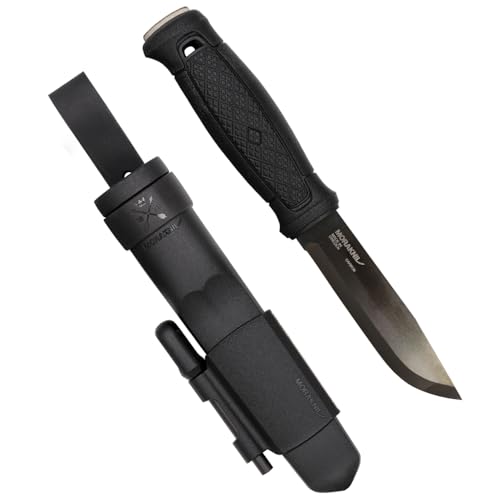
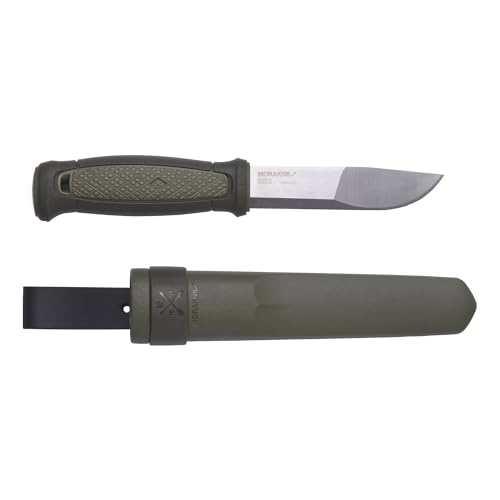
1. Morakniv Garberg
A full-tang bushcraft knife from a Swedish maker known for affordable outdoor knives. It is built with a thick spine and a squared spine edge for scraping and striking.
Suits: bushcraft and camp chores. Strengths: a full-tang build and a trusted maker. Weaknesses: a larger size than the lightest knives. Skip it if you want a pocket-sized tool.

Best for tough camp tasks
2. ESEE-4
A well-known survival-style fixed blade with a thick blade and a full tang. It is a longtime favorite among campers who baton and carve.
Suits: tough camp tasks. Strengths: a rugged build and a strong reputation. Weaknesses: a higher price tier than basic options. Skip it if you want a light, thin knife.

Best for heavy-duty camp use
3. Ka-Bar Becker BK2 Companion
A heavy-duty fixed blade with a very thick spine, designed by Ethan Becker for hard outdoor work. It handles chopping and splitting well.
Suits: heavy-duty camp use. Strengths: extra thickness and durability. Weaknesses: weight and bulk. Skip it if you want something fine-edged for detail work.

Best for occasional campers
4. Gerber StrongArm
A mainstream full-tang fixed blade with a textured handle and a coating on the blade. It aims to give a rugged feel at an accessible tier.
Suits: occasional campers. Strengths: a familiar brand and a sturdy design. Weaknesses: less specialized than dedicated bushcraft knives. Skip it if you want premium steel.

Best for traditional bushcraft fans
5. Condor Bushlore
A bushcraft-style knife with a carbon steel blade and a wooden handle. It suits camp tasks from feather sticks to splitting kindling.
Suits: traditional bushcraft fans. Strengths: a classic look and a solid blade. Weaknesses: carbon steel needs rust care. Skip it if you want zero maintenance.

Best for rugged use
6. Ontario Knife RAT-7
A hefty fixed blade from the RAT line, built for demanding outdoor tasks. It is a compact choice with a strong frame.
Suits: rugged use. Strengths: a thick blade and solid construction. Weaknesses: bulky for light chores. Skip it if you want a slim blade.

Care and Setup
- Wipe the blade dry after use to prevent rust, especially on carbon steel.
- Use a wooden baton, not a metal hammer, to avoid damaging the spine.
- Split wood from the top down, keeping your free hand clear of the path of the blade.
- Sharpen the edge if it dulls, but keep the factory angle.
Mistakes to Avoid
- Batoning with a folding knife that was not built for it.
- Hitting the tip of the blade with the baton.
- Splitting wood with knots that are too large.
- Skipping safety gear like gloves and eye protection.
Batoning Technique Step by Step
Good technique protects both the knife and your hands, and it saves effort. Start by choosing a stable chopping surface, such as a flat stump or a thick log laid on level ground. Never baton on a rock or concrete, where a missed stroke can chip the edge, and keep the area clear of bystanders.
Set the knife edge across the top of the round, close to the handle end of the cutting edge rather than the tip. Hold the handle firmly with one hand and keep your other hand well away from the line of the blade. Tap the spine with the baton in short, controlled strokes, driving the blade down through the wood rather than swinging hard. Let the blade do the work as the split opens.
Once the blade is partway through, turn the whole piece over, or flip the knife and wood together, and continue from the other side if the split stalls. Avoid levering the handle sideways to pry a piece apart; side loads are what bend or crack blades. If the blade sticks, tap it back out along the line it entered and try another spot instead of twisting.
Start with smaller diameter pieces and work up. Split a round into halves, then quarters, then kindling. Stop when the baton starts to bounce or the blade stops advancing. That usually means the wood is too knotty or too wide for the knife, and it is time to switch to a saw or an axe. Always finish by checking the edge for rolls or chips before you put the knife away.
Choosing Wood and Making a Good Baton
The wood you split changes how hard the job is on the blade. Straight-grained, dry, seasoned wood without knots splits cleanly along its fibers. Wet or green wood grips the blade, while heavily knotted or twisted pieces resist splitting and can pinch the steel. Dead standing wood that is dry is usually easier than freshly cut limbs, though rotten wood crumbles and is not worth the effort.
Different species behave differently, and hardwoods generally demand more force than softwoods. If you are new to batoning, begin with softer, dry pieces so that you learn the rhythm before trying dense material. A round that is only a little wider than the blade is much easier to control than a thick trunk section.
The baton matters too. A good one is a straight, solid stick of hardwood that fits your hand comfortably and has enough weight to drive the blade without much swinging. Many people look for a length around the forearm, as the existing FAQ says, and a thickness that feels secure. Do not use a stick with a crack or a rotten core, which can break and send fragments at your hand.
Avoid a metal hammer or a rock as the striking tool. These can mushroom or chip the spine and transmit shock to the handle. A wooden baton absorbs some of the impact and is easy to replace in the field. If a baton starts to split or splinter, cut a new one rather than keep using it.
Blade Geometry, Grind and Steel Considerations
Beyond thickness and tang, the shape of the blade changes how well a knife splits wood. A thick blade with a fairly shallow taper wedges wood apart but needs more force, while a thinner grind slices fibers more easily and is more prone to damage when struck. A flat or Scandi-style grind is simple to sharpen in the field, whereas a convex edge is stronger but takes more practice to maintain.
The edge angle also matters. A very acute edge cuts well but can roll or chip when it meets hard knots, and a more robust edge angle takes more punishment. Because specifics vary by version, check the product listing or manual for the grind and edge details instead of assuming them from the model name.
Steel type is a trade-off between toughness, edge holding, and rust resistance. Carbon steel is often easy to sharpen and tough, but it needs drying and a light coat of oil to prevent rust. Stainless steel resists corrosion better but can behave differently under shock. Coatings can reduce rust and glare, though they can wear where the blade rubs against wood or a sheath, so they are not a substitute for care.
Blade length is a balance. A medium blade gives enough reach to split small rounds without being awkward to control. A very long blade increases leverage on the tip and the risk of binding. A shorter blade is easier to carry and use for detail, though it limits the diameter of wood you can split. Pick the length that matches the size of wood you actually expect to process.
Handles, Sheaths and Carrying the Knife
A knife that splits wood well still has to be comfortable to hold for repeated work. Handle shape, texture and size all affect control, and what feels good bare-handed may feel different in gloves or when wet. Look at whether the handle has a guard or a pronounced bump near the blade that stops your hand sliding forward, and whether the material is grippy without being rough enough to cause hot spots.
Handle materials have trade-offs. Wood is comfortable and traditional but can swell, dry out or crack if it is neglected. Synthetic handles tolerate moisture and temperature swings better, and rubberized or textured surfaces help in cold weather. Check that the handle slabs are fastened securely and that no gaps collect moisture or grit.
The sheath is often overlooked. It should hold the knife firmly so it cannot fall out when you bend or climb, and it should cover the edge fully. Leather sheaths look good and mold to the knife but need care when wet, while molded plastic types shed moisture and are easy to clean. Consider how it attaches to a belt or pack, and whether you can draw and re-sheathe the knife safely with one hand.
When carrying, keep the knife on a belt or pack where it will not snag, and never walk with it unsheathed. At camp, store it sheathed and in a consistent place so that you do not have to look for it in the dark. If a lanyard hole is present, a loop can help keep it from slipping when your hands are wet.
Budget Tiers and Questions to Ask Before Buying
Batoning knives span a wide range, and spending more does not always mean a better fit for your needs. Lower-priced fixed blades can be perfectly serviceable for occasional camp use if they are full tang and have a sturdy spine. Mid-range knives usually add better steel, handle ergonomics and sheaths. Premium knives offer refined heat treatment, tighter tolerances and strong warranties, which matter mostly if you baton regularly.
Before you buy, ask yourself a few direct questions. How often will you baton, and how large is the wood you split? Will you carry the knife a long way, where weight matters, or keep it near a vehicle? Are you comfortable maintaining carbon steel, or would you rather have something low maintenance? Do you wear gloves, and do you need a handle that works with them?
- Is the tang described as full on the listing, and is the construction clear from the photos?
- What are the spine thickness and blade length for this exact version?
- Does the sheath hold the knife securely and suit how you will carry it?
- What warranty or return terms apply?
- Is a spare tool, such as a saw or hatchet, better for the larger wood you expect?
Be cautious with listings that describe a knife as tactical or survival-grade without giving any real construction detail. Read the specifications, and treat marketing words as less important than the facts of tang, thickness and steel. If you are unsure, choose the sturdier and simpler knife, and match it to the tasks you will actually do.
Quick Checklist Before You Pick a Batoning Knife
Batoning asks more of a blade than slicing food or cutting cord ever will. Run through this list before you commit to any model, and you will filter out most poor fits in a few minutes.
- Full tang construction, meaning the steel runs the whole length of the handle.
- A spine thick enough that it does not flex when struck with a wooden baton.
- A flat, square spine without sharp corners, so the baton hits it cleanly.
- A handle with a lanyard hole or textured grip that stays secure with damp or gloved hands.
- A sheath that holds the knife firmly and has a drainage point or belt loop you can actually use.
- A blade length that suits your wood. Most campers settle between four and six inches.
If a listing is vague about tang type or steel thickness, treat that as a warning sign. Sellers who build a rugged knife usually say so plainly in the bullet points.
Glossary for Batoning Knife Shoppers
Product pages lean on jargon. Here is what the common terms mean in practice.
| Term | What it means for you |
|---|---|
| Full tang | One piece of steel from tip to pommel, with handle scales attached on each side. |
| Partial tang | The steel narrows inside the handle, which can weaken the knife under heavy strikes. |
| Spine | The unsharpened back edge of the blade, which receives the baton. |
| Scandi grind | A single wide bevel that bites into wood well and is simple to maintain. |
| Drop point | A gently curved tip that is strong and good for general camp chores. |
| Pommel | The rear end of the handle, sometimes used for light hammering. |
Knowing these terms makes it far easier to compare two knives that look almost identical in photos.
When to Follow the Maker Manual or Choose Another Tool
Every maker sets its own limits for how a knife should be used. Some explicitly say their blades are built for batoning, while others describe the same task as misuse. Read the care sheet that ships with the knife, and keep it with the sheath so you can check it in the field.
It also pays to be honest about the job. Logs thicker than your forearm are better handled with a hatchet or a folding saw than with a knife. A saw cuts to length without stress on the blade, and an axe splits large rounds with far less effort. A knife is the right choice for kindling and for small splits that you need to get a fire going.
If a blade chips, bends or loosens at the handle, stop using it for hard work and contact the seller or maker for guidance. Do not try to reshape steel yourself unless you know how to do it properly, and always follow the maker instructions for sharpening and storage.
One last habit worth building: inspect the knife after every session. Look along the spine for burrs, check the edge for rolled spots and make sure the handle scales are tight. Catching a small issue early keeps a good knife in service for many seasons.
Batoning Knife FAQ
Can any knife be used for batoning?
No. Folding knives and thin blades can break or fail. Look for a fixed blade with a full tang and a thick spine.
What is a full tang?
The blade steel extends through the entire handle, which makes the knife stronger under heavy use.
How big should the baton be?
A sturdy stick about the length of your forearm works well. Choose dry, solid wood.
Should I use an axe instead?
For large logs, an axe or hatchet is the better tool. A baton and knife suit smaller pieces and kindling.
Is it safe to baton with a knife that has a hollow handle?
Hollow or poorly attached handles are not designed for impact and can fail. Choose a solid full-tang fixed blade and avoid anything described as a hollow survival handle for this job.
Can I baton on rocks or concrete?
No. Hard surfaces can chip the edge and are dangerous if the blade slips. Use a stump, log or other stable wooden base.
Does a coated blade need less care?
A coating can help resist rust, but it can wear off in use. Still wipe the blade dry and check it after wet work.
How do I tell if my knife is damaged after batoning?
Check the edge for chips, rolls or flat spots, and look at the handle fit and spine for cracks or movement. If you see any damage, stop using it for heavy work and have it assessed or replaced.
Should I wear gloves while batoning?
Many people do for grip and protection from splinters, and eye protection is also sensible. Make sure the gloves do not reduce your control of the handle.
What is the best way to deal with a stuck blade?
Tap the spine to drive the blade out along the path it entered, or tap on the wood from the side. Avoid twisting or prying with the handle, which stresses the steel.
Is a thicker knife always better for batoning?
Thickness helps with toughness, but a very thick blade can be harder to drive through wood and heavier to carry. Balance thickness with length, grind and the size of the wood you split.
The Short Version
For a trusted full-tang value, the Morakniv Garberg. For a premium build, the ESEE-4. For maximum thickness, the Ka-Bar Becker BK2. For a mainstream option, the Gerber StrongArm. For a classic bushcraft look, the Condor Bushlore. For a rugged compact blade, the Ontario RAT-7.