A fixed blade knife has no hinge to fail, which makes it a simple and strong tool for camp, shop or garden. Budget models skip premium steel and fancy handles but still do the basics well. This list focuses on knives with a long track record, so you can start with a design many people already trust.
The six budget fixed blade knives below span different styles and budgets. We have not used these products ourselves, and the descriptions come from general product knowledge rather than hands-on testing. Details can change between versions, so confirm sizes, materials and what is included on the current listing before you buy. Steels, sheaths and sizes vary by version, so check the current listing for exact details.
As an Amazon Associate we earn from qualifying purchases. Links below are affiliate links, and they do not change the product information we give.
What to Look For
| Feature | Why it matters |
|---|---|
| Steel type | Stainless resists rust; carbon steel is easier to sharpen but needs oil |
| Handle | Textured rubber or polymer grips stay secure when wet |
| Blade length | Three to five inches covers most everyday chores |
| Sheath | A snug sheath protects the edge and keeps carrying safe |
| Tang | Full-tang designs are stronger for heavy use, partial tangs are lighter |
In this guide
Specs at a Glance
| Knife | Type | Key feature | Notes |
|---|---|---|---|
| Morakniv Companion | Fixed blade | Rubberized grip, plastic sheath | Swedish brand |
| Morakniv Basic 511 | Fixed blade | Carbon steel, plain handle | Lightweight |
| Buck 119 Special | Fixed blade | Classic hunting profile, sheath | American brand |
| Morakniv Eldris | Compact fixed blade | Small blade, neck-carry sheath | Small fixed blade |
| Ontario RAT-3 | Fixed blade | Thick blade, sturdy handle | Rugged build |
| Becker BK16 Short Drop Point | Fixed blade | Full-tang, drop-point shape | Sturdy design |
The 6 Best Budget Fixed Blade Knives
Top pickBest for first-time campers and general chores
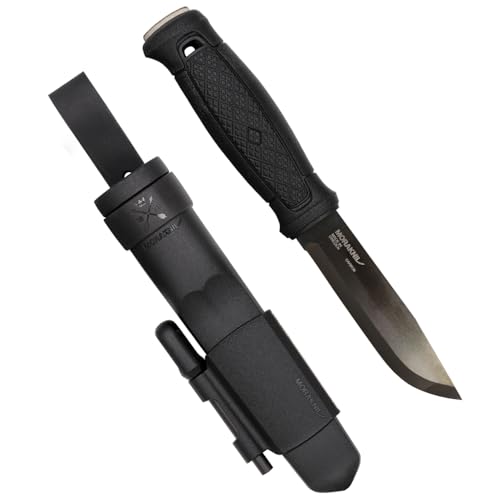
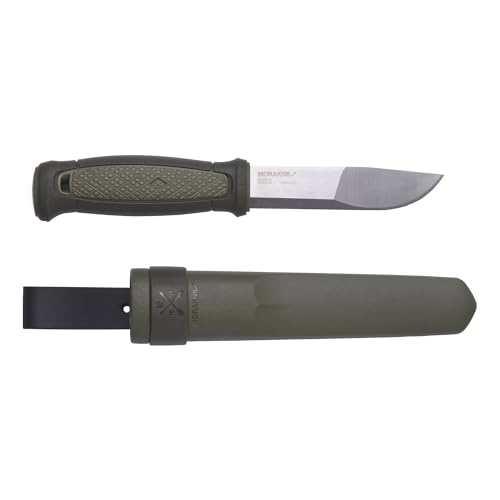
1. Morakniv Companion
A popular, inexpensive fixed blade from Sweden, with a rubberized grip and a simple plastic sheath. It is a common first recommendation for people who want a dependable general-purpose knife.
Suits: first-time campers and general chores. Strengths: a trusted design and a keen factory edge. Weaknesses: a lighter build that is not meant for heavy batoning. Skip it if you want a thick, heavy-duty blade.

Best for simple utility and carving jobs
2. Morakniv Basic 511
A plain, lightweight fixed blade with a carbon steel edge from the same Swedish maker. It is built for straightforward cutting and carving rather than comfort extras.
Suits: simple utility and carving jobs. Strengths: a sharp, low-frills blade. Weaknesses: carbon steel needs a little rust care. Skip it if you want a polished handle.

Best for camp and field use
3. Buck 119 Special
A long-running fixed blade with a classic hunting profile and a leather sheath. It has been a staple of American outdoor kits for decades.
Suits: camp and field use. Strengths: a proven design from an established maker. Weaknesses: heavier than a Mora-style knife. Skip it if you want a minimalist blade.

Best for light everyday chores and hiking
4. Morakniv Eldris
A compact fixed blade with a small sheath that can be worn on a cord around the neck. It handles light chores in a very small, light package.
Suits: light everyday chores and hiking. Strengths: a small size and a sharp edge. Weaknesses: less hand room for long sessions. Skip it if you need a big camp knife.
Best for rough use
5. Ontario RAT-3
A rugged fixed blade from Ontario’s RAT line, with a thicker blade than many budget options. It is made for tough tasks around camp or the workshop.
Suits: rough use. Strengths: a sturdy build that tolerates abuse. Weaknesses: a heavier feel. Skip it if you want a thin slicer.

Best for camp and utility use
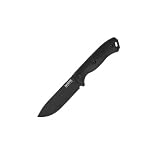
6. Becker BK16 Short Drop Point
A short, full-tang knife from the Becker line, with a drop-point shape that suits general cutting. It balances strength with portability.
Suits: camp and utility use. Strengths: a full-tang frame in a short blade. Weaknesses: may sit above the cheapest options. Skip it if you want the lowest cost available.
Care and Setup
- Dry the blade after use and wipe a light coat of oil on carbon steel.
- Store the knife in its sheath only when it is dry.
- Keep a small sharpening stone or strop in your kit.
- Check the sheath retention before hiking.
Mistakes to Avoid
- Using a thin knife as a pry bar.
- Leaving a damp knife in a sheath.
- Skipping a regular sharpening routine.
- Buying by looks alone without checking tang and steel.
Blade Geometry, Grind and Thickness
The shape of a blade decides what it does well. A drop-point blade has a curved spine that falls toward the tip, giving a strong point and plenty of belly for slicing, which makes it a good all-round shape. A clip point has a thinner tip suited to detail and piercing, but the point is weaker. A straight spine with a gently curved edge suits carving and woodworking, and a blade with a flat spine lets you press with a thumb or hand for control.
The grind describes how the blade tapers to the edge. A flat or scandi style grind is simple and easy to sharpen, and it carves wood well. A convex grind is strong and durable, and other grinds trade off slicing ease and edge strength. You do not need to master the terms, but it helps to know that a thinner blade slices better, and a thicker one tolerates harder use. Check the listing for the blade thickness and grind style.
Think about the job. For general camp use, such as preparing food, cutting rope, making feather sticks and trimming, a medium-thickness blade with a drop point is a good choice. For heavy chores like batoning small logs, a thicker blade with a full tang is stronger. For light tasks and carrying comfort, a thinner and lighter blade is easier to handle. No single knife does everything well, so match the blade to the work you expect.
Steel Types and What They Mean in Practice
Budget knives tend to use simpler steels, and that is not a bad thing. The main difference is between carbon steel and stainless steel. Carbon steel is usually tough and easy to sharpen, and it can take a keen edge with little effort. It rusts if left damp, and it can develop a patina, a color change that is harmless but a sign it needs care. Stainless steel resists rust and needs less care, though some types are harder to sharpen and may chip if abused.
Names and numbers on a listing do not tell the whole story. Heat treatment, thickness and edge geometry all affect performance as much as the steel type. A well-treated simple steel can outperform a more exotic one that is poorly handled. Treat the maker’s claims about hardness or edge retention as their own statements, and look for consistent buyer feedback about how the knife holds up in use.
Choose based on your habits. If you will be in wet conditions or by the coast, or if you are not going to oil the blade, stainless is more forgiving. If you enjoy sharpening and are willing to dry and oil the blade, carbon can be a pleasure to use. Some people keep one of each. Either way, plan to sharpen the knife yourself, because even a good factory edge dulls with use.
Handles, Sheaths and Carrying the Knife
A comfortable handle makes a big difference during long tasks. Rubberized and textured grips help in wet or cold conditions, while wood handles are classic and comfortable but can swell or crack if left wet. Look at the shape. A handle with a slight swell fills the hand, and one with a guard or a flared end can prevent your hand from sliding onto the blade. Try to imagine gripping it with gloves on, and check the handle’s length against your hand size.
Sheaths are part of the system. A good sheath holds the knife securely, protects the edge, and lets you draw and return it with one hand. Plastic sheaths are light and weather-resistant, and they can have drainage holes. Leather sheaths look good and mold to the knife, but they can hold moisture against the blade if wet. Check how the knife is retained, and whether there is a belt loop or other carry options. A loose sheath is a safety risk, so test it before a hike by shaking it upside down.
Consider weight and carry. A light knife on a belt is easy to forget, while a heavy one can feel burdensome over a long day. Smaller knives can sit in a pocket or on a pack strap. If you plan to carry it in a vehicle or a bag, keep it in its sheath. When traveling, check the rules for transporting knives, since they differ by place and by method of travel.
Practical Tasks and Safe Technique
A fixed blade shines in a range of everyday jobs. At camp, it prepares food, cuts cord, trims kindling and makes feather sticks for starting a fire. In the shop or garden, it opens boxes, cuts twine, trims plants and scrapes surfaces. For carving and craft, a fixed blade with a good edge gives control. Understanding what the knife is not for is just as important. Avoid prying, throwing or using it as a screwdriver, since these abuses can damage or break the blade.
Safe technique protects you and the knife. Cut away from your body and keep your free hand out of the blade’s path. Use a stable surface, and keep the blade sharp, since a dull knife requires more force and slips more easily. When carving, brace your hand or elbow and make short controlled cuts. Keep children away, and always put the knife away in its sheath when not using it.
For batoning, where you hit the spine of the knife with a piece of wood to split logs, check that the knife is designed for it, with a full tang and a thick enough blade. Many light knives are not. If you are unsure, use a small saw or hatchet for heavy cutting and save the knife for finer work. Pack a small first aid kit, and know how to use it.
Upkeep, Rust Prevention and When to Replace
Looking after an inexpensive knife keeps it working well for years. Clean the blade after use with warm water and mild soap, dry it completely and wipe a thin film of oil on carbon steel. Check the handle for loose fittings and the sheath for dirt and moisture. Store the knife in a dry place and avoid leaving it in a sheath that holds moisture.
Rust spots can be handled early. A light rub with a fine abrasive pad or a paste of baking soda and water often removes surface rust. Dry and oil the blade afterwards. A forced patina is another option if you like the look and want some protection. For dull edges, use a whetstone or guided sharpener, and finish on a strop. Take your time, keeping a consistent angle.
Replace or retire the knife if you see a crack in the blade or handle, a loose tang, a bent blade that will not straighten, deep pitting that weakens the edge, or a handle that slips even after cleaning. A chipped edge can often be repaired with sharpening, but a deep chip may cost too much steel. Before you buy, check the return policy and what the maker says about warranty, and read recent buyer feedback for patterns of defects such as loose handles or rough finishing.
Fixed Blade Knife FAQ
What is the best budget steel?
Both carbon and stainless work. Carbon is easier to sharpen but rusts; stainless resists corrosion with less upkeep.
Is a full tang necessary?
Not for light chores, but it adds strength for heavier work such as splitting kindling.
How do I sharpen a fixed blade?
A whetstone or guided sharpener works well. Keep to a consistent angle and finish on a strop.
Can I carry a fixed blade knife legally?
Laws differ by location. Check your local rules before you carry one.
What blade length is best for general use?
A medium length blade suits most camp and utility work, since it is easy to control and still handles most tasks. Check the listing for the exact length, and match it to your hand size and tasks.
Is a scandi grind good for beginners?
Many people find it easy to sharpen and good for carving wood. It is not the best for every task, so consider what you will cut most.
Should I buy a knife with a leather or plastic sheath?
Plastic sheaths are light and weather-resistant, and leather ones look good and mold to the knife. Choose by how you carry it and how much moisture it will see.
Can I baton wood with a budget fixed blade?
Only if the knife is meant for it, usually with a full tang and a thicker blade. Check the maker's guidance, and use a different tool for heavy chopping if unsure.
How do I remove rust from the blade?
Rub gently with a fine abrasive pad or a baking soda paste, then dry and oil the blade. Take care not to scratch deeply.
How should I store the knife long term?
Clean and dry it, apply a light coat of oil if it is carbon steel, and keep it in a dry place. Avoid storing it in a sealed sheath that traps moisture.
Is a thicker blade always stronger?
Thicker blades tolerate harder use but slice less easily. Choose the thickness that matches the work you plan to do.
What do I need to carry for sharpening in the field?
A small stone or a compact sharpener and a strop are enough for most trips. Keep them dry and learn to use them before you leave.
Blade Shapes and Grinds Explained
Two knives with the same length and steel can behave very differently because of blade shape and grind. Shape decides where the point sits and how the belly curves. Grind describes how the blade tapers from spine to edge, and it influences how easily the knife slices, carves and holds up under pressure.
Common blade shapes
- Drop point: the spine slopes gently down to a strong, controllable tip. It is the most versatile outline for camp work and is the shape mentioned for the Becker BK16 Short Drop Point on this list.
- Clip point: a concave cut near the tip makes a finer point, useful for piercing and detail work, though the tip is a little weaker.
- Spear and straight-back styles: symmetrical or flat-spined shapes that give a lot of usable edge for slicing and food prep.
Grinds in plain terms
A flat grind tapers evenly and slices well. A scandi grind has a single wide bevel that is easy to sharpen freehand and is popular for carving wood. A convex grind curves toward the edge, which adds strength behind the cutting edge but takes more skill to reproduce when sharpening. Thick blades built for rough use often have a steeper, more durable edge geometry, while thinner blades cut with less effort but can chip or roll if pried.
If most of your cutting is wood shavings, feather sticks and general chores, a simple bevel you can sharpen on a stone is a practical match. If the knife will pry, scrape and take occasional abuse, favor thicker stock and a stout tip.
Matching a Knife to the Job
The six knives here overlap, but each leans toward a certain kind of use. Thinking about your typical task first saves you from buying a blade that is either too delicate or needlessly heavy.
- Light camp chores and food prep: a slender blade with a comfortable handle, such as the Morakniv Companion or Basic 511, handles cutting cord, slicing food and making kindling shavings without tiring the hand.
- Neck carry and small tasks: the compact Morakniv Eldris suits someone who wants a knife that stays out of the way, with its neck-carry sheath, for opening packages and light utility cuts.
- Traditional outdoor use: the Buck 119 Special has the classic hunting profile and suits people who like a larger, familiar shape for field work and general camp use.
- Rough shop and trail work: the thick-bladed Ontario RAT-3 and the full-tang Becker BK16 are the pick if you expect prying, scraping or heavier cutting.
Also consider how much weight you want on your belt. A thick, full-tang knife gives confidence but feels substantial after a day of hiking. A thin, light blade disappears on the hip but gives less margin for abuse. Most households only need one general knife and can add a specialist later.
Handle Materials and Hand Fit
A knife is only as good as your grip on it. Handle shape, texture and size matter more in daily use than a small difference in steel, because a slipping hand is the usual cause of injuries.
- Rubber and rubberized polymer: gives a secure, slightly tacky grip in wet or cold conditions and absorbs some vibration. The Morakniv Companion is described as having a rubberized grip.
- Plain polymer or plastic: light and inexpensive, and easy to clean, though it can feel slick when wet unless it has texture.
- Wood and leather washers: attractive and warm in the hand, but they need more care around moisture and can swell or crack if neglected.
Fit your hand to the knife. Large hands may prefer a longer handle with a guard or finger groove, while small hands often control a shorter handle better. If you wear gloves outdoors, leave extra room. Check for hot spots where the handle edges could rub during long carving sessions, and look for a lanyard hole if you like a wrist strap for safety or hanging.
Sheaths and Carry Habits
A sheath does more than hold the knife. It protects the edge, keeps the blade from cutting you or your gear, and decides how the knife rides on your body or in a pack.
Plastic sheaths, like the one listed with the Companion, resist moisture and are light, and many include a retention click so the knife will not slide out when you bend or climb. Leather looks traditional and molds over time, but it holds moisture against carbon steel, so never store a wet knife inside it. Some sheaths allow belt, pack or neck carry, which is a real advantage if you move between uses.
Build good habits from the start. Draw and return the knife slowly with your free hand clear of the path. Cut away from your body and keep bystanders out of arm’s reach. Never leave an unsheathed knife in a pocket or loose in a bag. If you are traveling with it, pack it where regulations require and keep it out of reach in a vehicle when you are away from your camp or work site.
Frequently Asked Questions
What is the difference between a drop point and a clip point blade?
A drop point has a spine that slopes gently to a strong, broad tip, which makes it controllable and durable for general camp work. A clip point has a concave cut near the tip, giving a finer point that pierces well but is a bit weaker. Most buyers are well served by a drop point.
Do I need a knife with a guard on the handle?
A guard or finger stop helps keep your hand from sliding onto the edge during hard pushes and wet conditions, so it is a safety plus for heavier work. For light carving and food prep, many people prefer a guardless handle for flexibility. Think about the pressure you will apply.
How often should I sharpen a camp knife?
Sharpen when the edge stops slicing paper or shaving cleanly, not on a fixed schedule. Light stropping after use keeps an edge fresh longer. Heavy work such as cutting dirty rope or prying dulls it faster, so a quick touch-up during a trip is often enough.
Is a thicker blade always stronger?
Thicker stock does resist bending and breaking under prying or batoning, but it cuts less smoothly and weighs more. A thin blade slices food and wood shavings more easily. Choose thickness based on whether you value cutting finesse or durability for rough tasks more.
The Short Version
For a first fixed blade, the Morakniv Companion. For a bare-bones carbon blade, the Mora Basic 511. For a classic design, the Buck 119. For a compact option, the Mora Eldris. For a rugged build, the Ontario RAT-3. For a full-tang camp knife, the Becker BK16.