A block plane is a small hand plane used one-handed for trimming end grain, easing edges and fitting parts. Most have a low blade angle and an adjustable mouth. Some listings in this group are not block planes in the strict sense, so the shape and the pull or push stroke are worth reading.
The six planes below run from a 5 inch Japanese plane to a 9-1/2 inch cast iron block plane. Sizes, angles and materials come from each listing page, and several listings disagree with themselves, which we note. We have not used these planes ourselves.
As an Amazon Associate we earn from qualifying purchases. Links below are affiliate links, and they do not change the product information we give.
What to Look For
| Feature | Why it matters |
|---|---|
| Blade angle | Low angles suit end grain |
| Adjustable mouth | A narrow mouth gives finer shavings |
| Body material | Cast iron holds a flat sole; wood bodies need a different set-up |
| Blade steel and width | Wider blades take wider shavings |
In this guide
Specs at a Glance
| Plane | Size | Blade | Notes |
|---|---|---|---|
| Stanley No. 9 | 7.87 x 2.76 x 5.31 in | 21 degree cutter angle | Cast iron; manual adjustment |
| Big Horn 19317 | 6 in sole | 1-3/8 in A2 steel; 13.5 degree bed | Bevel-up; adjustable mouth; 0.81 kg |
| Rockler Bench Dog | 6.25 in | Hardened carbon steel | Adjustable mouth; parallel guide |
| Spear and Jackson CBP95 | 9-1/2 in style | 1-5/8 in low angle | Adjustable mouth; brass adjuster; spare blade sold |
| WORKPRO W052002 | Not listed | 1-5/8 in hardened steel | Front wooden knob; 0.7 kg |
| SUIZAN Kanna | 5.9 x 2.2 x 1.6 in | 1.7 in (42 mm) | Beech body; used with a pull stroke |
The 6 Best Block Planes
Top pickBest for light trimming
1. Stanley 1-12-020 Block Plane No. 9
A cast iron block plane about 7.87 inches long with manual blade adjustment. The listing says the cutter rests at 21 degrees, suited to cross-grain planing, and calls it a general-purpose tool for light duty jobs.
Suits: light trimming. Strengths: a known name and cast iron. Weaknesses: the model number shows as 12-920 and 1-12-020 on one page. Skip it if you need a low-angle plane.

Best for end grain and fitting
2. Big Horn 19317 No. 60-1/2 Style Block Plane
A 60-1/2 style low-angle plane with a 13.5 degree bed, a bevel-up setup, a 1-3/8 inch A2 steel blade and an adjustable mouth. The body is ductile cast iron with a 6 inch sole, and the effective cutting angle is stated as about 38.5 degrees.
Suits: end grain and fitting. Strengths: detailed blade and angle data. Weaknesses: no wooden knob. Skip it if you want a larger plane.

Best for edge and end grain trimming
3. Rockler Bench Dog No. 60-1/2 Block Plane
A low-angle block plane for end grain and edge grain with an adjustable mouth and a parallel guide. The listing gives cast iron, brass and hardened carbon steel, and 6.25 inches in length.
Suits: edge and end grain trimming. Strengths: mouth adjustment and a guide. Weaknesses: the weight shows as 0.27 g, which cannot be right. Skip it if you want a known weight.
Best for one-handed end grain work
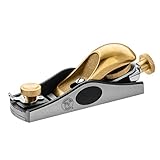
4. Spear and Jackson CBP95 Block Plane
A 9-1/2 style block plane with a cast iron body, a precision-milled base, a brass adjusting screw, an adjustable mouth and a 1-5/8 inch (42 mm) low-angle cutter. A replacement blade, CBP95BLADE, is listed.
Suits: one-handed end grain work. Strengths: a spare blade is available. Weaknesses: the material field says Wood while the text says cast iron. Skip it if the contradicting field bothers you.

Best for cleaning up ends and edges
5. WORKPRO W052002 Block Plane
A block plane with a 1-5/8 inch blade, a cast iron body, adjustable cutting depth and a front wooden knob. The listing describes a single hardened and tempered steel blade set at a shallow angle, and the weight is 0.7 kg.
Suits: cleaning up ends and edges. Strengths: a front knob. Weaknesses: the material field says Wood, and no length is given. Skip it if you need exact dimensions.
Best for a pull-stroke plane
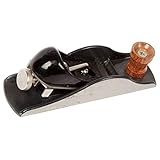
6. SUIZAN Kanna Japanese Hand Plane
A Japanese plane with a 1.7 inch (42 mm) blade in a beech body, used on the pull stroke. The listing gives 5.9 by 2.2 by 1.6 inches and a user manual in the box.
Suits: a pull-stroke plane. Strengths: a compact body. Weaknesses: the weight shows as 0.17 kg in one place and 0.40 lb in another. Skip it if you want a Western-style block plane.
View SUIZAN Kanna Japanese Hand Plane SK-001 on Amazon
Care and Setup
- Follow the maker’s manual for blade set-up.
- Check the blade projection before each pass.
- Wipe the sole and blade dry after use.
- Store the plane where the edge is protected.
Mistakes to Avoid
- Overlooking the blade width in the listing.
- Planing against the grain on edges.
- Ignoring contradicting listing fields.
- Expecting a Japanese plane to work like a push plane.
What a Block Plane Does Best
A block plane is a compact plane designed for one-handed use. Its blade sits at a lower angle than the blade of a bench plane and is usually bedded with the bevel facing up. That geometry suits the tough job of slicing across end grain, where the fibers stand up like a bundle of straws and resist a steeper cutter. You can hold the plane in the palm of your hand and push it along an edge with minimal setup.
Typical jobs include trimming the end of a board for a tight fit, easing sharp edges, chamfering corners, fitting a drawer or door, flush-trimming a small overhang and taking a thin shaving off a joint that is slightly proud. Because the body is small, you can use it where a larger plane would be awkward, such as inside a cabinet or on a narrow part.
It is not the right tool for flattening a wide board or jointing a long edge. Those jobs need the longer sole of a bench plane, which bridges high spots and gives a straighter surface. A block plane is a finishing and fitting tool, and it works best when used for small, precise cuts rather than heavy stock removal.
Think about what you will do with it before comparing listings. If most of your work is trimming end grain on small parts, a low-angle model with a fine mouth adjustment is a better match than a plane built for general light duty. If you rarely plane and simply want a tool for occasional edge easing around the house, a simpler plane may be enough.
Low-Angle Versus Standard Angle Planes
Block planes are commonly sold in two broad styles. A low-angle plane beds the blade at a shallow angle with the bevel up, which lowers the effective cutting angle and slices end grain with less effort. A standard-angle plane beds the blade more steeply, often with the bevel down, which tends to handle cross-grain and difficult grain with less tear-out in some woods.
The listings here show this difference in practice. One is described with a cutter resting at a moderate angle suited to cross-grain planing, while others are described as low-angle designs with bevel-up blades. The details in each listing may differ, so check the product page for the actual bed angle and how the blade is set up.
The effective cutting angle combines the bed angle and the blade’s sharpening bevel. A steeper sharpening angle raises the effective angle, which can help with figured or curly grain. Many woodworkers keep a spare blade honed at a different angle for tricky material. You can only do that if the blade is easy to remove, so read how the blade is secured and whether replacements are sold.
If you can only own one, a low-angle model is a versatile choice for end grain and general trimming. If you work with difficult, interlocked grain, consider whether the plane lets you adjust the cutting angle by regrinding or by swapping blades. In either case, the sharpness of the blade has a larger effect on the result than a small difference in the angle.
Body Material, Sole Flatness and the Adjustable Mouth
The body of a block plane supplies weight and a flat reference surface. Cast iron is the common material because it is rigid, adds heft that helps the cut and can be machined flat. Wooden bodies are lighter and traditional, and they are often used with a pull stroke in some designs, but they need different care and set up and may change shape with humidity.
Sole flatness matters more than most features. A sole that rocks or has a hollow near the mouth will leave a poor surface. You can check flatness by placing a straightedge across the sole, or by planing a test piece and watching the shavings. Many budget planes need a bit of tuning on a flat abrasive surface to reach a good result, so factor in that time if you buy a lower-priced tool.
The adjustable mouth is the opening in front of the blade. A narrow mouth supports the wood fibers right in front of the edge and helps prevent tear-out on fine work, while a wider mouth passes thicker shavings without clogging. Look for a clear, smooth mechanism that locks in place, and keep in mind that a mouth set too tight will clog, which is a frequent source of frustration.
Check the way the blade adjusts. A screw-type depth adjuster allows tiny changes with a fine feel, while a simple lever or manual adjustment is quicker but less precise. A lateral adjuster or a visible blade alignment helps you set the edge parallel to the sole. Listings often leave these details out, so look at the photos and the manual.
Tuning and Sharpening a New Plane
Almost any plane benefits from a little attention before its first real use. Begin by cleaning off any protective oil or coating from the sole and blade. Check that the sole is flat, and if it is not, flatten it on a flat abrasive surface with even strokes until the sole shows a uniform scratch pattern. Do this slowly, since it is easy to remove more metal than you need.
The blade is the next job. Many planes arrive with a blade that is reasonably flat but not truly sharp. Flatten the back for a short distance behind the edge, then hone the bevel on a stone or abrasive of your choice until you raise a small burr and then remove it. Keep the bevel angle consistent, since a rocking motion will round the edge and make the plane dull sooner.
Set the blade so that it protrudes by only a hair beyond the sole. The easiest way is to look down the sole toward a light and advance the blade until you see a thin line of edge. Take a test cut on scrap and adjust. A good shaving should be thin and curl cleanly. If the plane chatters, the blade may be loose, the mouth too wide or the cap iron not seated. If it digs in, retract the blade slightly.
Follow the maker’s manual for specifics, since the adjustment method differs between designs. For a Japanese-style plane used on the pull stroke, setting the blade in the body involves tapping it with a small hammer, and the technique is different from a metal-bodied plane. Take care and consult the instructions that come with it.
Budget Tiers and Pre-Purchase Checks
Block planes range from basic models to refined tools made to tight tolerances. Lower-priced planes often need tuning, and their blade steel may not hold an edge as long, but they can be a fine starting point if you are willing to flatten the sole and hone the blade. Mid-range planes usually have better machining, smoother adjusters and better blade steel. Premium planes offer fine fit, excellent finish and often a long service life.
As the listings in this guide show, product pages may contain contradictory information, such as conflicting weight or material fields. When that happens, trust the photos and the descriptive text over a single data field, and ask the seller for clarification if a detail matters to your decision. Be wary of any listing that gives very little information about the blade or the sole.
- Is the bed angle stated, and does it match the work you plan to do?
- Can you adjust the mouth, and is the mechanism smooth?
- Are replacement blades sold, and is the blade width given?
- Is the body material clear, and does the sole look flat?
- What is the return policy if the sole is not flat?
Signs it is time to replace a plane include a cracked body, a sole that cannot be flattened, a mouth that no longer locks and a blade that cannot be held square. Most other problems can be fixed with cleaning, sharpening or a new blade.
Low-Angle or Standard Angle: A Decision Guide by Task
A block plane is a compact hand tool that shaves end grain, trims edges and eases corners. The angle of the blade bed changes how it behaves, so the choice depends on what you plan to cut most.
| Task | Often suited to | Why |
|---|---|---|
| Trimming end grain | Low-angle planes | A shallow cutting angle slices fibers cleanly |
| Smoothing face grain | Standard angle planes | A steeper angle can reduce tear-out on figured wood |
| Chamfering edges | Either type | Depends on the species of wood |
| Fitting small parts | Either type | Choose the one with a precise adjuster |
| Working in a bag or apron | Compact bodies | Small, light tools are easy to carry |
Many woodworkers keep one low-angle plane as their everyday tool and add a second later. If you are just beginning, a low-angle model with an adjustable mouth tends to be the most flexible first pick.
Setup and Sharpening Notes
Even a well-made plane needs tuning. Lay the sole on a flat reference, check for rocking, and read the maker’s guidance on flattening. The blade must be sharp, and the cap iron or lever cap should be tightened evenly.
- Hone the blade on a sharpening stone or plate until it shaves a clean burr-free edge.
- Set the blade so only a thin sliver of the edge projects from the mouth.
- Adjust the lateral lever so the shaving comes out evenly across the width.
- Take a light pass on scrap to confirm the cut.
- Tighten the lever cap just enough to hold the blade steady.
Dull blades are the most common reason beginners struggle with hand planes, so invest time in learning sharpening basics from a trusted source.
Mistakes to Avoid and When to Seek Help
- Setting the blade too deep. A coarse cut tears wood and wears you out.
- Planing against the grain. Read the direction of the fibers and reverse the board if needed.
- Dropping the plane on a hard floor. Casting can crack, so set it on its side when resting.
- Leaving it unprotected. A light wipe of oil on the sole and a dry storage spot slow rust.
- Using it on materials the maker does not recommend. Nails and abrasive composites can damage the edge.
If a plane arrives with a badly out-of-flat sole or a cracked casting, contact the seller or maker rather than trying to repair it yourself. A local woodworking club or class is another good place to learn tuning in person.
Reading a Block Plane Listing
Look for the body length, the blade width, the blade material and the weight. Check whether the sole is machined flat, whether an adjustable mouth is included and whether the blade is supplied ready to use or needs honing first. Photos of the adjuster and lever cap help you judge build quality, and a clear return policy matters for hand tools, since flatness and fit are easiest to judge once you hold the plane.
Block Plane FAQ
Which of these are low-angle planes?
The Big Horn lists a 13.5 degree bed, and the Rockler and Spear and Jackson list low-angle designs.
Why are some listing fields marked as flagged?
Several pages list a material or weight that conflicts with their own text, so we state the conflict instead of picking one.
Can a block plane replace a bench plane?
No. A block plane is made for small trimming and end grain. Flattening wide boards and jointing long edges are better done with a longer bench plane.
What does bevel-up mean?
It means the sharpened bevel of the blade faces upward, with the flat back against the bed. This arrangement gives a low cutting angle that is well suited to end grain.
How do I stop tear-out on end grain?
Use a sharp blade, set the mouth fairly narrow, take thin shavings and plane from the edge inward, or support the far edge with a scrap block to prevent splintering.
Why does my plane keep clogging?
The mouth may be too tight or the blade set too deep for the wood. Open the mouth slightly, retract the blade and clear any shavings caught under the cap.
Do I need to flatten the sole of a new plane?
It depends on the plane. Check with a straightedge, and if it rocks or shows gaps, flatten it carefully on a flat abrasive surface.
How often should I sharpen the blade?
Whenever shavings get thicker, ragged or require more effort. Light, frequent honing keeps the edge sharp longer than waiting until it is very dull.
How should I store a block plane?
Keep it dry, with the blade retracted so the edge does not touch a hard surface, and rest it on its side. A light coat of oil on the sole helps against rust.
The Short Version
For a plain cast iron plane, the Stanley. For detailed angle data, the Big Horn. For a parallel guide, the Rockler. For a spare blade, the Spear and Jackson. For a front knob, the WORKPRO. For a pull-stroke plane, the SUIZAN Kanna.