An everyday carry knife, or EDC knife, is a small folding or slip-joint knife that rides in a pocket and handles routine cutting: opening packages, trimming cord, slicing food, cleaning up a loose thread or splitting a cardboard box. A budget-friendly EDC knife aims to do those jobs reliably without a premium price, using proven designs and sensible steels instead of exotic materials.
The six knives below span a range of styles, from a spring-assisted folder to a classic wooden-handled French design and a lightweight stainless folder. We have not used these knives ourselves, so treat the notes as general guidance based on long-running models. Details such as steel, blade length and handle material can change between production runs, so confirm them on the current listing before you buy.
As an Amazon Associate we earn from qualifying purchases. Links below are affiliate links, and they do not change the product information we give.
What to Look For
| Feature | Why it matters |
|---|---|
| Blade steel | Stainless steels resist rust; carbon steels sharpen easily but need drying |
| Lock or mechanism | Liner locks, frame locks, virole rings and slip joints behave differently |
| Handle material | Nylon, G10, wood and stainless each change weight and grip |
| Blade shape | Drop point suits most chores; sheepsfoot and Wharncliffe suit controlled cuts |
| Weight and thickness | A slimmer knife is easier to carry all day |
| Pocket clip | A clip keeps the knife where you expect it; some classics have none |
At the budget end, you are buying a balance. A knife may have a very good blade but a plain handle, or a nice handle and a basic steel. Decide which matters most for your daily use.
In this guide
Specs at a Glance
| Knife | Type | Handle | Notes |
|---|---|---|---|
| Kershaw Cryo | Folding, assisted opening | Stainless steel | Check the listing for lock details |
| Civivi Elementum | Folding, liner lock | G10 or other materials by version | Check the listing for steel |
| Byrd Cara Cara 2 | Folding, locking | Fiberglass-reinforced nylon | Spyderco-made budget line |
| Opinel No. 8 | Folding, locking ring | Wood | Classic French design |
| Ontario RAT 1 | Folding, liner lock | Nylon | Long-running utility folder |
| Gerber Paraframe | Folding, locking | Stainless steel | Skeletonized frame |
The 6 Best Budget EDC Knives
Top pickBest for an easy, assisted folder for everyday jobs
1. Kershaw Cryo
The Kershaw Cryo is a stainless steel folder with assisted opening that has been a popular budget carry knife for years. The all-steel handle gives it a solid feel in the hand, and its simple profile suits pockets and keyring-adjacent carry alike. Kershaw sells it in a few finishes, so check the listing to see which one you are viewing.
For daily chores it handles packages, tape, food prep and light outdoor work. The assisted opening helps the blade snap into place, which many people like, though the mechanism is something to keep clean over time. Look at the listing for the blade length and the exact steel before ordering, since these may vary slightly by version.
The trade-off is the steel handle: it is cool and rigid, but less cushioned than nylon, and it can feel slick when your hands are wet. It is also not the lightest option on this list.
Suits: an easy, assisted folder for everyday jobs. Strengths: a solid all-steel build. Weaknesses: a metal handle can feel slick. Skip it if you want the lightest possible knife.
Best for a tidy, good-looking daily folder
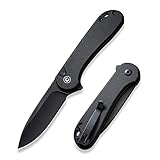
2. Civivi Elementum
The Civivi Elementum is among the most recognized budget-friendly folders from the newer wave of value brands. It has a clean, simple shape with a drop-point-style blade, a liner lock and a handle available in several materials and colors depending on the version. It is a good fit for people who want a knife that looks refined without a high price.
It suits daily carry at work or home: opening boxes, cutting food and handling light utility tasks. Because the Elementum has been sold in several steels and handle options, read the listing carefully to see which one you are getting, and confirm the blade length and lock style.
The fair trade-off is that a nicer look sometimes comes with a thinner handle that has less grip volume than a utility-focused design. For light and moderate cutting it is comfortable, and for repeated heavy cutting you might prefer something with more handle presence.
Suits: a tidy, good-looking daily folder. Strengths: clean design and wide color choice. Weaknesses: variants differ, so read the listing. Skip it if you want a rugged utility handle.
Best for a light, easy one-hand folder
3. Byrd Cara Cara 2
Byrd is the value line from Spyderco, and the Cara Cara 2 is one of its better-known folders. It is a lightweight knife with a reinforced nylon handle, a large opening hole in the blade and a clip, designed to offer Spyderco-style ergonomics at an accessible level.
The blade shape and opening hole make it easy to deploy with one hand, and the light handle makes it comfortable to carry. It works for general chores such as opening mail, cutting packaging or slicing a sandwich. Check the listing for the lock type and steel, because these can differ between versions of a Byrd model.
The trade-off is materials: a nylon handle is light and tough but feels plainer than G10 or steel, and budget steels may need more frequent touch-ups than premium ones. It rewards a basic sharpening routine.
Suits: a light, easy one-hand folder. Strengths: a comfortable shape from a well-known maker. Weaknesses: a plain nylon handle. Skip it if you want a metal or G10 handle.

Best for food, picnic and light utility carry
4. Opinel No. 8
The Opinel No. 8 is a classic French folding knife with a wooden handle and a simple rotating locking ring that secures the blade open. It has been made for generations, and its slim, light design makes it very easy to carry, often without a clip.
It is a favorite for food and picnic use, whittling and light utility chores because the blade is thin and slices cleanly. It is sold in stainless and carbon steel versions, and the difference matters: stainless needs less care, while carbon steel takes a keen edge but must be dried to avoid rust. Check which one the listing shows.
The trade-off is simplicity. There is no clip, the wooden handle can swell if left wet, and the locking ring is a different feel from a liner lock. It is a charming, practical tool, though it will not suit someone who wants a modern tactical look.
Suits: food, picnic and light utility carry. Strengths: a thin blade and a classic, light design. Weaknesses: no clip and a wooden handle that needs care. Skip it if you want a pocket clip.
Best for rugged utility and outdoor use
5. Ontario RAT 1
The Ontario RAT 1 is a long-running utility folder with a nylon handle, a liner lock and a sturdy, straightforward blade. It has a following among people who want a working knife that is not precious about scratches or wear.
It handles heavier chores than slim EDC knives, such as cutting rope, breaking down boxes and general outdoor tasks. The listing should show the steel and blade length, and Ontario has sold the RAT line in more than one steel, so confirm which one you are getting. Its chunky handle gives good grip with gloves.
The trade-off is bulk. It is thicker and heavier than the slim folders here, and the nylon handle feels more utilitarian than refined. If you want a knife that nearly vanishes in a dress pocket, a thinner option will suit you better.
Suits: rugged utility and outdoor use. Strengths: a sturdy build and a grippy handle. Weaknesses: thicker and heavier. Skip it if you want a slim dress-pocket knife.
Best for light-duty everyday carry
6. Gerber Paraframe
The Gerber Paraframe is a skeletonized stainless steel folder with a locking blade, built around a lightweight handle with cutouts. It is a familiar name from a large, long-established knife maker and an easy knife to find.
It is a simple everyday cutter for packages, tape and household tasks. The skeletonized frame keeps weight down, and a clip lets it ride in a pocket. Check the listing for the blade length, the steel and the lock type, and look at photos of the handle to confirm the size suits your hand.
The trade-off is comfort during long or forceful cuts: a thin metal frame with open sections gives less cushioning than a thicker nylon or G10 handle. It is a good light-duty carry rather than a heavy-duty tool.
Suits: light-duty everyday carry. Strengths: a lightweight steel frame from a well-known brand. Weaknesses: less cushioned for heavy use. Skip it if you plan to cut for long stretches.

How to Choose a Budget EDC Knife
Start with the jobs you actually do. A person who opens boxes all day needs a different knife from someone who slices lunch and tightens the odd screw. Write down the three tasks you do most, and pick a knife that handles those comfortably instead of one that looks impressive for rare jobs.
Think next about carry. A slim, light knife is more likely to stay in your pocket, which means it is more likely to be there when you need it. Heavy, thick knives can feel great in the hand but get left on the dresser. Consider the clothes you wear and how you sit throughout the day.
Then weigh the blade. A moderate-length drop-point blade is the most flexible. Thin blades slice food better, while thicker ones tolerate rougher work. Stainless steel is the lower-maintenance choice for most people, and carbon steel rewards those willing to dry and oil it.
Finally, check the return policy and the listing details. At a modest price, tolerances vary, so a seller with an easy return process takes the risk out of the purchase.
Budget Tiers Without Prices
Budget knives tend to fall into rough groups, and knowing them helps you set expectations. The most basic group uses simple stainless steels, nylon handles and straightforward mechanisms. These knives are light and forgiving, and they are the ones you will not worry about losing or scratching.
A step up brings better steels, G10 or steel handles and smoother pivots. Newer value brands compete here, and the fit and finish can be surprisingly good. You get more refinement, which matters if the knife is something you enjoy handling.
Traditional designs form their own group. Slip-joint and locking-ring knives such as the Opinel have no modern lock or clip, but they are simple, cut very well and have decades of use behind them. They suit people who value simplicity over features.
Whichever tier you choose, think about the cost of ownership. A modest sharpening stone or strop, a bit of oil and a dry place to store the knife will do more for performance than most upgrades. A well-kept budget knife often outlasts a neglected expensive one.
Care and Maintenance
- Wipe the blade dry after cutting food or working outdoors, especially on carbon steel.
- Rinse off grit and lint, then add a small drop of light oil to the pivot.
- Sharpen with a stone, ceramic rod or guided kit, and finish with a strop for a cleaner edge.
- Keep wooden handles away from long soaking, and dry them after exposure to water.
- Check pivot and clip screws now and then, and snug them if they have loosened.
- Store the knife in a dry spot, not in a damp bag or glove box.
Mistakes to Avoid
- Choosing a knife by looks without checking steel, lock and handle material.
- Using a folding knife as a pry bar, which can chip the tip or stress the lock.
- Putting a carbon steel blade away damp.
- Skipping a basic arrival check for blade centering and a firm lockup.
- Buying something so large that you leave it at home.
- Overlooking local rules about carrying knives at work, school or while traveling.
Budget EDC Knives FAQ
What makes a good EDC knife?
A good EDC knife is comfortable to carry, easy to open and close safely, and suited to the jobs you do. A reliable lock and an edge you can maintain matter more than looks.
Are budget knives worth buying?
For most daily tasks, yes. Modern value brands offer good steels and designs, and a budget knife is a low-stress choice if it gets lost or scratched. Fit and finish can vary, so inspect it on arrival.
Should I choose stainless or carbon steel?
Stainless needs less care and suits most buyers. Carbon steel sharpens easily and takes a fine edge but needs drying and a thin coat of oil. Check the listing to see which one a knife uses.
What blade length is best?
A compact to mid-size blade covers most chores. Longer blades give more reach but are bulkier to carry and may not be allowed in some places, so check the rules where you will carry it.
Do I need a pocket clip?
A clip keeps the knife positioned and easy to reach. Some people prefer clip-free designs such as the Opinel for a lighter, smoother pocket feel. It comes down to habit.
How do I sharpen a budget knife?
Use a fine stone or a guided sharpener and hold a steady angle. Light, regular touch-ups are easier than waiting until the blade is very dull. A strop can finish the edge.
Is an assisted opener better?
It is a matter of preference. Assisted knives open quickly but have a spring mechanism to keep clean. Manual folders are simpler. Whichever you choose, always keep fingers clear of the blade path.
Can I carry it anywhere?
No. Rules vary by place, workplace, school and travel setting. Check what applies to you and leave the knife at home where it is not permitted.
Folding Mechanisms Explained in Plain Terms
The mechanism decides how a knife opens, how it stays open and how safe it feels in use, so it deserves more thought than it usually gets. A liner lock uses a spring metal strip inside the handle that slides across the base of the blade once it is open. It is common at budget prices and easy to operate with one hand, but the lock must be checked now and then for wear. A frame lock works on a similar idea, using part of the handle itself, and tends to feel sturdy.
A slip joint has no lock at all. A spring presses against the back of the blade to keep it open or closed, and the knife relies on your grip and the pressure of the spring. Traditional designs work this way, and they are fine for light cutting but should not be pushed into hard prying or twisting. A virole ring, as on the Opinel No. 8, is a rotating collar that locks the blade by turning it. It is simple and easy to clean, though it needs a firm turn to engage.
Assisted openers such as the Kershaw Cryo use a spring to finish opening the blade once you start the motion. They feel quick, but the spring is another part that can wear and collect debris. If you carry the knife in places where rules restrict certain opening styles, check the local rules before choosing.
Handle Materials and How a Knife Sits in the Hand
The handle is what you touch all day, so it shapes your impression of the whole knife. Nylon and other glass-filled plastics are light, cheap and tough, and they handle wet hands well. Wood, as on classic French designs, feels warm and traditional but needs more care around moisture. Stainless steel handles look clean and last, but they can feel slippery and heavier. Composite materials such as G10 give a grippy feel but cost more, so they are not often found at the lowest prices.
Fit in the hand is just as important as material. A small knife can feel cramped for larger hands, while a long handle can poke at your hip or the seat of a chair. Look for a smooth transition between the handle and the blade, comfortable spine edges and enough room for your fingers behind the blade when you are cutting. If a listing shows photos of the knife in a hand, compare it with the size of your own.
Matching the Knife to the Jobs You Actually Do
The right knife depends less on specifications than on what you cut. If you mainly open boxes and trim packaging, a straight, sharp edge with an easy opening action is better than a delicate point. A sheepsfoot style with a straight edge and a blunt tip, found on several folding designs, gives control and reduces accidental stabs. If you often slice fruit or cut cord on a picnic, a slim blade with a gentle belly helps.
- Office and package work: a lightweight folder with a clip, which you can carry and forget.
- Outdoor use: a sturdier lock, a handle that stays grippy when wet and a blade that is easy to rinse and dry.
- Light kitchen duty: a thin blade that slices cleanly, preferably a stainless steel that tolerates food acids.
- Heavy chores like splitting kindling or prying: a larger knife or a different tool entirely, not a small budget folder.
Knowing your top three tasks keeps you from paying for features you will not use.
Edge Geometry and Why Thin Often Beats Thick
Two knives with the same steel can cut very differently because of how thin the blade is behind the edge. A thin grind slices easily and needs less force, while a thick grind is stronger but can feel like wedging through a material. Budget knives often come with a fairly thick factory edge to avoid chipping, and some owners thin the edge slightly through sharpening over time.
That is also why a dull edge feels worse than a modest steel. A moderately sharp, well-maintained blade will outperform an expensive one that has not been touched in months. Strop or hone it between sharpenings, and keep the tip clear of hard surfaces. These small habits give a lower-cost knife a long, useful life.
Knife Etiquette and Safe Everyday Habits
Carrying a knife comes with a small set of habits that keep it a useful tool rather than a problem. Open and close it deliberately, cut away from your body and keep your free hand clear of the blade path. Close the knife before handing it over, or pass it handle first, and put it away when you are finished instead of leaving it open on a desk.
Be considerate about where you use it. A pocket knife opening boxes at work is ordinary, while pulling one out in a tense situation is not. Many workplaces, schools and public buildings restrict blades, and rules about length, locking and opening style vary between places. Check the local rules before you carry, especially when traveling, and leave it behind where it is not allowed.
Also consider storage at home. Keep knives out of the reach of young children, and avoid leaving one in a coat pocket that someone else may reach into. A small set of habits keeps a budget knife from ever becoming a hazard.
Frequently Asked Questions
What is the difference between a slip joint and a locking folder?
A slip joint holds the blade with spring tension only, so it can fold on your fingers if pushed hard against the spine. A locking folder uses a mechanism that holds the blade open until you release it. For tasks involving force, a lock is the safer design.
Is a serrated edge worth having on an EDC knife?
Serrations cut rope, straps and fibrous material well, but they are harder to sharpen and rougher on food. For a general-purpose pocket knife, a plain edge is easier to maintain and more versatile. Partially serrated blades are a compromise some people like.
How do I tell if a knife’s blade is centered?
Close the blade and look from the top to check it sits evenly between the handle sides, without rubbing. A slightly off-center blade is common on lower-priced knives and usually does not affect cutting. If it rubs or the lock feels loose, contact the seller or maker about a return.
How do I remove light rust from a knife blade?
Wipe the blade with a little oil, then rub gently with a non-scratch pad or a cloth and baking soda paste. Rinse, dry thoroughly and apply a thin coat of oil. Avoid harsh abrasives that damage the finish, and keep carbon steel dry.
The Short Version
For an assisted all-steel folder, the Kershaw Cryo. For a clean, refined look, the Civivi Elementum. For a light one-hand folder, the Byrd Cara Cara 2. For food and picnic use, the Opinel No. 8. For rugged utility work, the Ontario RAT 1. For a light skeletonized frame, the Gerber Paraframe. Confirm the details on each listing before you buy.