A folding knife sheath keeps a pocket knife or multi-tool protected on your belt, in a bag or inside a glove box, so the clip, finish and your clothing all stay in better shape. It also keeps the knife easy to find. Sheaths come in leather, nylon and molded styles, each with its own fit.
The six below include brand-matched leather belt pouches and nylon or compact carry cases from well-known makers. Fit depends on the exact knife, so match the sheath to your model before buying. We have not used these products ourselves. Details change between listings and versions, so confirm sizes, materials and which knives each sheath fits on the current listing.
As an Amazon Associate we earn from qualifying purchases. Links below are affiliate links, and they do not change the product information we give.
What to Look For
| Feature | Why it matters |
|---|---|
| Fit | A sheath must match the knife’s length and thickness |
| Material | Leather looks traditional; nylon is lighter and weather-resistant |
| Closure | A snap or flap keeps the knife from falling out |
| Carry method | Belt loops suit daily wear; pouches suit bags |
In this guide
Specs at a Glance
| Sheath | Material | Closure | Notes |
|---|---|---|---|
| Victorinox Leather Belt Pouch | Leather | Snap | Made for Swiss Army knives |
| Leatherman Standard Leather Sheath | Leather | Snap | Made for Leatherman tools |
| Buck 110 Leather Sheath | Leather | Snap | Made for the 110 pattern |
| Case Leather Belt Sheath | Leather | Snap | Made for Case pocket knives |
| Nite Ize Clip Case | Nylon | Flap with a hook | Rotating belt clip |
| Tourbon Leather Knife Sheath | Leather | Snap | Aftermarket design |
The 6 Best Folding Knife Sheaths
Top pickBest for swiss Army knife owners
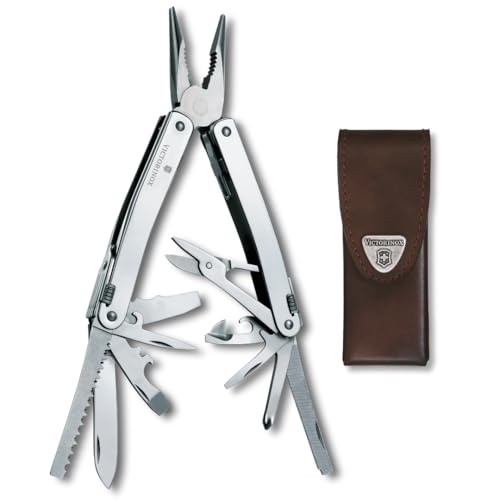
1. Victorinox Leather Belt Pouch
A leather belt pouch made to hold Swiss Army knives. Victorinox sells several sizes, so choose the one that matches your model.
Suits: Swiss Army knife owners. Strengths: a maker-matched fit and a classic look. Weaknesses: fit is specific to certain models. Skip it if your knife is not a Victorinox.

Best for owners of Leatherman tools
2. Leatherman Standard Leather Sheath
A leather sheath designed for Leatherman multi-tools and knives. It has a snap closure and a belt loop.
Suits: owners of Leatherman tools. Strengths: a purpose-made fit. Weaknesses: sizing varies, so check the tool it fits. Skip it if you want a nylon pouch.
View Leatherman Standard Leather Sheath on Amazon
Best for 110 owners
3. Buck 110 Leather Sheath
A leather belt sheath made for the Buck 110 Folding Hunter, matching its size and shape.
Suits: 110 owners. Strengths: a traditional look and a close fit. Weaknesses: only for a specific knife. Skip it if you own a different folder.
View Buck 110 Leather Sheath on Amazon
Best for traditional pocket knife owners
4. Case Leather Belt Sheath
A leather belt sheath for Case pocket knives, available in several sizes. Pick the size that suits your pattern.
Suits: traditional pocket knife owners. Strengths: a classic leather design. Weaknesses: sizing needs care. Skip it if you carry a modern thick folder.

Best for multi-tools and folders
5. Nite Ize Clip Case
A nylon holster-style case with a rotating belt clip, designed for multi-tools and folding knives in several sizes.
Suits: multi-tools and folders. Strengths: light weight and a rotating clip. Weaknesses: check the size chart. Skip it if you prefer leather.
View Nite Ize Clip Case on Amazon
Best for buyers who want an aftermarket leather option
6. Tourbon Leather Knife Sheath
An aftermarket leather sheath sold for folding knives and multi-tools. Sizes differ by listing.
Suits: buyers who want an aftermarket leather option. Strengths: a leather build. Weaknesses: fit varies by listing. Skip it if you want a maker-matched fit.

Many sheaths are sold for a family of knives rather than one exact model, so the listing sizes matter. Look at the closed length and thickness of your knife, and compare them to the dimensions given. If you are between sizes, a slightly snug fit is better than a loose one, because leather stretches with use. Also consider where you wear it: a belt sheath suits daily carry, while a pouch suits a pack.
Care and Setup
- Check the fit before wearing: the knife should seat firmly without forcing.
- Condition leather now and then to prevent cracking.
- Dry the knife before sliding it into a sheath.
- Wipe nylon cases clean with a damp cloth.
Remember that a sheath also protects you. A closed knife in a sturdy pouch will not open in a bag or catch on clothing. Test the closure by shaking the pouch gently with the knife inside before you rely on it during a hike or a day at work.
Mistakes to Avoid
- Buying a sheath without measuring the knife.
- Storing a wet knife in a leather sheath.
- Leaving a loose fit that lets the knife slide out.
- Ignoring a snap that no longer closes firmly.
Measuring Your Knife for a Proper Fit
Fit is the main difference between a sheath that works and one that frustrates you. Measure the folded knife at its longest, widest and thickest points, including the pocket clip if you plan to keep it attached. Many people forget thickness, but a sheath that is long enough can still be too narrow to accept a chunky handle, or too wide to hold a slim knife securely.
Compare your numbers with the listing. Sheath makers usually give an interior length, width and height, or they list the knives the sheath fits. Where the listing offers a size chart, use it. If your knife sits between two sizes, a slightly snug fit is better than a loose one, as the existing guide notes, because leather stretches and nylon can be adjusted. A loose sheath lets the knife shift, rattle or fall out.
Consider the shape as well. Swiss Army knives, multi-tools, pocket knives and modern folders with clips all have different profiles. A sheath made for a certain pattern fits that pattern best, and a universal sheath may leave gaps. Check how the sheath deals with a pocket clip or a protruding lanyard hole; some designs have a slot, and some need you to remove the clip.
Plan to test the fit as soon as the sheath arrives. The knife should slide in with firm, even resistance and seat fully, with the closure securing it. If you have to force it, the sheath is too small. If it drops out when you tip it, the sheath is too large. Keep the packaging until you are satisfied.
Leather, Nylon and Molded Materials Compared
Each material has a different personality. Leather is traditional, looks good with wood and metal, and molds to the knife with use. It needs occasional conditioning to prevent drying and cracking, and it does not like long exposure to water. Wet leather can hold moisture against the blade, so dry the knife and the sheath if they get soaked.
Nylon and other fabrics are light and shrug off rain and mud. They are often cheaper, dry quickly and can be cleaned with a damp cloth. Their stitching and webbing are the parts to inspect, since frayed threads and tired Velcro are usually where they fail first. Padded nylon can also protect delicate finishes, though loose-fitting versions let the knife rattle.
Molded plastic or composite sheaths keep their shape and provide a firm retention click, but they are less common for folders and are more often used for fixed blades. Whatever the material, look at the seams, the rivets and the edge finishing. Poorly finished edges can scratch the knife or your clothes. Check for a lining that traps dirt, since grit inside will scratch the blade finish.
Consider the environment. If you hike in wet conditions or work around water, nylon may be the more practical option. If you carry the knife daily in an office or workshop, leather can last for years with basic care. Pay attention to the color, since light leather can stain your clothes in the first weeks.
Carry Methods: Belt Loop, Clip, Pouch and Bag
How you carry the knife shapes which sheath you should choose. A belt loop sheath hangs from your belt and keeps the knife in a consistent place, which makes it quick to find. Check the loop width against your belt, since a thick work belt may not fit through a narrow loop. Some sheaths have a vertical carry and some are horizontal, and horizontal carry can be more comfortable when you sit.
A rotating belt clip lets the sheath swivel as you sit and bend, which can feel less restrictive. Check that the clip is firmly attached and does not slip off the belt when you move. Some clips are made for a belt only, and some attach to a pocket or a pack strap. If you want to use it on webbing, confirm that the clip is compatible.
A simple pouch works best inside a bag, glove box or tool kit. It protects the knife from other contents and keeps the edge and the clip from catching. Look at the closure for pouches, and check that it will not open as the bag is moved. A flap with a hook-and-loop closure is quick, while a snap is more secure but slower.
Think about accessibility. If you need one-handed access, a snap or flap that opens easily is better than a complicated strap. If you carry in a place where the knife could be accidentally exposed, choose a closure that cannot open by itself. Consider the carry position relative to your job: a sheath on the hip can snag on a seat belt or a tool belt.
Closures, Retention and Safety
A closure keeps the knife from falling out when you bend, climb or run. Snap closures hold a flap over the top of the knife and are secure and quiet. Hook-and-loop closures are quick and adjustable but wear out and can be noisy. Friction fit sheaths rely on a tight pocket and offer no closure, which makes them quick but less secure during activity.
Test the retention. With the knife in the sheath and the closure fastened, turn the sheath upside down and shake it gently. The knife should not move or slip out. Do the same on a belt and walk around. Replace the sheath or adjust the closure if the knife shifts. Do this test regularly, as leather stretches and snaps loosen over time.
Safety matters for the user and for others. A closed knife in a sheath should not be able to open inside the pouch. Make sure that the opening hole, the blade tip and the pocket clip are not exposed in a way that could snag. Keep the sheath away from children, and store it with the knife in a safe place, as you would an unsheathed knife.
- Check the snap still clicks firmly and does not pop open.
- Inspect stitching and rivets for loosening or cracks.
- Look for wear around the belt loop where the sheath attaches.
- Dry the knife and the sheath before storing them together.
Also check local laws on carrying knives, including how a knife may be carried in a vehicle or in public. Those rules vary, so check them for your area.
Care, Conditioning and Signs to Replace
Looking after a sheath extends its life and protects your knife. For leather, brush off dirt and apply a leather conditioner now and then, following the product’s directions. Avoid over-oiling, which can soften the leather and make it lose shape. Keep the sheath away from heat sources, which can dry and crack it. If it gets wet, let it dry naturally at room temperature, not near a radiator.
For nylon, clean with a damp cloth and mild soap, then let it dry. Brush out grit from seams and pockets. Check the stitching for fraying, and trim loose threads carefully. Rinse off salt after use near the sea, as it can corrode metal parts and stiffen fabric. Lubricate a sticky clip pivot with a small amount of suitable lubricant.
Clean the inside of the sheath as well. Dust and pocket lint collect inside and can scratch the knife finish or hold moisture. A soft brush or a cloth wrapped around a stick can reach inside. Wipe the knife before it goes in, and avoid storing a damp or recently used knife inside a closed leather sheath for a long time.
Replace the sheath when the retention no longer holds, when stitching is coming apart, when the leather is cracked or the snap will not stay closed. A sheath with a stretched pocket may be fixed by a leather worker, but a worn out one is cheaper to replace. Check the return policy when you order, so that you can swap it if it does not fit.
Leather or Nylon: Weighing the Two Materials
Sheaths for folding knives are usually leather or nylon, and each has its own character. Leather has a classic look, shapes itself to the knife over time and can be conditioned. Nylon is lightweight, resists water and dries quickly. Think about how you will carry the knife and what conditions it will face.
| Material | Strengths | Considerations |
|---|---|---|
| Leather | Classic look, molds to the knife | Needs care and may stiffen when wet |
| Nylon | Light and water tolerant | Fit depends on stitching and webbing |
Fit, Retention and Carry Position
A sheath must hold the knife securely without trapping it. Check the listed knife size range, and measure your folded knife length, width and thickness. Look at the flap, snap or strap that keeps the knife in place, and think about where you will wear it, whether on a belt, a pocket or a pack strap.
- Vertical carry sits upright and often suits belts.
- Horizontal carry lies flat across the belt.
- Pouch styles can fit pockets and packs.
- Check whether the belt loop fits your belt width.
Legal and Practical Notes
Knife carry laws vary by place, and they cover blade length, locking mechanisms and where knives may be carried. Check local rules and rules for schools, workplaces and public transport before you carry a knife. Following the law is your responsibility, and official sources are the best place to confirm the rules.
Care, Cleaning and Storage
Keep the sheath clean and dry. Wipe leather with a soft cloth and use a conditioner that suits it, following the maker advice. Rinse nylon with mild soap and let it air dry. Always dry the knife before returning it to the sheath, because trapped moisture can cause spots on the blade. Inspect stitching and snaps from time to time, and replace the sheath if it begins to wear in a way that could release the knife.
Store the knife and sheath out of reach of children.
Mistakes to Avoid When Buying a Sheath
A sheath that does not suit the knife is annoying and can be unsafe. Watch for these errors.
- Buying without measuring the folded knife.
- Choosing a sheath with a loose fit that lets the knife fall out.
- Ignoring the belt loop size and the belt you wear.
- Forgetting that a tight leather sheath may need time to break in.
- Storing a damp knife in a closed sheath for long periods.
A Short Checklist Before You Order
- Measure the length, width and thickness of the closed knife.
- Decide on a carry position and a belt or pack attachment.
- Read the product description for the stated knife fit.
- Check the closure type, such as a snap, a flap or a strap.
- Look for stitching quality and reinforced edges.
If the knife has a pocket clip, check whether the sheath accommodates it. If the knife is opened one-handed, make sure the sheath does not interfere with the opening mechanism. Test the fit at home with the knife closed and locked, and avoid carrying until you are sure the knife is secure. Follow local laws and common sense about where you carry and store knives.
Folding Knife Sheath FAQ
How do I know which sheath fits?
Measure the closed length, width and thickness of your knife, then compare with the listing.
Is leather or nylon better?
Leather looks traditional and molds to the knife. Nylon is lighter and shrugs off water.
Can a sheath scratch my knife?
Dirt inside any sheath can. Keep it clean.
Does it need a snap?
A snap helps keep the knife from falling out during active use.
Can I use a sheath made for one brand with another brand's knife?
Sometimes, if the dimensions match. Compare the interior size of the sheath with your knife's closed length, width and thickness before ordering.
Will a pocket clip fit inside the sheath?
It depends on the design. Some sheaths have room for a clip, and others require you to remove it or carry the knife without a clip showing. Read the listing carefully.
Should a new leather sheath be broken in?
Leather often loosens slightly with use, so a snug fit at first is normal. Do not force the knife in, and avoid wet-forming methods unless the maker recommends them.
How do I stop my knife from rusting in a sheath?
Dry the knife before storing, avoid damp environments and wipe the blade regularly. Keep leather conditioned but not soaked.
Is a flap or a snap better?
A snap tends to hold more securely, while a hook-and-loop flap is quicker to open and adjustable. Choose based on your activity level.
How do I clean a nylon sheath?
Use a damp cloth with mild soap, brush out grit from seams and let it dry fully. Avoid hot dryers that could warp parts.
Can a sheath be worn on the right or left?
Many belt sheaths can be worn on either side, but some are designed for one side. Check the listing or the images to see whether the carry can be reversed.
The Short Version
For Swiss Army knives, the Victorinox pouch. For Leatherman tools, the Leatherman sheath. For a Buck 110, the Buck sheath. For Case knives, the Case sheath. For a lightweight option, the Nite Ize Clip Case. For an aftermarket leather option, the Tourbon.