Modern folding knives are made to be carried every day, which means a slim profile, a pocket clip, a reliable lock and a blade that stays sharp. Today’s best folding knives range from budget-friendly pocket knives to premium designs with advanced steels, and the right pick comes down to how you will use it.
The six below are popular everyday-carry folders from well-known makers. They suit opening packages, cutting cord, food prep and general tasks. We have not used these products ourselves. Details change between listings and versions, so confirm blade steel, size and what is included on the current listing before you buy. Check local laws on blade length and opening style too.
As an Amazon Associate we earn from qualifying purchases. Links below are affiliate links, and they do not change the product information we give.
What to Look For
| Feature | Why it matters |
|---|---|
| Lock | A secure lock stops the blade from closing on your fingers |
| Blade steel | Better steels hold an edge longer but can cost more |
| Size and weight | A light knife is easier to carry daily |
| Pocket clip | A good clip keeps the knife in place and handy |
In this guide
Specs at a Glance
| Knife | Style | Lock | Notes |
|---|---|---|---|
| Benchmade Bugout 535 | Lightweight EDC | Axis lock | Slim and light |
| Spyderco Paramilitary 2 | Full-size EDC | Compression lock | Popular all-purpose design |
| Kershaw Leek | Slim folder | Frame lock | Assisted opening |
| CRKT Squid | Small folder | Frame lock | Compact and affordable |
| Civivi Elementum | Mid-size folder | Liner lock | Value-oriented modern knife |
| Ontario RAT 1 | Mid-size folder | Liner lock | Workhorse design |
The 6 Best Folding Knifes
Top pickBest for everyday carry
1. Benchmade Bugout 535
A very light folding knife with a slim handle and Benchmade’s Axis lock, popular among everyday carriers who want a thin knife.
Suits: everyday carry. Strengths: low weight and a premium feel. Weaknesses: a higher cost. Skip it if you want a budget knife.

Best for serious everyday carriers
2. Spyderco Paramilitary 2
A well-regarded full-size folder with a compression lock, a large hole for opening and a comfortable handle.
Suits: serious everyday carriers. Strengths: a refined design and a secure lock. Weaknesses: it can be pricey. Skip it if you want a small knife.
View Spyderco Paramilitary 2 on Amazon
Best for office and daily use
3. Kershaw Leek
A slim, elegant folder with assisted opening and a frame lock. It is one of the best-known pocket knives in its class.
Suits: office and daily use. Strengths: a slim profile and quick opening. Weaknesses: a slim handle. Skip it if you do heavy work.

Best for light daily tasks
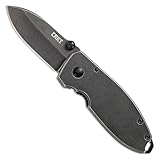
4. CRKT Squid
A small folder with a frame lock and a simple shape. It is affordable and easy to carry.
Suits: light daily tasks. Strengths: small size and low cost. Weaknesses: a short handle. Skip it if you have large hands.
Best for value-minded enthusiasts
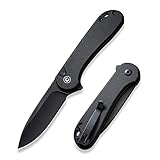
5. Civivi Elementum
A mid-size folder with a clean design and a liner lock. It is popular for offering a modern feel for a fair price.
Suits: value-minded enthusiasts. Strengths: clean finish and a good feel. Weaknesses: versions vary by steel and handle. Skip it if you want an older heritage brand.
Best for practical daily use
6. Ontario RAT 1
A mid-size folder known as a workhorse, with a straightforward design and an American knife maker behind it.
Suits: practical daily use. Strengths: tough, simple and easy to sharpen. Weaknesses: not fancy. Skip it if you want premium materials.

If you are buying your first quality folder, try to handle a few at a shop first. Grip, weight and the feel of the lock matter as much as steel. A knife that fits your hand will be used more and treated better. Think about where you live and work too, since some places limit blade length or opening style, and a legal, comfortable knife beats a flashy one every time.
Care and Setup
- Clean lint out of the pivot and lock with a brush.
- Add a drop of oil to the pivot now and then.
- Sharpen the edge before it gets very dull.
- Check pivot and clip screws for tightness.
Budget also deserves a plan. Spending more usually buys better steel, tighter tolerances and smoother action, but a mid-priced folder from a reputable maker handles nearly every daily task. Read the listing for blade steel, lock type, weight and whether a pocket clip is included, and keep the receipt in case you need to return the knife after handling it. Left-handed users should also check that the clip can move to the other side.
Mistakes to Avoid
- Using a folder as a pry bar.
- Closing the knife without watching your fingers.
- Ignoring local rules on blade length.
- Letting the knife stay wet in a pocket.
Opening Mechanisms Compared
How a folding knife opens affects speed, safety and legality. Thumb studs and thumb discs sit on the blade and let you open it with one hand. A flipper is a small tab on the spine that you press with your index finger so the blade swings out, and it can feel quick and smooth. Nail nicks are a traditional approach, simple but slower. Spring-assisted and automatic knives open with a mechanism, which can be convenient but is restricted in some places.
Smoothness depends on the pivot. Many knives use washers or bearings to reduce friction. Bearings can give a faster, smoother action, though they may need more careful cleaning. Washers are simple and durable and need less maintenance, and a well-tuned washer pivot opens nicely too.
Think about how you will use the knife. If you open it dozens of times a day, a reliable one-hand mechanism matters. If you rarely open it, a simpler design is fine. Always keep your fingers clear of the blade path, and practice closing it with the lock released safely. A mechanism that feels sharp or stiff may improve with break-in, but a loose or gritty action is worth checking against the listing or manual.
Handle Materials, Ergonomics and Pocket Clips
A knife you carry daily has to feel good in the pocket and in the hand. Aluminum handles are light and sturdy, and titanium is also light and resists corrosion. Steel handles are strong but heavier. Glass-reinforced nylon and similar composites are light and inexpensive, with a slightly more flexible feel. Texture matters, since a smooth handle may slip when wet.
Ergonomics involves handle length, thickness and contouring. A handle that is too short leaves fingers hanging off the end, and one that is too thick can feel bulky in the pocket. Check that the handle gives you a full grip and that the blade does not press into your fingers when you close the knife. Finger grooves and choils can improve control, though they depend on hand size.
Clip design determines how the knife rides. A deep-carry clip tucks the knife low so only the clip shows, while a standard clip leaves more visible. Tip-up and tip-down carry change how the knife draws, and some clips can be reversed. A secure clip prevents the knife from falling out, but a very tight clip may wear pocket fabric. Choose the carry style that feels natural to you.
Blade Steel, Edge Geometry and Maintenance
Steel choice involves trade-offs among edge retention, toughness, corrosion resistance and ease of sharpening. Harder steels hold an edge longer but can be harder to sharpen and may chip. Softer steels are easier to touch up and tougher, but need sharpening more often. Stainless types resist rust better, which helps if you sweat or carry in a humid environment.
Edge geometry also matters. A thin edge slices cleanly and feels very sharp, but a thicker edge is stronger for rougher tasks. Blade shapes such as drop point, clip point, sheepsfoot and tanto have distinct uses. A drop point is a flexible all-round shape, a sheepsfoot gives a safe, controllable tip for slicing, and a tanto offers a strong tip but a different sharpening approach.
Maintenance is short but important. Clean lint and grit out of the handle, wipe the blade, and add a drop of appropriate lubricant to the pivot if the maker advises. Sharpen with a stone or a guided system at the angle the maker suggests, and strop occasionally to maintain the edge. Check the pivot screw and lock periodically, since small adjustments keep the knife working properly.
Legal and Safety Considerations for Everyday Carry
Laws about carrying knives vary widely between countries, states and cities. Rules may limit blade length, opening mechanism, locking type or where you can carry. Workplaces, schools, courthouses, airports and public transport may have their own restrictions. Before buying a knife for everyday carry, read the rules that apply where you live and where you travel, and when in doubt, choose a smaller, simpler knife.
Safety goes beyond law. Treat a locked-open blade as if it were a fixed blade. Do not use a folding knife for prying, which stresses the lock and pivot and can break the tip. Keep your fingers clear when closing, and always release the lock deliberately. Avoid opening a knife in a crowd, and never use it to threaten others.
Storage and handling around children need extra care. Keep knives out of reach, and teach correct, supervised use when age is appropriate. When you hand a knife to someone, hand it closed or handle-first. Responsible habits protect you and help keep knife ownership trusted.
How to Test a New Knife and When to Replace It
When a new knife arrives, inspect it before use. Open and close it several times and check that the blade is centered, the pivot is smooth and the lock engages firmly. Look for gaps, loose screws, rough edges and scratches. Test the lock by applying light pressure to the spine with the blade open, never with your fingers in the path, to see whether it holds.
Cut a few materials appropriate for your use, such as paper, cardboard and rope, and see how the edge performs. If the knife does not meet the maker’s description or has a defect, check the return and warranty terms promptly. A knife is a personal tool, so make sure that the size, weight and carry style suit you.
Signs that it is time to replace the knife include lock failure, blade play that cannot be corrected by tightening, a bent or chipped blade that sharpening cannot fix, a cracked handle, or a pivot that has worn loose. Before replacing it, check whether the maker offers repairs or replacement parts. A knife that has been well cared for can last many years, but a failing lock is a safety issue.
Folding Knife FAQ
What lock is the strongest?
Several designs are strong, including the Axis, compression and well-made frame locks. Build quality matters most.
What blade length is best?
Around three inches handles most daily tasks and stays easy to carry.
How much should I spend?
Good everyday knives exist at many price points, so pick the features you will use.
Are assisted openers legal?
Rules vary by place, so check before you carry.
Is a bigger blade always better for everyday carry?
No. Larger blades handle more tasks but are bulkier and may be restricted in some places. Many people carry a moderate blade that fits a pocket and the local rules.
What is the difference between a liner lock and a frame lock?
Both use a spring bar that moves behind the blade to hold it open. A liner lock uses an inner liner, while a frame lock uses part of the handle frame itself. Both work well when properly made.
Should I buy a knife with bearings or washers?
Bearings can feel smoother and faster, and washers are simple and low maintenance. Pick the one that suits how you use and care for the knife.
How do I clean a folding knife?
Open it fully, brush out debris, wipe the blade and rinse the handle if the maker allows it. Dry it thoroughly and apply a drop of lubricant to the pivot if recommended.
Can I use a folding knife for batoning or prying?
Those tasks stress the lock, pivot and tip, and a folding knife is not designed for them. Use a fixed blade or the correct tool instead.
What does tip-up carry mean?
It means the blade tip points upward when the knife sits clipped in the pocket. Some people prefer it for faster drawing, while others prefer tip-down for safety. Many clips can be switched.
The Short Version
For a light everyday knife, the Benchmade Bugout. For a full-size favorite, the Spyderco Paramilitary 2. For a slim classic, the Kershaw Leek. For a small, affordable knife, the CRKT Squid. For value, the Civivi Elementum. For a workhorse, the Ontario RAT 1.
Related Guides
- 6 Best Kizer Knives: Everyday Carry Folders
- 6 Best MagnaCut Knives for Everyday Carry
- 6 Best Men's Pocket Knives for Everyday Carry
- 6 Best Single Blade Pocket Knives for Everyday Carry
- 6 Best Spyderco Knives for Everyday Carry
Blade Shapes and the Jobs They Suit
Blade shape is easy to overlook when comparing folders, yet it decides what the knife feels good doing. The outline controls where the point sits, how much belly the edge has and how well the blade cuts a straight line. Knowing the common profiles helps you read a listing and imagine the knife in your daily routine.
- Drop point: the spine curves gently down to the tip. It gives a strong point and a usable belly, which is why it is the most common shape on everyday folders.
- Clip point: part of the spine is cut away, which makes the tip finer and better for detail work, while giving up some strength at the point.
- Sheepsfoot: a straight edge with a spine that curves down to a blunt tip. It is stable for controlled cuts and safer around people, but it is poor for piercing.
- Wharncliffe: similar to a sheepsfoot but with a more tapered tip. It excels at slicing boxes and opening packages.
- Tanto: a thick, angular tip that resists breaking, which suits some utility carry but makes the knife harder to sharpen and less graceful for slicing food.
Grind shape matters as well. A flat grind slopes steadily from spine to edge and tends to slice well. A hollow grind is thin and sharp but can be more delicate. Thicker, more abrasion-resistant edges survive rough use but feel less precise in thin materials. When a seller does not describe the grind, look at the photos of the blade from the spine end and note how thick it appears behind the edge.
Matching a Knife to Your Daily Routine
The right folder depends on what you cut, how you dress and where you go. Thinking about a typical week often narrows the field faster than a spec sheet.
- Office or desk carry: you open mail and packages, and you want something unobtrusive. A slim, small folder like the Kershaw Leek or the CRKT Squid, both described in this guide as compact designs, fits that pattern.
- Outdoor and weekend use: you want a sturdier handle, a larger blade and a secure grip with gloves or wet hands. The Spyderco Paramilitary 2, as a full-size folder, and the Ontario RAT 1, as a workhorse, address those needs.
- Travel by car or foot: weight and pocket space are limited, so a light knife such as the Benchmade Bugout 535 is easy to forget about until you need it.
- Trades and warehouse work: look for a pocket clip that holds firmly, a handle that stays secure when dirty, and a blade that is simple to sharpen and replace.
- First knife for a teenager or beginner: choose a modest size, a clear locking mechanism and an affordable price, because the first knife is often lost or dulled.
Be honest about frequency. If you only use a knife a few times a month, the difference between a premium and a budget model may not justify the price gap. If you use it daily, small things such as smooth opening, a comfortable handle and a reliable lock become much more important.
Size, Weight and Pocket Carry in Practice
Specs for length and weight are easy to read, but carrying a knife all day tells you more. A knife that is slightly too big ends up on the dresser. Here is how to think about the numbers.
- Closed length indicates how far the knife reaches into your pocket and how it sits against your leg when you sit down.
- Thickness often matters more than length for comfort. A thick folder prints through thin pants, while a slim one disappears.
- Weight affects how much you notice it. Very light knives can feel almost absent, whereas heavier ones may drag at a belt line or pull the pocket sideways.
- Clip position and style change how the knife rides. Deep-carry clips keep it hidden, while a standard clip makes it easier to grab.
- Reversible clips help left-handed users, and some knives only offer one side, so check before ordering if that matters.
If possible, compare dimensions with a familiar object, for example a set of keys, a wallet or a phone, to judge how it will fit. Photos at an angle can make a knife look bigger or smaller than it is, and the measurements in the listing are more dependable than a picture.
Buying Smart: Warranty, Fakes and Used Knives
Knives from well-known makers attract imitations, and prices that look too good to be true are often a warning. Buy from authorized sellers when possible, check that the packaging and markings match the maker’s published details, and be wary of listings with vague photos or no brand information. A genuine product usually comes with documentation and a warranty contact.
Warranty and service policies differ between makers. Some offer free sharpening or repair, others only cover defects, and a few request that you pay for shipping. Read the terms before you buy, because a knife that can be serviced is likely to stay in use longer. Registering the product, where the maker allows it, and keeping the receipt can make a claim easier.
Used knives can be good value, but inspect the blade, pivot and lock carefully. Look for lock rock, blade play, a chipped tip or a bent liner. Open and close the knife many times, and listen for grinding. If any of these problems appear and the seller will not accept a return, move on.
Frequently Asked Questions
What is the best blade shape for everyday cutting?
A drop point is a safe default because it combines a strong tip with a usable edge for most tasks. If you mainly open boxes and cut straight lines, a sheepsfoot or wharncliffe can be better. Choose based on what you cut most often.
Are expensive folding knives worth it?
They can be if you use the knife daily and value tighter manufacturing, better steel and strong service. For occasional use, a modest knife covers most needs. Pay more for features you will notice, such as a better lock or comfortable handle, rather than the name alone.
How tight should a folding knife pivot be?
It should be snug enough that the blade does not wobble side to side, yet loose enough to open smoothly. If the blade has play, or the lock fails to engage, stop using it and consult the maker’s guidance on adjustment or service.
Can I carry a folding knife through airport security?
In most places, no. Knives are generally not allowed in carry-on bags, though rules for checked luggage vary by country and carrier. Check the current rules from the transport authority and your airline before you travel.