Disclosure: As an Amazon Associate, umtsmarttool.com earns from qualifying purchases. Links on this page are affiliate links; they cost you nothing extra. Prices and availability change often, so check the current Amazon listing before you buy.
Most blueair air purifier problems have a particular flavour, because Blueair’s design makes particular choices: an electrostatic boost inside the filter rather than a dense HEPA slab, fabric pre-filters you wash in the sink, cabinets that open like suitcases for filter changes, and — on the current Max generation — an app and a particle sensor layered over the whole quiet enterprise, each addition bringing its own small family of misunderstandings. The problems follow the choices, faithfully, like a shadow follows the object that casts it. The fabric pre-filter, neglected, strangles the machine while looking merely dusty. The combined filter loads invisibly and announces itself through smell and sound rather than appearance. The app disconnects for reasons that live in your router, not your purifier. And owners arriving from conventional HEPA brands misread the design itself — the looser filter media, the electrostatic stage — as defects, when they are the reason the machines run as quietly as they do. This guide works through the real problems in the order owners meet them, separates them carefully from the design’s normal behaviour — which is responsible for a surprising share of reported faults — and closes with the current range’s two most relevant models for anyone whose machine has reached the honest end of its service.
Two ground rules govern everything that follows. First, model-specific procedures — filter reset sequences, app pairing steps, disassembly — belong to your model’s manual and the manufacturer’s support pages, and this guide will say so rather than guess at button combinations that differ between generations. The diagnostic reasoning, by contrast, is stable across the whole range and across the years, and it is the reasoning — patient, ordered, evidence-led — that decides whether you actually need a sink, a filter, a router setting, a service quote, or a new machine. Second, the electrical boundary is absolute and admits no exceptions for optimism: a damaged cord, a hot or electrical smell, sparking, or any sign of water inside the cabinet ends the troubleshooting on the spot. Unplug it, keep it unplugged, and let professionals or retirement take it from there.
A word, too, about what this guide deliberately does not do. It does not reproduce error-code tables, pairing sequences, or reset combinations, and the omission is principled rather than lazy: those details differ between the Classic, HealthProtect, and Max generations and sometimes between production runs of one model, and a troubleshooting guide that guesses at them manufactures the very problems it exists to solve. What transfers safely across every generation is the reasoning — which suspect to clear first, which test separates filter from fan, which evidence outranks which indicator — and reasoning, unlike a button sequence, cannot be made obsolete by a firmware update. Keep your manual for the sequences; keep this guide for the thinking; between the two, there is very little a Blueair can do that will surprise you.
Key Takeaways
- The washable fabric pre-filter is Blueair’s most neglected part: a clogged fabric sleeve throttles airflow, raises noise, weakens cleaning, and mimics motor failure so convincingly that owners price replacements for a machine that needed a sink — wash and fully dry it before diagnosing anything else, every time.
- Combined particle-and-carbon filters load invisibly; odor breakthrough on cooking and smoke — judged by a fresh nose at the doorway after hours away — not appearance, not the calendar, and not the estimator light, is the honest change signal.
- App and Wi-Fi complaints on the Max models usually live in the router (band, range, password changes), not the machine; the purifier’s manual controls remain the fallback that keeps it cleaning while you troubleshoot the network.
- HEPASilent’s electrostatic stage means the filter media looks and feels different from dense HEPA — that is the design that buys the quiet, not a defect or a counterfeit.
- Filter reset indicators track time and estimates; reset only on an actual change, and treat persistent smells and sounds — not the light alone — as the machine’s real report, because a light that was reset during a cleaning will certify a saturated filter as healthy for months afterwards.
One scene-setting observation may save a reader some pages: if your machine’s problem arrived on the same day as a household event — a party’s cooking, a new puppy, a renovation’s dust, a heatwave’s closed windows — read the environment section near the end of this guide before the symptom sections at its start. The order of the guide assumes a stable room and a changing machine; when the room is what changed, the diagnosis inverts, and the machine’s strange behaviour is usually its honest report on a stranger week. Troubleshooting, like medicine, begins with the history, and the history of a room is written by everyone who lives in it.
In this guide
Problem One: The Machine Has Gone Loud or Weak — Start at the Fabric
Blueair’s signature pre-filter is a fabric sleeve stretched over the cabinet’s intake, and it is simultaneously the design’s charm — it vacuums and washes clean, and it comes in colours — and its most common failure point. In a real home the fabric accumulates, week by unremarkable week, a felt of dust, hair, and lint that no casual glance condemns: the sleeve looks merely grey-ish, the machine sounds faintly strained, airflow at the outlet feels somewhat thin, and the owner — comparing against a memory of the machine’s first silent month — concludes the fan is dying. So wash the sleeve first, before any of that conclusion is allowed to harden. Vacuum it, wash it according to the care instructions for your model, dry it completely — completely, because a damp sleeve reinstalled is a mustiness generator — and run the machine again before any further diagnosis. In a large share of cases the purifier that returns is the one you bought: quieter, stronger, and innocent of everything except a dirty sock.
If the washed and fully dried sleeve does not restore the machine to its old self, the suspicion moves inward, in order, to the main filter — and the test that separates filter from fan is the guide’s standard one: run briefly with the main filter removed, per your manual’s allowance, and compare. A machine that breathes freely and quietly with no filter fitted is a machine asking, as plainly as it can, for a filter; a machine still weak and loud while bare is a machine with a mechanical story to tell, and the remaining sections will help you decide whether that story ends in service, in a quoted repair, or in replacement. Note the discipline, because it recurs throughout this guide: fabric first because it is free, filter second because it is diagnostic, motor last because it is expensive — the same order of suspicion as every honest troubleshooting tradition, wearing Blueair’s particular, washable clothes.
Problem Two: Odors the Machine Used to Catch Are Coming Back
Blueair’s main filters combine particle capture with a carbon component for gases and smells, and the carbon is the part with the invisible expiry — the part whose end arrives without a sound, a colour change, or a warning light anyone can trust. It does not clog; it saturates, molecule by patient molecule, until cooking odors, smoke, pet smells, and the household’s general perfume begin passing straight through a filter that still looks perfectly serviceable and still stops dust beautifully. The owner experiences this, understandably, as a small betrayal — the machine demonstrably runs, the air is visibly clearer, the dust is plainly reduced, and yet the kitchen smells linger exactly as they did before the purchase was made. The diagnosis is the fresh-nose test, the most reliable instrument in this entire guide: leave the house for some hours, return, and judge the room at the doorway, before adaptation dulls your evidence; if particle control is evident but odor control has plainly gone, the carbon has given its all in honest service, and the remedy is a filter change — regardless of what the calendar, the packaging, or the indicator light says to the contrary. Households with heavy odor loads — smokers, keen cooks, multi-pet homes, keen cooks with multi-pet homes — will reach this point well inside the filter’s nominal life, because nominal lives are computed, as they must be, for nominal homes. The do air purifiers help with bad smells investigation works through the carbon physics in full, including why no filter change, however fresh, restores a machine asked to fight a source that is still actively smoking indoors.
Problem Three: The App, the Wi-Fi, and the Sensor (Max Models)
The current Max generation added connectivity and a particle sensor, and with them a new family of complaints that are mostly not the purifier’s fault. Connection drops cluster around router realities: networks that merge their bands under one name, passwords changed without updating the machine, range that reaches the purifier’s corner only on good days. Work the network side first — the purifier placed within honest range, the correct band per the manual, the app updated — and remember the saving grace of the design: the machine’s own controls keep it cleaning, at the last settings, through every connectivity tantrum, so a disconnected app is an inconvenience layered over a working purifier rather than a failed appliance. The sensor, meanwhile, generates its own misunderstandings: readings that spike when the door opens, when cooking sends its ambassadors down the hall, when the machine is moved to a dustier room. Those spikes are the sensor reporting a real world; judge it by its trend across days in one placement, and clean its lens gently per the manual when its reports drift from your nose’s evidence in a stable room. The best blueair air purifiers roundup profiles the connected range for readers whose current machine predates it.
Problem Four: “The Filter Looks Wrong” — Understanding HEPASilent
Owners arriving from dense-HEPA brands sometimes open a Blueair, find filter media that seems light and open beside the pleated slabs they are used to, and conclude they have been sent a fake or a downgrade. They have been sent the design. HEPASilent filtration charges incoming particles electrostatically so the filter can capture them with far less mechanical density — which is precisely how these machines move generous air at whisper volumes, since fan noise is mostly the sound of fighting filter resistance. The practical consequences for troubleshooting are two. First, judge a Blueair filter by performance evidence — odors, sounds, the room’s dust behaviour — never by comparing its media’s heft to another brand’s. Second, buy genuine replacements: a third-party filter built as a dense HEPA slab without the electrostatic design can strangle the fan the cabinet was tuned for, converting a quiet machine into a loud, weak one and manufacturing exactly the symptoms of Problem One. Filter fit in this brand is a system property, not a shape.
Problem Five: Indicator Lights, Resets, and False Alarms
Filter indicators on Blueair models, as across the industry, are estimators — clocks and usage counters wearing the costume of measurements. Two failure modes follow. The light that cries early, on a filter with honest life left, tempts owners into premature changes; judge by the nose and the noise before obeying it. The light that never cries, because a reset was performed during a cleaning rather than a change, leaves a saturated filter in service while the machine reports health; the household’s records — a note, a phone reminder, a date written on the filter’s frame at installation — are the only incorruptible indicator, and this guide recommends the frame-writing habit to every owner regardless of brand. Reset procedures themselves are model-specific button sequences: consult the manual, perform them only at genuine changes, and treat the whole indicator system as a reminder service subordinate to your own evidence. The best air purifiers guide’s maintenance chapters cover the cross-brand version of this discipline.
Problem Six: Musty Smells From the Machine Itself
A purifier that begins contributing a stale, musty note to the room is usually reporting a moisture story. The suspects, in order: the fabric pre-filter reinstalled before it was fully dry — the classic, and the reason this guide emphasised complete drying in Problem One; a main filter that has lived through a humid season in a damp room and carries the season in its media; a machine sited where a bathroom’s steam or a kitchen’s boil-overs regularly reach it. The remedies follow the suspects: wash and fully dry the fabric, relocate the machine out of the humidity’s path, and replace a main filter whose mustiness survives relocation, since media that has taken on odor does not give it back. Prevention is placement and patience — a dry sleeve, a dry room, and a machine never asked to filter a steam bath.
Problem Seven: Vibrations, Rattles, and the Cabinet’s Manners
Blueair cabinets are light for their size, which makes them honest reporters of an uneven floor or a hard surface: a machine that buzzes on hardwood may fall silent on a mat, and a rattle that comes and goes with speed is often a panel, a filter frame, or the fabric sleeve seated a fraction off its intended fit. Reseat everything the design lets you reseat — sleeve, filter, panels — on a level surface, and let the machine run through its speeds. Sounds that survive reseating divide as they do across this series: airflow sounds belong to loading and placement, while a grinding, scraping, or bearing-worn note that tracks the fan’s speed belongs to the machine’s mechanical biography, and on an older unit it is the first draft of the replacement conversation below.
The Preventive Calendar, Blueair Edition
Monthly: vacuum the fabric pre-filter in place, and wash it whenever its felt looks established rather than dusty — in pet homes, more often than pride suggests. Quarterly: wipe the cabinet and intakes, check the sensor lens on connected models per the manual, and walk the placement past the drift audit — furniture creeps, curtains migrate, and the machine’s corner is a negotiation that never permanently closes. At every filter change: write the date on the new filter’s frame, reset the indicator as the manual prescribes, and judge the old filter’s story — its captured load is the household’s air history, and a filter that filled faster than expected is reporting a source worth finding. Annually: reconsider the room itself, because the most common final chapter of a Blueair problem is a machine faithfully serving a room that has outgrown it — a nursery become a teenager’s den, a study become a two-dog office — and the correct fix is the sizing conversation, not another filter.
A Diagnostic Afternoon: One Machine, Worked in Order
To see the method assembled, consider a composite case drawn from this guide’s problem list: a three-year-old Blueair in a living room, reported by its owner as “louder than it was, and the room doesn’t smell as fresh.” The undisciplined response buys a filter, then a machine. The disciplined afternoon runs as follows. The fabric sleeve comes off first and goes into the wash — it emerges a shade lighter and a texture airier, and the machine, re-run, is measurably calmer at the same speed: half the loudness was felt. The fresh-nose test at the doorway after an evening out still catches yesterday’s cooking, though, and the main filter, inspected, shows the grey of honest service; the bare test confirms the machine breathes freely without it. Verdict: a filter at the end of a well-kept life, not a dying fan. The new filter goes in with its date written on the frame, the indicator is reset by the manual’s sequence, and the sleeve’s washing joins the monthly calendar as a standing appointment rather than an emergency response. Total spend: one filter, bought at the end of its predecessor’s genuine life. Total time: an afternoon, most of it drying. The case is ordinary to the point of banality, which is the point — Blueair problems, worked in order, usually resolve into housekeeping.
Buying a Used Blueair: The Inherited-Problems Checklist
Second-hand Blueairs circulate briskly, and they arrive carrying their previous owners’ maintenance debts. Before paying: run the machine through every speed and listen for the mechanical family of sounds, since a fan fault is the one debt that transfers at full price. Inspect the fabric sleeve for tears and permanent felting, and price a replacement if it is tired. Assume the main filter is at the end of its life whatever the seller says — its carbon’s history is unknowable — and price the machine as cabinet plus fan plus an immediate genuine filter. On connected models, confirm the machine can be unpaired from the previous owner’s account and paired to yours; a purifier still married to a stranger’s app is a discount with an asterisk. Finally, check the model against current filter availability, because a cheap discontinued unit whose filters are vanishing is expensive in the only currency that matters, which is the cost per year of clean air still ahead of it. The air purifier comparison tool worksheet in this series adapts well to scoring a used machine against a new one on exactly those terms.
When the Environment Is the Problem: Rooms, Seasons, and Sources
A share of Blueair complaints dissolve when the investigation leaves the machine. A purifier newly loud in June may be reporting open windows and pollen season — its auto mode working a load the winter never presented. A machine that seems to have lost its odor control in November may be facing the closed-house season’s concentrated cooking and heating smells with a carbon stage sized for spring. A unit “failing” in a renovated room is succeeding against drywall dust at a rate its filter was never scheduled for. The diagnostic habit is to ask what changed in the room before asking what failed in the machine, and to keep a sense of the household’s calendar: shedding season, wildfire season, the month the kitten arrived, the winter the windows closed. Machines live in years, not in vacuums, and a problem that arrives with a season usually leaves with one too — or asks, reasonably, for a filter change timed to the season’s demands rather than the indicator’s arithmetic. Owners who learn to read their machine as an instrument of the room’s condition, rather than a suspect in it, extract the second, quieter benefit of ownership: a running commentary on their home’s air, delivered in noise, smell, and filter grey, by the only appliance that reads the air for a living.
One more environmental suspect deserves its own paragraph because it impersonates filter failure so convincingly: the newly sealed home. Weatherproofing, new windows, and closed-flue winters reduce a house’s air exchange, and the purifier — unchanged, healthy — suddenly faces the household’s full, undiluted load: every cooking event, every shower’s humidity, every hour of occupancy accumulating rather than leaking away. Owners experience a machine that “can’t keep up anymore” in a home that has quietly become a different, harder assignment. The remedies are the assignment’s, not the machine’s: ventilation habits revisited, sources managed at their origin, and, where the sealed home is permanent, the resize conversation conducted honestly — a second machine for the second zone, or a larger unit for the larger effective load. Blaming the filter for the architecture is the one diagnostic error this guide most wants to prevent, because it is paid for in filters that were never the problem.
Before You Contact Support: The Evidence That Speeds Everything
If a genuine fault survives this guide’s sequence, support — the manufacturer’s or the retailer’s — will move faster with evidence than with adjectives. Assemble: the model and its approximate age; the symptom described as behaviour (“rattles at medium speed, silent at low”) rather than verdict (“broken”); the steps already taken, in order — fabric washed, filter tested bare, reseating done — because a household that arrives having worked the sequence skips the script’s first page; a short phone recording of any sound, which distinguishes families of faults better than any description; and the purchase channel and date, for warranty arithmetic. None of this is bureaucracy for its own sake. It is the same diagnostic discipline, exported: the technician at the other end is running the order of suspicion too, and the owner who meets them halfway down it gets to the resolution — a part, a procedure, a replacement under warranty — in one conversation instead of four.
The Electrostatic Question Owners Ask: Is the Boost Itself a Problem?
Because HEPASilent charges particles, owners sometimes worry the stage belongs to the ionizer family this series treats cautiously elsewhere. The distinction worth holding is between a charging stage inside a sealed filtration path — whose charged particles are captured in the machine’s own filter, in the cabinet, metres from nobody’s lungs — and room ionizers that release charge into occupied space and deposit particles on the room’s surfaces. The design intent and the particle destination are opposite. Owners who want documentation rather than reasoning should consult their model’s own published specifications and certifications, which is where claims of this kind properly live, and this guide will not invent numbers on the manufacturer’s behalf. What can be said from the troubleshooting chair is empirical: the electrostatic stage generates no maintenance category of its own in this guide — no cleaning ritual, no failure mode, no symptom family traces to it — and in a problem list built from owner experience, that silence is itself a finding. The stage’s real-world consequence is the one covered in Problem Four: it changes what the filter looks like and how the fan behaves, and owners who understand that stop filing the design under defects.
Filters: Genuine, Compatible, and Counterfeit
Filter sourcing generates a quiet stream of Blueair problems that present as machine problems. A compatible filter a millimetre off its intended dimensions bypasses air around its edges, and the machine’s performance falls in ways owners blame on the fan. A dense generic slab, as Problem Four explained, can throttle the cabinet outright. A counterfeit wearing the brand’s colours may do either while also shedding its own fibres. The defences are dull and complete: buy from the manufacturer or authorised channels, check the fit by the absence of play and the presence of the design’s expected lightness, and be suspicious of any price that implies the seller has discovered a manufacturing economy the brand itself missed. Keep one genuine spare if your household depends on the machine — allergy bedrooms and nurseries qualify — because the other filter problem is timing: the Saturday-evening discovery of a saturated filter with a week of shipping between the household and its replacement, during which the machine runs loud, weak, and reproachful on the old media. A shelf spare converts that week into ten minutes, which is the cheapest insurance in this entire guide.
Households with two Blueairs own a diagnostic instrument single-machine homes lack: the comparison. When one machine seems weak, run both in the same room at the same speed and compare airflow and sound at the outlet; a clear difference indicts the weaker machine’s filter or fabric, while identical behaviour in both suggests the room’s load has changed and neither machine is at fault. The same comparison calibrates expectations after any service — a cleaned machine should match its sibling, and if it does not, the remaining difference is the fault’s address. Owners of one machine can borrow the principle with the bare-filter test; owners of two should use their fleet, because cross-checking is the fastest lie detector in troubleshooting.
Repair, Replace, or Resize: The Decision
Price every genuine mechanical failure against the current range before authorising anything, because Blueair’s line has consolidated around the Max generation and older models’ parts and filters follow the usual economics of discontinued designs: available for a while, at rising prices, on a clock. The honest triggers for replacement are a fan or motor fault on a machine whose filters are also due, a cabinet or control failure on a pre-app model whose connectivity you would use, and the resize case above, where the machine is healthy and merely outmatched. What follows are the two current models this series has verified, offered as the reference points for that decision.

Blueair Blue 211i Max — The Large-Room Successor
Badge: Current flagship-class replacement
- Filtration: HEPASilent particle and carbon combination
- Coverage: large rooms up to about 3,235 sq ft on the listing
- Controls: app-enabled, auto mode, washable fabric pre-filter
- Design: 360-degree intake, quiet-leaning operation
The 211i Max is what a household lands on when the old machine’s room has grown, its fan has tired, or its owner simply wants the connected generation: the same washable-fabric, electrostatic-boost design language, scaled to open-plan spaces and given the app and sensor layer whose troubleshooting this guide has covered. Owners migrating from older Blueair models will find the maintenance religion unchanged — fabric, filter, evidence over indicators — at a larger and quieter scale.
Strengths
- Very large coverage from one cabinet
- Same serviceable design philosophy as the classic range
- App and auto mode for set-and-forget operation
Trade-offs
- Premium pricing and filter costs
- Oversized for ordinary bedrooms
- Connectivity adds a troubleshooting layer older models lacked
Best for: open-plan homes and owners replacing a large older Blueair. Not suited for: small rooms or buyers who want no app in their appliance.
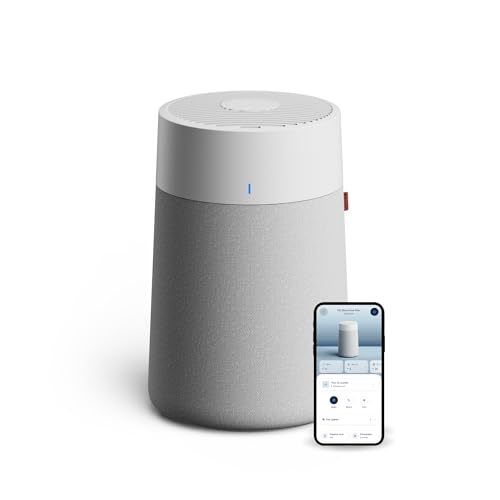
Blueair Blue Pure 511i Max — The Bedroom-Scale Successor
Badge: Quiet current model for sleeping rooms
- Filtration: HEPASilent particle and light-gas combination
- Noise: night mode listed at 19 dB
- Coverage: rooms up to about 1,138 sq ft on the listing
- Controls: app, auto mode, fabric pre-filter
For the bedroom machine that has reached its end, the 511i Max is the current range’s gentle answer: exceptionally quiet at night settings, connected for owners who want it, and built on the same fabric-and-filter maintenance this guide teaches. Households whose old Blueair served a nursery will find its successor’s manners improved in every dimension the original was chosen for — a point the air purifiers for a baby’s nursery guide also makes from the nursery’s side.
Strengths
- Among the quietest night modes available
- Familiar, simple maintenance
- Generous coverage for its size class
Trade-offs
- Carbon stage is light-gas, not a deep odor bed
- Premium filter pricing
- App features unused by some owners
Best for: bedrooms, nurseries, and light sleepers replacing an older unit. Not suited for: heavy odor duty, where deep-carbon machines lead.
There is a temperament note worth making about this brand specifically, because it predicts which owners thrive with it. Blueair’s design asks slightly more of its owner than a sealed-box brand does — a fabric to wash, a design to understand, an indicator to interpret rather than obey — and returns quiet and longevity for the attention. Owners who experience that exchange as a relationship tend to keep these machines for many years and describe them with unusual loyalty. Owners who wanted an appliance that never asked anything of anyone sometimes experience the same design as a series of small problems, each one in this guide, each one soluble, and each one resented. Neither temperament is wrong; but a household shopping its replacement should be honest about which it is, because the Max generation continues the philosophy — serviceable, washable, evidence-led — and the best predictor of satisfaction with the new machine is the owner’s history with the old one’s fabric sleeve.
Finally, a note for the household whose Blueair serves a health-adjacent purpose — the allergy bedroom, the nursery — because troubleshooting there carries a different emotional weight and deserves a different default. Where a machine’s downtime merely inconveniences, work the full sequence at leisure. Where its downtime leaves a sensitive sleeper breathing unfiltered air, invert the economics: keep the genuine spare filter on the shelf, treat ambiguous symptoms as filter-first rather than diagnosis-first, and let a possibly-premature filter change be the price of an unbroken night’s protection. The arithmetic of caution is different when the room’s occupant cannot report their own symptoms, and this guide’s cost-saving discipline yields, in those rooms, to the older household rule that sleep and breath outrank thrift.
Keep one more distinction filed with the calendar: the difference between a problem and a preference. A machine can be healthy and still wrong for its owner — its app unwanted, its fabric ritual tiresome, its size mismatched to a room that changed around it. Troubleshooting fixes problems; preferences are fixed by honesty at replacement time, and conflating the two produces the household that services a machine it dislikes for a decade. When your Blueair next asks for attention, ask which kind of attention it is asking for. If the answer is a wash, a filter, or a corner, this guide has you. If the answer is that the household has changed — its rooms, its animals, its tolerance for rituals — then the problem was never the purifier’s, and the replacement profiles that follow the decision section are the honest continuation of the troubleshooting, not its failure.
It is also worth recording, for owners deep in a frustrating diagnosis, that this brand’s problems have a statistical shape heavily tilted toward the trivial — and that this is a compliment to the design rather than a dismissal of the owner. Machines whose failure modes are dominated by a washable sleeve and a consumable filter are machines engineered so that the expensive parts rarely feature. If your troubleshooting has reached the mechanical chapters of this guide, you are in the minority of Blueair owners, and the correct emotional register is not suspicion of the brand but the calm arithmetic of the decision section: price the fault, price the successor, count the filters each path commits you to, and choose like an owner rather than a victim. The decade of quiet service most of these machines deliver is the context every individual problem should be judged against.
The guide closes where it opened, with the fabric sleeve — because if a single object could stand for the whole philosophy of owning this brand well, it is that washable, colourful, unglamorous piece of cloth. It asks to be washed. In return, it protects everything behind it: the filter’s life, the fan’s ease, the room’s quiet. Nearly every problem in these pages is, at one remove, the story of an attention the machine requested and did not receive — a sleeve unworn by washing, a filter judged by a light, a corner surrendered to furniture. Attend to the small requests and the large ones rarely arrive. That is the whole of Blueair troubleshooting, and it fits, appropriately, in a laundry sink.
And if the machine is simply old — a decade of service behind it, its fabric replaced twice, its filters a small library of dated frames — let the guide say plainly what its decision section implies: retirement is not a troubleshooting failure. Appliances, like the households they serve, have seasons, and a purifier that has filtered a family’s air through childhoods, pets, renovations, and one memorable wildfire summer has completed its purpose with honour. The successor profiles below exist for that moment. Buy the new machine without the guilt of a diagnosis unfinished; the old one’s problems, at that age, are not problems at all. They are a service record.
Print the preventive calendar, if you print anything, and fix it where the filters are stored: monthly fabric care, quarterly cabinet and sensor attention, a dated frame at every change, an annual reconsideration of the room. Troubleshooting guides are written for the day something goes wrong; calendars are written so that day keeps not arriving. The owners who need this article least are the ones who read its calendar section as the main text and the symptom sections as an appendix — an inversion this guide cheerfully endorses, since its highest ambition is to be consulted rarely, briefly, and usually in the laundry room, over a sink, with a fabric sleeve in hand.
A last piece of housekeeping for the reader who arrived mid-panic at midnight: nothing in this guide needs to happen tonight. A purifier that is loud, smelly, disconnected, or blinking is an inconvenience with a long fuse; it will keep some version of its job until the weekend, and it can also simply be switched off until then without consequence to anyone’s safety, the electrical exceptions of the ground rules aside. Troubleshooting done rested, in daylight, with the manual open and a sink available, reaches better verdicts than troubleshooting done at midnight with a screwdriver and a grievance. Let the machine wait. It is, after all, the most patient appliance in the house — it has been standing in the corner, breathing for you, the whole time.
And the guide’s very last word belongs to the room rather than the machine, because it is the moral of every section above: a purifier’s problems are a household’s autobiography, written in dust. The felted sleeve records the pets; the grey filter records the seasons; the sensor’s spikes record the parties, the renovations, the smoke that drifted in from a neighbour’s fire. Read the autobiography before replacing its author. Most of the time, the story it tells is of a machine doing exactly its job in a home living exactly its life — and the fix, where one is needed, is a wash, a filter, a corner, or a calendar entry, offered by an owner who has learned to read.
Should the diagnosis end, as it occasionally will, at a control board or a motor on a machine still young enough to matter, one more option deserves naming before replacement: the authorised service route, priced in writing before it is authorised in fact. A quoted repair with a warranty on the work is a different proposition from an open-ended one, and on a premium machine a board-level fault in year three can be entirely rational to fix. Ask for the quote, compare it honestly against the successor profiles in this guide with their filters priced in, and let the numbers — not the frustration of the diagnostic week — make the decision. That is the last of the order of suspicion: even the wallet is entitled to evidence before it is emptied.
Notice, reading back over the problem list, how few of its entries required buying anything at all: a wash, a relocation, a router setting, a habit. That is the economic signature of a serviceable design, and it is worth an owner’s gratitude even mid-diagnosis — the alternative appliance philosophy, sealed and disposable, generates shorter problem lists and longer invoices. Keep the faith with the washable sleeve a little longer; it has been keeping faith with your air for years.
Final Recommendation
Wash the fabric before you diagnose anything, judge the filter by your nose rather than its looks or its light, and troubleshoot the app in the router before blaming the machine — those three habits resolve the great majority of Blueair ownership complaints, because they are aimed at the design’s actual moving parts. Keep the frame-dating habit, buy genuine filters whose media the fan was tuned for, and let the machine’s quiet competence reassert itself. When a genuine mechanical fault or an outgrown room finally ends a unit’s service, the 211i Max and 511i Max carry the same philosophy forward at open-plan and bedroom scale respectively. A Blueair, properly kept, rarely dies dramatically; it asks, in fabric and filter and the occasional blinking light, for the maintenance it was designed around — and repays the attention in the currency it trades in, which is silence.
Frequently Asked Questions
Can I vacuum the main filter to extend its life?
You can vacuum the fabric pre-filter as often as you like — that is its design — but the main filter is a consumable, not a serviceable part. Surface dust on its intake face can be gently vacuumed without harm, yet the captured load inside the media and the saturated carbon within it are not recoverable by any household process. Vacuuming buys appearance, not capacity; judge the filter by odor breakthrough and airflow, and replace it when the evidence says its work is done.
Why does my Blueair smell sweet or chemical after a filter change?
New filters occasionally carry a faint manufacturing or packaging smell that dissipates over the first days of running; ventilate the room and let the machine run, and it should fade entirely. A smell that persists beyond the first days, or that arrives with an old filter rather than a new one, belongs to the mustiness investigation in Problem Six — check the fabric sleeve’s dryness and the machine’s placement relative to household humidity before suspecting the filter itself.
Why has my Blueair become noisy?
Start with the fabric pre-filter: a clogged sleeve is the commonest cause of rising noise and falling airflow in these machines, and washing and fully drying it restores most units. If the noise persists, test with the main filter removed per the manual — recovery points to a loaded filter, while a mechanical note that tracks fan speed, surviving a reseat of sleeve, filter, and panels, suggests genuine wear to price against a current model.
How often should I wash the fabric pre-filter?
Vacuum it monthly and wash it whenever its dust load looks felted rather than dusty — pet homes and dusty streets shorten the interval considerably. The non-negotiable rule is drying: reinstall only a completely dry sleeve, because a damp pre-filter is the leading cause of the musty smell owners later blame on the main filter.
My Blueair app keeps disconnecting. Is the purifier faulty?
Usually not. Connection problems on the connected models most often trace to router realities — band configuration, range to the machine’s corner, or a changed network password. Work through the network side with the manual’s pairing steps, and remember the machine keeps cleaning on its onboard controls meanwhile, so the fault is in the convenience layer rather than the purifier.
The replacement filter looks thinner than my old HEPA. Is it genuine?
Quite possibly, yes. Blueair’s HEPASilent design charges particles electrostatically and captures them in media far less dense than a conventional HEPA slab; that openness is what lets the fan run quietly. Judge a filter by the machine’s performance after fitting — airflow, noise, odor control — and buy from reputable channels, because an ill-suited dense third-party filter can strangle the fan and create the very symptoms owners fear.
When should I replace the main filter?
When the evidence says so: odor breakthrough on smells the machine used to catch, rising working noise with a clean pre-filter, or a visibly exhausted filter at inspection — whichever arrives first, and regardless of the indicator light, which is an estimator rather than a measurement. Heavy-load homes reach the point sooner than nominal schedules suggest. Writing the installation date on the filter frame keeps the household’s own record honest.
Is it worth repairing an older Blueair?
Price the repair against the current Max range first, and factor in filter availability and cost for a discontinued model over the years you would keep it. Consumable and placement fixes are almost always worth it; fan, motor, or control failures on a machine that also needs filters usually tip the arithmetic toward replacement — particularly when the room has also outgrown the old unit’s coverage.
Why does a new Blueair sometimes smell odd at first?
A mild, sweet or plasticky smell in the first days is commonly reported with new filters and packaging materials, and it usually fades as the machine runs in a ventilated room. Running the unit on a higher speed for the first day, away from bedrooms, often clears it faster than leaving it sealed in a small space. What should not be ignored is a smell that strengthens, turns sharp or electrical, or is accompanied by heat, discolouration or unusual noise: switch the machine off, unplug it, and contact the seller or manufacturer rather than masking the odour with sprays, which only add more chemicals for the filter to handle and make diagnosis harder.

