Disclosure: As an Amazon Associate, umtsmarttool.com earns from qualifying purchases. Links to Amazon on this page are affiliate links; they cost you nothing extra. Prices and availability change often, so check the current Amazon listing before you buy.
Where to buy
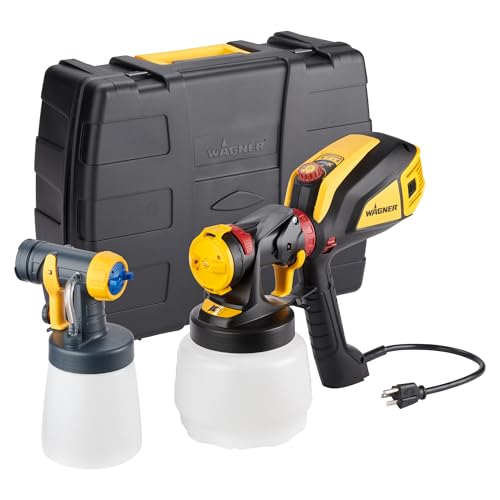
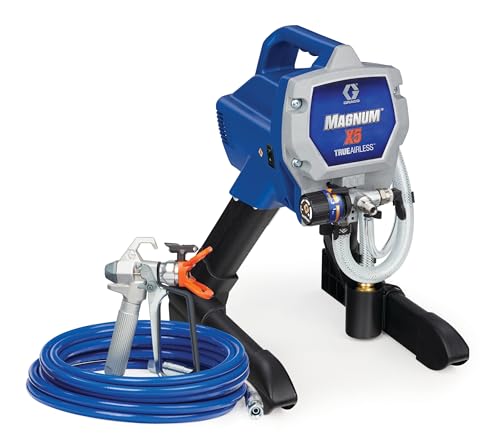
If the balance in this paint sprayer pros and cons analysis tips positive for your workload, the three tools this series most often lands on are the HomeRight Finish Max HVLP Paint Sprayer for gentle starts, the Wagner FLEXiO 595 for alternating work, and the Graco Magnum X5 for property scale:
- HomeRight Finish Max HVLP Paint Sprayer — the low-commitment entry — Check on Amazon
- Wagner FLEXiO 595 Handheld HVLP Paint Sprayer — the all-round case — Check on Amazon
- Graco Magnum X5 Electric True Airless Paint Sprayer — the property case — Check on Amazon
Read the full guide ↓
Paint Sprayer Pros and Cons: The Complete, Honest Ledger
Paint sprayer pros and cons lists usually fail in the same way: they enumerate features as advantages and inconveniences as disadvantages, without ever asking the only question that matters — for whom, doing what, at what rhythm? A sprayer’s speed is a pro to the renovator and an irrelevance to the once-a-year decorator; its cleanup is a con to the drizzle household and a rounding error to the campaigner. This page therefore does the ledger properly: each pro and con is stated at full strength, then weighed against the workloads it actually binds, so the reader can total the columns for their own case rather than inheriting someone else’s sum. The verdict the page defends is structural rather than universal: the pros are intrinsic to the physics and compound with use, while the cons are mostly procedural — real, recurring, and manageable by system — which is why owners who run the system report the ledger lopsidedly positive, and owners who don’t, report it honestly negative. Both reports are true; the difference is the operator, and this page’s job is to let you forecast which operator you will be. The economics behind the weighing are developed in Is A Paint Sprayer Worth It; the selection framework in Paint Sprayer Buying Guide.
In this guide
The Pros, at Full Strength
Speed that changes what is possible. Not convenience — possibility. Application compressed five-to-ten-fold converts projects from the category of “contractor or never” into “this weekend”: the fence in a day, the cabinets in a weekend, the house’s exterior in a season of Saturdays. Every other pro on this list is downstream of this one, because a household that can finish quickly is a household that finishes.
Finish quality brushing cannot reach. A sprayed film is level, continuous, and free of brush marks by physics, not by skill — the novice’s first sprayed door routinely exceeds the practiced brusher’s tenth, on smoothness. On furniture, cabinets, and doors — the surfaces judged at arm’s length — this is the difference between “painted” and “finished,” visible every day the piece is lived with.
Coverage of difficult geometry. Spindles, louvers, lattice, textured siding, chair legs, railings: the fan reaches what bristles bridge over or drown. Whole categories of household objects are effectively unfinishable by brush at any sane time cost, and merely routine by sprayer.
Material versatility in one tool. Stains, sealers, primers, enamels, paints, clears — a tip-system sprayer serves the whole shelf through one handle, where the brush cabinet needs a citizen per material and the aerosol cabinet a can per color.
Consistency and repeatability. A dialed, logged sprayer reproduces a finish across pieces, batches, and seasons — the property that makes sets match, additions invisible, and standards keepable. Brushing’s consistency lives in a hand; spraying’s lives in a system, and systems survive interruptions.
Physical kindness at scale. The trigger replaces the wrist’s thousand strokes; the turbine formats remove even the weight. For long work — and for operators whose joints have opinions — the sprayer is not faster or gentler; it is both, and the gentleness compounds across a decade of projects.
Economics that compound. Priced across a workload, the sprayer’s ledger — detailed in the worth-it analysis — returns its cost in hours and avoided quotes within a handful of projects, then pays rent for years. Few household tools amortize this visibly.
The Cons, at Full Strength
Preparation expands before it contracts. Masking is the sprayer’s admission price on every interior and most exterior work: film, tape, and time, sometimes rivaling the spraying itself on small jobs. Households that imagined spraying as pure speed meet the masking first, and the meeting has ended more ownerships than any mechanical fault.
Cleanup is a non-negotiable tax. Every session ends at the sink — minutes for HVLP handhelds, a quarter-hour’s ceremony for stations — and the tax is not deferrable, because dried finish in a fluid path is the category’s one reliable killer. The con is not the minutes; it is the obligation’s permanence.
Overspray is physics, not a defect. A fraction of every gallon becomes airborne — modest with HVLP, substantial with airless — costing material, demanding ventilation and masking discipline, and making the neighbor’s car a stakeholder in your fence project.
The learning curve is real, if short. Distance, overlap, thinning, trigger rhythm: a handful of skills, learnable in sessions, unforgiving of being skipped. The first project’s tuition — practice material, one forgiven surface — belongs in the honest ledger.
Safety duties are genuine. Respirator discipline, ventilation, ignition care with solvents, and — for airless — an injection protocol whose violation is a surgical emergency. None of it is difficult; all of it is mandatory, forever, without a “just this once” clause.
The tool can be wrong in expensive ways. Mismatched technology (airless on heirlooms, HVLP on a housing development), mismatched tier, mismatched format: the category punishes a wrong purchase more than most, because the wrong tool doesn’t merely underperform — it teaches its owner to hate a method that a right tool would have made beloved.
Storage, maintenance, and mental rent. A system to store complete, seals to inspect, tips to renew, a log to keep: the sprayer is not an appliance that tolerates neglect, and households at capacity — for space, for systems, for one more machine’s demands — should count this con at full weight.
The Weighing: Workload by Workload
Total the columns by case, as this page promised. Furniture and cabinets at any rhythm: the pros dominate overwhelmingly — quality, geometry, consistency — and the cons shrink to a cleanup tax the work’s value trivially covers. Rooms and interiors: the pros win on speed and finish, with masking as the honest counterweight — the verdict turns on the household’s tolerance for preparation, which the first room teaches permanently. Exteriors and fences: the pros win on speed and coverage; overspray and weather discipline are the priced cons; at property scale the ledger is not close. The single small project: the cons win — setup, masking, and cleanup exceed the application’s saving, and the brush or the rental is the correct instrument; a pros-and-cons page that cannot concede this case cannot be trusted on the others. Production and property rhythm: the pros are not a list but a business model, and the cons are line items. The pattern across cases is the page’s thesis made visible: the pros scale with workload and the cons are mostly fixed per session — which is why rhythm, more than any preference, predicts an owner’s final verdict.
Pros and Cons by Technology
The ledger’s shape shifts by physics, and the buyer choosing a technology is choosing a column-weighting. HVLP maximizes the quality and geometry pros and minimizes the overspray con, at the price of pace and the thinning discipline. Airless maximizes the speed pro beyond argument and pays for it in overspray, masking, and the safety protocol’s seriousness. Pneumatic maximizes finish per dollar where a compressor exists, and adds infrastructure’s cons where it does not. There is no column-free technology — each is a different treaty with the same physics — and the mature household’s answer, owning two treaties and routing work between them, is less indecision than the ledger’s logical conclusion. The routing framework is developed in How To Choose A Paint Sprayer.
The Pros in Practice: What Each One Feels Like
Abstract pros persuade poorly, so the page grounds its three largest in experience. Speed feels like this: a fence that had been, for three summers, a standing reproach — too big to brush, too small to contract — becomes a single Saturday, and the household’s relationship to its own backlog changes in a day. The speed pro is not really about minutes; it is about the conversion of “someday” projects into finished ones, and its true measure is the project list’s length a year later. Quality feels like this: a cabinet door in morning light, level as glass, that a guest assumes was bought — the finish pro is paid every time a hand runs across a surface and finds no apology. Consistency feels like this: the sixth chair, sprayed in month four, matching the five sprayed in month one, because the recipe was written and the dial returned — the pro that separates a household’s finishing from a mood and makes it a standard. Owners asked to rank the pros rarely choose the specification-like ones; they choose these, in this order, which is why the page weighs the ledger by workload and rhythm rather than by feature count.
The Cons in Practice: What Each One Costs
The cons deserve the same concreteness. Masking costs a Saturday-morning hour in a room and a permanent change in how projects are imagined: every interior job now visibly has two phases, and households plan accordingly or resent accordingly. Cleanup costs fifteen minutes at the tired end of the day, priced not in minutes but in will — it is the con that compounds when skipped and vanishes when systematized, the most operator-dependent line in the entire ledger. Overspray costs a film of finish on the garage floor’s unprotected corner, once, instructively — and thereafter costs only the discipline it taught. The learning curve costs one dresser’s first coat, sanded back and resprayed, in the households that skipped the test board; in the households that didn’t, it costs a sheet of cardboard and an hour. Stated at this scale, the cons are neither trivial nor tragic: they are the operating expenses of a capability, and the page’s weighing holds because the expenses are per-session and fixed, while the pros are per-project and scaling. A household deciding its verdict should imagine both lists at its own rhythm — the cons arriving every session like rent, the pros arriving every project like income — and notice that the arithmetic of rent against income is decided, always, by how often the income comes.
Pros and Cons Across a Tool’s Lifetime
The ledger is not static, and a complete analysis tracks its motion across ownership’s phases. In the first month, the cons lead: tuition is being paid, masking is slow, cleanup is unfamiliar, and the pros are still mostly promises — the phase in which verdicts should never be rendered, and usually are. Across the first season, the columns cross: the curriculum completes, the systems form, the projects accumulate, and the pros — speed now habitual, quality now standard — begin their compounding. In the mature years, the ledger stabilizes into its long-run shape: the cons shrink to their systematized minimum (masking as choreography, cleanup as ritual, consumables as a shelf) while the pros continue at full rate, which is why long-tenure owners describe the question itself as puzzling — their lived ledger has not been close for years. At the tool’s end of life, one final pro appears that no first-year analysis predicts: the maintained sprayer’s residual value, in use to a second owner or in resale, returns a parting credit against the original ledger. The lifetime view’s lesson for buyers is timing: judge the category by its mature ledger, discounted by an honest assessment of whether you will run the systems that produce it — because the phases are not the tool’s moods but the operator’s biography, and the biography is, unusually for a purchase, substantially within the buyer’s control.
The Myth Ledger: Claimed Pros and Cons That Do Not Survive Inspection
Both camps traffic in myths, and the page clears them in both directions. Myth one, from the enthusiasts: “spraying needs no preparation.” False, and the most expensive myth in the category — preparation is the majority of fine work, and spraying merely refuses to add application time to it. Myth two: “a sprayer pays for itself on any single project.” Only against a professional quote or at property scale; the single small project is the cons’ home case, as this page conceded. Myth three, from the skeptics: “sprayers always waste half the paint.” Transfer losses are real, bounded, and technology-dependent — HVLP’s are a planning allowance, not a hemorrhage. Myth four: “the finish is only as good as a brush’s in expert hands.” The physics disagree — a level film is a level film — and the expert brusher’s true advantage lies in judgment and preparation, which transfer to spraying intact. Myth five: “cleaning takes an hour.” It takes the manual’s minutes, and the hour belongs to the first performance or the neglected one. A ledger cleared of myths is shorter than either camp’s — and it still totals positive for the rhythmic household, which is why the page’s verdict can afford its concessions.
Environmental Pros and Cons
The ledger has an environmental column that modern buyers increasingly total, and it is genuinely two-sided. On the debit side: overspray is material converted to waste at the moment of application; solvent-based work carries its chemistry into the air and the cleanup stream; and the category’s consumables — strainers, liners, masking film — are a real, recurring material flow. On the credit side: renewal is the deepest environmental act a household performs — every fence re-stained is a fence not replaced, every cabinet refinished is a kitchen not manufactured — and spraying is what makes renewal cheap enough to choose at household scale, repeatedly, for decades. Waterborne finishes, which the current category sprays best, keep lowering the chemistry’s cost on both sides of the ledger. The net assessment depends, as everything in this page does, on rhythm: the active renewer’s credits swamp the debits, while the occasional sprayer’s ledger is closer and tilts on technology — HVLP’s transfer efficiency being the environmentally literate choice at small scale. A buyer who totals this column honestly will find it rarely decisive and never ignorable, which is the correct weight for it in a household decision.
Social and Household Pros and Cons
The final column is the household itself. The pros are social in kind: a spraying household finishes visibly, and finished homes change how families use them — the renewed room gets lived in, the rescued furniture gets kept, the fence stops being apologized for. Skills transfer across the household’s members and down its generations in a way few tool categories manage, because finishing is teachable, visible, and immediately rewarding to learn. The tool circulates — lent, borrowed, demonstrated — building the informal capital that neighborhoods run on. The cons are equally domestic: the sprayer’s sessions commandeer shared space (the garage, the driveway, the weekend’s noise budget), its chemistry requires the household’s cooperation in exclusion and ventilation, and its standards can become a quiet tyranny — the owner who now sees every surface as a project is not always the household’s favorite development. Weighed soberly, the social column follows the same law as the rest: at rhythmic workloads the household is enriched faster than it is inconvenienced, and at sporadic ones the inconvenience, being per-session, is the whole story. The page’s consistent advice applies without modification: forecast the rhythm, and the column totals itself.
Pros and Cons for the Beginner, Specifically
Beginners total the ledger differently, and the page adjusts for them explicitly. Their pros arrive amplified: the quality pro pays immediately, because a novice’s sprayed finish exceeds their brushed one by the widest margin in the category — the tool is, functionally, a skill subsidy. The speed pro pays in morale: projects finish while enthusiasm survives, which is the beginner’s scarcest resource. Their cons also arrive amplified: the learning curve is theirs alone to climb, the cleanup tax falls on the least-formed habits, and a mismatched first tool can end the hobby in its first season — the con this series’ beginner guides exist to prevent by routing gently and honestly. The beginner’s correct total, computed across the guides’ collective evidence, is positive at every tier provided the tool is matched to the forecast and the curriculum is run — the two conditions that convert the beginner’s amplified cons into tuition and their amplified pros into a practice. Beginners who skip the conditions are not refuting the ledger; they are volunteering for its worst-case column, which this page has printed at full strength precisely so they can recognize it in advance.
Pros and Cons for the Professional-Adjacent User
At the ledger’s other end, the small-shop and landlord users total it in business terms, and their column weights invert several household judgments. Speed stops being a pro among others and becomes the business model — billable hours are the currency, and the sprayer’s compression of them is the margin. Cleanup, the household’s chief con, becomes a scheduled labor line, priced and systematized until it is merely a cost of goods. Consistency becomes revenue protection: matched finishes across units and pieces are what clients pay premiums for, and the logged sprayer is the cheapest quality system in the shop. The cons that bind at this level are different in kind: duty cycle (a consumer tool asked to live a production life will invoice its limits in downtime), parts velocity (a seal needed Tuesday is a schedule, not an errand), and the finesse ceiling on signature work. The professional-adjacent total is the most lopsidedly positive in this page — provided the equipment is tiered to the duty, which is the one condition this class of user cannot waive. Their ledger is the household’s, grown up: same physics, same law, larger numbers.
The Deciding Factors: The Three That Actually Total the Ledger
After the full enumeration, the page owes its reader a compression: of all the pros and cons in both columns, three factors decide the total for nearly every household, and the rest are commentary. The first is rhythm — sessions per season — because it sets the pros’ compounding rate against the cons’ fixed rent; it alone predicts owner satisfaction more reliably than any product variable in the category. The second is preparation tolerance — the household’s honest relationship to masking, setup, and cleanup as crafts in themselves — because the cons’ weight is not fixed by the tools but by the operator’s willingness to systematize them, and a household that enjoys process will experience the cons at half the weight of one that endures it. The third is match — technology, format, and tier fitted to the workload — because mismatch manufactures cons that no tool deserves (the station’s overhead in a drizzle life, the handheld’s limits in a campaign life) and deletes pros that the right tool would have paid automatically. A reader who can score their own household on the three factors — rhythm high or low, tolerance willing or reluctant, match careful or casual — can total this page’s ledger without reading another word of it, and will arrive within a rounding error of the verdict the full analysis produces. The enumeration exists for the scoring’s honesty; the scoring is the enumeration’s point.
How the Ledger Has Shifted: The Category’s Recent History
Pros-and-cons lists age, and this page should date its own weighing by noting how the columns have moved across the category’s recent development — because several of the cons that defined spraying a generation ago have been engineered down, and pretending otherwise would be its own distortion. Cleanup, historically the ledger’s heaviest con, has been cut by design: liner systems in airless, fast-strip fluid paths in HVLP, and honest manuals have converted an ordeal into a routine for the current generation of tools. The learning curve has been shortened by the same forces — tip systems that forgive thinning, variable output that detunes for students, and an owner-community literature that teaches at the hour of need. Overspray has been pressed from both ends: HVLP’s efficiency has improved, and reduced-pressure airless tips have civilized the pace technology’s worst externality. What has not moved is equally instructive: masking remains masking, dried finish remains fatal, and the safety protocols remain protocols — the cons that are physics and procedure rather than engineering, and therefore permanent. The contemporary ledger is thus kinder than its ancestors’ on every line that design could touch, and identical on the lines that only discipline touches — a distribution that tells the modern buyer exactly where their own effort will be spent, and why the operator, more than the model year, remains the verdict’s author.
A Worked Total: One Household’s Ledger, Filled In
Abstractions total poorly, so the page fills in one representative ledger — the active homeowner of the worth-it analysis, at a mid-tier handheld, across a representative year. The year’s work: one fence re-stain, six furniture pieces, two interior doors, one room’s walls-and-trim refresh. The pros, priced in the household’s own currency: roughly thirty hours of application avoided against brushing, one contractor quote (the fence) avoided entire, a cabinet-grade finish standard achieved on the furniture without a professional’s invoice, and a backlog that ends the year shorter than it began — the completion dividend, unpriced and, by the owner’s report, the largest line. The cons, priced identically: eleven sessions’ masking and setup at perhaps eight hours total, eleven cleanups at three hours total, a season’s strainers and masking stock, one tip renewed, and the spring afternoon spent re-learning what winter forgot. The total is not close — and the page insists the reader notice why it is not close: the pros were paid by projects (large, lumpy, valuable) while the cons were paid by sessions (small, steady, systematized). Change the year’s shape — one small project instead of eleven sessions’ worth — and the same ledger, honestly kept, totals the other way. The worked example is therefore not an argument but a template: substitute your own year’s shape, and the page’s verdict becomes yours.
The Cons That Are Actually Buying Signals
A final refinement, and the page’s most useful: several entries in the cons column are not arguments against spraying but specifications for the purchase — cons that the right tool, tier, or system deletes, leaving the pros intact. Cleanup dread specifies a fast-strip HVLP and a staged sink system. Masking dread specifies HVLP’s low overspray over airless’s pace, or a project list re-sorted toward exteriors and pieces. Overspray concern specifies transfer efficiency and, in airless, reduced-pressure tips. Learning-curve anxiety specifies the beginner-matched tiers and the curriculum this series publishes. Storage rent specifies the handheld formats and the bin system. Read this way, the cons column becomes the shopping list’s second half: the pros tell you whether to buy, the cons tell you what — and a buyer who totals both columns into a single decision has used this page as it was designed, less as a verdict than as an instrument. The households that report the lopsidedly positive ledgers are, disproportionately, the ones who bought their cons away at the start rather than enduring them at retail for a decade.
The Honest Summary Table
For the reader who totals best in rows, the page compresses itself — with the standing warning that every row’s weight is workload-dependent, as the sections above establish. Speed: a decisive pro at campaign and piece scale alike, irrelevant only where there is nothing to spray. Finish quality: a decisive pro at arm’s-length surfaces, a minor one at ten-foot surfaces. Geometry coverage: a pro without a household counterweight — nothing else finishes a spindle. Versatility: a pro that grows with the household’s material shelf. Consistency: a pro that grows with the log. Preparation: the standing con, heaviest indoors, lightest on pieces in open air. Cleanup: the permanent con, smallest in fast-strip handhelds, largest in stations, decisive only for the system-averse. Overspray: a managed con, technology-priced. Learning curve: a one-season con with a lifetime rebate. Safety duties: a con of vigilance rather than of effort, non-negotiable and, once systematized, unremarkable. Mismatch risk: the meta-con — the only one capable of inverting the entire ledger — and the only one entirely within the buyer’s control at the moment of purchase. Totaled for the rhythmic, matched, systematized household: pros, decisively. Totaled for the sporadic, mismatched, improvising one: cons, honestly. The table’s two totals are the page in miniature, and the distance between them is not the tools — it is the three deciding factors, scored.
What This Page Asks of Its Reader
Pros-and-cons pages usually ask for a decision; this one asks for a forecast, because the decision is the forecast’s arithmetic and not the page’s. Write the coming year’s finishing honestly — the projects, the rhythm, the household’s tolerance for process — and total the columns against it with the worked example as the template. If the pros win, buy the cons away where they can be bought (format, tier, system) and systematize the rest. If the cons win, accept the verdict with the same respect — the brush, the rental, and the professional are honorable instruments, and a household that declines spraying on evidence has used this page exactly as successfully as one that buys. What the page asks its reader not to do is the category’s standard error: to inherit a total — from a neighbor’s enthusiasm, a reviewer’s confidence, a skeptic’s scar tissue — computed against a workload that is not theirs. The ledger is personal or it is fiction. Total your own, and the paint sprayer question, in your house, is settled for the decade.
Two Verdicts From the Record, Quoted in Spirit
The page closes its evidence with the two owner verdicts it has heard, in substance, more than any others — because together they contain the whole analysis. The first, from the systematized owner, usually delivered while gesturing at a fence or a kitchen: “I don’t understand why everyone doesn’t spray.” Their ledger is invisible to them now — the cons systematized into invisibility, the pros compounded into a standard of living — and their puzzlement is genuine, because from inside a mature practice the category looks like a solved problem. The second, from the improvising owner, usually delivered while gesturing at a shelved tool: “It was more trouble than it was worth.” Their ledger is equally real — the cons paid at retail every session, the pros never given a workload to compound against — and their verdict is equally honest, because from inside an unmatched purchase the category looks like a confidence trick. The page’s entire labor has been to show that both owners are describing the same physics from different sides of three decisions — rhythm, tolerance, match — that were made, or defaulted, at the purchase. A new buyer reading both verdicts should feel neither encouraged nor warned, but located: the question is not which owner is right, but which owner’s decisions they are about to repeat.
A Note on Method: How This Ledger Was Built
The page’s method, stated for the record as this series requires: a research-led synthesis. The pros and cons enumerated were drawn from the documented owner record across the category’s classes and tiers, from manufacturer documentation (including the manuals’ own accounts of maintenance and safety, which are the cons’ most honest source), and from the physics of the three technologies, which bounds what either column can claim. No hands-on testing is claimed; no prices or ratings are printed, per standing rule; and the weighings are presented as workload-conditional judgments rather than measurements, because that is what they are. Readers who weight the columns differently — the professional’s hand that genuinely loves the brush, the household whose storage truly cannot hold a system — will total differently from the same evidence, and the page regards that not as disagreement but as the method working: a ledger honestly built is one whose totals the reader is equipped to recompute. The columns are the category’s; the sum, as this page has insisted from its first paragraph, is yours.
Frequently Asked Questions
What is the biggest disadvantage of a paint sprayer?
By owner report and by this page’s weighing, the preparation-and-cleanup bracket around the spraying itself — masking before, cleaning after — because it is paid on every session regardless of the work’s size, and it is the con that most often surprises buyers who priced only the trigger time. It is also the most manageable con on the list: systems, staging, and format choice shrink it predictably, which is why experienced owners rank it as a routine while new owners rank it as a betrayal.
Do paint sprayers waste a lot of paint?
They waste some, by physics: HVLP’s transfer efficiency keeps the loss modest — a planning allowance rather than a scandal — while airless loses more and repays it in labor saved. Against the waste, credit the thinner coats that achieve coverage and the absence of brush-loading losses. The honest summary: material waste is a real line in the ledger, rarely the deciding one, and most decisive for production work on expensive coatings.
Is a paint sprayer hard to learn?
No — it is a short curriculum (distance, overlap, thinning, rhythm, cleaning) measurable in sessions, with the peculiar kindness that good results arrive early and mastery arrives steadily. What is hard is learning it on the signature project at a deadline, which is a scheduling error rather than an aptitude test. The series’ how-to guides exist to sequence the learning properly, starting with How To Use A Paint Sprayer.
Are paint sprayers safe?
They are as safe as their protocols, which are clear, documented, and entirely within a careful household’s competence: respiratory protection, ventilation, ignition discipline, and for airless the injection rules. The category’s serious incidents cluster where protocols were treated as optional. A buyer willing to run the system operates at household-tool risk levels; a buyer unwilling should choose the brush, whose safety case is genuinely simpler.

Sprayer or brush for kitchen cabinets?
Sprayer, and it is the ledger’s clearest case: the quality pro is at maximum (arm’s-length judgment, daily), the geometry pro is real (frames, edges, profiles), the speed pro converts a week of evenings into a weekend, and the cons — masking a kitchen, cleaning a tool — are paid once against years of daily visibility. Cabinets are where this page’s weighing stops being close.
Final Recommendation
Weigh the ledger against your own rhythm before you buy, and weigh it honestly: count the masking and the cleaning at full price, count the hours and the finish at full value, and let the workload — not enthusiasm, not skepticism — total the columns. For most finishing households the pros win, and the instruments this series recommends for the three common shapes of that win are the HomeRight Finish Max for the gentle case, the Wagner FLEXiO 595 for the alternating case, and the Graco Magnum X5 for the property case. For the household whose honest total favors the cons, the page’s recommendation is equally clear: brush the small work, rent the large, and revisit the ledger when the rhythm changes — because in this category, the rhythm always, eventually, is the verdict.
If the total favors buying, let the cons column write the purchase order alongside the pros: choose the format whose cleanup your schedule survives, the technology whose overspray your setting tolerates, the tier whose support your decade can lean on, and the system — bin, bench, log, safety kit — that converts the remaining cons from surprises into routines before the first project begins. Bought that way, the ledger’s negative column is mostly prepaid, and what remains is the part of spraying that no page can total for you: the Saturday the fence stops being a reproach, the evening the cabinets catch the light the way you imagined, the quiet accumulation of a house that looks kept because, at last, keeping it is easy.
If the total favors waiting, wait without the faintest sense of a missed verdict. The tools will keep, the tiers will hold, and the workload — the only input that matters — will announce its own change in its own time: a house bought, a hobby born, a fence finally past arguing with. When it does, this ledger will total itself again in your favor, and the purchase you make then, against evidence rather than restlessness, will be the one whose pros you actually collect.
Either way, the page’s work is done when the decision stops being about the sprayer. The households that finish things do not have better tools than the households that don’t; they have clearer totals — an honest rhythm, a tolerated process, a matched machine — and the clarity, once written down, has a way of outlasting every individual purchase it produces. Total yours, in pencil, against your own year. The columns are printed above; the sum is the first entry in the log.
And if, a season from now, you find your own verdict quoted in spirit by some future version of this page — the systematized owner’s puzzlement or, less happily, the improviser’s shrug — let it be the first one, earned the way every owner in the positive column earned it: not by buying the most capable tool on the shelf, but by matching a good one to a real workload, running its systems without drama, and letting project after finished project make the argument that no pros-and-cons list, including this one, can make as persuasively as a fence in fresh stain or a kitchen in level, light-catching enamel.
The ledger, in the end, is a mirror: it shows the buyer their own household — its rhythm, its patience, its ambitions — rendered in the neutral vocabulary of advantages and drawbacks. Read it as a mirror and it will never lie to you. Read it as a verdict and it will only ever repeat someone else’s. This page has printed both columns at full strength, weighed them against every workload it could name, and conceded the cases it had to concede; the rest — the totaling, the buying or the waiting, the spraying or the brushing — belongs, as it always did, to the person whose fence it is.
Total it tonight, in pencil, in ten minutes. Whatever the sum, act on it cleanly — buy the matched tool and run its systems, or close the question and finish the project another way — and let next year’s ledger, kept in finished work rather than in figures, be the review that settles the matter for good and for all.
That is all a pros-and-cons page can honestly offer: not the answer, but the columns, the weights, and the confidence that a reader who totals them against their own life will reach the answer that fits — and will still be glad of it when the second season, and the fifth, come round to audit the sum.
Begin with the rhythm — write it down, count the coming year’s sessions honestly — and the rest of the ledger, as this page has shown from every angle it could find, will practically total itself.
Pros on one side, cons on the other, and between them nothing but your own year, waiting to be written down and weighed, honestly and once, for good and all.