Disclosure: As an Amazon Associate, umtsmarttool.com earns from qualifying purchases. Links to Amazon on this page are affiliate links; they cost you nothing extra. Prices and availability change often, so check the current Amazon listing before you buy.
Where to buy
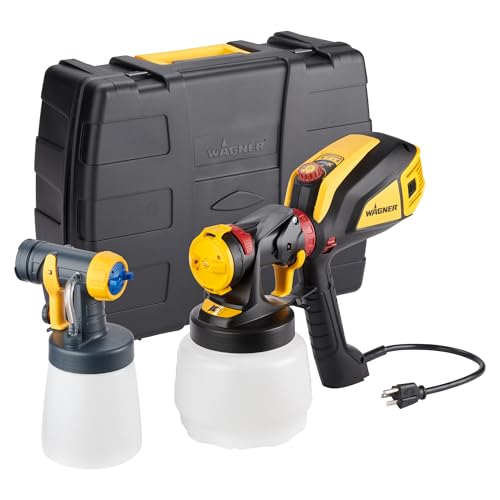
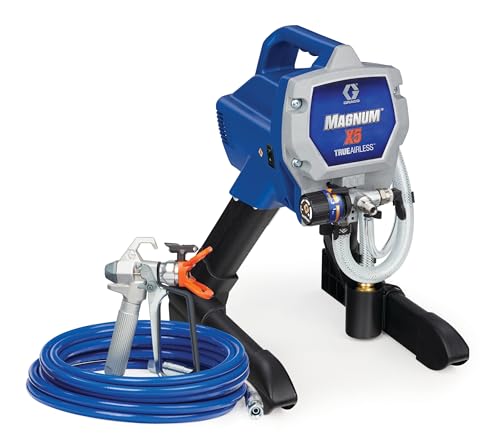
This guide on how to choose a paint sprayer ends at a shortlist; its most-chosen members are the Wagner FLEXiO 595 Handheld HVLP Paint Sprayer for alternating work, the HomeRight Super Finish Max for furniture, the Graco Magnum X5 for property scale, and the NEIKO 31215A for compressor shops:
- Wagner FLEXiO 595 Handheld HVLP Paint Sprayer — alternating work — Check on Amazon
- HomeRight Super Finish Max HVLP Paint Sprayer — furniture and finesse — Check on Amazon
- Graco Magnum X5 Electric True Airless Paint Sprayer — property scale — Check on Amazon
- NEIKO 31215A HVLP Air Spray Gun — compressor-equipped shops — Check on Amazon
Read the full guide ↓
How to Choose a Paint Sprayer: The Decision, Step by Step
Learning how to choose a paint sprayer is learning to ask five questions in the right order — because the category’s confusion is not a shortage of good tools but a surplus of good answers to different questions, all shelved together. This how-to walks the decision in the order it actually binds: surfaces first, materials second, rhythm third, and only then technology, format, and specifications — the reverse of the order in which stores present them, and the reason store-led decisions so often end in returns. Each step below is a procedure, not a topic: do the step, write the answer, and let it veto what it vetoes. By the final step the shelf will have narrowed itself to a name or two, and the guide’s shortlist — one exemplar per surviving path — will be waiting with the reasoning attached. Readers who want the framework’s full theory will find it in Paint Sprayer Buying Guide; this page is the working version, written for the reader with a project list in one hand and a free Saturday in the other. The destination it serves is the cluster’s hub, Best Paint Sprayer Under $100, and its neighbors.
In this guide
Step 1: List Your Surfaces — Pieces, Planes, or Both
Take a pencil and sort the coming year’s finishing into two columns. Pieces: furniture, cabinets, doors, shutters, bikes, railings — anything you can walk around, spray on a stand, and judge at arm’s length. Planes: walls, ceilings, siding, fences-as-surfaces — anything measured in square footage and judged from across a room or a yard. The columns’ relative weight is the single most predictive fact in the entire decision, because it selects the physics: pieces belong to HVLP’s gentle, fine atomization; planes belong to airless’s pace; a genuine alternation belongs to the convertible flagship or to an honest pair bought in sequence. Do not skip the writing — buyers who hold the list in their heads reliably overweight the most recent project and underweight the year’s true center, and the pencil is the cheapest corrective in this guide. If the list cannot be written because the year is genuinely unknown, that too is an answer: buy the gentlest, cheapest competence (an entry HVLP handheld) and let the year, once lived, write the list for the second purchase.
Step 2: List Your Materials — The Viscosity Spectrum
Second column exercise: the finishes themselves, sorted by body. Thin (stains, sealers, thin clears) spray willingly through everything. Middle (enamels, primers, most paints when thinned) want tip range and honest atomization. Heavy (unthinned latex, thick primers, elastomerics) divide the shelf absolutely — flagship turbines and airless on one side, everything else on the other, with thinning as the toll for crossing. The material list vetoes more tools than any advertisement admits: a stain-only household can ignore the heavy column’s entire price premium, while a household whose list is latex-led must either pay for unthinned capability or enroll in the thinning discipline with its eyes open. Write the materials beside the surfaces; the two lists together are the workload, and the workload — as every guide in this series insists — is the specification that cannot lie.
Step 3: Name Your Rhythm — Drizzle, Practice, or Campaigns
Third, the calendar’s shape. Drizzle: small jobs arriving weekly, each too small for ceremony — the rhythm that prices setup and cleanup above all specifications. Practice: a standing weekly or monthly engagement — the workshop’s, the refinisher’s — where repeatability and endurance compound. Campaigns: seasonal offensives — the fence month, the renovation, the exterior — where duty and capacity are the binding constraints. Rhythm selects format the way surfaces select technology: drizzle to the grab-and-go handheld, practice to the station, campaigns to the tool whose container and duty rating match the offensive’s size. It also selects tier honesty: drizzle at flagship prices is stranded capital, campaigns on a drizzle tool are a sentence. Most choosing errors are rhythm errors wearing a product’s name, which is why this step precedes every specification in the guide.
Step 4: Choose the Technology — Apply the Vetoes
Now the shelf can be approached, because the three lists have done the choosing. Pieces-led, thin-to-middle materials, any rhythm: HVLP, and the only remaining questions are format and tips. Planes-led, latex-heavy, campaign rhythm: airless, with the safety protocol accepted as part of the price. Alternating lists: the two-nozzle HVLP flagship if one tool must serve, or the pair sequenced by first chapter if it needn’t. Compressor already owned and audited (capacity, dry air): pneumatic HVLP enters as the finesse value it genuinely is. Notice what the step does not contain: brands, prices, wattages. Those arrive next, as servants of a decision already made — and a reader who reaches this step with three written lists will find the technology question has become the easiest one in the guide, which is precisely the how-to’s point.
Step 5: Choose the Format and Read the Five Specifications
Inside the technology, format follows rhythm (Step 3), and the specification sheet can finally be read — for five lines only. Tip or nozzle system: range and change-cost, the material spectrum’s true governor. Output class: watts, GPM, or CFM appetite, read as sustainable pace rather than league position. Container: size and system (liner formats count double, as cleaning in disguise). Controls: flow and pattern everywhere, pressure on stations — the variables you will document. Working weight: full, at arm’s length, at hour two. Everything else on the sheet is garnish. The shortlist below is annotated in exactly these terms, so the reader can watch the procedure terminate: four tools, four workload shapes, no orphans.
The Shortlist, Annotated by the Procedure
| Tool | Surfaces / materials / rhythm | The deciding specification |
|---|---|---|
| Wagner FLEXiO 595 | Both / all incl. unthinned latex / any | Two nozzles: the alternation, answered |
| HomeRight Super Finish Max | Pieces / thin-to-middle / drizzle-to-practice | Three brass tips and the fastest cleanup |
| Graco Magnum X5 | Planes / heavy / campaigns | Duty rating and hose reach |
| NEIKO 31215A | Pieces / all / practice (compressor shops) | Atomization per dollar, infrastructure permitting |
Step 6: Audit the System Before the Money Moves
The final step is the one that separates kept tools from shelved ones, and it is performed on paper: read the finalist’s cleaning pages in its actual manual; price one wear part and confirm it is stocked like a part; imagine the bin, in the actual closet or corner, complete with strainers and the log; and add the safety system to the budget in the same breath as the tool. A finalist that fails the audit is not a bad tool — it is a bad fit, which is the only kind of bad this guide recognizes. Pass the audit, and the purchase is no longer a gamble but a commissioning: four weeks of curriculum (water, test board, forgiving project, widening) stand between the box and the verdict, and the how-to for that month is laid out in How To Use A Paint Sprayer.
Worked Examples: The Procedure Run on Real Lists
Procedures are believed when they are seen working, so the guide runs its six steps on three composite households drawn from the series’ reader patterns. The first list: surfaces — a nursery’s furniture, six thrifted chairs, interior doors; planes — none. Materials — stains, enamels, one primer. Rhythm — drizzle deepening to monthly. The vetoes fall in order: planes absent, so airless is out at step four without a hearing; materials mid-spectrum, so a tip system is specified at step five; rhythm gentle, so the format is handheld and the audit’s cleanup test decides between finalists. The procedure terminates at the Super Finish Max pattern — and note what it never consulted: the budget, which entered only as the answer’s price. The second list: a bought house — planes everywhere (four rooms, an exterior elevation, a long fence), pieces trailing (cabinets in month six). Materials latex-led. Rhythm: campaigns. Airless takes the technology step; the format question — handheld or station — is decided by the exterior’s scale at step five’s duty line; the cabinets, arriving later, nominate the second tool (a finesse HVLP) in the sequence the guide teaches. The third list: a workshop’s — pieces at production rhythm, materials rotating weekly, a compressor already humming in the corner. Pneumatic passes its infrastructure audit and takes the finesse role at a gun’s price; a turbine handheld takes utility. Three lists, three disjoint answers, one procedure — the demonstration the how-to exists to give.
Choosing for a Household With Two Operators
The procedure assumes one decider; households have two, and the amendment is worth its own section because shared tools fail socially before they fail mechanically. Run the lists together — surfaces and materials are household facts, but rhythm is personal, and the second operator’s rhythm (often drizzle where the first’s is campaigns) can flip a format decision honestly. Weight the audit by the less enthusiastic operator: the cleanup routine they will perform is the one the tool will actually receive, and the controls they find legible are the ones that will be used at midnight before a deadline. Where the two operators’ lists genuinely diverge — one planes, one pieces — the pair stops being a luxury and becomes the household’s peace treaty, each tool matched to its operator’s work and neither forced across the aisle. The choosing literature rarely says this plainly, so this guide will: in a two-operator household, the correct sprayer is the one both people will pick up, and a theoretically superior tool that one of them avoids is, in the only arithmetic that matters, the inferior purchase.
Choosing on a Budget: Where the Money Actually Binds
The procedure is budget-blind by design until the shortlist, at which point money enters as a filter with its own honest rules. Rule one: cut tier before cutting fit — a gentler tool matched to the lists outperforms a flagship matched to nothing, at every price, because fit is what the sessions feel. Rule two: protect the system line — the safety kit, strainers, and masking are not the budget’s flex; a purchase that starves them to reach a higher tier has bought a photograph. Rule three: let the lists price the premium — every step up in this category buys named capabilities (unthinned latex, pressure control, duty rating), and the lists either invoice those names or they don’t; pay for invoiced capabilities only, and the budget question dissolves into the workload question, where it always belonged. Rule four: consider the sequence as a budget instrument — the pair bought across two seasons costs the household less cash-flow pain than the flagship bought at once, and arrives at greater total capability; time is a legitimate currency in tool buying, and the procedure spends it deliberately. A reader who applies the four rules will find that “how much should I spend” has been answered by the same pencil that wrote the lists — which is, for the last time in this guide, the entire point.
Choosing for the Long Term: The Decade Test
A sprayer is a decade-scale purchase wearing a weekend’s price tag, and the procedure’s final lens is temporal. Apply the decade test to the finalist: will its parts be findable in year seven (the majors’ catalogs answer yes; anonymity answers silence)? Will its format still match the household in year five, when the lists have evolved one notch — and if the evolution is predictable (the workshop formalizing, the property campaigns ending), should the purchase anticipate it or honestly serve the present and let the second tool handle the future? Will its cleaning routine survive the owner’s year-eight patience, which is a different and lesser quantity than year-one enthusiasm? The decade test regularly reverses showroom verdicts: the exciting flagship with the proprietary wear parts loses to the dull major with the stocked seal; the station bought for a campaign decade outlasts three handhelds bought for drizzle years. None of this argues for maximal spending — it argues for matching the tool’s design life to the workload’s expected life, and for treating support infrastructure as the specification it secretly is: the only one whose value is zero in week one and decisive in year nine.
Choosing When You Cannot Choose: Rentals, Loans, and Trials
Sometimes the correct output of the procedure is “not yet,” and the guide honors it with a protocol rather than a shrug. When the lists are unwritable — a house not yet bought, a hobby not yet tested — convert the uncertainty into evidence cheaply: rent the station for the one campaign that looms, borrow the neighbor’s handheld for the fence weekend, and let the sessions write the lists that speculation couldn’t. A rental weekend teaches format preference with a completeness no review can match, because the student’s own arms, patience, and garage are the laboratory. The protocol’s rules are few: return borrowed tools cleaner than they arrived, replace every consumable you touched, and log the sessions with the same honesty the procedure demands of purchases — the borrowed weekend is data collection, and its quality decides the eventual purchase’s quality. Households that trial before buying show, in the record, the lowest regret rates in the category — not because trials are magic, but because the procedure’s first three steps stop being hypothetical. The guide’s readers with genuinely open futures should take the protocol as the recommendation, and the shortlist as next season’s reading.
Reading Reviews Without Being Read by Them
The choosing process consumes reviews — this series’ included — and a how-to owes its reader a protocol for that consumption too. Extract from any review the workload it assumed, and discount its verdict by the distance between that workload and your lists; a flagship’s rave from a renovator is data about renovators. Weight limitations over enthusiasms, because limitations are where reviews are honest against their incentives, and note which cons are workload-conditional (most) versus absolute (few). Treat specification disputes as checkable and character judgments as advisory. Beware the review — in any medium — that never routes a reader away from its subject; a guide that cannot say “not this one, for you” is a sales document in review’s clothing, and this series has tried to earn its keep by saying it in every article, this one included. Finally, let the lists arbitrate between conflicting reviews: where two honest examinations disagree, they almost always assumed different workloads, and yours is the tiebreaker that was missing from both.
The Specification Sheet, Interrogated Line by Line
Step five named the five specifications that matter; this section teaches the interrogation of each, because listings are written to be admired and must be read to be audited. Tip system: ask not “how many tips” but “which sizes, at what replacement cost, stocked where” — a range that spans your materials’ two ends is capability; a count is marketing. Output: translate into your pace — a turbine’s watts against your thickest material, an airless pump’s GPM against your largest plane, a gun’s CFM appetite against your compressor’s honest delivery at pressure, not its badge. Container: divide your median job by it; the quotient is your refill rhythm, and rhythms above three per job are format errors announcing themselves. Controls: ask which variables you will actually document — if the answer is “none,” pressure dials are decoration and should be priced as such; if the answer is “all of them,” their absence is a veto. Weight: find the full-configuration figure or assume the listing’s is dry, and test the candidate in the hand if any channel permits — thirty seconds of honest heft outweighs a page of ergonomics copy. Interrogated this way, two finalists separate themselves within minutes, and the separation is made of your workload’s facts rather than the shelf’s lighting.
Choosing the Second Sprayer: The Fleet Decision
The procedure’s last application is the one its readers will use longest, because most spraying households eventually choose again — and the second choice has its own logic, distinct from the first. The first tool was bought against a forecast; the second is bought against a log, and the log’s evidence should be allowed to be specific: name the recurring friction (refills, refusals, fatigue, finesse) in the log’s own words, and let it — not the catalog’s novelty — nominate the technology of the second purchase. Sequence matters economically: the second tool should be bought at the tier its role deserves, which is often lower than the first’s (utility and specialty roles are honestly served at gentle prices) and occasionally higher (the station that production finally invoices). And the fleet should be audited as a fleet: two tools whose roles overlap by eighty percent are one tool and a regret, while two whose roles interlock — volume and finesse, station and site — multiply each other’s value by keeping each on its home physics. The household that chooses its second sprayer by the log will find the decision almost embarrassingly easy, which is the procedure’s graduation gift: the first purchase required a guide; the second requires only the record the first one generated.
Special Cases the Procedure Handles Explicitly
A procedure earns trust at its edges, so the guide walks three special cases through the steps rather than leaving them to improvisation. The renter’s house: surfaces skew to furniture and small planes (deposit-safe work), materials to the reversible end, rhythm to drizzle — and the procedure returns, correctly, the gentlest handheld tier with a premium on fast cleanup, because the renter’s true constraint (space, storage, the landlord’s surfaces) lives in the audit step. The historic house: surfaces heavy with trim profiles and delicate substrates, materials including the oil traditions where local rules permit — the procedure’s materials step widens (tip range becomes the specification), its safety step acquires a second clause (old coatings demand their own protocols and testing), and the technology step usually lands on HVLP’s gentleness with pneumatic as the connoisseur’s branch. The flip and the rental portfolio: planes-led, latex-bound, campaign rhythm with a revenue clock — the procedure’s rhythm step prices time in currency, the format step reaches for duty and hose, and the audit step becomes a business continuity check (parts velocity, second-unit logic). Three houses, three disjoint shortlists, zero improvisations: the steps held, which is all a how-to can promise and everything a buyer needs.
When the Answer Is “Don’t Buy One”
The procedure’s integrity is proven by its willingness to terminate at zero, and the guide states the terminating conditions plainly. If the lists, honestly written, total one small project a year or less, the arithmetic of ownership loses to the arithmetic of renting or hiring at every tier — the tools are good and the workload is not there, and no choosing skill can fix an absent workload. If the audit fails on space — no bin corner, no bench, no safe storage — the household is not declining a sprayer but declining the system the sprayer is, and the honest purchase is the brush set and the drop cloth. If the safety protocols cannot be honored in the household’s actual circumstances — the space, the occupants, the coatings involved — the procedure stops, by design, at the step where it must. Readers routed to zero by their own evidence have not failed the guide; they have used it at its highest function, which is to make the decision before the money, in pencil, where decisions are cheap. The cluster’s other guides will be waiting, unchanged, in the season the lists change.
The One-Page Worksheet
For the reader who wants the procedure on a single sheet, here it is, in the order of operations. Line one — surfaces: pieces ___ , planes ___ , both ___ (check one, honestly). Line two — materials: thinnest ___ , thickest ___ , the one I use most ___ . Line three — rhythm: drizzle / practice / campaigns (circle one; if two, circle the heavier). Line four — technology: read off lines one and two; if the answer is not obvious, the default is HVLP and the exception must argue its case. Line five — format: read off line three; handheld unless campaigns or practice argue for the station, in writing. Line six — the five specifications: tip range covering line two’s ends; output class at your pace; container dividing your median job to three refills or fewer; controls you will document; weight your arm accepts at hour two. Line seven — the audit: cleaning pages read, one wear part priced, bin imagined in its actual corner, safety system in the same budget breath. Seven lines, one pencil, perhaps twenty minutes — and the shelf, the reviews, and the advertisements all become servants of the sheet rather than substitutes for it. Photograph the worksheet and keep it with the tool’s papers; in five years it will be the most interesting page in the file, because it records the household you were when the practice began.
After the Choice: Commissioning the Purchase
A chosen sprayer is a decision, not yet a capability, and the guide closes the loop between the two with the commissioning sequence it has referenced throughout. Week one: unbox against the manual, inventory the wear parts, and run water — the tool’s voice, learned at zero stakes. Week two: the test board, with the log opened and the first recipes written in pencil. Week three: the forgiving project, chosen for its tolerance, executed at curriculum pace. Week four: the first real work, with the audit’s systems (bin, bench, safety kit) already habitual. The sequence is unglamorous and it is the entire difference between the owners whose tools compound and the owners whose tools shelve — a difference this series has traced, article after article, to nothing more mysterious than whether the first month was treated as a curriculum or as a verdict. The choosing procedure got you the right tool; the commissioning makes you the right operator; and the pair of them, together, is what “how to choose a paint sprayer” actually means when the phrase is taken as seriously as your money deserves.
Choosing Across the Price Bands: What Each Tier Buys
The worksheet terminates at a shortlist; the bands price it, and the guide annotates them by capability rather than by virtue, so the reader can watch the procedure’s output land in a band and know what the band means. The entry band buys HVLP competence for thin-to-middle materials — the full curriculum, the finesse standard on pieces, the gentle ownership costs — and its boundary is the heavy-material wall. The middle band buys the wall’s removal: unthinned latex, pressure control, convertible nozzles, liner systems — the capabilities that alternating and campaign households invoice. The property band buys pace and duty: flow rates, hose reach, annual-gallon ratings, the arithmetic of square footage. The professional band buys finesse at production endurance: staged turbines, fluid sets, and the parts ecosystems of a working life. Nothing in the annotation ranks the bands as better or worse — each buys exactly the capabilities its households invoice and strands exactly the ones they don’t — and the worksheet, not the wallet, is what assigns a reader to a band. A household that lands in the entry band by evidence and buys there with confidence has chosen better than a household that lands in the middle by evidence and apologizes its way down, or drifts up, out of someone else’s arithmetic.
A Note on Method: How This Procedure Was Built
The guide’s method, stated for the record as this series requires: a research-led synthesis. The step order — surfaces, materials, rhythm, technology, format, specifications, system — was derived from the documented pattern of owner regret and satisfaction across the category’s classes, cross-checked against manufacturer selection guidance and the cluster’s own verified tool pool; where sources disagreed, the procedure follows the regret data, on the principle that a choosing method is judged by the purchases it prevents as much as by the ones it blesses. No hands-on testing is claimed; no prices or ratings are printed, per standing rule; and the shortlist’s tools are named as exemplars of their workload shapes, with their specifications drawn from the sources in the accompanying file. Readers whose lists produce a different finalist than the exemplars have not departed from the guide — they have completed it, and the worksheet in their hand is worth more than any name in its tables.
The Decision, Compressed to a Single Evening
Everything in this guide fits inside one deliberate evening, and the page offers the timetable as its final practical gift, because procedures die of vagueness about when they happen. First twenty minutes: the lists, in pencil, at the kitchen table — surfaces, materials, rhythm, argued aloud if the household has a second operator, whose amendments are cheaper tonight than in month three. Next twenty: the technology and format read-offs, with the worksheet’s lines four and five filled and the vetoes acknowledged rather than resented. Next thirty: two finalists interrogated line by line — the five specifications, the cleaning pages, one wear part priced — with the shortlist’s exemplars as the standing comparison. Final twenty: the audit and the money — bin imagined, safety system budgeted, band confirmed against the four budget rules, and the purchase either commissioned or honestly deferred to the trial protocol. Ninety minutes, start to finish, and the category’s most-regretted purchase becomes one of the household’s best-documented decisions. The evening’s real product is not the tool — the tool arrives by post — but the worksheet: seven lines that will out-reason every advertisement the household meets for the next decade.
Why Order Is the Whole Secret
The guide ends where it began, with the observation that choosing a paint sprayer is not a knowledge problem but a sequence problem. Every fact a buyer needs is printed somewhere honest — in manuals, in the cluster’s guides, in the owner record — and yet the category’s regret rate stays high, because the facts are consulted in the order the shelf presents them rather than the order the workload binds them. Surfaces before brands, materials before wattages, rhythm before formats, systems before money: the procedure is four “befores,” and each one is a small refusal to let a later, louder question shout down an earlier, decisive one. A reader who remembers nothing else — not the exemplars, not the five specifications, not the worksheet’s seven lines — and remembers only the order, will choose well with whatever facts their own evening provides. That is the how-to inside the how-to, and it transfers, as the best ones do, to every shelf beyond this one.
Common Choosing Mistakes
Choosing in the store’s order. Brand, price, wattage — the shelf’s sequence — produces the category’s standard regrets. The procedure’s order (surfaces, materials, rhythm, technology, format, specs, system) exists because each step vetoes honestly and the store’s vetoes nothing.
Buying for the exceptional project. The once-a-decade exterior should be rented for, not purchased around. Frequency is the workload’s truth; the exception is its anecdote.
Letting one specification impersonate the decision. Wattage, PSI, container size — each is a servant variable. Buyers who choose by a single number get a tool that is excellent at that number.
Skipping the audit. The cleaning pages take four minutes to read and predict four years of ownership. Every shelved sprayer in the record passed a feature comparison and failed an audit nobody ran.
Forcing one tool across both columns. When the lists genuinely alternate at scale, the pair is the answer and the flagship is the compromise — choosing either consciously is wisdom; pretending the tension doesn’t exist is how households end up hating two technologies with one tool. The full mistake catalogue, with its economics, is in Paint Sprayer Pros And Cons.
Frequently Asked Questions
What is the first thing to decide when choosing a paint sprayer?
Your surfaces — pieces, planes, or both — written down for the coming year. That single list selects the technology, and the technology is the purchase; everything else is refinement. Buyers who begin anywhere else (price, brand, a neighbor’s model) are choosing in the store’s order, with the store’s results.
How do I know if I need airless or HVLP?
Read your two lists. Planes-led with latex-heavy materials and campaign rhythm: airless. Pieces-led with stains, enamels, and clears: HVLP. Genuinely alternating: the two-nozzle flagship, or the pair sequenced by your first chapter. If the lists are unwritten, the honest interim answer is a gentle HVLP handheld and a season of evidence.
What specifications actually matter?
Five: the tip or nozzle system’s range, the output class as sustainable pace, the container’s size and system, the controls you will document (flow, pattern, pressure where offered), and the working weight full at hour two. The rest of a typical listing is garnish — read it last, weight it least.
Should a beginner follow the same procedure?
Yes, with one amendment: weight the rhythm and the audit more heavily, because beginners quit over burdens, not over missing capability — and let the first purchase be the gentlest tool that serves the written list, with the log nominating any second tool. The beginner-specific routing is in the beginner tier guides, beginning at Best Paint Sprayer For Beginners Under $100.

When should I choose two sprayers instead of one?
When both columns of the surface list are heavy and recurring — planes at campaign scale and pieces at finesse standard — because no single tool holds both physics without compromise, and the pair, sequenced, costs less than the regret of forcing either. The signal is in the lists, not in ambition: two heavy columns, honestly written, are the purchase order.
Final Recommendation
Choose in the procedure’s order and the shelf narrows itself: surfaces, materials, rhythm — then technology, format, five specifications, and the system audit. If a single name must stand for the alternating majority, it is the Wagner FLEXiO 595; for pieces, the HomeRight Super Finish Max; for planes at scale, the Graco Magnum X5; for the compressor shop, the NEIKO 31215A. But the guide’s true recommendation is the six steps themselves, because a reader who runs them owns the decision in a way no shortlist can confer — and will still be choosing well, by the same pencil, when every model named here has been succeeded.
Run the evening. Write the three lists before you open a single listing, and notice how the advertisements change character once the pencil has spoken — from arguments into evidence, from pressure into inventory. The tools named in the shortlist will still be there at the end of the ninety minutes, sorted now by your workload rather than by the shelf’s lighting, and the one that survives your audit will arrive at your door as something rarer than a purchase: a decision you can defend, to yourself, in year five, with the worksheet to prove it was never luck.
And if the evening’s honest output is patience — a trial first, a season of evidence, a purchase deferred until the lists can be written from life rather than from hope — take that output with the same confidence as any name on the shortlist. The procedure does not grade its answers by the money they spend. It grades them by whether, a year later, the tool in the corner is the tool the household reaches for — and by that measure, the deferred purchase that becomes the right one is the procedure’s finest result.
Choose in order, audit before money, commission like a curriculum. The sprayer question, which looked like a shelf, resolves into a pencil, three lists, and ninety honest minutes — and the household that spends them will spend the following decade, as this series’ best owners do, thinking about finishes instead of about tools.
Keep the worksheet. Tape it inside the bin’s lid, where the log will join it, and let the two documents grow together — the forecast and the record, the choosing and the chosen life of the tool. Years from now, when a second sprayer is contemplated or a neighbor asks how you knew, the sheet will answer with an authority no memory can match: this is what we sprayed, this is what we sprayed it with, this is how often we came back — and the decision, line by line, made itself. That is the whole method. It has been the whole method since the first step, when a pencil, and not a price tag, picked up the question.
One last encouragement for the reader standing where every reader of this guide has stood — between the lists and the shelf, aware that the category is larger than it looked and that the wrong choice is genuinely possible. The wrong choice is possible, and it is also, by the procedure’s design, unlikely in a specific way: the steps fail safe. A surfaces list slightly misjudged still vetoes the worst mismatches; a rhythm slightly misread still lands within a format of the truth; an audit honestly run catches what the lists missed. Perfection was never the standard — the standard is a tool the household reaches for, and the procedure, followed even imperfectly, reaches it with a reliability that no amount of unaided shelf-staring has ever matched. Pick up the pencil. The shelf can wait ninety minutes; it has waited this long.
Surfaces, materials, rhythm. Technology, format, five specifications, one audit. Seven worksheet lines between a household and a decade of finishes it no longer dreads — and a decision, at the end of them, that belongs entirely to the people who will live with it, which is the only kind of decision this guide has ever been interested in helping anyone make.
The evening is yours to schedule. Put it before the purchase rather than after the regret, and the paint sprayer — whichever of the shortlist’s names, or whichever better-fitting name your own lists nominate — will be chosen the way the finishes it produces deserve: deliberately, in order, and once.
Then commission it like a curriculum, log its first season like a scientist, and let the finishes — level, matched, and entirely your household’s own — deliver the verdict that no guide, including this one, is qualified to deliver in their place.
Pencil first. Lists second. Shelf last. The order is the method, the method is the guide, and the guide ends — as it should — with the reader holding the pencil.
Write the year’s surfaces in the first column, its finishes in the second, its rhythm in the third — and watch a category that confused a thousand shoppers resolve, in your own hand, into one tool’s name, arrived at honestly and kept, with confidence, for the decade of work ahead of it, starting tonight, in pencil.