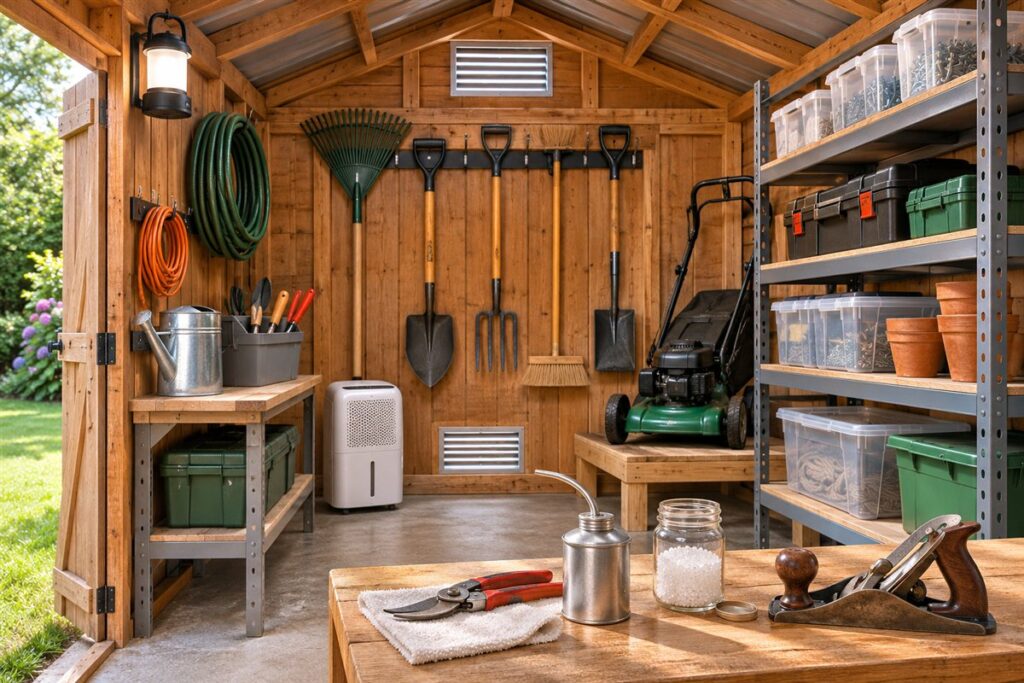
Tools stored in a shed need protection from damp, temperature swings and pests, plus a layout that keeps them easy to reach. Lift everything off the floor, group items by use and check the shed regularly.
Prepare the Shed First
A shed that leaks or floods will undo every other effort. Look for gaps in the roof, walls and door, and for ground water running toward the base. Repairs to structure, roofing or wiring are best handled by a qualified professional. Add air vents if the shed has none, because trapped moist air encourages rust and mold.
Plan the Layout
- Back wall: long-handled tools hung on hooks or racks, heads up where the maker allows.
- Side wall: shelves for boxes, bins and sealed containers.
- Near the door: items you use most, so the entrance stays clear.
- Floor: kept as empty as possible, with heavy machines on a low platform or stand.
- High shelves: light items only.
Protecting Different Tools
| Tool type | Main risk | Habit |
|---|---|---|
| Hand tools with bare steel | Rust | Wipe dry and apply a thin film of light oil |
| Power tools | Damp and temperature swings | Keep in cases; follow the manual on storage conditions |
| Batteries | Extreme heat and cold | Store them as the maker directs, often indoors |
| Fuel-powered gear | Fumes and fire | Follow the manual and local storage rules |
| Wooden handles | Drying out or swelling | Keep out of direct sun and wet floors |
A Seasonal Check
- Empty a shelf or wall section at a time and wipe down the tools.
- Check for rust, loose handles, frayed cords and damaged blades.
- Sweep out dirt and look for signs of rodents or insects.
- Put tools back in order and note what needs repair or replacement.
- Check that the lock, hinges and vents work.
Keep chemicals, fuels and cleaners in their original containers, as labels direct, and keep them out of reach of children. Fuel and chemical storage has local rules, so follow them. Old fuel, solvents and batteries are hazardous waste in many areas, so use local collection points.
Lighting and access matter in a shed too. A bright, battery-powered light or a window helps you see what is stored, and a clear path from the door stops tripping. Keep pathways free of cords and hoses, and leave space to open the door fully.
Controlling Moisture and Condensation
Most shed damage comes from moisture that never fully leaves, not from a single dramatic leak. Warm daytime air holds more water than cold night air, so as temperatures drop the vapor condenses on cold metal. Steel tools, saw plates and metal shelving are the first surfaces to collect it, which is why rust often appears even in a shed with a sound roof.
Start with airflow. Vents placed high and low let air circulate, and even a small gap under the eaves helps. Keep boxes and bins a hand’s width from the walls so air can move behind them. If the floor is bare concrete or soil, lay a vapor barrier or a raised timber floor, and never stack cardboard directly on it, because cardboard soaks up damp and then holds it against your tools.
Absorbent products can help in a closed space. Silica gel packs or moisture-absorbing containers tucked into toolboxes work in small volumes, but they need emptying or recharging according to the product directions. Wrap especially valuable bare-steel items such as chisels, planes and measuring tools in a lightly oiled cloth or a breathable bag. Avoid sealing wet tools inside plastic, since trapped dampness speeds up corrosion. If you plug in a dehumidifier or heater, make sure the shed wiring was installed by a qualified electrician and follow the appliance manual.
Shelving, Hooks and Racks That Suit a Shed
Shed storage has to cope with weight, dust and the occasional knock, so the hardware matters as much as the layout. Metal shelving resists damp better than bare chipboard, which swells and crumbles when it gets wet. If you build timber shelves, choose boards that tolerate humidity or seal them, and fix brackets into solid framing, not into thin cladding.
Before buying, ask a few questions. How much will each shelf carry? Check the load rating on the packaging and keep a margin, because a shelf loaded with paint tins and bags of compost is heavier than it looks. Are the fixings rust-resistant? Plain steel screws in a damp shed will stain and weaken, so look for coated or corrosion-resistant fasteners. Can the system be reconfigured? Adjustable brackets and rail systems let you change the arrangement as your tools change.
- Hooks and rails: good for long-handled tools, hoses and extension cords. Use hooks with a rounded tip so heads cannot slip off.
- Clear lidded bins: let you see contents and keep dust and insects out of fixings and small parts.
- Wall-mounted racks for ladders and bulky items: free the floor, but they must be anchored to structure and rated for the load.
- Low platforms: keep heavy machines like mowers or benches off a wet floor.
Put the heaviest items lowest and keep pathways clear so nothing can topple onto you when you reach for a tool.
Security and Theft Prevention
A shed full of tools is an attractive target, and a good lock only helps if the rest of the shed is equally sturdy. Walk around the outside and judge it the way a thief would. Hinges with exposed screws can be unscrewed, thin door panels can be forced, and a window with no cover shows everything inside. Replace exposed hinge screws with non-return or carriage bolts, and fit hasps whose fixings are hidden when the door is closed.
When choosing a padlock, check how the shackle is protected. A shackle that is short and shielded is harder to cut or lever than a long, exposed one. Product listings and manuals describe the security rating system used in your country, so compare ratings instead of relying on size or weight alone. Match the lock to the value of what is inside; a pricier lock is wasted on a flimsy door.
Other measures are inexpensive and sensible. Keep a written list of tools with serial numbers and photographs, because that record helps with insurance claims and police reports. Mark tools discreetly with your postcode or a permanent identifier. A motion-activated light or a battery alarm can deter casual visits. Check your home insurance policy to see whether shed contents are covered and what conditions apply, since some policies require specific locks. Avoid storing ladders outside where they can be used to reach upper windows.
Winter and Summer Differences
A shed behaves differently across the year, and your habits should shift with it. In cold weather the main concerns are freezing, condensation and brittle materials. Liquids such as paint, glue, caulk and some cleaners can be damaged by freezing, and the label usually says whether the product tolerates it. Move frost-sensitive items indoors rather than hoping they survive. Water left in hoses, sprayers or pressure washers can freeze and crack parts, so drain them fully before cold weather arrives.
In hot weather the problems reverse. A closed shed in direct sun can become very hot, which is hard on plastic cases, battery packs, adhesives and anything pressurized. Aerosol cans and gas cylinders carry warnings about heat on their labels, so read them and store those items as directed, usually in a cooler, ventilated place. Light-colored roofing, shade from a tree or fence, and roof vents all reduce heat build-up.
Seasonal changes also affect pests. Rodents look for shelter as temperatures fall, so seal gaps and store seed, pet food and fertilizer in tightly closed metal or heavy plastic containers. Use the changeover between seasons as a reminder to rotate items: bring summer tools forward in spring, move snow shovels and de-icers near the door before winter, and put off-season equipment on the higher or rear shelves.
Inventory, Labels and an Easy Routine
A tidy shed stays tidy only if putting things away is easier than leaving them out. Labels and a simple inventory make that possible. Label shelves and bins with plain words such as “fixings”, “garden hand tools” or “paint and brushes”. Waterproof labels or marker on tape survive damp better than paper. If more than one person uses the shed, agree where things live so nobody has to guess.
An inventory does not need software. A page taped inside the door listing major tools, with a note of any that are on loan, is enough. Photographing the shed once a year gives you a record for insurance and shows quickly if something has gone missing. Add the purchase date for bigger items, and note where the manuals are kept, because many tools need a specific procedure for storage or winter care.
Build a short routine around the existing seasonal check. After each use, wipe tools clean and dry before hanging them up. Once a month, glance over the floor for spills or droppings, and look at the roof and walls after heavy rain or wind. Keep a small bin of rags and a bottle of light oil in a fixed spot so quick maintenance takes a minute. If you find you rarely use a tool, consider selling, donating or recycling it by local rules, because fewer items mean easier storage and cleaner shelves.
FAQ
Should batteries live in the shed?
Many makers advise storing them away from extreme heat or cold. Read your battery manual and follow its guidance.
How do I keep pests out?
Seal gaps where you can, keep food and bags of seed or feed in sealed containers, and keep the shed tidy so nests are easier to spot.
Is it safe to run a heater or dehumidifier in a shed?
Only if the shed has proper electrical supply installed by a qualified electrician and the appliance is rated for the conditions. Never use fuel-burning heaters in a closed shed because of fire and fumes. Read the appliance manual and keep heaters well away from fuel, paper and sawdust.
How high off the floor should tools be stored?
There is no single rule, but a few inches of clear space lets air circulate and keeps items out of puddles and splashes. Use shelves, pallets or low platforms rather than leaving boxes on the ground. Heavy machines are best on a stand that you can sweep under.
Can I store paint and varnish in the shed?
Check the can label, since many paints and finishes are damaged by freezing or high heat. Keep lids closed tightly and containers upright. If the shed gets very cold or hot, store them in a more stable place indoors.
What is the best way to stop hand tools rusting in storage?
Clean them, dry them thoroughly and wipe a thin film of light oil on bare steel. Keep them off the floor and away from the walls, and let air move around them. Check them each season and re-oil where the film has worn off.
Should I put a lock on the shed even if it is in a fenced yard?
A lock is sensible in most cases because fences do not stop all access. It also keeps children and pets out of areas with sharp tools, chemicals and fuel. Choose a lock that suits the strength of the door.
How do I tell if my shed has a damp problem?
Look for musty smells, dark patches, peeling paint, warped boards and rust that returns soon after cleaning. A cheap hygrometer can show humidity levels over time. Persistent signs usually point to a leak, poor drainage or too little ventilation.
Is it worth insulating a shed?
Insulation can reduce temperature swings and condensation, which helps tools and stored materials. It must be combined with ventilation, or trapped moisture can create new problems. Check the product instructions and consider a professional for any wiring or structural changes.
The Short Version
Fix leaks, lift tools off the floor, group them by use and protect bare steel. Check the shed each season and follow the maker’s and local storage rules.