A dive knife is a tool, not a weapon. It cuts fishing line, frees you from kelp and handles small jobs underwater, and it does not need to be expensive. A budget model with a rust-resistant blade and a secure sheath covers most recreational needs.
The six knives below are budget-friendly options from known diving brands and gear makers. Sizes and sheath types differ, so check the listing before you order. Because budget knives often use basic stainless, rinse them well after every salt-water dive and dry them before storing. Pick a style with a lanyard or strap that is easy to adjust over a wetsuit sleeve. Smaller knives are enough for line, while a longer one helps with kelp, rope and general cutting. Plan to test the sheath release at home so you can draw the knife smoothly with a glove on. If you only dive in calm warm water, a compact model is plenty, but cold-water divers often prefer a larger handle for thick gloves. Spare straps are cheap and worth keeping in your bag, since a snapped strap on the boat can cancel a dive day. Finally, keep the knife sharp enough to cut line cleanly, because a dull blade tends to saw and tangle. We have not used these products ourselves, so confirm sizes, materials and details on the current listing before buying.
As an Amazon Associate we earn from qualifying purchases. Links below are affiliate links, and they do not change the product information we give.
What to Look For
| Feature | Why it matters |
|---|---|
| Blade steel | Stainless or titanium resists corrosion better than plain steel |
| Sheath | A secure sheath keeps the knife from falling out |
| Mounting | Leg straps and hose mounts suit different dive styles |
| Edge | A plain edge slices; a serrated section helps with line |
| Handle | A grippy handle helps with wet hands or gloves |
In this guide
Specs at a Glance
| Knife | Blade | Size class | Notes |
|---|---|---|---|
| Aqua Lung Argonaut | Stainless steel | Compact | Sheath with straps |
| Cressi Skorpion | Stainless steel | Compact | Easy mounting |
| Cressi Lima | Stainless steel | Medium | Sheath included |
| TUSA FK-940 | Stainless steel | Compact | Diving brand |
| Promate Dive Knife | Titanium or stainless | Medium | Budget-friendly |
| Scuba Choice Dive Knife | Titanium or stainless | Medium | Budget-friendly |
The 6 Best Budget Dive Knives
Top pickBest for new divers
1. Aqua Lung Argonaut Dive Knife
A stainless dive knife from a major scuba brand, sold with a sheath and straps. It is a classic, simple choice for new divers.
Suits: new divers. Strengths: trusted brand and clear design. Weaknesses: basic finish at the price. Skip it if you want titanium.
View Aqua Lung Argonaut Dive Knife on Amazon
Best for easy carry
2. Cressi Skorpion Dive Knife
A compact knife from a diving specialist, made to mount easily on a leg or forearm. It suits recreational snorkelers and divers.
Suits: easy carry. Strengths: light weight and ready mounting. Weaknesses: limited blade length. Skip it if you need heavy cutting.
View Cressi Skorpion Dive Knife on Amazon
Best for general diving
3. Cressi Lima Dive Knife
A medium-sized knife from the same brand family, with a sheath and straps. Check the listing for the current sheath type.
Suits: general diving. Strengths: balanced size and brand trust. Weaknesses: may be larger than needed. Skip it if you want a mini backup.
View Cressi Lima Dive Knife on Amazon
Best for backup carry
4. TUSA FK-940 Dive Knife
A compact dive knife from a gear maker known for masks and fins. It works well as a backup tool in a kit.
Suits: backup carry. Strengths: small footprint and easy clipping. Weaknesses: not meant for big jobs. Skip it if you want a primary knife.

Best for budget shoppers
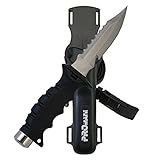
5. Promate Dive Knife
A budget-friendly dive knife from a brand that sells diving accessories, often in titanium. Verify the steel and sheath on the listing.
Suits: budget shoppers. Strengths: low cost and rust resistance. Weaknesses: less brand detail. Skip it if you want a premium name.
Best for occasional divers
6. Scuba Choice Dive Knife
A budget-friendly dive knife from a diving accessory seller, often with a sheath and straps. Check the current listing for materials.
Suits: occasional divers. Strengths: low cost and basic features. Weaknesses: variable finish. Skip it if you want a well-known maker.

Care and Setup
- Rinse with fresh water after each use.
- Dry the blade and sheath fully.
- Check the straps for fraying.
- Test the sheath lock before diving.
- Store the knife in a dry bag.
Mistakes to Avoid
- Using a dive knife to pry shells.
- Forgetting to rinse after salt water.
- Trusting a loose sheath.
- Mounting the knife where it blocks gauges.
- Buying a size too large for a small leg strap.
What a Dive Knife Is Actually For
A dive knife is a utility tool carried for emergencies and small jobs. Its main purpose is to cut things that should not be wrapped around you or your gear: fishing line, loose netting, rope and kelp. It can also pry gently, scrape growth off equipment or open packaging on the boat. It is not a weapon, and in many places it is not meant for harassing marine life or collecting animals, so check local rules before diving.
That purpose shapes the right design. A blade that is too small may struggle with thicker line, while one that is too large can snag on gear and feel awkward on the leg. Many divers carry a compact knife as a backup to a line cutter or shears. If you dive in areas with a lot of fishing line or kelp, a knife with a serrated section or a line-cutting notch is useful.
Budget models can do these jobs well when they are built from corrosion-resistant steel and sit in a secure sheath. Think about the kind of diving you do. Warm, calm water diving may only need a small tool, while cold-water or wreck diving may justify a larger handle that works with thick gloves and a blade that can handle heavier cutting. Match the tool to the actual risk instead of buying the biggest knife.
Sheath, Release and Mounting Styles
The sheath is as important as the blade. A good sheath holds the knife firmly so it does not fall out, yet lets you draw it easily with one hand, even in gloves. Look for a locking or retention system that is clear to operate, and practice releasing it before your first dive. Some sheaths use a push button, others a pull tab or friction fit. Whichever you choose, make sure it is easy to use under stress.
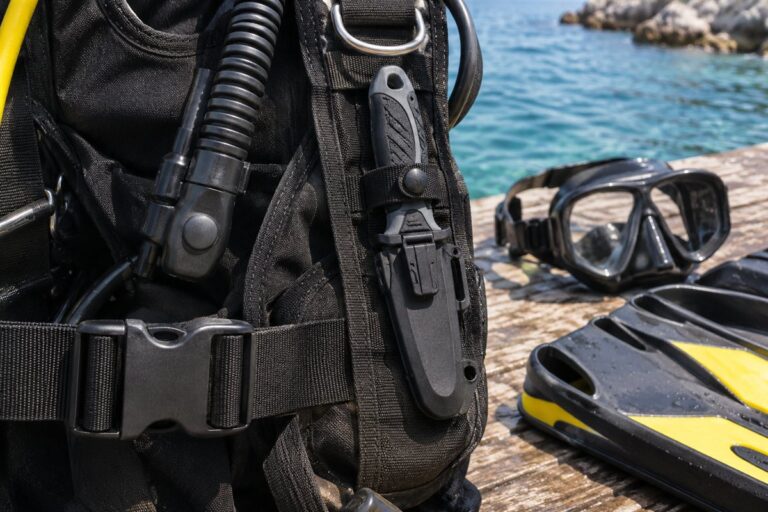
Mounting options include leg straps, forearm straps and attachments for a BCD or hose. A leg mount keeps the knife low and out of the way, but may be hard to reach in tight gear. A forearm mount is easy to reach with the other hand but can snag. A BCD mount keeps it near your chest. Think about where you can reach it without moving too much.
- Check that straps adjust over thick wetsuit or drysuit material.
- Look for rubber or quick-release straps that are easy to replace.
- Avoid mounting the knife where it can catch on lines or ascent gear.
Test the fit at home with your exposure suit if possible. A knife that feels fine in a shirt may be too tight over a wetsuit.
Blade Shape, Edge and Tip Design
Dive knives come with several blade shapes. A pointed tip is good for piercing and scraping, but it can also damage gear and poke you. A blunt or squared tip is safer for prying and general use, and is often preferred where the knife is mainly for cutting line. Many budget knives offer a combination of a plain edge and a serrated section.
A plain edge slices cleanly and is easier to sharpen. A serrated edge grips and saws through line and rope more effectively, but is harder to sharpen. A hybrid can offer the best of both if the serrations are positioned well. Check the listing for the edge description and the blade length. A longer blade cuts more but is bulkier.
Handle shape also matters. A textured, hand-filling handle helps you keep hold when wet or gloved. Some knives have a pommel at the end for tapping on a tank to signal. Make sure the knife does not feel unbalanced. If you sometimes need to cut thick rope or heavy line, consider a blade with a thicker spine. For general use, smaller and lighter is easier to carry and use. Also consider whether a line cutter notch is included, as it adds convenience without needing the full blade.
Rinsing, Drying and Corrosion Prevention
Salt water is hard on metal, and budget stainless knives rely on regular care. After each dive, rinse the knife and sheath with fresh water, including the area between the blade and handle and inside the sheath, where salt crystals can hide. If possible, remove the knife from the sheath, rinse both, and let them dry fully in the open air before storing. Do not seal a damp knife in a bag.
Check the blade for spots of rust or pitting. Light surface marks can often be removed with a soft cloth or a mild abrasive pad, followed by a thin coat of light oil if the maker allows it. Wipe off any excess so it does not attract dirt. Avoid harsh cleaners that can damage coatings or plastic parts.
Examine the sheath and straps, since salt and sun can weaken them over time. Look for cracks, stretched elastic, worn Velcro or sticky release buttons. Keep spare straps in your gear bag, as they are inexpensive and easy to replace. Store the knife in a cool, dry place away from direct sunlight. A knife that is cleaned and dried every time can last a long time, even if it is a budget model, while a neglected one may corrode quickly.
Legal, Travel and Practical Carry Notes
Rules about carrying knives differ by location, and they apply to dive knives too. Some regions limit blade length, locking mechanisms or carrying in public spaces. Dive sites, parks and marine reserves may have extra regulations, and some prohibit carrying knives in certain areas. Check local rules before you travel, and ask the dive operator if you are unsure.
When traveling by plane, knives generally cannot go in carry-on baggage, so pack the knife in checked luggage in line with airline guidance. Keep it in its sheath and wrap it so it cannot injure baggage handlers. If you dive on a boat, ask whether the crew has rules on knives. Some operators provide cutting tools or ask you to keep yours stowed during transit.
Practical habits include securing the knife so it does not drop on the deck, keeping it away from children and storing it where it cannot cause an accident. Remember that a dive knife does not replace training or good practice. Learn how to avoid entanglement, how to use your tools calmly and when to ask for help. A budget knife can be a valuable backup when it is chosen with care, maintained properly and carried with respect for local rules.
Budget Dive Knives FAQ
Is a cheap dive knife worth it?
Yes, if it has a rust-resistant blade and a secure sheath.
Is titanium necessary?
Not required. Stainless works well if rinsed and dried.
Where should I wear it?
On the leg, forearm or BCD, wherever it is easiest to reach.
Should it be serrated?
A small serrated section helps with line, but a plain edge is easier to sharpen.
How big should a budget dive knife be?
A compact to medium blade covers most recreational needs. Larger blades suit heavy rope or kelp, but they can be bulkier to carry.
Do I need a line cutter as well?
Many divers carry both, since a line cutter is quick and safe for fishing line. A knife handles thicker items.
Can I sharpen a serrated dive knife?
It takes a tapered rod or specialist tool. A plain edge is easier to sharpen at home.
How should I rinse it after a dive?
Rinse the knife and sheath in fresh water, remove the knife, and let both dry fully before storing.
Can I take a dive knife on a plane?
Usually only in checked luggage. Check airline and airport rules before you travel.
What if the straps do not fit over my suit?
Look for longer or elastic straps, and replace them if needed. Test the fit over your suit before diving.
Is a pointed tip safer or riskier?
A pointed tip pierces and scrapes well but can snag gear and cause injury. A blunt tip is safer for general use.
The Short Version
For a classic starter, the Aqua Lung Argonaut. For compact carry, the Cressi Skorpion. For a medium size, the Cressi Lima. For a backup, the TUSA FK-940. For budget titanium, the Promate. For another value pick, the Scuba Choice.
Related Guides
- 6 Best Dive Knives for Spearfishing: Steel and Titanium (2026)
- How to Choose the Best Dive Knives: Buyer's Guide (2026)
- 6 Best Hori Hori Knives: Stainless, Wood and Sheathed (2026)
- 6 Best Budget Chopper Knives: Machetes and Kukris (2026)
- 6 Best Budget Fixed Blade Knives for Camp and Utility (2026)
Blade Materials and What Budget Steel Means in the Water
The biggest difference between a cheap dive knife and an expensive one is usually the steel. Salt water is hard on metal, and budget knives often use stainless steels that resist rust reasonably well but are not immune. Understanding the trade-offs helps you set realistic expectations.
Titanium knives resist corrosion extremely well and hold up to salt water with little fuss, but they tend to cost more and can be harder to sharpen. Many stainless knives take an edge easily and are cheaper, but they need more care after every dive. Some budget knives use basic stainless that may show spots or pitting if rinsed poorly, which is why maintenance matters more than the sticker on the box.
- Titanium: highly corrosion resistant, usually beyond the lowest price tier.
- Higher grade stainless: good balance of edge holding and rust resistance.
- Basic stainless: affordable and easy to sharpen, but needs thorough rinsing and drying.
- Coated blades: a coating can reduce glare and add protection, but scratches expose the steel underneath.
Fasteners, springs and sheath hardware can also corrode even when the blade holds up. Look for knives that describe the whole assembly as corrosion resistant and avoid parts that look plain steel or have visible rust on arrival. If you dive in fresh water only, steel choice matters less, though any knife benefits from care.
Choosing a Knife for the Kind of Diving You Do
The right knife depends on what you expect to cut. A person who dives in warm, clear water over reefs has different needs from a cold-water diver working around kelp, fishing line and ropes.
Recreational reef and tropical diving
You will rarely need a knife, and when you do, it is typically for monofilament line or small tangles. A compact knife with a good line cutting notch is enough. Remember that many reefs and parks protect marine life, so a knife is not for poking, prying or collecting.
Kelp and cold water diving
Kelp wraps around tanks, fins and hoses. A somewhat longer blade with a serrated section helps cut through fibrous plant material. Heavy gloves also affect how you reach and release the knife, so test the sheath with your actual gloves.
Wreck and cave environments
These environments involve rope, cable and line, and divers often carry more than one cutting tool, including shears or line cutters. A single budget knife is a starting point, and technical diving needs training and gear well beyond this guide.
Spearfishing and general utility
Spearfishers often use a longer, sturdier blade and secure sheath. Regulations differ by region, so check local rules on knife length and carry.
Testing Fit and Function Before the Dive
A knife you cannot reach or release is worse than none. Before taking a new knife into the water, check it on dry land with all your gear on.
- Wear the full exposure suit, gloves and equipment, then strap the knife on and practice drawing it with one hand.
- Check that the sheath retains the knife during movement but releases when you pull firmly.
- Make sure straps are long enough for a thick wetsuit sleeve or calf and do not pinch.
- Look at where the handle sits relative to hoses, gauges and the BCD so nothing snags.
- Check that the blade cannot press against inflator hoses or other equipment.
Some divers mount the knife on the lower leg, others on the BCD strap or forearm, and the right spot is the one you can reach without contortion. Whatever you choose, keep the knife in the same place on every dive so reaching for it becomes automatic.
Sharpness, Maintenance and Replacement Timing
A dive knife only has to be sharp enough to cut line and plant material, but a dull blade makes the job slower and more dangerous because you push harder. Check the edge before each trip. A light touch with a fine stone or sharpener restores most budget blades. Serrated sections are more difficult to sharpen, so do not rely on them for a long service life.
Replace the knife if the blade shows deep pitting, if the handle cracks or loosens, or if the sheath no longer holds firmly. Straps and retaining bands also age, so inspect them for wear. A budget knife can be fully adequate for years if it is rinsed, dried, inspected and stored properly, and the cost of replacing one is small compared with the risk of relying on a damaged tool.
Finally, practice the emergency use of the knife before you need it. Rehearse reaching for it in a pool or shallow water with a buddy, and agree on what to do if one of you becomes tangled. A knife is a backup, and the best approach to entanglement is prevention: keep hoses and loose gear tucked in, watch for fishing line, and stay off the bottom in kelp. Taking a rescue or advanced course teaches skills no piece of gear can replace.
Frequently Asked Questions
What is the difference between titanium and stainless dive knives?
Titanium resists corrosion very well and needs little care after salt water, but it usually costs more and can be harder to sharpen. Stainless steel is cheaper and holds an edge well, yet it can rust or pit if not rinsed and dried. Budget knives are typically stainless.
Which dive knife style is best for kelp?
A somewhat longer blade with a serrated section tends to handle fibrous kelp better than a short plain edge. Make sure the sheath is easy to reach and release while wearing thick gloves, since cold-water gear makes small straps and buttons harder to operate.
How often should I replace a budget dive knife?
There is no fixed schedule. Replace it if the blade shows deep pitting, the handle loosens, or the sheath no longer holds the knife securely. With thorough rinsing, drying and inspection after each trip, many budget knives last several seasons.
Are dive knives legal to carry everywhere?
Not always. Rules on blade length, locking mechanisms and carrying in public vary by region, and marine parks may limit what divers can bring. Check local regulations and dive operator policies before you travel, and do not carry a dive knife outside the dive context.