A hori hori is a Japanese garden knife with a long, narrow blade that is serrated on one side and sharp on the other. It digs, cuts roots, slices through sod, opens bags of soil and measures planting depth, all with one tool. Many gardeners keep one on the belt instead of a trowel.
The six hori hori knives below include classic stainless designs, a model with a sheath and a few brand-name options. We have not used these tools ourselves, so confirm the blade length, material, handle and sheath details on the current listing before buying. Look for depth markings if you plant bulbs often.
As an Amazon Associate we earn from qualifying purchases. Links below are affiliate links, and they do not change the product information we give.
What to Look For
| Feature | Why it matters |
|---|---|
| Blade material | Stainless resists rust in wet soil; carbon steel needs more care |
| Depth markings | Etched marks help with planting bulbs and seedlings |
| Handle | A grippy handle stays secure in muddy hands |
| Sheath | A good sheath protects you and your tools |
| Serrated edge | Cuts roots and rope; the other edge slices soil |
In this guide
Specs at a Glance
| Knife | Blade | Handle | Notes |
|---|---|---|---|
| Nisaku Hori Hori | Stainless steel | Wood | Classic Japanese design |
| Barebones Hori Hori | Stainless steel | Wood or composite | Includes a sheath |
| DeWit Hori Hori | Steel | Wood | Dutch garden tool brand |
| Edward Tools Hori Hori | Stainless steel | Rubber or wood | Sold with a sheath |
| A.M. Leonard Hori Hori | Steel | Wood | Garden and nursery supplier |
| Truper Hori Hori | Steel | Wood or plastic | Budget-friendly choice |
The 6 Best Hori Hori Knives
Top pickBest for traditional use
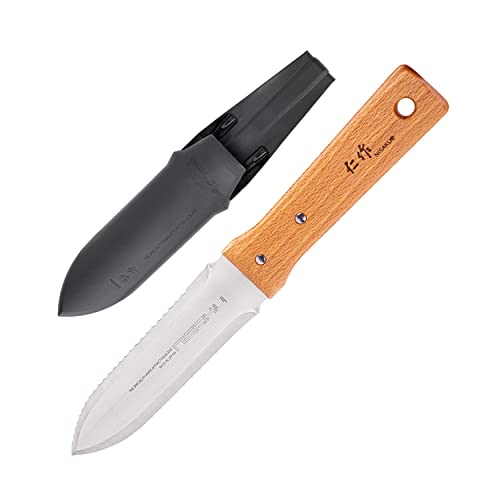
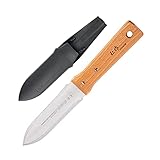
1. Nisaku Hori Hori Digging Knife
A classic Japanese garden knife from a long-time maker. It has a stainless blade with a serrated side, a wood handle and a simple, no-frills shape. Many gardeners consider it the standard.
Suits: traditional use. Strengths: a trusted, proven design. Weaknesses: the sheath may be basic. Skip it if you want modern grips.

Best for everyday gardening
2. Barebones Hori Hori
Barebones makes outdoor and garden tools with a rustic, practical look. Its hori hori comes with a sheath and a handle designed for a firm grip, suiting everyday garden use.
Suits: everyday gardening. Strengths: a sheath and a sturdy build. Weaknesses: check the handle style. Skip it if you want depth marks only.


Best for serious gardeners
3. DeWit Hori Hori
DeWit is a Dutch maker of garden hand tools known for forged steel and wood handles. Its hori hori is built to last and to feel good in the hand over a long day of work.
Suits: serious gardeners. Strengths: quality forging. Weaknesses: steel may need oil. Skip it if you want the lowest cost.


Best for planting bulbs
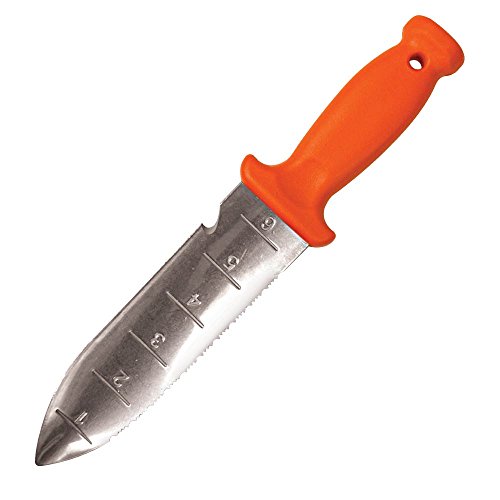
4. Edward Tools Hori Hori
A stainless hori hori with a grippy handle and a sheath, aimed at a broad garden audience. It often features laser-etched depth markings along the blade.
Suits: planting bulbs. Strengths: depth marks and a sheath. Weaknesses: details vary by listing. Skip it if you want a wood handle.

Best for nursery work
5. A.M. Leonard Hori Hori
A.M. Leonard has supplied nursery and garden professionals for generations. Its hori hori is a practical, professional-style tool that suits regular use.
Suits: nursery work. Strengths: a pro-supplier brand. Weaknesses: fewer extras. Skip it if you want a branded sheath.
Best for a first hori hori
6. Truper Hori Hori
Truper is a broad hand tool brand with budget-friendly garden items. Its hori hori is a simple way to try the style before you invest in a premium version.
Suits: a first hori hori. Strengths: an accessible entry point. Weaknesses: basic finish. Skip it if you want a heirloom tool.
View Truper Hori Hori on Amazon
Care and Setup
- Rinse off soil after use and dry the blade.
- Oil carbon steel and the wooden handle lightly.
- Sharpen the plain edge with a file or whetstone.
- Store in the sheath so the point is protected.
Mistakes to Avoid
- Using the knife to pry large rocks.
- Leaving it wet in a sheath.
- Carrying it unsheathed in a pocket.
- Forgetting to sharpen the plain edge.
Everyday Garden Jobs a Hori Hori Can Handle
A hori hori is more than a narrow trowel. Its long, strong blade, with a plain edge on one side and a serrated edge on the other, suits a surprising list of jobs. You can dig a planting hole for a seedling or a bulb, slice through sod to lift a section, saw through a stubborn root, and cut open bags of soil, mulch or fertilizer. The blade length, often marked with depth lines, makes it easy to plant bulbs or transplants at the right depth without a ruler.
It is also a capable weeder. Slide the blade alongside a tap-rooted weed, lever it up and lift out the whole root. In tight spaces between plants or along a path edge, the narrow blade reaches where a wide trowel will not. Gardeners also use it to divide perennials, cut through tough clumps and trim string, twine and plant ties.
Think about the work you do most. If you mainly plant bulbs and seedlings, depth marks and a comfortable handle matter most. If you do a lot of weeding and root cutting, a sturdy blade and a good serrated edge are more important. If you garden in heavy clay or rocky soil, a thicker blade and a strong handle can prevent bending or loosening.
- Digging and planting, including measuring depth.
- Weeding and root cutting.
- Dividing perennials and slicing sod.
- Opening bags and cutting twine.
Keep in mind that a hori hori is a cutting tool, not a pry bar, as the post points out.
Blade Material, Thickness and Rust Resistance
Blade material affects how well the tool survives wet soil and daily use. Stainless steel resists rust and is easy to clean, which makes it a solid choice if you garden in damp conditions or do not want to oil the blade after every use. Carbon steel is often tougher and can take a sharper edge, but it will rust if left wet and needs regular drying and oil. The post’s specs mention both types, so check each listing.
Thickness matters in hard ground. A thin blade may flex or bend when levering, while a thicker one holds up better against roots and compacted soil. Too thick a blade can feel clumsy in tight spaces and may be heavier to carry. Look for a blade that feels balanced and sturdy without being bulky.
The edges also deserve a look. The serrated side should have teeth that bite into roots and rope, while the plain edge should be sharpenable for clean slicing. Check whether the serrations are large and sturdy or shallow and fine, since that affects how aggressively they cut.
Finish may influence maintenance. A coated or brushed blade can reduce sticking soil. If the blade is polished, soil may wipe off easily but show scratches.
- Stainless for low maintenance and damp conditions.
- Carbon steel for toughness if you will keep it dry and oiled.
- Check the listing for blade thickness and steel type.
If details are missing, consider asking the seller or checking the maker’s information.
Handle Comfort and Hand Fit
You will hold a hori hori for long stretches, often with wet or muddy hands, so the handle has a major effect on the tool. A comfortable handle has a diameter that fits your hand, enough length to cradle the palm, and a surface that stays secure when damp. Wood handles feel natural and warm but need occasional oiling and can swell or crack if left wet. Rubber and composite handles are often grippier when wet and usually easier to keep clean.
Size your hand against the handle. Small hands may find a thick handle tiring, and large hands may find a thin one cramped. If a listing shows dimensions or photos with a hand for scale, use them. Check the shape as well: an oval or slightly contoured handle helps keep the blade oriented.
Also look at how the blade joins the handle. A full or partial tang, with rivets or a solid bond, gives more strength than a blade simply pressed into the handle. Any play or wobble at the joint is a warning sign, particularly if you plan to lever the tool.
- Choose a grip that stays secure when wet.
- Check for a firm blade-to-handle connection.
- Consider whether a hand loop or lanyard hole is useful.
A lanyard hole lets you hang the tool or attach a cord, which helps prevent loss in a garden bed.
Sheaths, Carry Options and Storage
Because the blade is long and pointed, a good sheath is a safety item and not just an accessory. Sheaths protect you, your clothing and other tools. They also keep soil from scattering when you set the knife down. Check the sheath material and design: leather and sturdy synthetic options both work, and the best ones hold the knife securely without being hard to draw.
Think about how you will carry it. A belt loop or clip lets you keep the tool on you while you move around the garden. Some sheaths include a retention strap or a snap so the knife cannot fall out when you bend over. Others hang from a pouch or tool bag. Make sure the sheath fits the knife properly, since an oversized one can let the blade rattle and an overly tight one is hard to use.
Storage affects tool life. Always rinse and dry the blade before it goes in the sheath, because trapped moisture causes rust and stains. Leather sheaths should be kept dry and conditioned occasionally. Clean soil out of the sheath now and then so grit does not wear the blade.
- Cover the point whenever you carry or store the knife.
- Do not carry it loose in a pocket or bag.
- Store in a dry shed or toolbox, away from children.
Check each listing to see whether a sheath is included and what material it uses, since the post notes that sheath quality varies.
Keeping a Hori Hori Sharp and Ready
A hori hori does not need a razor edge, but a reasonably sharp plain edge cuts roots, sod and twine more cleanly and safely. Sharpen it with a flat file or a whetstone, following the existing bevel, and work along the edge with steady strokes. Keep the angle consistent and avoid over-sharpening. Be careful not to round the tip, which you use for digging and prying lightly.
The serrated edge usually needs less attention. Because of its shape, it is hard to sharpen precisely. Many gardeners leave it alone, or use a small tapered file for each tooth. Check the maker’s care notes to see whether they recommend sharpening the serrations.
Clean the tool after each session. Rinse off soil, scrub away stubborn mud with a brush, and dry the blade. A light coat of oil on carbon steel, and on wooden handles, keeps them in good shape through the season. At the end of the year, deep clean the tool, check for rust, loose handles or damage, and store it dry.
- Check the handle joint and sheath each season.
- Remove rust with fine abrasive and oil afterward.
- Replace the tool if the blade is bent, cracked or heavily pitted.
With a little care, a hori hori can last many gardening seasons.
How the Six Picks Compare in the Garden
Every knife in this list shares the hori hori pattern, a long blade with a plain edge on one side and a serrated edge on the other, depth markings on many models, and a job description that runs from digging and dividing to weeding and cutting roots. The differences that matter are build tradition, handle style and how finished the package feels, and sorting the six by those differences is faster than comparing them feature by feature.
The traditional standard and the professional route
The Nisaku Hori Hori is the classic of the category, a Japanese garden knife with a stainless blade, a serrated side and a wood handle in a simple, no-frills shape that many gardeners treat as the standard. Choose it if you want the proven pattern without embellishment, accepting that the sheath may be basic. The A.M. Leonard Hori Hori comes from a supplier that has served nursery and garden professionals for generations, and its practical, professional style suits regular, unglamorous use in a working garden or nursery setting, with fewer extras as the honest trade. Between them, the Nisaku is the traditionalist's pick and the Leonard is the working professional's, and both reward gardeners who value function over finish.
Forged quality and modern comfort
The DeWit Hori Hori represents the forged end of the market, from a Dutch maker known for forged steel and wood handles, built to last and to feel good in the hand over a long day. Choose it if you garden seriously and often, and accept that the steel may need a light oil as part of its care. The Barebones Hori Hori takes the modern route, with a sheath included and a handle designed for a firm grip in a rustic, practical package suited to everyday gardening. The Edward Tools Hori Hori is the modern stainless option with a grippy handle, a sheath and, on many versions, laser-etched depth markings along the blade, which bulb planters in particular appreciate. Confirm the details on its listing, since they vary, and choose among the three by whether heritage forging, ready-to-carry packaging or marked planting depth matters most to you.
The first hori hori
The Truper Hori Hori is the accessible entry point, a simple, budget-friendly way to learn whether the hori hori pattern suits your gardening before investing in a premium version. Its honest limit is basic finish, which matters little while you are discovering the tool and more if it becomes your daily companion. Many gardeners sensibly start here or with the classic Nisaku, then upgrade to a forged or professional model once the pattern has earned a permanent place in their kit. There is no wrong door into this category, only a wrong expectation: even the finest hori hori is a hand tool for hand-scale jobs, not a substitute for a spade, a saw or a lopper.
A Closer Look at Each Pick in Real Use
Nisaku: who it suits, and its honest limits
Choose the Nisaku if you want the standard pattern from a long-time maker: stainless blade, serrated side, wood handle, no fuss. It suits traditional use across digging, weeding and dividing. The honest limit is the package around the blade, since the sheath may be basic, so budget for storage that protects the point properly. Skip it if you want modern grip materials, and choose it as the reference hori hori against which the others are judged.
Barebones: who it suits, and its honest limits
Choose the Barebones if you want a sturdy everyday gardener with a sheath and a handle shaped for a firm grip, in a package that feels ready for the garden from day one. The honest point to check is the handle style, since hands differ and this is a tool you will grip hard in resistant soil. Skip it if your only interest is depth markings, and choose it for balanced, ready-to-carry practicality.
DeWit: who it suits, and its honest limits
Choose the DeWit if you are a serious gardener who notices tool quality across a long day and wants forged steel and a wood handle built to last. The honest limit is care: the steel may need oil to stay at its best, which suits owners who already maintain tools as a habit. Skip it if you want the lowest cost or a maintenance-free finish, and choose it as the heirloom end of this list.
Edward Tools: who it suits, and its honest limits
Choose the Edward Tools if you plant bulbs and transplants by measurement and want depth markings etched along a stainless blade, with a grippy handle and a sheath in a broad-audience package. The honest caution is that details vary by listing, so confirm the markings and the sheath before ordering. Skip it if you want a wood handle and a traditional feel, and choose it when planting accuracy is your headline need.
A.M. Leonard: who it suits, and its honest limits
Choose the A.M. Leonard if your gardening resembles work more than hobby, or you simply trust a professional supplier's practical tool for regular use. The honest limit is extras: fewer of them, in exchange for a no-nonsense professional pattern. Skip it if a branded sheath package and consumer polish are what you are shopping for, and choose it for steady, serious use.
Truper: who it suits, and its honest limits
Choose the Truper if this is your first hori hori and you want to learn the pattern at an accessible cost, for a small garden, a starter allotment or a spare tool at a second property. The honest limit is finish, which is basic rather than refined. Skip it if you already know you want an heirloom tool, and choose it as the sensible trial the guide intends.
Selection Criteria, Technique and Care
Judge a hori hori first by the blade's build and how it meets the handle, because this tool gets levered in soil and a flimsy junction is where cheap digging tools fail. Next, match the steel to your care habits: stainless versions forgive a busy gardener, while steels that need oil reward the habit with toughness and easy sharpening. Handle comfort under real load comes third, since you will push this tool into resistant ground with your palm and grip; a handle that feels fine empty can bruise a palm by the twentieth planting hole. Finally, treat the sheath as part of the tool, not an accessory. A hori hori is carried constantly and has a real point, so a sheath that covers it fully and rides securely on a belt is a safety feature, and models that include a good one start ahead.
Technique keeps both the tool and the gardener intact. Dig with the blade, lever gently rather than prying with full force, and reach for a spade or a mattock when a rock or a root is clearly beyond hand-tool scale, since bending a blade helps no one. Use the serrated side for fibrous roots and sod, the plain edge for clean slicing and cutting ties and bags, and the depth markings, where fitted, to plant bulbs and transplants consistently. After each session, rinse off the soil, dry the blade, oil any steel that needs it, sharpen the plain edge with a file or a whetstone when it dulls, and store the knife in its sheath with the point protected. Carried sheathed, never loose in a pocket or a trug, a hori hori from any tier of this list will quietly become the tool your hand reaches for first.
Matching the Tool to Your Garden
Small, intensively planted gardens reward the hori hori most, because beds, borders and containers are full of hand-scale jobs in tight spaces where a trowel is too wide and a spade is absurd. Allotment and nursery work adds volume, which pushes the choice toward the professional and forged picks that stay comfortable across a long day. Gardeners who mostly plant bulbs in autumn should weight depth markings heavily, while those who divide perennials and weed year-round should weight blade strength and handle comfort. Read your own garden honestly, pick the tier that matches its demands, and the hori hori will repay you in every season rather than in the first enthusiastic month.
Three Gardening Scenarios, Worked Through
The balcony and container gardener
Picture a gardener whose whole plot is pots, planters and a small raised bed. The jobs are intimate and constant: repotting, dividing crowded plants, weeding between close neighbours and cutting roots in confined compost. A hori hori is almost perfectly sized for this life, and the choice turns on comfort and carry rather than strength. The classic Nisaku suits a traditional hand, the Barebones suits someone who wants a sheath and a modern grip for moving between balcony and storage box, and the Truper is a perfectly sensible first trial. What this gardener should not buy is disappointment in reverse: even the forged DeWit cannot make container work faster than the containers allow, so mid-list picks serve this scenario fully.
The allotment holder working a full plot
Now picture a plot worked every week across the seasons, with bulbs in autumn, dividing in spring and weeding without end. Volume changes the priorities: handle comfort across a long day, a blade junction that shrugs off levering in real soil and a sheath that survives being worn for hours. The DeWit, with its forged build and day-long handle comfort, and the A.M. Leonard, with its professional pattern, lead this scenario, while the Edward Tools earns its place in autumn when its depth markings turn bulb planting into a measured, repeatable routine. This gardener will also feel the care differences most: a tool washed, dried and oiled as a habit in October is the tool that starts March ready.
The professional and the nursery bench
Finally, picture hori hori use as paid work: nursery benches, landscaping crews and market gardens, where the tool is used hard, shared cautiously and replaced on performance rather than sentiment. The A.M. Leonard's professional-supplier pattern is the natural centre here, with the DeWit for those who prefer forged tradition. At this level the purchasing questions become organisational: are sheaths replaced when they wear, are edges maintained on a schedule, and does each worker have their own tool rather than a communal one of unknown sharpness? The knife models matter less than those systems, which is exactly what makes this scenario professional.
A Year of Hori Hori Work, Season by Season
The tool earns its keep differently across the year, and noticing the pattern helps you choose and care for it. In spring it divides perennials, plants out seedlings at measured depth and slices through winter-compacted beds. In summer it becomes a weeder first, sliding alongside tap roots in tight borders, with sidelines in cutting twine, opening bags and trimming. Autumn is its showcase season, when bulb planting rewards depth markings and a blade that digs a clean, narrow hole hundreds of times without complaint. Winter is for the jobs nobody photographs: cutting roots in cleared ground, tidying beds and, indoors, the wash, dry, oil and sharpening session that resets the tool for spring. A hori hori bought with that whole year in mind, and maintained at its turning points, is one of the few garden tools that genuinely has no off-season.
Hori Hori Knife FAQ
What is a hori hori used for?
It digs, weeds, cuts roots, divides plants and opens soil bags. It also marks planting depth.
Which side is serrated?
One edge is serrated for roots and rope, and the other is plain for slicing soil and sod.
Can it replace a trowel?
For many jobs, yes. The narrow blade digs narrow holes, divides perennials and slices through roots. A wide trowel still moves more soil, so some gardeners keep both tools in their kit.
How should I carry it safely?
Keep it in its sheath, on a belt or in a tool bag, with the point covered. Never carry it loose in a pocket, and clean the sheath now and then so soil does not build up inside.
Do I need depth markings on a hori hori?
They are helpful for planting bulbs and seedlings at the right depth, but not essential. If you plant often, markings save time. If not, a good blade and handle may be more important.
Is stainless steel better than carbon steel for a hori hori?
Stainless needs less care and handles wet soil well. Carbon steel can be tougher and sharpen easily but must be dried and oiled. Choose based on how willing you are to maintain it.
Can I use a hori hori for pruning?
It can cut thin roots and soft stems, but it is not a pruning tool. Use secateurs or loppers for woody branches so you do not damage the blade or the plant.
How do I sharpen the serrated edge?
Many gardeners leave it as is. If it becomes dull, a small tapered file can work on individual teeth, following the maker's advice. The plain edge is much easier to sharpen with a file or whetstone.
What should I do if the blade bends?
Stop using it for prying. A slightly bent blade may be straightened, but if it is cracked or keeps bending, replace it. Avoid using it to lever rocks or large roots.
Is a hori hori safe to carry on a belt?
Yes, if it sits in a secure sheath with the point covered and you keep it fastened. Avoid carrying it unsheathed, and take care when bending or kneeling.
Can I use a hori hori in rocky or clay soil?
It works in many soils, but hard clay and stones put more stress on the tool. Choose a sturdy blade and a strong handle joint, and avoid prying against rocks.
How a Hori Hori Compares With Other Hand Tools
A hori hori sits between a trowel, a knife and a small saw, and that mix is both its strength and its limit. A trowel has a broad scoop that moves loose soil well. A hori hori has a long, narrow blade that slices through it. If your main task is filling pots with potting mix, a trowel is still the more natural tool. If you are working in a bed full of roots, a hori hori usually gets further with less effort.
Compared with a soil knife of the Western style, the Japanese pattern tends to have a concave blade with a sharpened edge on one side and a serrated edge on the other. That shape lets you scoop a little, cut a little and measure planting depth if the blade is marked. A standard pocket or utility knife can cut roots, but it lacks the width to lever soil and will suffer if you pry with it.
A weeder with a forked tip excels at pulling taproots, such as dandelions, but it does little else. A hand fork loosens compacted ground but cannot cut. Because the hori hori covers some of each job, many gardeners keep one on the belt and add a second specialist tool only if they notice a specific gap.
Techniques for Digging, Dividing and Planting
Good results come from letting the blade do the cutting instead of forcing it. For planting bulbs or small starts, push the point straight down, rock the handle back to open a hole, then lift out the blade. If the blade has depth marks, you can check that a bulb sits at the right depth without a ruler.
For dividing perennials, drive the blade down around the edge of the clump, working in a rough circle. The serrated edge saws through thick root balls more easily than the smooth edge. Lift the clump with a fork or the blade once the roots are cut, then slice it into sections.
For weeding, slide the blade down beside the weed, angle it under the root and lever the plant upward. Work gently with long-rooted weeds so the root comes out whole. When cutting twine, plastic pot edges or landscape fabric, use the serrated side and keep your free hand clear of the line of the cut.
- Keep your wrist straight and use your arm, not just your hand, for steady pressure.
- Do not twist the blade sideways against rock; a stone can chip or bend the edge.
- Wipe soil off the blade after each session so moisture does not linger.
Working in Different Soils
Soil type changes how a hori hori feels in use. In loose loam or raised-bed mix, almost any model slides in easily and the differences between blades are small. In heavy clay, a thicker blade resists flexing, and a comfortable handle matters more because you push harder. In sandy soil, the blade goes in quickly but loose walls can collapse, so a narrow blade that opens a tight hole works nicely.
Rocky or root-filled ground is the true stress test. Expect to hit stones, and understand that even a strong blade can dull or nick against them. Probing first with the point, rather than driving the blade at full force, helps you feel an obstruction and work around it. If you garden mostly in stony soil, favor a thicker blade and a model that is easy to resharpen over a thin, lightweight one.
Wet soil sticks to steel. A smooth, well-finished blade releases mud more readily than a rough one, and a quick rinse afterward keeps the serrations clear. Dry, baked ground is hard on any tool, so water the spot first if you can.
Gifts, Budgets and Realistic Expectations
A hori hori is a popular gift for gardeners because it is useful and not very bulky, but it helps to match it to the recipient. A new gardener will appreciate a simple, sturdy model with a sheath. An experienced gardener who already owns one may prefer an upgrade in steel or handle material, or a matching sharpening stone.
On budget, price differences tend to reflect steel, sheath quality and handle finish. A lower-cost blade is perfectly capable of digging and cutting if you keep it clean and dry; higher-cost models mostly offer better rust resistance, tidier finishing and a more refined feel in the hand. Since this guide is based on specs and published information rather than hands-on use, treat durability claims as general indicators and read the return policy before you buy.
Finally, remember that any fixed blade needs respect. Store it in its sheath, keep it away from children and check local rules if you plan to carry it outside your own property.
A few practical habits make any hori hori last longer and work better. Keep it in the sheath whenever it is not in use, even in the garden, because a blade left on a bench or in the grass is both a hazard and a rust risk. Wash soil off with water and a brush, dry it with a rag and wipe a thin film of oil on carbon steel before storage. If the handle is wood, avoid leaving it soaking wet in a bucket, since repeated wetting can raise the grain and loosen fittings.
Think, too, about how often you will actually reach for it. Gardeners who work in raised beds and containers may use it daily, while those who mostly mow and prune might use it only a few times a season. Matching how much you spend to how much you use is the simplest way to avoid regret. A modest, sturdy knife with a decent sheath serves most people well, and you can always upgrade once you know your habits.
- Rinse, dry and oil after wet or acidic jobs.
- Check the handle fit and rivets once a season.
- Sharpen the plain edge lightly before spring planting.
Frequently Asked Questions
Hori hori vs trowel: which should I buy first?
If you mostly plant in loose soil or pots, a trowel scoops more efficiently. If you weed, divide plants or cut through roots, a hori hori does more jobs. Many gardeners start with a hori hori and add a trowel later for bulk soil moving.
How deep can I dig with a hori hori?
Blade length sets the limit, and most of these knives dig roughly the length of the blade, often six to seven inches. That is plenty for bulbs, transplants and weeds. For deeper holes, such as shrubs, you will still want a shovel or spade.
Will a hori hori damage plant roots?
It can if used carelessly. The sharpened edge cuts roots cleanly, which helps when dividing plants but hurts if you drive the blade too close to a plant you want to keep. Insert it a few inches away and lever outward gently.
Can I use a hori hori on frozen or very dry ground?
It is not ideal. Frozen soil and hard baked clay can chip an edge or bend a thin blade. Water dry ground first and wait for frozen soil to thaw. A stronger tool, such as a mattock or pick, suits those conditions better.
How do I use the serrated and plain edges correctly?
Use the serrated side with a sawing motion for fibrous material such as roots, sod and tough stems, where its teeth bite and work through fibres that a plain edge would slide on. Use the plain edge for clean slicing cuts, opening bags, cutting twine and trimming, where a smooth edge leaves a tidy result. Keeping both edges in their proper work is what makes the pattern so versatile, and keeping the plain edge sharp with a file or whetstone preserves the half of the tool that does the delicate work.
What should I do if the handle feels uncomfortable on long jobs?
First check your technique, since pushing with a pinched grip tires any hand; drive the tool with your palm and body weight where the job allows, and take natural breaks between beds. Garden gloves with some padding help many users. If discomfort persists across sessions, the handle shape does not suit your hand, and that is a legitimate reason to change tools, because a hori hori is used with force and a handle that fights you will limit every job. Handle fit is a selection criterion, not a luxury.
Can a hori hori cut through large roots?
It can saw through modest roots with the serrated edge, which is one of its regular jobs when dividing plants or clearing a planting hole. Large roots belong to a pruning saw or loppers, and forcing a hori hori against them risks bending the blade or slipping under load. Part of using this tool well is recognising the boundary of hand-tool work and stepping up to the right tool, then coming back to the hori hori for the digging, levering and tidying it does best.
How do depth markings help in practice?
They turn planting depth from a guess into a repeatable measurement. Bulbs and transplants have preferred depths, and a blade marked along its length lets you dig and check in one motion, hole after hole, without carrying a ruler into the bed. Gardeners planting in batches notice the consistency most: rows come up evenly because every plant started at the same depth. If your gardening is mostly weeding and dividing, markings matter less; if you plant bulbs every autumn, they are worth choosing deliberately, as on the marked models in this list.
Is a hori hori a good gift for a gardener?
Yes, for a gardener who works at hand scale, because it is useful in every season and most recipients did not know they needed one until it is in their hand. Choose a complete package with a sound sheath, at the classic or modern tier for a safe reception, and consider the recipient's care habits when choosing the steel. Add a note about sheathed carry and storage if they are new to the tool. It is a gift that gets used weekly rather than admired, which is the best kind.
Can I use a hori hori in place of a whole tool set?
It replaces more tools than any other single hand tool in the garden, covering much of what a trowel, a weeder, a transplanting tool and a small root saw do at hand scale. It does not replace a spade for real digging, loppers or a saw for large roots and branches, or secateurs for clean pruning cuts. Think of it as the tool that handles the middle of the job range superbly and travels with you constantly, inside a small kit whose larger members stay in the shed until their moment comes.
How do I keep the depth markings readable?
Rinse soil off rather than scrubbing with anything abrasive, dry the blade after use and avoid grinding the marked face against stones or concrete during work. Etched markings, like those on the marked models in this list, survive far longer than printed ones because they are cut into the surface. If markings matter to your planting, that difference is worth checking on the listing before you buy, since it decides whether the feature lasts a season or the life of the tool.
The Short Version
For a classic, the Nisaku. For a sheath and sturdy build, the Barebones. For forged quality, the DeWit. For depth marks, the Edward Tools. For a nursery staple, the A.M. Leonard. For a first knife, the Truper.