Boning knives have narrow, flexible blades that lose their alignment fast on bone and sinew. A honing steel realigns the edge between sharpenings, so the knife cuts cleanly on the next piece of meat. For a thin blade, a fine ceramic rod or a smooth steel is usually gentler than an aggressively ridged one.
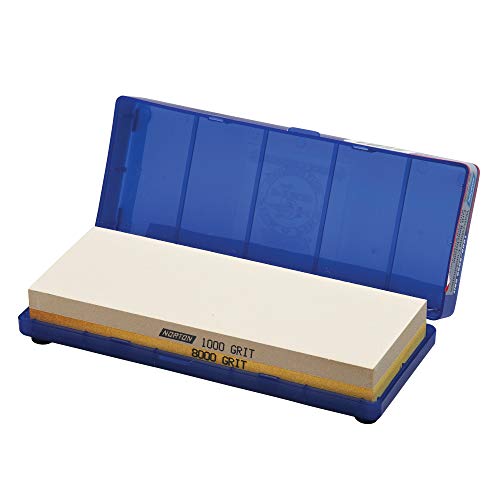
The six steels below include fine ceramic rods and smooth or lightly ridged steel rods. We have not used these products ourselves, so confirm length, surface type and handle design on the current listing before buying. The rod should be long enough to hold the full blade. Pair the steel with a good stone for periodic sharpening, since honing alone cannot restore a worn edge.
As an Amazon Associate we earn from qualifying purchases. Links below are affiliate links, and they do not change the product information we give.
What to Look For
| Feature | Why it matters |
|---|---|
| Surface | Smooth or fine rods are gentle on thin boning blades |
| Length | A longer rod makes full-blade strokes easier |
| Material | Ceramic hones fine; steel realigns without removing much metal |
| Guard | A hand guard protects your fingers |
| Hardness | The rod should be harder than the knife steel |
In this guide
Specs at a Glance
| Rod | Material | Surface | Notes |
|---|---|---|---|
| Idahone Fine Ceramic Sharpening Rod | Ceramic | Fine | Rod in a handled form |
| Victorinox Honing Steel | Steel | Fine ridges | Fibrox handle |
| Wusthof Honing Steel | Steel | Fine ridges | German knife brand |
| Dexter-Russell Sani-Safe Honing Steel | Steel | Light ridges | Foodservice style |
| Mercer Culinary Honing Steel | Steel | Fine | Budget-friendly style |
| Messermeister Ceramic Honing Rod | Ceramic | Fine | Ceramic option |
The 6 Best Honing Steels for Boning Knives
Top pickBest for careful, fine honing
1. Idahone Fine Ceramic Sharpening Rod
A fine ceramic rod that realigns and lightly refines an edge. It is a good match for thin boning blades because the fine surface is gentle. A few light strokes per side are normally enough.
Suits: careful, fine honing. Strengths: a fine ceramic surface. Weaknesses: ceramic can chip if dropped. Skip it if you want an unbreakable rod.
View Idahone Fine Ceramic Sharpening Rod on Amazon
Best for everyday realignment
2. Victorinox Honing Steel
A steel rod with fine ridges and a comfortable handle with a guard. It handles most kitchen knives, boning knives included. The fine ridges realign a thin edge without grabbing it, as long as you keep the pressure light.
Suits: everyday realignment. Strengths: a grippy handle. Weaknesses: the ridges can feel coarse to some. Skip it if you want a smooth finish.

Best for matching sets
3. Wusthof Honing Steel
A honing steel from a German knife maker with fine ridges and a sturdy handle. It pairs well with matched European-style knives. Rod length varies by listing, so confirm it is longer than your boning blade.
Suits: matching sets. Strengths: a refined build. Weaknesses: check the listing for rod length. Skip it if you want ceramic.

Best for butchers and processors
4. Dexter-Russell Sani-Safe Honing Steel
A foodservice honing steel with a safety guard and a textured handle, used widely by butchers. The guard and textured grip help when hands are wet or greasy.
Suits: butchers and processors. Strengths: a rugged, grippy handle. Weaknesses: plain looks. Skip it if you prefer a decorative steel.
View Dexter-Russell Sani-Safe Honing Steel on Amazon
Best for students and home cooks
5. Mercer Culinary Honing Steel
A steel rod with a straightforward handle and a rod length suitable for most knives. It is a practical option for culinary students. It is also a sensible spare for a second knife roll.
Suits: students and home cooks. Strengths: a simple, sturdy build. Weaknesses: less refined than premium sets. Skip it if you want fine ceramic.

Best for delicate edges
6. Messermeister Ceramic Honing Rod
A ceramic rod offering a smooth surface for realigning fine edges. It is gentle on thin blades. Handle it with care, since ceramic can chip if dropped on a hard floor.
Suits: delicate edges. Strengths: a smooth ceramic finish. Weaknesses: can chip. Skip it if you want steel.
View Messermeister Ceramic Honing Rod on Amazon
Care and Setup
- Wipe the rod clean after use.
- Clean ceramic with a mild abrasive cleaner.
- Store the steel upright or in a drawer sleeve.
- Use gentle pressure and a shallow angle.
- Give a flexible boning blade only a few strokes per side before testing it on a cutting board.
- Wipe the blade after honing to remove fine metal dust before cutting food.
Mistakes to Avoid
- Using a heavily ridged steel on thin flexible blades.
- Pressing too hard.
- Holding the knife at a changing angle.
- Expecting a honing steel to replace sharpening.
- Dropping a ceramic rod onto a hard floor.
Honing, Sharpening and Stropping: Three Different Jobs
The word “steel” in this guide refers to a honing rod, and it helps to separate three tasks that people often blur together. Honing straightens the very fine edge that has bent sideways during use. A knife edge is so thin that cutting pushes it out of line, and a few passes on a rod bring it back. Little or no metal is removed, which is why a honed knife feels sharper at once but is not truly new.
Sharpening removes metal to create a fresh edge. It is needed when honing no longer helps, usually because the edge has worn, rounded or chipped. A stone, a guided system or a professional service does this work, and a honing rod cannot replace it. Stropping polishes and aligns the edge on leather or a similar surface, often with a fine compound, and some cooks use it for a keener finish.
- Honing: frequent, light, realigns the edge, removes almost nothing.
- Sharpening: occasional, removes metal, rebuilds the bevel.
- Stropping: optional polish for a finer edge.
A simple test is to look at how the knife behaves after a few honing strokes. If it cuts well again, honing was the right fix. If it still struggles on soft skin or tears meat, the edge needs sharpening. Using the right task for the problem keeps a thin boning blade from being worn away more quickly than necessary.
Ceramic, Smooth Steel, Ridged Steel and Diamond Rods Compared
Each rod surface acts differently on a blade. A smooth steel realigns the edge with almost no abrasion, so it is gentle but does nothing for a worn edge. A steel with fine ridges grips the edge slightly and realigns it a little more quickly, though heavy ridges can be aggressive on thin blades. Ceramic rods are harder and have a fine texture that realigns and polishes lightly, and fine grades can take off a tiny amount of metal. Diamond-coated rods cut more aggressively and act partly as a sharpener, so they should be used sparingly on a thin boning blade.
The rod must be harder than the knife steel, otherwise it cannot straighten the edge. Most quality rods meet this for common kitchen knives, but very hard modern blade steels may need ceramic or a similar surface. Check the listing for the material and the maker’s guidance on which knives it suits.
For a thin, flexible boning knife, start with the gentlest option that works: a smooth or finely ridged steel, or a fine ceramic rod. Keep in mind that ceramic can chip or break if dropped, while steel is tougher. Think about whether you will use the rod at a butchery bench, where it may be dropped or splashed, or in a quiet home kitchen, where a ceramic rod can last for years.
Boning Knife Shapes and How They Affect Your Technique
Boning knives differ in stiffness, length and curve, and these affect honing. A flexible blade bends under pressure, so it needs a very light touch against the rod. A stiffer blade gives more feedback and can take slightly firmer strokes. A strongly curved blade needs a rolling motion so that the full length of the edge touches the rod, and a straight narrow blade can be drawn down in a more direct line.
Hold the rod steady and keep the knife at the same angle on every stroke. Start with the heel of the blade near the top of the rod and draw it down and across so the tip finishes near the bottom, then repeat on the other side. Count the strokes so both sides get the same treatment, and use only a few strokes before testing on the cutting board. Too many passes can roll the edge instead of aligning it.
There are two common positions. One holds the rod vertically with its tip on the board, and the other holds it horizontally in front of you. Beginners often find the vertical position with the tip on a folded cloth the most stable. Keep your fingers behind the guard, and keep the blade moving away from your hands. If the knife has a narrow tip, take care not to catch it on the rod, because the tip is fragile and can snap if it digs in.
Rod Length, Handle Design and Guard Fit
A rod that is too short makes honing awkward, because you cannot cover the full blade in one pass. A rod should be about as long as the blade, or a little longer. For a boning knife with a shorter blade, a medium-length rod is often enough, but if you also hone chef knives or a long slicer on the same rod, a longer one makes more sense. Check the listed rod length rather than the total length of the tool, since the handle adds length.
Handle comfort matters because honing often happens with wet or greasy hands. A textured, non-slip handle gives security, and a guard stops your hand sliding onto the edge. A hanging loop makes storage easier, but check that it is strong enough to hold the weight. Handles on ceramic rods vary, and some are plastic while others are wood, so look at how well the rod is attached.
Consider left-handed use. Most rods work in either hand, but handles and guards are sometimes shaped with a right hand in mind. If you are left-handed, check that the guard still protects you comfortably. Also consider where you will store it: near the station where you work, so you hone before each session instead of skipping it. A clear storage place, such as a knife roll or a wall hook, protects the rod from knocks and keeps the surface clean.
Hygiene, Cleaning and Knowing When Honing Is Not Enough
Because boning knives work on raw meat, cleanliness around honing matters. Wipe the blade and the rod clean after use. Metal particles from honing can remain on the blade, so wipe it before it touches food again. Wash a steel rod with warm soapy water and dry it fully, since moisture can rust some rods. Ceramic rods can be scrubbed with a mild abrasive cleaner to lift embedded metal, as the care notes above suggest, and then rinsed and dried. Never hone with a dirty rod, and do not store a damp rod in a closed sleeve.
Follow food safety rules for your setting. In a commercial kitchen, honing should be done away from open food, or the rod and blade should be cleaned afterward. At home, wash your hands and wipe down the board after handling raw meat.
Signs that a boning knife needs sharpening instead of honing:
- It slips on skin or sinew and needs extra pressure.
- The edge catches the light as a visible line, which suggests it is rounded.
- Honing helps for only a moment before the edge fades again.
- You see chips or nicks along the edge.
When those signs appear, use a stone, a guided system or a professional service. After sharpening, honing only needs a few light strokes to keep the edge going. A rod that has deep scratches, a damaged handle or a chip should be replaced.
Honing Steel FAQ
Does a honing steel sharpen?
It realigns the edge. Real sharpening needs a stone.
Ceramic or steel?
Ceramic is finer and slightly abrasive. Steel is more forgiving of drops.
How often should I hone?
Before each session or whenever the edge feels slightly dull.
What angle should I use?
Match the knife’s edge angle, normally a shallow one.
ARRAY(0xa00042a68)
Is a longer rod better?
How is honing different from sharpening?
Honing realigns a bent edge and removes almost no metal, while sharpening removes metal to form a new edge. A worn knife needs sharpening.
Is a ceramic rod better than a steel one for a boning knife?
Not always. Ceramic is fine and polishes lightly but can chip, while steel is more forgiving of drops. Pick based on your blade and how you work.
How many strokes should I use?
A few light strokes per side, then test the edge. Too many strokes can do more harm than good on a thin blade.
Can a honing rod be too hard or too soft for my knife?
The rod needs to be harder than the knife steel to realign it. Check the listing and the knife maker's advice, especially for very hard blades.
Do I need a long rod for a short boning knife?
A rod about as long as the blade works well. A longer one is more flexible if you also hone other knives.
Should I hone before or after each use?
Many cooks hone before a session or when the edge feels slightly dull. It depends on how heavily you use the knife.
How do I stop my knife tip from catching?
Use a light touch and a steady angle, and lift the tip slightly as you finish the stroke. Practice with the rod on a stable surface.
How should I store a honing rod?
Keep it dry and clean in a drawer sleeve, a knife roll or on a hook. Protect a ceramic rod from knocks.
Reading the Edge: Signs It Is Time to Hone
A honing steel works best when it is used before the edge is truly dull, so the useful skill is noticing early signs. A boning knife gives plenty of them if you pay attention while you work.
- The blade starts to skate on skin or slip on silverskin instead of biting in. A fresh edge grabs the surface immediately.
- You find yourself pressing harder to separate meat from bone. Extra force is the most common hint that the edge has rolled.
- Cuts leave a ragged or shredded line along the muscle seam instead of a clean separation.
- The edge catches on a thumbnail in a different way than it did when new. A gentle drag across the nail that skips instead of grabbing is an old tester’s trick, and it is only an informal check.
- Under bright light, a dull or rolled edge can show a thin reflective line along the apex, where a sharp edge looks like nothing at all.
Hone at the first of these signs, not the last. A few light strokes catch a slightly rolled edge, while waiting until it is badly dull means the steel cannot help and the knife needs sharpening on a stone. That difference is the reason honing steels are used between sessions, not instead of them.
Matching the Rod to Your Blade Steel
The rod and the knife are two pieces of metal rubbing against each other, and their relative hardness matters. If you plan to hone a boning knife, it helps to know in general terms what kind of steel the blade is made of, even if you do not know the exact grade.
Softer European-style blades
Many Western boning knives, including those from the German makers listed in this guide, use steels that are relatively soft and tough. They roll their edges more readily, and they respond well to a steel with fine ridges that pulls the rolled edge back into line. A ridged steel can realign these knives quickly.
Harder Japanese-style blades
Harder steels hold a keener edge longer but are more brittle. Instead of rolling, the edge may chip if pushed against a rod that is too aggressive. A smooth steel or a fine ceramic rod is usually gentler on these blades, and light pressure is essential.
Stainless foodservice knives
Knives used in butchery and processing, such as the type that pairs with the Dexter-Russell steel in this guide, tend to be tough and sized to be sharpened often. A lightly textured steel keeps up with the pace of work.
If you are unsure, ask the maker or check the listing for the hardness rating. As a rule of thumb, the rod should be harder than the knife, or the steel will wear and not realign anything. Ceramic is very hard, which is why it can work on tough steels but also why it can chip a brittle edge if you are careless.
Setting Up a Safe Honing Station
Boning is wet, slippery work, and the honing step often happens with greasy hands and a knife that has just come off a carcass. Safety is a matter of setup as much as technique.
- Hone on a stable surface. A non-slip mat or a damp towel under the rod tip keeps it from skating if you use the tip-down method.
- Keep your hand behind the guard at all times. The guard on a steel exists for the moment the blade slips off the rod.
- Dry the handle and your hands before honing. A wet handle is a hazard even if the knife feels secure.
- Hold the rod at a comfortable height, around chest level, so you can see the angle and your elbows are not pinned.
- Use a slow, controlled motion. Speed adds risk and does not improve the edge.
- Do not hone in a crowded line. Stand clear of coworkers or family so a slip cannot reach anyone.
Cut-resistant gloves are worth considering for the non-knife hand during boning, though they are not meant for honing. Treat the honing step as part of the knife’s cycle: clean, hone, rest, and put away dry.
How the Task Changes the Maintenance
Boning a chicken, breaking down a pork shoulder and trimming a beef brisket stress an edge differently, and the way you maintain the knife should shift with the work.
- Poultry. Thin skin and joints are easy on the edge, but cartilage and bone contact at the joint can roll the tip. A quick pass on a fine rod between birds is usually enough.
- Pork. Dense muscle, silverskin and the occasional bone fragment reward a steady edge. Check the knife after each major section.
- Beef. Large, tough pieces with heavy connective tissue and sometimes frozen spots need more frequent touch-ups. Stop at the first sign of drag.
- Fish. A flexible boning knife glides through fish, but scales and small bones can dull the tip. Hone lightly and avoid forcing the blade along the spine.
Across all of these, the principle is the same: hone a little and often, with the lightest pressure that works. Taking a break to realign the edge is faster than fighting a dull blade for the rest of the job.
Frequently Asked Questions
How can I tell if my boning knife needs honing or sharpening?
If honing a few light strokes restores a clean bite, it only needed realignment. If the knife still slips or tears after honing, the edge has worn away and needs a stone. Honing fixes a bent edge, while sharpening removes metal to form a new one.
Should I hone a boning knife with a ridged or smooth steel?
A fine-ridged or smooth steel is usually gentler on a thin, flexible blade than a coarse one. Harder, more brittle blades call for a smooth steel or fine ceramic and very light pressure. If the knife is soft, a lightly ridged steel realigns it faster. Check your knife’s steel type when you can.
Can I hone a boning knife on a countertop?
Yes, using the tip-down method with the rod’s tip resting on a non-slip mat or folded towel. Keep the rod vertical and draw the blade down along it with light pressure. It is a stable way to hone, as long as your hand stays behind the guard and the surface is dry.
How do I clean a honing steel after boning?
Wipe it with a damp cloth and a little dish soap to remove grease and fine metal dust, then dry it fully. Ceramic rods may need a gentle scrub with a non-abrasive pad. Check the maker’s care notes, since some ceramics should not be soaked and some steels can rust if left wet.
The Short Version
For fine honing, the Idahone. For an everyday steel, the Victorinox. For a German-style set, the Wusthof. For butchers, the Dexter-Russell. For students, the Mercer. For a smooth ceramic finish, the Messermeister.