Disclosure: As an Amazon Associate, UMT Smart Tool earns from qualifying purchases. This guide is built from product listings and maker specifications, not from our own hands-on testing. Prices are approximate and can change, so check the current price before you buy. Last updated: November 11, 2026.
HEPA is the first word most shoppers look for in an air purifier, and it is also the word marketing stretches the furthest. “True HEPA,” “H13,” “HEPA-type” and “99.97% filtration” are not interchangeable claims, and the gap between them decides whether a machine actually scrubs pollen, dander and smoke particles out of a room or just moves air around. This guide to the best air purifiers HEPA buyers can verify sticks to models whose filter claims hold up on paper: a sealed True HEPA or graded H13 filter with AHAM-verified CADR numbers, plus one clearly labeled hybrid that earns its place on performance rather than on a HEPA badge. Each pick below states its real certified room size, not the inflated headline figure.
In this guide
Quick Picks
The short version: six purifiers we would look at first among the best air purifiers HEPA buyers can verify, organized by the job each one does best.
| Pick | Type | Best for |
|---|---|---|
| Winix 5510 | True HEPA tower | All-round use in rooms up to about 390 sq ft |
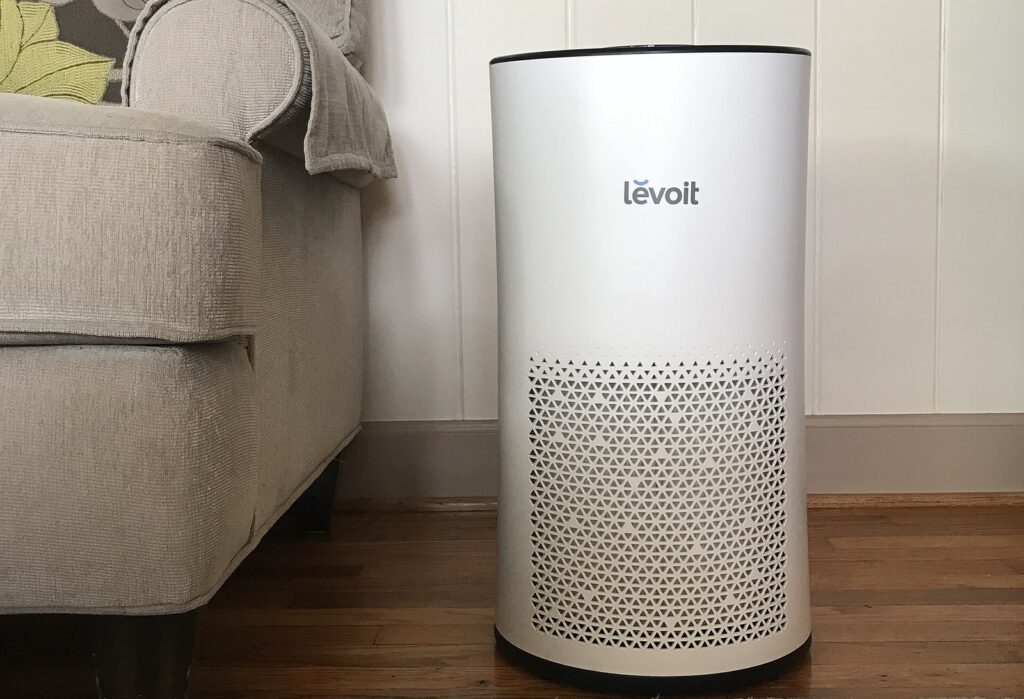
| Levoit Core 400S-P | Smart True HEPA (H13) | App control, sensors and set-and-forget Auto mode |
| Blueair Blue Pure 311i Max | HEPASilent hybrid (not True HEPA) | Quiet running in bedrooms and living rooms |
| Shark NeverChange HP302 | HEPA with 5-year filter system | Lowest filter maintenance |
| Coway Airmega 150 | Compact True HEPA | Small bedrooms, nurseries and desks |
| GermGuardian AC4300BPTCA | Budget True HEPA tower | Small rooms on a tight budget |
Our Picks
1. Winix 5510 — Best Overall
The Winix 5510 is the current-generation successor to Winix’s long-running 5500-2, and it keeps the formula that made that line popular: a washable fine-mesh pre-filter, an activated carbon filter for odors, and a sealed True HEPA filter behind them. Its AHAM Verifide CADR ratings — 253 for smoke, 252 for dust and 247 for pollen — are certified for rooms up to 392 sq ft at 4.8 air changes per hour, which covers most living rooms and primary bedrooms without resorting to the one-air-change headline numbers other brands advertise. Winix’s PlasmaWave technology is built in, but it can be switched off entirely, which matters if you prefer filtration only.
An air-quality sensor drives a proper Auto mode, and Wi-Fi app control is new on this generation. The trade-offs are running costs and size: the all-in-one filter cartridge is a periodic replacement rather than a washable part, and this is a full-size tower that needs floor space and clearance around its intakes. It sits in the mid-range tier. For a single purifier that can handle a main living space with verified numbers behind every claim, the 5510 is the safest first choice here.
2. Levoit Core 400S-P — Best Smart Pick
The Core 400S-P is the connected option: a three-in-one filter (pre-filter, True HEPA main filter and activated carbon) behind a laser dust sensor that shows a live PM2.5 reading and adjusts fan speed automatically in Auto mode. Levoit’s manual specifies the main filter as True HEPA, H13 grade. Current AHAM and Energy Star test figures put its CADR at 231 for smoke, 240 for dust and 259 for pollen, with an AHAM-suggested room size of 358 sq ft — honest, mid-to-large-room numbers rather than the bigger figures in older listings.
Control runs through the VeSync app or Alexa and Google voice assistants, and there is a quiet sleep mode for overnight use. One point of honesty: in 2024 Levoit revised some HEPA wording after an advertising review challenged its claims, which is exactly why the AHAM-verified CADR figures above — not the box copy — are the numbers to trust, and why genuine Levoit replacement filters matter for keeping that performance. It is a mid-range purchase. Choose it for bedrooms and home offices where you want the purifier to manage itself.
3. Blueair Blue Pure 311i Max — Best for Quiet Rooms
This is the pick that tests the theme of this guide, so we will label it plainly: the Blue Pure 311i Max does not use a sealed True HEPA filter, and Blueair does not grade it H13. Its HEPASilent system combines electrostatic charging with mechanical filtration, a hybrid design that lets it move a lot of air through a less dense filter — which is how it stays so quiet on low speeds. The performance is independently framed anyway: AHAM CADR of 250 for smoke, dust and pollen, certified for rooms up to 387 sq ft at 4.8 air changes per hour.
Washable fabric pre-filters wrap the outside and come in different colors, and app control with an Auto mode is built in. The trade-off is the one stated above: if a clinician has told you to buy a True HEPA machine specifically, or you simply want a sealed HEPA filter on principle, choose one of the other picks instead. If what you actually need is verified particle removal at bedroom-friendly noise levels, the 311i Max is arguably the most livable machine here. It sits in the mid-to-premium tier.
4. Shark NeverChange HP302 — Best Low Maintenance
Every purifier in this guide asks for a new filter every 6 to 12 months — except this one. The NeverChange HP302 is built around a long-life HEPA filter system that Shark rates at up to five years before replacement, tested under GB/T18801-2015 conditions, with a washable mesh Debris Defense pre-filter that you rinse instead of replace. Shark rates the Anti-Allergen HEPA filtration to capture 99.98% of particles between 0.1 and 0.2 microns, a figure measured under the EST-RP-CC007.3 test method, and the headline coverage claim runs up to 1,400 sq ft.
Two honest caveats come with that. First, the 1,400 sq ft figure works out to roughly one air change per hour; at the 4.8 changes per hour AHAM uses for allergy-grade cleaning, the suitable room is far smaller. Second, Shark does not publish an AHAM CADR for this model, so it cannot be compared head-to-head on the AHAM scale the way the Winix or Levoit can. Buy it for the reason it exists: if you know yearly filter swaps will not happen in your household, a filter rated for years beats a stronger filter that never gets changed.
5. Coway Airmega 150 — Best Compact
The Airmega 150 is the small-room specialist: a slim tower, roughly 6.5 inches deep and about 12 pounds, that fits on or beside a desk where a full-size purifier would crowd the room. Its HyperCaptive stack pairs a washable pre-filter with a deodorization filter and Coway’s Green True HEPA filter. Coway’s specification sheet lists CADR at 138 for smoke, 161 for dust and 219 for pollen, which AHAM-sizes it to rooms up to 214 sq ft at 4.8 air changes per hour; Coway rates the system to capture 99.999% of particles down to 0.01 microns in its own laboratory testing.
An Auto mode with a color air-quality indicator keeps it hands-off, and separate indicator lights track each filter — useful, because the two filters run on different clocks: the deodorization filter lasts about six months and the HEPA filter about a year, so running costs arrive in smaller, more frequent steps. It is Energy Star certified and backed by a three-year warranty, and it sits in the mid-range tier. For bedrooms, nurseries and small home offices, it is the neatest verified-True-HEPA package here.
6. GermGuardian AC4300BPTCA — Best Budget Tower
The AC4300BPTCA is the straightforward, budget-friendly route to a genuine True HEPA filter. This 22-inch tower uses Guardian’s Filter B Pet Pure HEPA filter — rated to capture 99.97% of particles as small as 0.3 microns — behind a charcoal pre-filter for odors, with an optional UV-C light you can switch on or off. Its AHAM CADR ratings are modest, about 99 for smoke, 107 for dust and 116 for pollen, which is the number that should drive your decision.
That CADR is also why the marketing needs translating: Guardian advertises coverage up to 743 sq ft, but at AHAM’s 4.8 air changes per hour those CADR figures suit rooms up to roughly 170 sq ft — bedrooms and nurseries, not open-plan living spaces. There is no app, no sensor and no Auto mode; you get three fan speeds and a machine that is cheap to buy and cheap to keep in filters, with a three-year limited warranty behind it. As a first True HEPA purifier for a small room, it is honest value.
Best Picks by Category
- Overall: Winix 5510 — the strongest verified CADR-to-room-size balance, with a sealed True HEPA filter.
- Smart features: Levoit Core 400S-P — PM2.5 sensor, Auto mode and app control around an H13 True HEPA filter.
- Quiet rooms: Blueair Blue Pure 311i Max — HEPASilent hybrid (not True HEPA) with AHAM CADR of 250 at low noise.
- Low maintenance: Shark NeverChange HP302 — a HEPA filter system rated for up to five years between changes.
- Compact spaces: Coway Airmega 150 — slim True HEPA tower sized honestly for rooms up to 214 sq ft.
- Budget: GermGuardian AC4300BPTCA — genuine True HEPA filtration for small rooms at a budget-friendly tier.
Read that list as a set of trade-offs, not a ranking: the quietest machine is not a True HEPA machine, the lowest-maintenance machine does not publish AHAM numbers, and the cheapest machine is sized for small rooms. The right pick is the one whose compromise you can live with.
How to Choose the Best Air Purifiers HEPA Models
True HEPA, H13 and “HEPA-type” are not the same thing
True HEPA means a filter captures at least 99.97% of particles at 0.3 microns, the size that penetrates filters most easily. European grading splits this further: H13 captures at least 99.95% and H14 at least 99.995% of the most penetrating particle size. “HEPA-type,” “HEPA-style” and “HEPA-like” have no standard behind them at all — a HEPA-type filter may capture far less at 0.3 microns. When a maker will not state a grade or an efficiency at 0.3 microns, judge the machine by its independently verified CADR instead, or pick a model whose grade is printed in the manual, as Levoit does with the Core 400S-P.
Match CADR to your room, not the box headline
CADR (Clean Air Delivery Rate) is the number that decides whether a purifier can keep up with a room. AHAM’s rule of thumb: smoke CADR should be at least two-thirds of the room’s floor area, which works out to about 4.8 air changes per hour. Most headline coverage figures assume only one air change per hour, which is why a purifier “for 743 sq ft” can be an honest 170 sq ft machine at allergy-grade cleaning rates. Find the AHAM Verifide room size or do the two-thirds math yourself before comparing models.
Count filter costs, not just the purchase price
A purifier is a subscription in disguise. Typical HEPA filters last 6 to 12 months; some machines split filtration across two filters on different schedules, like the Coway above, and long-life systems like Shark’s NeverChange stretch the interval to years under stated test conditions. Check the replacement filter’s price and availability before buying, and prefer models with a washable pre-filter — catching hair and coarse dust in a rinseable mesh noticeably extends the main filter’s working life.
Add activated carbon if odors, smoke or VOCs are the problem
HEPA filters catch particles, and only particles. Cooking smells, tobacco odor, wildfire-smoke gases and household VOCs pass straight through a HEPA filter and need activated carbon to adsorb them. Every pick in this guide pairs its HEPA filter with some carbon stage, but the amount varies from a thin charcoal sheet to a substantial carbon bed. If odor removal is your main goal rather than a bonus, weight this stage heavily and expect to replace carbon more often than the HEPA filter itself.
Noise decides whether a bedroom purifier actually gets used
A purifier only cleans the air while it is running, and in a bedroom that means running at a volume you can sleep through. Check the lowest-speed noise figure, but remember CADR drops with fan speed too — a machine that is silent on sleep mode may be delivering a fraction of its rated cleaning. Hybrid designs like Blueair’s HEPASilent exist precisely to soften this trade-off. For more models chosen specifically for overnight use, see our guide to the best air purifiers for the bedroom.
Certifications worth more than extra features
AHAM Verifide confirms CADR independently, Energy Star certification keeps running costs in check, and CARB compliance matters in California, where ozone-emitting air cleaners are regulated. Treat ionizers and plasma features as optional extras — every such feature in this guide can be switched off — and treat UV-C lights the same way: a supplement to filtration, never a substitute for a rated filter.
Which HEPA air purifier should you buy?
The best HEPA air purifier for you depends on room size, noise tolerance and how much you want to think about filters. Here is how the picks in this guide map to common needs.
- One purifier for a main living space: the Winix 5510 is the all-rounder, with a sealed True HEPA filter and a sensor-driven Auto mode.
- You want app control and a hands-off routine: the Levoit Core 400S-P adds a sensor, Auto mode and phone or voice control around an H13 True HEPA filter.
- Quiet matters most: the Blueair Blue Pure 311i Max is the livable choice, as long as you accept that it is a HEPASilent hybrid rather than a sealed True HEPA unit.
- You will not keep up with filter swaps: the Shark NeverChange HP302 is built around a long-life filter system, though it does not publish an AHAM CADR to compare.
- Small bedroom, nursery or desk: the Coway Airmega 150 is a slim True HEPA tower sized honestly for smaller rooms.
- Firm budget, small room: the GermGuardian AC4300BPTCA delivers a genuine True HEPA filter without extras.
If a clinician has told you specifically to buy a True HEPA machine, skip the hybrid and pick one of the sealed-filter models. If you simply want verified particle removal that you can live with at night, the quiet hybrid becomes a reasonable option.
When two picks seem close, let room size break the tie. A purifier sized above your room can run slowly and quietly, while one that is too small ends up on its loudest setting or switched off.
What to check before you buy a HEPA purifier, and who should skip it
Before you buy a HEPA air purifier, check the filter grade, the independently verified room size and the replacement filter on the current listing. These checks matter more than the badge on the box.
- Look for a stated filter grade or an efficiency figure at the standard test particle size, not just the word HEPA.
- Find the AHAM room size rating and compare it with your floor area.
- Check the replacement filter: how many parts, how often, and whether the maker sells them.
- Confirm whether a pre-filter is washable, since that extends the main filter.
- Switch-off options matter: see whether ionizer, plasma or UV features can be turned off.
- Measure the floor space and the clearance the manual asks for around the intakes.
- Read the warranty and return terms on the listing.
Be honest about the limits. HEPA filtration captures particles only, so odors and gases need an activated carbon stage, and the amount of carbon varies a lot between models. A purifier does not clean surfaces, carpets or bedding. Bigger machines cost more to run in filters and take up real floor space. And a model that publishes no CADR makes direct comparison harder.
Who should skip it? If your main problem is a gas or chemical smell, a HEPA-first purifier is not the whole answer. If your room is tiny and rarely dusty, a full-size tower is more machine than you need, and a compact model will do.
When you are ready, compare the picks above, check the current listing for size and what is included, then choose the one that fits how you will use it.
Frequently Asked Questions
What does “True HEPA” actually mean?
It means the filter itself meets the HEPA standard: at least 99.97% of particles captured at 0.3 microns, the most penetrating particle size. Filters graded H13 or H14 under the European EN 1822 standard meet or exceed that bar. Anything labeled HEPA-type or HEPA-style is using the words without the standard, which is why this guide names the filter grade — or its absence — for every pick. That standard is what the best air purifiers HEPA models above are measured against.
Is a higher CADR always better?
Only up to the size of your room. A CADR well above the two-thirds rule for your floor area buys you the option to run the fan slower and quieter for the same cleaning rate, which is genuinely useful. Far beyond that, extra CADR mostly adds cost, size and noise. Size the machine to the room it will live in, using the room’s real dimensions rather than the coverage printed on the box.
Can a HEPA purifier remove odors and cooking smells?
Not on its own. HEPA filtration is mechanical particle capture; gases and odors pass through. Removing smells requires an activated carbon stage, and the thicker the carbon, the longer it keeps working before it saturates. If wildfire smoke is your concern, you need both: HEPA for the fine particles, carbon for the accompanying gases and odor.
Do HEPA air purifiers help with allergies?
They reduce the airborne triggers — pollen, pet dander, dust mite allergen and mold spores are all particles in the size range HEPA filters are built to catch, and running a correctly sized unit continuously keeps those levels down between cleanings. They do not help with allergens already settled in carpets and bedding, so treat the purifier as one part of the routine. Our dedicated guide to the best air purifiers for allergies goes deeper on sizing for allergy relief.
How often do HEPA filters need to be replaced?
For most machines, every 6 to 12 months of regular use; smoke-heavy or pet-heavy homes sit at the short end. Long-life systems are the exception — Shark rates the NeverChange filter at up to five years under its stated test conditions. Whatever the interval, a clogged filter quietly cuts CADR long before it looks dirty, so follow the maker’s schedule or the machine’s filter indicator rather than appearance.
Where should I place a HEPA air purifier?
On the floor or a low stand in the room where you spend the most time, with clearance around the air intakes and outlet — check the manual, but a hand’s width from walls and furniture is a common minimum. Keep doors to that room closed where practical, and resist moving one purifier between rooms: a correctly sized machine running continuously in one room beats a stronger machine that is always somewhere else.
Is H13 better than True HEPA?
They are close, and they come from different grading systems. True HEPA is a US-style claim, while H13 comes from a European grade. Compare the efficiency figure and the verified CADR rather than assuming one label always wins.
Do I need an air purifier with a UV light?
No, it is an optional extra. UV-C features should be treated as a supplement to filtration, never a substitute for a rated filter. Pick a model where the light can be switched off if you prefer filtration only.
Are ionizers safe in an air purifier?
Some ionizing features are marketed as optional, and rules differ by region. If you want to avoid them, choose a model where the feature can be turned off. Check the manual and any regional certification notes on the listing.
Can I wash a HEPA filter?
Generally no, since washing can damage the fine fibers. Many purifiers include a washable pre-filter that you rinse instead. Always follow the manual for which parts are washable and which must be replaced.
How loud is a HEPA air purifier?
Noise depends on the model and the fan speed, and the lowest setting is far quieter than the highest. Check the lowest-speed figure on the listing. Remember cleaning rate also drops at lower speeds.
Should I run a HEPA purifier all day?
Running it continuously in the room where you spend the most time is the usual approach, since it only cleans while it runs. A moderate speed or Auto mode keeps noise and filter wear reasonable. Close the room door to help it work on a smaller air volume.
Bottom Line
Start with the Winix 5510 if you want one machine with verified numbers for a main living space. Choose the Levoit Core 400S-P for app-driven, set-and-forget running, the Blueair Blue Pure 311i Max when quiet matters more than a sealed True HEPA filter, the Shark NeverChange HP302 if filter changes are your sticking point, the Coway Airmega 150 for small rooms, and the GermGuardian AC4300BPTCA when the budget is firm and the room is small. Whichever of the best air purifiers HEPA models you choose, size it by CADR against your room’s floor area, confirm the current price and replacement-filter cost before ordering — and if you want a broader shortlist beyond HEPA-focused picks, our main guide to the best air purifiers covers the wider field.