A bowie knife is known for a broad blade with a clip point, and a folding bowie packs that profile into a pocketable lockback or similar design. These knives are used for camp chores, utility cutting and hunting work. The key is a strong lock and a blade shape you can control.
True folding bowies are a small category, so the six below mix bowie-style and clip-point folders from major makers. Some are large, some are classic. We have not used these products ourselves. Details change between listings and versions, so confirm blade length, steel and what is included on the current listing before you buy. Check local knife laws before you carry a large folder.
As an Amazon Associate we earn from qualifying purchases. Links below are affiliate links, and they do not change the product information we give.
What to Look For
| Feature | Why it matters |
|---|---|
| Lock type | A strong lockback or similar lock keeps a large blade from closing on your hand |
| Blade shape | A clip point gives the classic bowie profile and a fine tip |
| Size and weight | Large folders are heavy in a pocket |
| Local law | Blade length limits differ by place |
In this guide
Specs at a Glance
| Knife | Style | Lock | Notes |
|---|---|---|---|
| Buck 110 Folding Hunter | Clip point folder | Lockback | Classic with a belt sheath |
| Buck 112 Ranger | Clip point folder | Lockback | Smaller than the 110 |
| Cold Steel Recon 1 Clip Point | Large folder | Tri-Ad lock | Heavy-duty design |
| Cold Steel Voyager Clip Point | Large folder | Tri-Ad lock | Offered in several sizes |
| Cold Steel Code 4 Clip Point | Large folder | Tri-Ad lock | Strong lock with a clip point |
| Cold Steel Rajah III | Large folder | Check the listing | Large, heavy folder |
The 6 Best Folding Bowie Knives
Top pickBest for hunters and traditionalists
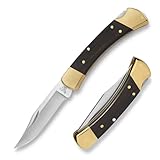
1. Buck 110 Folding Hunter
One of the most recognized folding knives in America, with a clip-point blade, a lockback and brass and wood trim on many versions. It ships with a leather belt sheath.
Suits: hunters and traditionalists. Strengths: a time-tested design and a sheath. Weaknesses: heavy for a pocket. Skip it if you want a light carry.
Best for those who want a smaller classic
2. Buck 112 Ranger
A smaller cousin of the 110 with the same clip-point style and lockback design, made for easier carrying.
Suits: those who want a smaller classic. Strengths: a trusted design and less bulk. Weaknesses: less blade than the 110. Skip it if you want a large knife.

Best for users who want a strong lock
3. Cold Steel Recon 1 Clip Point
A large, tough folder with a clip-point blade and Cold Steel’s Tri-Ad lock, which the maker designs for hard use.
Suits: users who want a strong lock. Strengths: a robust lock and a sturdy build. Weaknesses: size and weight. Skip it if you need a discreet knife.

Best for those who like a large clip point
4. Cold Steel Voyager Clip Point
A big folder with a clip-point blade and a Tri-Ad lock, offered in several sizes. Check the listing for the size you want.
Suits: those who like a large clip point. Strengths: size options and a strong lock. Weaknesses: bulk. Skip it if you want a slim knife.

Best for general heavy-duty use
5. Cold Steel Code 4 Clip Point
A folder with a clip-point blade and Tri-Ad lock, built around a thick blade and a sturdy frame.
Suits: general heavy-duty use. Strengths: a strong lock and a firm grip. Weaknesses: weight. Skip it if you prefer a classic wood handle.
View Cold Steel Code 4 Clip Point on Amazon
Best for those who want a big folder
6. Cold Steel Rajah III
A very large folder with a broad blade. Check the listing for the exact blade shape and size before ordering.
Suits: those who want a big folder. Strengths: a large blade and a heavy-duty build. Weaknesses: very heavy and bulky. Skip it if you want everyday carry.
View Cold Steel Rajah III on Amazon
Large folders suit people who want a big blade without a sheath. If you mostly cut rope, food and cardboard, a smaller clip-point folder will do the job with less weight, so match the size to your real tasks.
Care and Setup
- Wipe the blade clean and dry after each use.
- Add a drop of oil to the pivot now and then.
- Keep the lock free of pocket lint and grit.
- Store the knife in a sheath or pouch if one is included.
Mistakes to Avoid
- Skipping a check of local blade length rules.
- Using a folder as a pry bar.
- Closing the knife with your fingers in the path.
- Choosing a size that is too big to carry comfortably.
What Makes a Folder Bowie-Style
The classic bowie is a large fixed blade with a long clip point, a broad belly and a substantial guard. Folding knives cannot copy that fully, so the term usually describes a folder with a clip-point blade, a pronounced belly and a lock strong enough for camp work. The result is a knife that borrows the silhouette and the idea of a hard-working utility blade.
The clip point is the heart of the shape. The spine drops in a concave or straight cut toward the tip, which gives a finer point for piercing and detail work while keeping a broad belly for slicing. That combination suits cutting meat, preparing food, opening packages and general chores. It is a versatile profile, though the thinner tip is less robust than a drop point’s.
Size and weight come with the territory. A large blade needs a big handle and a robust lock, so many of these folders are heavy and bulky in the pocket. If you want a lighter knife, a clip-point folder with a more moderate blade may capture the style without the weight.
When you read listings, look at actual blade length, thickness, lock type and weight rather than relying on the name. Many knives use the word bowie loosely as a style note, and details vary between editions. Choose the shape you like and confirm the specifications on the current listing before buying.
Locks for Big Blades
A big blade puts more leverage on the lock, so lock choice matters more here than on small knives. Lockback designs are a traditional answer. A spring-loaded bar on the spine of the handle engages a notch in the blade tang, holding it open. They are simple, strong and well understood. Releasing them means pressing the bar, so you need to learn the motion to close the knife safely.
Some large folders use other lock styles, including frame or liner-type locks and reinforced designs that add a secondary stop. The maker’s claims about lock strength are their own, so rely on build quality and your own checks. Open the knife and apply gentle pressure to see whether there is any play, and inspect the blade for side movement. A wobbling blade or a lock that engages only slightly is a warning sign.
Check the ease of closing. Some heavy locks are stiff and need a firm press, which is fine if you can do it with the fingers away from the edge. If you have a large hand, that is less of a problem than for a smaller one. Practice opening and closing until it becomes second nature.
Finally, never use the knife as a pry bar or a hammer. A strong lock does not make a folder immune to abuse, and snapped tips and damaged tangs are common failures. If you need to pry or chop heavily, carry a fixed blade or a different tool.
Handle Size, Weight and Pocket Practicality
Large folders feel good in the hand but weigh down a pocket. Before buying, think about how you will carry the knife. A belt pouch or sheath removes the weight from your pants and keeps the knife accessible. A pocket clip works for lighter models, but a heavy knife can pull on clothing and be uncomfortable when sitting or driving.
Handle materials affect both weight and grip. Wood and natural materials look classic but may need more care and can be slippery when wet. Synthetic handles such as polymer or composite give a more secure grip and are less affected by moisture. Metal handles are strong and may add weight. Look for rounded edges and a comfortable fit with your hand, since the knife will be used for longer cutting tasks than a small folder.
Consider the opening mechanism. Large blades may open with a thumb stud, nail nick or hole, and they can be stiff. A reliable, easy-to-use opener is important, and gloves can change how it feels. If you plan to use it in cold weather, practice with gloves.
Finally, balance weight against how often you will actually carry it. A heavy folder that stays at home is less useful than a lighter one that rides along every day. Be realistic about your routine, and choose a size you will carry.
Camp, Hunting and Utility Roles
A folding bowie-style knife suits a range of outdoor jobs. At camp it can cut rope and cordage, prepare food, process kindling and open packaging. For hunting and fishing, it can handle skinning and field dressing small game, though many people keep a dedicated fixed blade for heavy work. The broad belly slices well, and the clip point lets you pierce and make detail cuts.
For heavier tasks like batoning wood or chopping, a folder is not the ideal tool. The pivot and lock add potential weak points that a fixed blade lacks, so it pays to treat the knife with respect. Use a fixed blade or a small axe for processing wood, and reserve the folder for cutting, slicing and general utility.
Hygiene matters in food and game work. Clean the blade and pivot thoroughly after use, as blood and fat can collect in the joint. Disassembling a folder, where the maker permits, makes it easier to clean. Dry everything before storing to prevent rust.
Consider backup. In remote areas, carry a sharpener or a compact stone and a second cutting tool. If you rely on one knife, a lock failure or a lost blade can be a serious problem. Many people carry a large folder as a main utility blade and a small knife as a spare, which covers most needs.
Legal Limits and Care for Large Folders
Large folders attract more legal attention than small ones. Blade length limits, restrictions on locking blades and rules about concealed carry vary by place, and they can differ between public areas, vehicles and certain buildings. Check current rules from an official source before you carry, and consider leaving the knife in a bag or a vehicle in situations where it might be questioned. When traveling, check regulations at every stop.
Maintenance is straightforward but important. Wipe the blade dry after use, remove debris from the pivot area and apply a drop of lubricant to the pivot and lock. Check the lock engagement and any screws before each outing, and tighten as needed according to the maker’s guidance. Keep wooden handles away from prolonged moisture and consider wiping them with a suitable finish if the maker advises.
Sharpen with a consistent angle, starting with a medium stone if the edge is dull and finishing with a finer one. Clip points have a fine tip, so be careful not to round it. Avoid dragging the tip across the stone.
Replace or repair the knife if the lock fails to hold, the blade shows side play that cannot be adjusted, the tip is bent or snapped, or the handle cracks. A folding knife is only safe if it locks reliably, and a worn lock is not worth the risk.
Folding Bowie Knife FAQ
What is a bowie blade?
A broad blade with a clip point, meaning the spine curves or cuts away near the tip.
Are folding bowies strong enough for camp work?
A strong lock is the key. Pick a large folder from a maker known for sturdy locks.
Can I carry one daily?
Many are too large for daily carry. Check local rules before you do.
Should I get a fixed blade instead?
For hard use, a fixed blade is stronger. A folder wins on portability.
Is a clip point better than a drop point?
Neither is better overall. A clip point has a finer tip for piercing and detail work, while a drop point has a stronger tip. Choose according to what you cut.
Can a folding knife replace a fixed blade for camp?
For light cutting and food prep, yes. For heavy chopping or batoning, a fixed blade is safer and stronger. Many campers carry both.
How do I close a lockback safely?
Keep fingers away from the edge, press the lock bar on the spine and fold the blade with your other hand clear. Practice slowly until it feels natural.
Are big folders legal everywhere?
No. Rules differ by region and can restrict blade length or lock type. Check the current local law before carrying.
Why does my large folder feel stiff?
New knives often have tight pivots or lock springs. Clean it, apply a drop of oil and open and close it repeatedly. If it stays stiff, check the maker's guidance.
What carry method suits a heavy folder?
A belt sheath or pouch distributes the weight better than a pocket clip. It also keeps the knife accessible.
Can I sharpen a clip-point folder at home?
Yes, with a stone or a guided sharpener. Take care at the tip and keep the angle steady so you do not round it.
Blade Steel and Edge Geometry on a Big Folder
A large folding blade makes different demands on steel than a small pocketknife does. Longer, thicker blades are asked to chop, pry a little, and split kindling, which pushes the design toward toughness rather than extreme edge retention. Softer, tougher steels tend to bend or roll under abuse and are easy to bring back with a stone. Harder, more wear-resistant steels hold an edge longer but can chip if misused. Neither is wrong, and the right balance depends on whether you will mostly slice food and rope or hack at wood.
Edge geometry matters as much as the steel name. A thick blade ground with a steep, robust edge survives rough work but cuts less cleanly through soft material. A thinner grind slices better and feels livelier, but it will not forgive prying. When reading a listing, look for blade thickness and grind type. If those are missing, treat the knife as a general-purpose tool rather than a chopper.
Coatings and finishes affect upkeep too. A dark coating cuts glare and can slow rust on the flats, but it wears at the edges and along the spine with use. A plain satin or polished finish shows scratches earlier but is simple to refresh. Carbon-leaning steels need more drying and oiling than stainless ones, particularly if you handle the knife with sweaty hands or carry it in a damp sheath.
Pivot, Detent and the Mechanics of Deploying a Heavy Blade
The pivot is where a big folder either earns its keep or becomes a nuisance. A heavy blade needs a pivot that is tight enough to avoid side-to-side wobble yet smooth enough to open without a wrist flick. Many large folders use washers or bearings to keep that motion consistent, and the choice affects how the knife feels over years of use. Washers are simple and tend to be forgiving of dirt; bearings are smoother but can be more particular about grit.
The detent holds the blade closed. On a knife of this size, a weak detent lets the blade swing open in a pocket, which is a safety problem. A very strong one makes one-hand opening hard. If you can try the knife in person, open it slowly and watch for any grinding or gritty spots. If you are buying online, customer comments about stiffness or looseness out of the box are worth reading, along with whether the seller offers an easy return.
- Check that the blade centers in the handle when closed and when open.
- Look for lateral play at the tip after opening; slight play is common, but a lot is not.
- Make sure the lock engages fully every time before you apply force to the blade.
Sheaths, Pocket Clips and Carrying a Large Knife
A folder with a long blade is bulky, so carry choice shapes how often you will actually use it. Some models come with a belt sheath, which keeps the knife accessible and protects other gear. Others rely on a pocket clip, which is convenient but can strain a pocket when the knife is heavy. A leather sheath breathes and ages gracefully; a nylon one dries faster and tolerates weather better.
Think about where the knife rides. On a belt, a heavy folder sits steadily and does not poke you when you sit. In a pocket, a deep-carry clip hides the profile but can make the knife harder to draw. If you hike with a pack, a belt sheath can interfere with a hip belt, so some people move the knife to a chest or pack strap pocket. Test the setup by sitting, crouching and climbing before you rely on it in the field.
Safe Practice, Maintenance and Keeping a Big Folder in Shape
Large folders store a lot of energy in the blade, so habits matter. Keep fingers clear of the closing path, and never use the knife as a hammer by striking the spine. Avoid prying with the tip, where the lock and blade are under the most leverage. If you need to split wood, use the blade to start the cut and a baton of appropriate size, and stop if the lock shows any sign of slipping.
Maintenance is simple but worth repeating. After use, wipe the blade clean and dry, and blow out debris around the pivot and lock. A drop of light oil at the pivot once in a while keeps motion smooth. Do not soak the knife; water and grit in the handle can lead to rust and stiff action. If the lock feels gritty or the blade wobbles, clean it first before assuming it is damaged. A quick inspection before each trip, looking for loose screws and chipped edges, prevents most trouble.
When a Bowie-Style Folder Is the Wrong Tool
Because these knives look dramatic, it is easy to overbuy. For everyday tasks such as opening boxes, cutting cord and preparing food, a smaller folder is lighter, easier to carry and less likely to draw attention. For heavy chopping or shelter building, a fixed blade is stronger because it has no hinge or lock to fail. A large folder sits between these jobs, and it makes the most sense when you value the compact closed size more than ultimate strength.
Also think about where you will take it. Some workplaces, schools and public buildings prohibit large blades regardless of local law, and travel rules can be stricter still. If you will often be in places that restrict knives, a modest folder you can leave behind or check easily may be more practical than a showpiece you end up not carrying.
Frequently Asked Questions
Does blade steel matter more than lock type on a large folder?
Both matter, but for different reasons. Steel affects edge holding, toughness and rust resistance, while the lock determines whether the blade stays open under load. For hard use, prioritize a lock you trust and a tough steel you can sharpen yourself, then worry about fine differences in edge retention.
Is a pocket clip or a belt sheath better for a big folder?
A belt sheath spreads weight and keeps the knife accessible, which suits heavy folders. A pocket clip is more discreet but can strain a pocket and make the knife harder to draw. Many owners try the clip first and switch to a sheath if the weight becomes annoying.
Can I baton wood with a folding knife?
It is generally risky. A folder has a pivot and lock that can fail under repeated shock, and a slip can injure your hand. If you need to split wood often, a fixed blade is the safer tool. If you must, use light taps, small pieces and stop at any sign of looseness.
How do I stop rust on a large folder?
Wipe the blade dry after every use, especially after cutting food or working in damp conditions. Apply a thin film of light oil to the blade and pivot, and store the knife somewhere dry rather than in a closed leather sheath for long periods, since leather can hold moisture.
The Short Version
For a classic, the Buck 110 Folding Hunter. For a smaller classic, the Buck 112 Ranger. For a strong lock, the Cold Steel Recon 1. For size options, the Voyager. For a thick frame, the Code 4. For a very large folder, the Rajah III.