Where to buy
Check the latest price, availability and delivery on Amazon. Orders are placed on Amazon. We may earn a commission from qualifying purchases. One honesty note before the list: there is no powered miter saw at this budget, from any brand, so the linked pick below is a hand miter saw kit — the tool that actually does this job under $30 — and the remaining picks are described in prose so you can compare the real options without pretending a motor exists at this price.
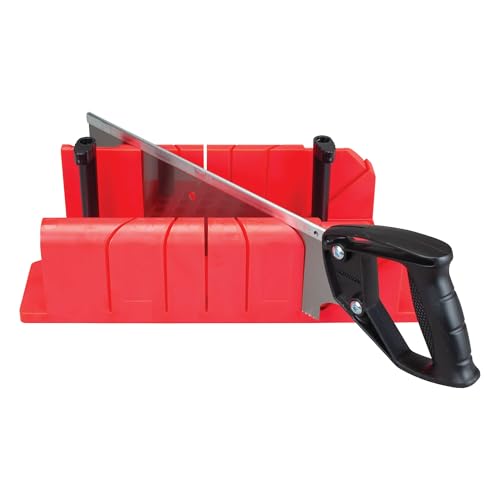
- Best overall under $30: CRAFTSMAN Mitre Saw, 12-Inch Saw & Clamping Box (CMHT20600) — Check on Amazon
- Stanley Saw Storage Miter Box with Saw (20-600) — the step-up hand kit, usually sitting just above this budget; described in prose below
- Excel Blades 6-Inch Metal Mitre Box Set (55666) — the hobby-scale precision option, prose-only below
- Japanese pull-saw miter box sets (GARTOL 4-piece style) — the fine-finish route, prose-only below
- Olympia Tools Saw Storage Mitre Box with 14-Inch Backsaw — the basic big-box alternative, prose-only below
- The save-up route: an entry powered compound miter saw such as the Metabo HPT 10-inch class — prose-only below, because it costs several times this budget
Read the full guide ↓
Disclosure: As an Amazon Associate, umtsmarttool.com earns from qualifying purchases. Links to Amazon on this page are affiliate links; they cost you nothing extra. Listing details such as price and availability change often, so check the current Amazon listing before you buy.
Searching for the best miter saw under $30 puts you in front of a hard fact about how miter saws are priced, and this guide starts with it rather than burying it: a powered miter saw needs a 15-amp-class motor, a precision-ground blade, a cast table, a fence that stays square and a pivot mechanism that holds its angles, and no manufacturer on earth assembles that package for thirty dollars. The honest entry point for a new powered compound miter saw sits several times higher than this entire budget. What $30 genuinely buys — and buys well — is the original miter saw: a hand backsaw guided by a miter box, a tool that has cut accurate 45s and 90s in trim, picture frames and small furniture parts for well over a century, and that still earns its bench space next to powered saws in serious workshops because it is silent, dust-light and incapable of ruining a workpiece in a quarter of a second.
So this guide does two jobs. First, it reviews the hand miter kits that are actually sold at or near this budget and tells you which one to buy — the CRAFTSMAN clamping kit at the top of the list is a complete, clamp-the-work, cut-the-angle system that handles the trim and framing jobs most people mean when they search for a miter saw. Second, it maps the honest alternatives around the budget: the step-up hand kits, the hobby-scale precision set, the pull-saw route for fine work, and the powered saw to save toward if your project list is long enough to justify it. If your real need is cutting two-by lumber all weekend or production trim work, no article should talk you into a hand saw — and the final section of this guide says exactly when to stop shopping at $30 and start saving. Readers weighing that decision may also want Best Miter Saw Under $50, where the hand kits get better and the powered gap narrows slightly, though it does not close.
In this guide
Quick Picks
Short on time? Each row names a buyer type and the option that suits it. Only the first pick is linked, because it is the only complete kit we verified as genuinely sold within this budget; the rest are described honestly in prose rather than dressed up with links they have not earned.
| Buyer type | Pick | Why it stands out | Link |
|---|---|---|---|
| Best overall under $30 | CRAFTSMAN Mitre Saw, 12-Inch Saw & Clamping Box (CMHT20600) | Clamping box, cam pins and a 12-inch backsaw in one complete kit | Check on Amazon |
| Best step-up hand kit | Stanley Saw Storage Miter Box with Saw (20-600) | Saw stores inside the box; 90°, 45° and 22.5° slots | Prose-only — check price on Amazon |
| Best for hobby and models | Excel Blades 6-Inch Metal Mitre Box Set (55666) | Aluminum box and razor pull saw for small, precise stock | Prose-only — check price on Amazon |
| Best for fine finishes | Japanese pull-saw miter box sets | Thin-kerf pull strokes leave a cleaner face on small trim | Prose-only — check price on Amazon |
| Best basic alternative | Olympia Tools Saw Storage Mitre Box with 14-Inch Backsaw | Longer backsaw and a simple storage box design | Prose-only — check price on Amazon |
| Best save-up target | Entry powered compound miter saw (Metabo HPT 10-inch class) | What to buy when the project list outgrows hand cutting | Prose-only — several times this budget |
How These Picks Were Chosen
The budget was applied as a hard ceiling for a complete, ready-to-cut purchase: a kit counts for this guide only if it is a real Amazon listing positioned within the $30 budget in the United States — check the current price on Amazon before you buy, as listing prices move. That single rule eliminated every powered saw immediately, and it also eliminated the bare miter boxes sold without a saw, because a box alone does not cut anything and the matching backsaw would push the real cost over the line. What survived the filter, and what this guide is built on, is the complete hand miter kit: box, backsaw and a way to hold the work.
We did not use these tools ourselves. We read maker listings, specification pages and reputable roundups, and compared the things that decide whether a hand miter kit is accurate or frustrating: how the work is clamped, which angles the box actually offers, the length and tooth style of the included saw, and what the box is made of, because a flexing plastic box is an angle error built into every cut. Clamping mattered most. A miter box that relies on your free hand to hold stock against the fence will drift on long trim pieces; a box with cam pins that twist and lock the workpiece against a honeycomb base removes the largest single source of error in hand mitering, which is why the one fully linked pick in this guide is a clamping design.
Two honesty filters sat on top of the spec comparison. The first: no product was described as something it is not. The prose-only picks are labeled with why they carry no link — a price that normally sits just above the tier, a listing we could not verify to the standard this guide requires, or, in the case of the powered saw, a product that belongs in the guide as advice rather than as a purchase at this budget. The second filter: every angle, dimension and kit content stated below traces to a maker listing or a published specification, and anything we could not verify was left out rather than rounded into existence. If you are comparing this guide with our sibling coverage, the beginners’ version of this same budget applies the same verified shortlist with a first-tool teaching angle, while this page stays with the general buyer.
The 6 Best Miter Saws Under $30
CRAFTSMAN Mitre Saw, 12-Inch Saw & Clamping Box (CMHT20600)
Who it suits: Anyone whose miter-saw jobs are trim, picture frames, small furniture parts and craft lumber — and who wants the complete, clamp-and-cut system rather than a box they have to wrestle.
This is the pick because it solves the actual problem of hand mitering, which is not the sawing but the holding. The kit includes the miter box, a 12-inch backsaw and two cam pins; the pins twist and lock to secure the workpiece against the box’s honeycomb base, so the stock stays where you put it while both of your attention and one of your hands go to the saw. The box cuts 90° and 45° miters, and it also offers face angles of 45° and 22.5° — the 22.5° setting is the one that matters for octagonal work and for the angled faces on certain trim profiles, and it is missing from the cheapest boxes. The backsaw’s stiffened spine keeps the blade from bowing mid-stroke, which is what makes a hand-cut miter land flat enough to glue without a fight.
In practice this is the kit for the jobs that fill a homeowner’s year: quarter-round and shoe molding at a floor’s edge, casing around one door, a frame for a poster, stops and small rails for a bookcase. The 12-inch saw sets the capacity honestly — this is a small-stock tool, happiest with trim and lumber up to a few inches wide, and it will not pretend otherwise. Check the current price on Amazon before you order; the kit is the one purchase in this guide verified as sold within the budget, and it arrives ready to cut, which at $30 is the whole ballgame. If you later move up to a powered saw, this kit still earns its shelf space for the one-off cut at 9 p.m. that does not justify dragging out a power tool — see How To Use A Miter Saw Basics for the technique that makes either kind of saw cut true.
- Complete kit: miter box, 12-inch backsaw and two cam pins in the box.
- Cam pins twist and lock the work against a honeycomb base — the accuracy feature that matters most.
- Cuts 90° and 45°, plus 45° and 22.5° face angles for trim and octagonal work.
Honest limitation: It is a hand saw. Cutting is slower than any powered saw, capacity tops out at small stock, and a roomful of baseboards is a workout rather than an afternoon.
Choose it if your cutting list is trim, frames and small parts and you want the most accurate complete kit this budget buys. Skip it if your project is framing lumber, deck boards or a whole house of trim — that is powered-saw work, and the last pick in this guide is your honest route.
Stanley Saw Storage Miter Box with Saw (20-600)
Who it suits: Buyers who like the clamping-box idea but want the saw to store inside the box, and who can stretch a few dollars past the tier when the listing sits above it.
Stanley’s long-running design pairs a high-impact miter box with a 14-inch backsaw that stores in the box itself, which sounds like a small thing until you have owned a miter kit whose saw lives separately and is never where the box is. The box offers the standard working angles — 90°, 45° and a 22.5° face angle — and the design includes a clamping facility for holding stock, in the same spirit as the CRAFTSMAN above. The longer 14-inch saw gives a slightly longer stroke than the 12-inch class, which some users find smoother on wider trim.
Why is it prose-only in a guide about a $30 budget? Because its US listing has been seen sitting just above this tier, and this guide links only what it verified inside the budget. Treat it as the step-up hand kit: if you find it at a price you accept, it is a legitimate, well-proven alternative to the top pick, with the storage design as its distinguishing virtue. If the price gap matters more than the storage, the CRAFTSMAN’s cam-pin clamping is the stronger accuracy story at the lower price. Either way, check the current price on Amazon rather than trusting any figure printed elsewhere — prices on these legacy hand-tool listings drift with sellers.
- Saw stores inside the box — the kit stays together on the shelf.
- 90°, 45° and 22.5° cutting slots cover standard trim and frame work.
- 14-inch backsaw gives a longer stroke than 12-inch kits.
Honest limitation: It usually sells just above this budget, which is exactly why it carries no link here — and like every hand kit, it shares the speed and capacity limits of the class.
Choose it if you value the self-storing design and find it priced close enough to the tier. Skip it if the budget is firm — the linked CRAFTSMAN kit clamps as well or better for less.
Excel Blades 6-Inch Metal Mitre Box Set (55666)
Who it suits: Model builders, miniaturists and crafters cutting balsa, basswood, thin plastic and small dowels — work where a full-size box is clumsy and precision is measured in fractions of a millimeter.
Everything about this set is scaled down on purpose. The box is metal — aluminum and steel rather than molded plastic — at six inches, and the set pairs it with a K5 handle and a razor pull saw, cutting at 45° and 90°. For small stock, that combination is genuinely better than a carpentry kit: the razor saw’s fine teeth leave a face on balsa and thin hardwood that needs almost no cleanup, the metal box does not flex or wear its slots wide the way small plastic boxes do, and the whole set works on a desk or a kitchen table rather than a bench. It is made in the USA, which is a real distinction in a category of anonymous imports.
The boundary is equally clear: this set cannot cut trim for a room, and it is not trying to. Its capacity is small stock, full stop. We list it because a meaningful share of “miter saw” searches at this budget are really hobby searches — dollhouse parts, model railroad structures, picture-frame fillets, craft sticks — and for those searches this is arguably the best tool in the entire guide. It is prose-only because we could verify the product and its specifications but did not verify a current in-budget US Amazon price to this guide’s standard; check the listing before you buy, as with everything here.
- Metal box — aluminum and steel — holds its angles instead of wearing them wide.
- Razor pull saw cuts balsa, basswood and thin plastic with a very clean face.
- 45° and 90° angles, sized for desk-scale hobby work.
Honest limitation: Six inches is six inches: no trim, no framing, no furniture parts beyond the miniature. It is a specialist, proudly.
Choose it if your mitering is models, miniatures and craft stock. Skip it if you need to cut anything you would buy at a lumber counter — that is the CRAFTSMAN’s job.
Japanese Pull-Saw Miter Box Sets (GARTOL 4-Piece Style)
Who it suits: Finish-focused woodworkers cutting small trim and fine stock, who want the cleanest possible cut face and are willing to learn a pull-stroke technique.
A Japanese pull saw cuts on the pull stroke, which lets the blade be far thinner than a push saw’s — and a thinner blade means a narrower kerf, less material turned to dust, and a cut face that often needs no sanding before glue. Sets in this style pair a miter box with a fine-toothed pull saw and, in the four-piece configurations seen in roundups at this budget, add small accessories such as spare blades or a pencil. For picture frames, fine trim and small hardwood parts, the finish quality is the best achievable by hand at any price, and the technique — let the teeth work, draw the saw toward you, never force it — is a genuine pleasure to learn.
Two cautions keep this pick honest. First, pull-saw teeth are hard and fine, which makes them brittle against nails and careless twists; this is a finish tool, not a demolition tool. Second, this pick is prose-only because the sets sold under this description vary by seller and we did not verify one specific listing’s ASIN and in-budget price to the standard required for a link. The category is real and the prices seen in roundups sit inside this budget — but verify the exact set’s contents on the listing you choose, because piece counts and blade quality are where these sets differ.
- Thin-kerf pull stroke leaves the cleanest hand-cut face in this guide.
- Excellent for picture frames, fine trim and small hardwood parts.
- Sets at this budget typically bundle the box, saw and small extras.
Honest limitation: Fine pull-saw teeth are brittle and unforgiving of nails or twisting, and set contents vary by seller — read the exact listing carefully.
Choose it if finish quality on small work is your priority. Skip it if you need a rugged general-purpose kit — the CRAFTSMAN’s backsaw shrugs off rougher handling.
Olympia Tools Saw Storage Mitre Box with 14-Inch Backsaw
Who it suits: Buyers who want the simplest possible complete kit — box, backsaw, storage in one — and who comparison-shop the big value brands.
Olympia’s take on the classic kit follows the Stanley pattern: a molded saw-storage miter box with angle slots at 90°, 45° and 22.5°, supplied with a 14-inch backsaw that lives in the box. It is the kind of kit that hardware stores have sold for decades for the occasional trim job, and for occasional use that is a perfectly rational purchase: the angles a homeowner needs are present, the saw is long enough for trim-width stock, and the kit stores as one piece. Where it gives ground to the CRAFTSMAN at the top of this guide is workholding — this class of basic box typically relies on the user’s hand and the box’s fence rather than a positive cam-pin clamp, and hand-holding is where hand-miter accuracy goes to die on longer pieces.
It is prose-only here for a verification reason rather than a quality verdict: we found the product consistently in roundups of Amazon-sold miter boxes, but did not verify a current US Amazon price and listing to the standard this guide requires for a link. If you shop it, compare its live price directly against the linked CRAFTSMAN kit: the Olympia earns your money only if it is meaningfully cheaper on the day, because at price parity the clamping kit is the better tool. And whichever basic box you buy, the technique section below — especially clamping the box itself to the bench — will do more for your angles than the brand on the box.
- Complete storage-box kit with a 14-inch backsaw included.
- 90°, 45° and 22.5° slots cover the standard homeowner angles.
- Simple, proven design for occasional trim work.
Honest limitation: No positive work clamp in the CRAFTSMAN’s class, so long pieces depend on your free hand — the classic source of drifting miters.
Choose it if its live price undercuts the clamping kit by a margin that matters to you. Skip it if prices are close — buy the clamp.
The Save-Up Route: An Entry Powered Compound Miter Saw
Who it suits: Anyone whose honest project list — a room of baseboards, a deck’s worth of cuts, framing, flooring — is longer than a hand saw’s patience.
This pick has no link and no price, deliberately. The entry tier of powered compound miter saws is a real, well-defined class: a 10-inch blade, a 15-amp motor spinning it at up to about 5,000 RPM, a single-bevel compound head, and a weight around 24 pounds that one person can carry to the work. The Metabo HPT 10-inch compound saw is the class’s usual value benchmark, with the DEWALT and Makita equivalents sitting above it. Everything in that class costs several times this guide’s entire budget, and any article that implies otherwise is selling you a toy or a lie. What the money buys is not luxury; it is throughput and capacity — crosscuts in two-by lumber in seconds, bevels as well as miters, and the stamina to cut all day.
The decision framework is simple. Count your cuts. A frame, a door’s casing, a few shelves: the hand kit at the top of this guide does them beautifully for $30, today, with no save-up period. A renovation, a flooring job, a fence: buy the hand kit only if you also need it for small work, and put the real money toward the powered saw — or rent a powered saw for the big weekend and own the hand kit for everything else, which is the combination a surprising number of experienced DIYers settle on. Our guide to Best Miter Saw Under $50 covers the hand-kit tier above this one; for the powered decision itself, How To Choose A Miter Saw walks the blade sizes, bevel types and capacities in full.
- 10-inch, 15-amp class: real capacity for lumber, flooring and all-day cutting.
- Compound head cuts bevels as well as miters — a capability no hand box matches.
- The honest benchmark is several times this budget; plan or rent accordingly.
Honest limitation: It is not a $30 purchase, and pretending otherwise helps no one. It also needs storage space, power and hearing protection that a hand kit does not.
Choose it if your project list is measured in rooms and weekends. Skip it if your list is measured in frames and shelves — the hand kit is the right tool, not a compromise.
Comparison Table
| Product | Type | Key verified spec | Best use | Link |
|---|---|---|---|---|
| CRAFTSMAN Mitre Saw & Clamping Box (CMHT20600) | Hand miter kit | 12-in backsaw, cam pins, honeycomb base; 90°/45°, face 45°/22.5° | Trim, frames and small parts with clamped accuracy | Check on Amazon |
| Stanley Saw Storage Miter Box (20-600) | Hand miter kit | 14-in backsaw stores in box; 90°/45°/22.5° slots | Step-up hand kit with self-storing saw | Prose-only |
| Excel Blades Mitre Box Set (55666) | Hobby miter set | 6-in aluminum/steel box, razor pull saw, 45°/90° | Models, miniatures and craft stock | Prose-only |
| Japanese pull-saw miter sets | Hand miter kit | Thin-kerf pull saw with miter box | Finest cut faces on small trim and frames | Prose-only |
| Olympia Tools Mitre Box with Backsaw | Hand miter kit | 14-in backsaw, storage box, 90°/45°/22.5° slots | Basic occasional trim work | Prose-only |
| Entry powered compound miter saw | Powered saw | 10-in blade, 15-amp class, up to ~5,000 RPM | Lumber, flooring and high-volume cutting | Prose-only — above budget |
How to Choose a Miter Saw Under $30
- Start by accepting what the budget is. Under $30 buys hand mitering, done well or badly. Spend the money on the features that make hand mitering accurate — clamping and a stiff saw — rather than hunting for a motor that does not exist at this price.
- Clamping is the first spec. Cam pins, clamps or any positive workholding beat a hand pressed against a fence. Work that cannot move cannot drift, and drift is the difference between a miter that glues shut and one that gaps.
- Check the angle menu against your projects. 90° and 45° are universal. A 22.5° face angle matters for octagonal work and some trim profiles; compound angles and bevels are powered-saw territory entirely.
- Match saw length to stock width. A 12-inch backsaw handles trim and small parts; 14 inches smooths the stroke on wider pieces; the 6-inch hobby sets are for craft stock only. The saw must clear the workpiece with stroke to spare.
- Box material decides lifespan. Molded plastic boxes are fine for occasional use but their guide slots wear wider with every year of cuts; metal hobby boxes hold precision longest. Inspect slot play if you buy in person.
- Buy the complete kit, not the cheapest component. A box without a saw, or a saw without clamping, is a partial tool. The honest comparison is always complete-kit price against complete-kit price — the same discipline we apply in every budget guide on this site.
- Count your cuts before you count your dollars. Under a few dozen cuts a year, a hand kit is not a compromise — it is the correct tool. Hundreds of cuts, or lumber wider than a few inches, means save, rent or step up a tier.
- Plan the bench, not just the box. A miter box works properly only when it is itself clamped or screwed to something solid. If you have no bench, a sturdy table and a clamp you already own will do; a box sliding on a countertop will ruin angles no matter its brand.
Getting Accurate Miters by Hand: Technique That Matters More Than the Box
Every complaint ever written about hand miter kits — gaps at the joint, angles that will not close, corners that rock — traces back to technique more often than to the tool. The box provides the angle; you provide everything else. Start with the setup: clamp the miter box itself to the bench or table, firmly, at a comfortable working height. A box that shifts a millimeter mid-stroke writes that millimeter into the joint. Then seat the workpiece against the fence and engage the clamping pins or your holding hand low on the stock, close to the cut line, because stock held far from the cut can pivot around the fence corner as the saw pushes through.
The stroke itself is where beginners lose the angle. Begin with two or three light pull strokes to establish a kerf exactly on your line — the saw should score the surface, not bite it — then settle into long, even strokes that use most of the blade’s length, letting the teeth cut on the push for a backsaw (or the pull for a Japanese saw) with almost no downward pressure. Downward force is the enemy: it bows a backsaw’s thin blade, wanders the kerf, and tears the exit face. Support the offcut as you finish, because a piece that snaps off under its own weight takes a splinter of the good face with it. Finally, test the pair, not the piece: cut both halves of a corner and hold them together against a square or on the workpiece itself. A miter is a relationship between two cuts, and small errors that cancel are invisible while small errors that add are glaring — which is why experienced hands cut mating pieces in the same box setup without touching the settings in between. For a fuller walkthrough of setup and first cuts, How To Make A Miter Joint covers the joint from layout to glue-up.
Miter Box Care and Honest Safety
A hand miter kit is nearly maintenance-free, but “nearly” is doing some work in that sentence. Saw teeth dull fastest on dirty stock and on the grit embedded in old, painted trim; a blade that starts to skate, chatter or demand downward pressure is telling you it is done, and replacement backsaw blades are the correct fix rather than more force. Keep the blade clean and dry — a wipe with a lightly oiled cloth before storage prevents the surface rust that roughens a kerf — and store the saw in its box, both for the edge’s sake and for everyone who reaches into the toolbox after you. The box itself needs one periodic check: run the saw gently in each slot and feel for side play. Slots wear, especially in plastic boxes used with gritty stock, and a worn slot is an angle error you cannot technique your way around; that wear point, honestly reached, is the natural moment to step up to a better kit or a powered saw.
Safety with hand saws is quieter than with power tools but not absent. The classic hand-saw injury is a skated start that runs the teeth across a thumb placed too close to the line — keep the holding hand behind the fence line, use the clamping pins when the kit has them, and let the established kerf guide the blade before any speed builds. Cut-resistant gloves are a reasonable choice for repetitive work. Eye protection matters less for the saw than for the stock: snapping offcuts and brittle plastic trim can flick fragments. And the powered-saw comparison cuts both ways — if you do save up for the compound saw, its safety world is different and larger: eye and hearing protection, a clamped workpiece, a blade guard that must never be pinned back, and hands never in the blade’s path. The hand kit’s silence and slowness are, for a first tool in a home with children underfoot, a genuine safety argument rather than a consolation prize.
Stock, Blades and the Jobs This Budget Genuinely Covers
It helps to name the workload precisely, because “miter saw work” spans two very different worlds. In the hand kit’s world: picture and poster frames in hardwood or MDF; quarter-round, shoe molding and small casing in pine or primed MDF; craft lumber and hobby boards; dowels and small rails for furniture repair; PVC and plastic trim. In that world, a clamping miter kit is not the cheap version of the tool — it is the tool, full stop, and woodworkers with powered saws on the bench still reach for it when the cut is small and the hour is late. The stock itself cooperates: softwoods and MDF cut cleanly with a standard backsaw blade, hardwoods cut more slowly but just as accurately, and the only materials that genuinely fight a hand kit are thick, dense sections — oak much beyond an inch thick turns each cut into exercise rather than workmanship.
Blade choice inside that world is simpler than the marketing suggests. The blade that comes in a complete kit is a general-purpose backsaw blade, and for trim and frames it is the right blade; replacement blades matter more than exotic alternatives, because a sharp standard blade outcuts a dull premium one every time. The one exception is the fine-tooth world of the pull-saw and hobby sets, where tooth count is the product: razor-fine teeth exist to leave balsa, basswood and finish-grade hardwood faces that need no cleanup, and they earn their fragility honestly. A practical rule for a first kit: spend nothing on extra blades until the included blade dulls, then replace like-for-like, and keep the old blade for painted salvage stock. That discipline — plus the clamping habits in the technique section — is the entire running cost of hand mitering, which is precisely why the $30 tier remains rational long after a buyer could afford more.
Common Buying Mistakes
- Expecting a powered miter saw at $30. Motors, cast tables and precision pivots cannot be built at this price; listings that hint otherwise are selling toys or mislabeled hand tools.
- Buying a bare miter box with no saw — or a saw with no box — and calling the partial purchase a saving. Compare complete kits only.
- Ignoring workholding. The cheapest box plus your free hand is the classic recipe for gapping miters; clamping is worth more than any other feature at this tier.
- Using a hobby-scale set for carpentry, or a carpentry kit for miniatures. Six-inch razor sets and 12-inch backsaw kits are different tools that share a name.
- Forcing the stroke. Downward pressure bows the blade and wanders the cut; if the saw will not cut without force, the blade is dull or the stock is wrong for the tool.
- Skipping the box clamp. An unclamped miter box on a smooth countertop guarantees the angle errors people then blame on the box.
- Cutting painted or gritty old trim with your good blade and wondering why it dulls — strip or dedicate a blade for salvage work.
- Refusing the rental option. For one big weekend, renting a powered saw while owning a good hand kit beats both a cheap powered purchase and a week of hand sawing.
Final Recommendation
- Most buyers at this budget: CRAFTSMAN Mitre Saw, 12-Inch Saw & Clamping Box (CMHT20600).
- Self-storing step-up: Stanley Saw Storage Miter Box with Saw (20-600), when its live price sits close enough.
- Hobby and miniature work: Excel Blades 6-Inch Metal Mitre Box Set (55666).
- Finest hand-cut finishes: a Japanese pull-saw miter box set.
- Big project lists: save or rent toward the entry powered compound class instead.
Our top two for a $30 budget are the CRAFTSMAN clamping kit — the only complete system we verified as genuinely sold inside the budget, and the one whose cam-pin workholding removes the biggest source of hand-miter error — and, as the deliberate second, the save-up route to an entry powered compound saw for anyone whose project list is honestly measured in rooms rather than frames. Between them they cover the two shapes this search really takes: small, precise work that a hand kit does beautifully today, and volume work that no $30 tool should pretend to attempt. If your work is fine and small, the pull-saw sets and the Excel hobby set outrank both on finish. Measure your stock, count your cuts, clamp the box to something solid, and check the live price before you order.
Frequently Asked Questions
Can you really buy a miter saw for under $30?
Yes — a hand miter saw. A miter box with a backsaw is the original miter saw, and complete clamping kits from major hand-tool brands sell inside this budget. What you cannot buy at $30 is a powered miter saw; the entry powered compound class costs several times more, and this guide treats that as a fact to plan around rather than a gap to paper over.
What can a hand miter kit actually cut?
Trim, molding, picture-frame stock, dowels and small lumber parts — the small cross-section work that fills most home projects. The 12-inch class of kit handles stock a few inches wide; it is not a tool for framing lumber, deck boards or wide planks, which need a powered saw’s capacity and stroke.
Are the 22.5° slots worth caring about?
Only if your work uses them. Octagonal frames and boxes, and certain trim face angles, need 22.5°; standard picture frames and door casing need only 90° and 45°. It costs nothing to have the extra slots in the box, so treat them as a tiebreaker rather than a headline feature.
How accurate is a hand miter kit compared with a powered saw?
Surprisingly close, when the work is clamped and the box is clamped. The powered saw’s advantages are speed, capacity and repeatability across hundreds of cuts — not a magically truer angle on a single careful cut. Most gapping hand miters trace to movement: of the stock, of the box, or of a bowed blade under downward pressure.
When should I skip the hand kit and save for a powered saw?
When your list includes flooring, framing, deck work, a whole room of baseboards, or any bevel cutting — and when you expect to cut most weekends. The hand kit still earns its place afterward for one-off small cuts, so the money is rarely wasted; it is simply not a substitute for capacity you genuinely need.
What else do I need besides the kit?
Very little: a clamp for the box if your bench lacks a vise, a pencil and a combination square for layout, and a handful of replacement-blade budget for the day the teeth dull. A square is the one accessory that pays for itself immediately, because it lets you verify the box’s angles before you trust them on good stock. Add a small offcut of your actual project stock for test cuts — the first miter from any new kit should be a practice joint in scrap, checked against the square and against its mating piece, not the opening cut on the one length of casing you bought for the doorway.
Can a miter box cut metal or plastic?
Plastic trim and tubing, yes, with the standard blade, carefully. Metal is backsaw work only in the thinnest hobby gauges — the Excel-class razor sets handle soft, thin stock — and anything structural in metal belongs to a hacksaw or a powered saw with the correct blade, not to a miter kit.