An adult-grade rock tumbler is built for long, repeated runs rather than a weekend science project. Most use a rubber barrel on rollers that turns for days, grinding rough stones through several grits until they shine. A few use vibration instead, which is faster but works differently.
The six tumblers below mix single-barrel, dual-barrel and vibratory designs from long-running lapidary makers. We have not used these products ourselves, so confirm barrel size, motor details and what is included on the current listing before buying.
As an Amazon Associate we earn from qualifying purchases. Links below are affiliate links, and they do not change the product information we give.
What to Look For
| Feature | Why it matters |
|---|---|
| Barrel capacity | Larger barrels hold more stone per run, but need more grit and more patience |
| Barrel count | Two barrels let you run coarse grit and polish in parallel |
| Drive type | Rotary machines are slow and gentle; vibratory ones finish sooner but suit smaller stones |
| Motor and belt | A steady motor and replaceable belt matter on week-long runs |
| Noise | Rubber barrels are quieter than plastic, which matters in a spare room |
In this guide
Specs at a Glance
| Tumbler | Type | Barrel setup | Notes |
|---|---|---|---|
| Lortone QT66 | Rotary | Two barrels, larger size class | Run two stages at once |
| Lortone QT12 | Rotary | One large barrel | Higher capacity per batch |
| Thumler’s Tumbler Model B | Rotary | Single rubber barrel | Long-running hobby workhorse |
| Thumler’s Tumbler UV-10 | Vibratory | Bowl-style tub | Shorter cycles than a barrel |
| National Geographic Professional Rock Tumbler | Rotary | Single barrel | Approachable entry to serious tumbling |
| Lortone 33B | Rotary | Two small barrels | Compact two-stage option |
The 6 Best Rock Tumblers for Adults
Top pickBest for hobbyists doing continuous batches
1. Lortone QT66 Dual Barrel Rock Tumbler
A two-barrel rotary tumbler from a well-known lapidary supplier. Each barrel is a mid-size class, so you can grind in one and polish in the other without waiting for a free machine.
Suits: hobbyists doing continuous batches. Strengths: two barrels and a reputation for durability. Weaknesses: it takes up bench space and runs for days. Skip it if you tumble only a handful of stones now and then.
View Lortone QT66 Dual Barrel Rock Tumbler on Amazon
Best for bulk loads of rough
2. Lortone QT12 Rock Tumbler
A single large-barrel rotary machine meant for people who tumble in bulk.
Suits: bulk loads of rough. Strengths: large capacity and simple operation. Weaknesses: one barrel means one stage at a time. Skip it if you want to run two grits side by side.
View Lortone QT12 Rock Tumbler on Amazon
Best for steady weekly tumbling
3. Thumler’s Tumbler Model B
A classic hobby machine from a maker that has served lapidary users for a long time. It pairs a rubber barrel with a sturdy base and is easy to find supplies for.
Suits: steady weekly tumbling. Strengths: a proven design and available spare parts. Weaknesses: a single barrel and a slow cycle. Skip it if you want a quick finish.
View Thumler’s Tumbler Model B on Amazon
Best for smaller stones and faster polishing
4. Thumler’s Tumbler UV-10 Vibratory Tumbler
A vibratory tumbler that shakes media in a bowl instead of rolling it in a barrel. Stones tend to keep more of their shape, and cycles run shorter than rotary machines.
Suits: smaller stones and faster polishing. Strengths: a shorter cycle and gentler on edges. Weaknesses: less suited to large rough chunks. Skip it if you want the traditional rolled-pebble look.
View Thumler’s Tumbler UV-10 Vibratory Tumbler on Amazon
Best for first-time adult buyers
5. National Geographic Professional Rock Tumbler Kit
A rotary tumbler sold as a kit with grits and some rough stones. It is more capable than the toy-style versions and a gentler step into the hobby for adults who are unsure yet.
Suits: first-time adult buyers. Strengths: a bundled starter kit and simple setup. Weaknesses: a smaller barrel than the lapidary-focused machines. Skip it if you already know you need a high-capacity unit.

View National Geographic Professional Rock Tumbler Kit on Amazon
Best for small spaces and small batches
6. Lortone 33B Dual Barrel Rock Tumbler
A compact two-barrel rotary tumbler with small barrels. It suits anyone who wants two stages going without giving over a whole bench to the hobby.
Suits: small spaces and small batches. Strengths: two barrels in a compact body. Weaknesses: low capacity per run. Skip it if you tumble large rough in volume.
View Lortone 33B Dual Barrel Rock Tumbler on Amazon
Care and Setup
- Wash every grit off the barrel and stones before the next stage; a single coarse grain can ruin a polish.
- Fill a barrel about two thirds full and mix stones of similar hardness.
- Vent the lid slowly, as pressure can build during runs.
- Rinse sludge outside rather than down a household drain.
Mistakes to Avoid
- Mixing hard and soft stones in one barrel.
- Overfilling or underfilling the barrel.
- Skipping the cleaning step between grits.
- Running a tumbler in a bedroom or small apartment without thinking about noise.
The Four Stages of Tumbling
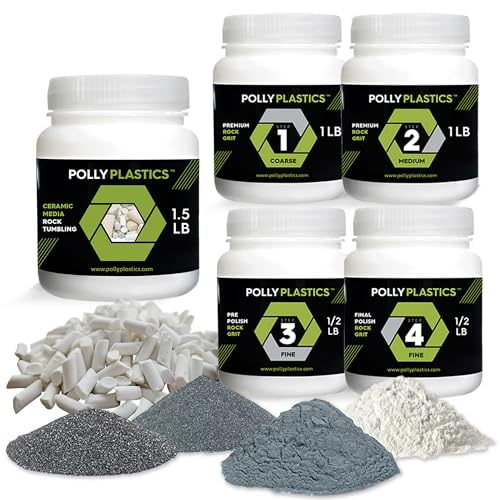
Tumbling works by running rough stones through progressively finer abrasives. Each stage has a purpose, and skipping one makes the next less effective. Stage one is coarse grinding, which shapes the rock and removes rough edges. It is the longest stage. Stage two uses a medium grit to remove the scratches left by stage one. Stage three uses fine grit to smooth the surface and prepare it for polish. Stage four is the polish, which brings out the shine.
Between every stage, the barrel and stones must be washed thoroughly. Even a few grains of coarse grit carried into a fine stage can leave scratches that no amount of polishing will remove. Some people use a separate barrel for each stage to avoid contamination; with a dual-barrel tumbler, that is built into the machine.
- Coarse stage: often a week or more per run, depending on the stone and the instructions.
- Medium and fine stages: usually shorter, and you check results between runs.
- Polish: a final run, sometimes with a burnish step using soap to clean off residue.
Times differ widely, so follow the maker’s guidance and your own checks rather than a fixed calendar.
Choosing and Sorting Rough Stones
The finished result depends heavily on what goes in. Agates, jaspers and quartz types are popular because they are hard and polish well. Soft stones can wear away or turn to mud in a barrel of harder rock. Keep stones in one batch within a narrow hardness range, as the harder ones grind down the softer ones.
Size matters. A mix of sizes helps because small pieces fill gaps and cushion the larger ones, but very large chunks can chip smaller stones. Avoid stones with cracks, since they may break during the run and leave sharp fragments that scratch others. Check each rock for hollow pockets or soft layers before loading.
- Test hardness with a simple scratch test or look up the mineral.
- Sort by size and hardness before loading.
- Rinse dirty rough stones before starting to keep grit clean.
- Add ceramic media or plastic pellets if you have too few stones for a full barrel.
Ask the seller or read the listing to check whether rough is included or sold separately, since many machines ship without any stones.
Grit, Media and Consumables to Plan For
A tumbler is only the start; consumables keep it running. You will need silicon carbide grits in stages, a polish such as aluminum oxide or cerium oxide, and perhaps ceramic or plastic filler media. Buy grit sets that match your barrel size, because the correct amount depends on the volume of the barrel and the load.
Consider the long-term costs: replacement barrel seals, lids and belts wear over time, and an extra barrel lets you run stages in parallel. Spare parts are easier to find for long-established lapidary makers, which is a factor in choosing a machine. Check the listing to see what comes in the box and what the maker sells separately.
- Keep grit in labeled, sealed containers, since the stages must stay separate.
- Do not tip used slurry down the sink; let it settle and dispose of it according to local guidance.
- Store polish in a dry place to avoid clumping.
Treat grit with care: wear a dust mask when handling dry powders, and wash your hands afterward.
Noise, Location and Household Considerations
Rock tumblers run for days or weeks, so where you put them matters. A rotating barrel makes a steady rumble as stones tumble and roll. Rubber barrels reduce noise compared with hard plastic, but the sound still carries through a thin floor. A garage, basement or shed is a better home than a bedroom or a shared wall.
Vibration may move a machine across a surface, so place it on a sturdy, level shelf or bench with a rubber mat. Keep it near an outlet but away from water, and avoid placing it on a surface that can be damaged by slurry. A tray under the machine catches drips. Keep the area ventilated, as some slurry can smell, especially in later stages.
- Never leave a leaking barrel running; check for drips each day for the first few days.
- Keep children and pets away from moving parts and grit.
- Check the power cord and plug type for your region.
Plan for long runs: consider the electricity use and decide whether you are comfortable with the machine running while no one is home.
Troubleshooting Poor Results
If your stones look dull or pitted after a run, the cause is usually one of a few things. Contamination from carried-over grit is the top suspect, followed by skipping a stage, running a stage too briefly, or mixing stones of very different hardness. A barrel that is under-filled lets stones crash instead of slide, causing chips, while an overfilled barrel stops them from moving.
Check slurry consistency. A good slurry is like thin cream; too thick and the stones stick, too thin and the grit cannot work. Add a small amount of water if the mix looks like cement, or let it settle if there is too much liquid. Sludge buildup also happens; rinse and refresh the grit if the barrel gets gummy.
- Pitted surface: go back to a coarser grit or run the previous stage longer.
- Scratches in the polish: clean the barrel more thoroughly and repeat the fine stage.
- Dull finish: use fresh polish, a thorough rinse and a longer polish run.
- Cracked stones: remove them next time and choose tougher rough.
Patience pays off. Take notes on each batch so you can improve from run to run.
Adult Rock Tumbler FAQ
How long does a full cycle take?
It depends on the stone and machine, but rotary tumbling normally takes several weeks across all stages. Vibratory machines usually need less time.
Is a dual-barrel machine worth it?
If you tumble regularly, yes. Two barrels let you stagger stages so there is always something in progress.
What do I need besides the tumbler?
Rough stones, a set of grits and a polish. Some kits include a starter amount, but serious users buy these separately.
Are vibratory tumblers better?
They are faster and kinder to sharp edges, though they suit smaller stones. Rotary machines are still the traditional choice for pebble shapes.
Can I tumble different types of stone together?
It is best to keep stones of similar hardness together. Softer stones can wear away or contaminate the batch when tumbled with harder ones.
Why do my stones come out with chips and flat spots?
Chipping often comes from an underfilled barrel, cracked rough or very mixed sizes. Add filler media, discard stones with fractures and keep sizes reasonably balanced.
Why do my polished stones look cloudy?
Cloudiness often comes from leftover grit, a skipped stage or worn polish. Clean thoroughly, repeat the fine stage and use fresh polish.
Can I reuse grit?
Some people reuse slurry for a short time, but worn grit cuts less effectively, so results suffer. Check the grit maker's guidance and never mix stages.
How do I dispose of tumbling slurry?
Do not pour it down a household drain. Let it settle, then dispose of the solids according to local guidance and pour clear water outside.
Do I need to add water?
Yes, tumbling normally works with water in the barrel, usually to just cover the stones. Follow the maker's directions for the right level.
Is a vibratory tumbler right for large stones?
Vibratory machines suit smaller stones and shorter cycles. Large rough chunks are better handled by a rotary barrel, according to most makers.
The Short Version
For two stages at once, the Lortone QT66. For bulk loads, the Lortone QT12. For a hobby workhorse, the Thumler’s Model B. For quicker finishes, the Thumler’s UV-10. For an easy start, the National Geographic Professional. For a compact two-barrel setup, the Lortone 33B.
Related Guides
- 6 Best Vibratory Rock Tumblers and Rotary Alternatives (2026)
- 6 Best Rotary Rock Tumblers: Barrel Machines Compared
- 6 Best Gem Tumblers: Rock Tumbler Kits and Barrels
- 6 Best Rock Tumblers for Hobbyists and Polishing (2026)
- 6 Best Rock Tumblers for Kids: Safe Starter Kits
Rotary and Vibratory Tumblers: How They Actually Differ
The two machine styles in this guide solve the same problem, smoothing rough stones, by very different physical means, and understanding that helps you pick the right one.
A rotary tumbler is a rotating barrel, usually rubber or plastic, that spins on rollers. Stones, grit and water slide and tumble over each other as the barrel turns. The action is gentle on the stones and works through the grind stages slowly, which is why a full cycle takes weeks. Rotary barrels do best with a barrel that is filled about two-thirds to three-quarters full, since too little load lets stones strike each other and chip.
A vibratory tumbler, such as the Thumler UV-10 in this guide, uses a vibrating bowl instead of a spinning barrel. Stones move in a spiral through the media, and the faster action shortens polishing from weeks to days for many materials. It is an excellent choice for smaller stones, jewelry-sized pieces and anyone who dislikes waiting. Large, heavy stones tend to sit rather than move, and vibratory units can be louder in a different register than the low rumble of a rotary.
Choose based on what you plan to tumble. If you work with larger rough from a gem show or collecting trip, a rotary barrel is the safer fit. If you want quick results on small stones, a vibratory model deserves a look.
Barrel Materials, Capacity and Loading
Capacity is stated in pounds or in barrel volume, and the useful amount is less than the figure suggests. Plan for roughly two-thirds of the barrel to be filled with stone and the rest with water and grit, leaving enough space for stones to move.
- Rubber barrels are quieter and tend to last longer under heavy use, but need to be inspected for cracks or hardened rubber over time.
- Plastic barrels are lighter and often less costly, though they can wear at the seals and lid.
- Dual-barrel machines like the Lortone QT66 and 33B let you run two loads at once, which is useful if you want to move one batch to the next stage while another continues. They do not shorten the time for a single load.
- A tight lid and a reliable seal matter more than the barrel’s color or brand name, because leaking slurry damages floors and motors.
Mixing rock types in one load is a common mistake, since softer stones erode faster and contaminate the load with debris. Keep similar hardness together and sort by size as well.
Motors, Belts and Maintenance
The tumbler runs for days or weeks without interruption, so durability is mostly about the drive system. In rotary machines a small motor turns a belt that spins the barrel rollers. Belts can stretch or wear, and many manufacturers sell replacements, so check availability of parts when comparing models.
Place the unit on a stable, level surface with the power cord clear of splashes, and keep the motor and electrical parts dry. After each batch, rinse the barrel thoroughly and clear the rollers of grit, because abrasive residue wears bearings and belts. Run the machine in a space where a small leak will not cause damage.
For a vibratory unit, check that the bowl, spring mounts and lid are clean and intact. Never overfill the bowl, which strains the motor and reduces polish quality. Follow the manufacturer’s instructions on run times to avoid overheating.
Planning the Cost of a Tumbling Hobby
The machine is only the entry fee. Over time you will spend more on consumables than on the tumbler itself. A realistic budget covers silicon carbide grit in coarse, medium and fine grades, a polish such as aluminum oxide or cerium oxide, ceramic or plastic filler media for cushioning, and replacement belts.
Rough rock is the other expense. Mixed bags from rock shops are inexpensive but variable, while specific agate, jasper or tiger’s eye lots cost more and often deliver better results. If you collect your own rocks, check local rules about where you may collect, since many parks and public lands restrict removal.
It also pays to plan for the finished stones: pouches, display jars, wire wrap supplies or jewelry findings turn a pile of polished rocks into something worth sharing. Keeping a notebook of load weight, grit stage durations and results helps you repeat what worked and spot what went wrong.
Safety and Cleanup Habits
Grit and slurry are abrasive and, when dry, can create fine dust, so avoid grinding or sweeping dried residue. Wear gloves when handling coarse grit, rinse stones in a bucket rather than a household sink, and let the slurry settle before disposal. Never pour it down a drain in large amounts, because it can harden and clog pipes. Keep the tumbler away from children and pets, and unplug it before opening a barrel or lid.
Frequently Asked Questions
Can I run a rock tumbler in an apartment?
Yes, but noise and location matter. Rotary tumblers produce a steady low rumble, so place one on a stable shelf away from sleeping areas, perhaps on a foam pad. Run slurry down a drain only after letting the grit settle, and check building rules.
How full should a rock tumbler barrel be?
Aim for about two-thirds to three-quarters full of stone, with water just covering the load. Too empty and stones crash and chip, and too full they cannot tumble. Include a mix of sizes so smaller pieces fill the gaps between larger ones.
What is the best first rock to tumble?
Hard, fine-grained stones such as agate and jasper are common beginner choices because they take a polish well. Avoid very soft minerals like calcite in the same load as hard stones. Sort by hardness and start with a single stone type.
How often should I replace the belt on a tumbler?
There is no set interval. Replace it when you notice cracks, stretching, slipping, or a drop in barrel speed. Keeping the machine clean and the barrel balanced extends belt life, and having a spare on hand avoids a stalled batch.