Saltwater fish such as redfish, snapper, mackerel and tuna have thick skin, stiff bones and a lot of meat, and an electric fillet knife saves a lot of hand fatigue when you clean a cooler full. The key points are blade length, power source and how easy the knife is to rinse after contact with salt and slime.
The six knives below include cordless lithium-ion models for the dock or boat and corded ones for the cleaning station. We have not used these products ourselves, so confirm blade lengths, battery or cord details and what comes in the case on the current listing before buying. Electric knives are not designed to be submerged, so keep water away from the motor.
As an Amazon Associate we earn from qualifying purchases. Links below are affiliate links, and they do not change the product information we give.
What to Look For
| Feature | Why it matters |
|---|---|
| Power | Cordless suits boats and docks; corded offers steady power at home |
| Blade length | Longer blades handle large fish; shorter ones give better control |
| Blade set | Several blades let you match the knife to the species |
| Grip | A non-slip handle matters when your hands are wet |
| Corrosion care | Rinse and dry the blades after each saltwater use |
In this guide
Specs at a Glance
| Knife | Power | Blades | Notes |
|---|---|---|---|
| Bubba Lithium Ion Cordless Fillet Knife | Cordless | Interchangeable blade set | Case and charger included |
| Bubba Pro Series Cordless Fillet Knife | Cordless | Interchangeable blade set | Higher-capacity line |
| Rapala Heavy Duty Electric Fillet Knife | Corded | Blade set | Plug-in power |
| Rapala Lithium Ion Cordless Fillet Knife | Cordless | Blade set | Boat-friendly |
| American Angler PRO Electric Fillet Knife | Corded or cordless | Blade set | Popular angler brand |
| Mister Twister Electric Fillet Knife | Corded | Blade set | Value-style option |
The 6 Best Electric Fillet Knives for Saltwater
Top pickBest for dock and boat use
1. Bubba Lithium Ion Cordless Electric Fillet Knife
A cordless fillet knife from a well-known knife brand, usually sold with several blade lengths, a charger and a carrying case. The grip is designed for wet hands.
Suits: dock and boat use. Strengths: cordless freedom and a blade set. Weaknesses: battery life depends on the load. Skip it if you only fillet at a corded station.
View Bubba Lithium Ion Cordless Electric Fillet Knife on Amazon
Best for frequent anglers
2. Bubba Pro Series Cordless Fillet Knife
A step-up version of the cordless design, intended for people who clean fish often. It brings a similar blade variety and a comfortable handle.
Suits: frequent anglers. Strengths: a sturdier feel. Weaknesses: check the listing for the exact battery details. Skip it if you need only occasional use.
View Bubba Pro Series Cordless Fillet Knife on Amazon
Best for cleaning-station work
3. Rapala Heavy Duty Electric Fillet Knife
A corded knife from a fishing-tackle brand, meant for large batches of fish. The plug-in power delivers steady performance without a battery to charge.
Suits: cleaning-station work. Strengths: steady corded power. Weaknesses: you need an outlet nearby. Skip it if you want to fillet on the boat.
Best for mobile cleaning
4. Rapala Lithium Ion Cordless Fillet Knife
A cordless version from the same brand, bundled with blades for different species. It is easier to carry between a boat and a cleaning table.
Suits: mobile cleaning. Strengths: freedom from cords. Weaknesses: it needs charging. Skip it if you want unlimited run time.
View Rapala Lithium Ion Cordless Fillet Knife on Amazon
Best for anglers who clean often
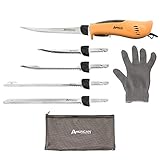
5. American Angler PRO Electric Fillet Knife
A popular pick among anglers, sold in corded and cordless variants with a set of blades. The ergonomic handle is built for a firm hold on slippery fish.
Suits: anglers who clean often. Strengths: a long track record with fishermen. Weaknesses: the versions can be confusing. Skip it if you want a specific power source.
Best for home fillet stations
6. Mister Twister Electric Fillet Knife
A corded electric fillet knife with a set of blades in a case, positioned as a value-style option for home use.
Suits: home fillet stations. Strengths: a simple corded design. Weaknesses: corded only. Skip it if you want a cordless option.

Care and Setup
- Rinse the blades in fresh water right after use.
- Dry the blade and wipe the handle before putting the knife away.
- Keep the motor body out of water.
- Store the knife in its case away from damp air.
Mistakes to Avoid
- Letting salt dry on the blades.
- Washing the motor body under the tap.
- Cutting through large bones.
- Charging the battery near a wet cleaning station.
Power Source, Motor Strength and Sustained Cutting
Saltwater species tend to be larger and tougher than panfish, so an electric fillet knife for this use needs enough motor power to keep the blade moving through thick skin, stiff ribs and dense flesh without stalling. Corded models plug into household current or a vehicle inverter and usually keep going as long as they are plugged in. Cordless models run from a rechargeable battery, which is convenient on a boat or a dock, but the battery’s capacity limits how many fish you can clean before recharging. If you clean a big catch after a charter trip, battery endurance matters.
Look for details in the listing: how many fish a charge is designed to handle, charge time and whether a spare battery is available. Treat these figures as the maker’s estimate, since the actual count depends on fish size and species. If you often clean large batches, think about a second battery or a corded model for the cleaning station and a cordless one for the boat.
Also think about how the knife handles load. A knife that slows or stops under pressure makes ragged cuts and tires you, because you push harder. Let the blade do the work and use smooth strokes rather than forcing it. Check that the switch is easy to operate with wet or gloved hands, and that it has a safety feature to avoid accidental starts.
- Cordless: portable, limited by battery capacity.
- Corded: steady power, tied to an outlet.
- Spare battery: useful for large catches.
Choosing Blade Length and Flexibility for Different Fish
Most electric fillet knives come with several interchangeable blades, and picking the right one for the fish saves meat and effort. Blade length should be comparable to the fish. Longer blades suit large fish such as big snapper, tuna or redfish, since a single long stroke follows the backbone cleanly. Medium blades work for mackerel, grouper steaks and mid-size fish. Short blades give control for small fish, delicate species and trimming around the belly or the collar.
Flexibility is the other variable. Flexible blades follow the contours of the ribs and bend with the backbone, which helps on thin-boned fish and to minimize waste. Stiffer blades give more power and control on thick, firm fish where you need to cut through resistance. If a set offers both, you can match blades to species. Check the listing for how many blades are included and what lengths they are.
Edge and tip shape also play a role. A fine tip helps start the cut at the tail or collar, and a serrated edge grips slippery skin. Keep spare blades on hand, because bone and scales dull them, and a dull blade tears flesh and makes the motor work harder.
- Match blade length to fish size.
- Use flexible blades for thin-boned fish and stiffer blades for thick fillets.
- Replace dull or bent blades promptly.
Handle, Grip and Safety When Everything Is Wet and Slippery
Cleaning fish is messy, and safety depends on a firm, steady grip. The handle should be non-slip and comfortable in a wet hand, with a shape that fits your palm and a switch you can reach without shifting your hold. Check that the handle does not feel too bulky, because a handle that is too large tires the hand, and too small makes control difficult. Gloves, such as a cut-resistant glove on the hand holding the fish, are a worthwhile addition, though never use gloves that can be caught by the moving blade.
Keep a stable cutting surface. A fish-cleaning board with a clamp or a non-slip mat prevents the fish from sliding. Work in good light, with the fish placed so you cut away from your hands and body. Do not hold the fish in a way that puts your fingers in the cutting path, and keep your free hand behind the blade. Unplug a corded knife or remove the battery before changing blades.
Electric safety matters in a wet environment. Keep cords and chargers away from standing water, use a ground-fault protected outlet if you are working near water, and do not operate the knife with wet hands on a corded model unless the maker’s instructions allow it. Never submerge the motor body. Put the knife down with the blade away from you and switch it off before setting it down.
- Use a non-slip handle and a stable board.
- Keep fingers out of the blade path.
- Disconnect power before changing blades.
- Keep cords and chargers dry.
Technique for Clean Fillets and Less Waste
Good technique matters as much as the knife. Start by keeping the fish cold and secure on a board. Make the first cut behind the gill plate down to the backbone, then turn the blade toward the tail and run it along the backbone, letting the blade follow the bones with light pressure. With an electric knife, the motion of the blade does much of the cutting, so use long, smooth strokes instead of sawing. Let the tip ride along the backbone and rib cage.
Next, separate the fillet from the rib bones by sliding the blade along the ribs, keeping it flat. Remove the skin by holding the tail end of the fillet and running the blade between skin and flesh at a shallow angle, with a flexible blade if possible. Trim any dark meat, bloodline or fat if you prefer a milder taste, and check for pin bones, which can be pulled with tweezers or fish bone pliers.
Practice on smaller fish before tackling a large one. Take your time, since rushing can cut through bones, damage the blade and waste meat. After filleting, rinse the fillets in cold water, pat dry and keep them on ice or refrigerated promptly. Follow safe food handling practices and local rules about catch size, species and bag limits.
- Cut along the backbone with long, smooth strokes.
- Keep the blade flat against the ribs.
- Skin with a shallow angle.
- Chill the fillets promptly.
Storage, Battery Care and Knowing When to Replace Parts
Saltwater environments are hard on equipment, so a consistent storage routine pays off. After use, remove the blade or blades, wash and dry them thoroughly and wipe the handle with a damp cloth. Keep the motor housing dry. Store the knife, blades and charger in the case they came in, in a dry place, away from heat and humidity. If the case has foam or compartments, make sure everything is dry before closing it, since trapped moisture encourages corrosion.
For cordless models, follow the maker’s battery guidance. In general, avoid leaving a lithium-ion battery fully drained for long periods, do not charge it near water or on a flammable surface, and avoid leaving it in a hot vehicle. Use the charger supplied or one the maker recommends. If a battery swells, overheats, leaks or fails to hold a charge, stop using it and replace it according to the manual and local rules for battery disposal.
Check the knife regularly. Look at the power cord for cuts, the switch for sticking and the blade connector for wear, since a loose blade connection can cause wobble and uneven cuts. Replace blades when they are chipped, bent or dull. If the motor sounds strained, runs hot or smells burned, stop and check it.
- Wash and dry blades after every use.
- Store in a dry case and keep the motor body clean.
- Charge batteries safely, away from water.
- Replace damaged cords, batteries and blades.
Electric Fillet Knife FAQ
Cordless or corded for saltwater fish?
Cordless is easier on a boat or dock, while corded offers steady power at home.
What blade length works best?
Longer blades suit large fish, while shorter ones give control on smaller catches.
Can I rinse the whole knife?
No. Rinse and dry the blades only, and avoid getting water in the motor.
Are electric fillet knives better than manual?
They save effort on large batches, but a manual knife gives more control.
How many fish can I clean on one battery charge?
It depends on the fish size, the battery capacity and the maker's design. Check the listing, and consider a spare battery for big catches.
Can I use an electric fillet knife on a boat?
Cordless models are well suited to this, and corded ones need a safe power source such as an inverter. Keep electrics dry and follow the maker's safety guidance.
Why is my blade making ragged cuts?
A dull or bent blade, forcing the cut or the wrong blade for the fish are common causes. Replace the blade and let it move freely.
Do I need cut-resistant gloves?
They are a sensible safety addition for the hand holding the fish. Avoid loose gloves that could catch on the moving blade.
How do I keep blades from rusting?
Rinse with fresh water, dry them thoroughly and store them in a dry case. Avoid leaving them damp.
How do I remove pin bones?
Feel along the fillet and pull the bones with tweezers or fish bone pliers, in the direction they point. A sharp blade helps trim around them.
When should I replace the battery?
Replace it if it no longer holds a charge, swells, overheats or leaks. Dispose of old batteries according to local rules.
Matching the Knife to the Species You Actually Catch
Saltwater is a broad category, and a fish that suits one knife can punish another. Redfish and snapper carry heavy scales and a firm skin, so the blade has to start the cut at the collar without skating. Mackerel and bonito are slim and oily, with soft flesh that bruises if the blade is dull or the stroke is rushed. Large pelagic fish such as tuna are usually cut into loins or steaks, where the long, flexible blade matters less than a steady motor and a big, stable work surface.
Flatfish and fish with a wide rib cage ask for control more than power. A short, thin blade lets you follow the contour of the frame with little waste. Fish with strong spines, such as some inshore species, are a reason to wear a cut-resistant glove and to keep your free hand well behind the cut. Before you buy, write down the three fish you clean most often and compare that list against the blade lengths shown on the listing. If most of your catch is under a few pounds, you may never use the longest blade in a set.
- Scaled fish: scale first or skin first, depending on how you plan to cook them.
- Oily fish: use a sharp blade and a light touch to avoid mushy fillets.
- Big fish: cut manageable sections with a heavier knife, then trim with the electric blade.
Setting Up a Cleaning Station at the Dock or Ramp
The way you arrange the work area affects speed and safety more than a small difference between knives. A clamp-on board or a table with a non-slip mat keeps the fish still. Keep a bucket of clean water and a bucket for scraps within reach, and place a cooler or ice chest at the end of the line so each finished fillet goes straight into the cold. A hose is useful, but aim it away from the knife body and any outlet.
If you use a corded knife, think about where the power comes from. Dock outlets, generators and inverters all behave differently, and wet conditions make a ground-fault protected circuit the sensible choice. Route the cord so it cannot be pulled by a passerby or dragged through fish slurry, and use a drip loop where it meets the outlet. With a cordless knife, plug the charger in somewhere dry and indoors, not on the cleaning table. Mark a clean spot to set the knife down so it never rests in a pile of scraps.
- Work in good light, since blood and slime hide pin bones and fingers.
- Keep a towel nearby for dry hands before you touch the switch.
- Rinse tools and surfaces when you finish so odors and bacteria do not build up.
Corrosion Beyond the Blade
Most advice about salt focuses on the blade, but moisture finds other places to hide. Blade connectors, the small contact points where the blade meets the motor, can collect salt crystals that cause a loose fit or a gritty feel. After each trip, remove the blade, wipe the socket with a clean cloth and let it air dry. Do not spray water or cleaner into the motor housing. If the maker allows it, a very light coat of a suitable lubricant on metal contact surfaces can slow corrosion, but only follow what the manual says.
Cases deserve attention too. A case that holds damp blades becomes a small humidity chamber, and foam trays can stay wet for days. Let everything dry open before you close the lid, and consider placing a desiccant pack inside for humid coastal climates. Check metal screws on the handle for rust bloom, and look at the charger pins and cord ends for green or white deposits. Stainless blades resist rust better than plain steel, but none is immune to long exposure to salt and fish residue.
Cordless users should also watch the battery contacts. Wipe them dry before you insert the pack, and do not charge a battery that feels damp or shows corrosion. A clean, dry set of contacts gives a more reliable connection and reduces heat at the joint.
Before the Season and Between Trips
A short routine at the start of the season saves frustration on the water. Run the motor with a fresh blade and listen for grinding, rattling or a change in pitch. Check that the switch and any safety lock feel positive, that the cord has no cuts and that every blade in the set seats fully. Charge the battery and note how it behaves under a light load, since an aging pack tends to fade sooner than it used to. Replace any blade that is chipped, bent or rusted.
For long storage, clean and dry the whole kit, store it in a cool dry place and follow the maker’s advice about leaving a lithium-ion pack partly charged rather than empty or full. Keep the knife away from children and from the tackle box, where hooks can damage cords and cases. Between trips, a spare blade and a spare battery or an extension cord rated for outdoor use are small additions that can rescue a day when a catch is large.
Finally, keep a short written checklist in the case lid: blades counted, battery charged, charger packed, cord checked, gloves and board included. Anglers who clean fish only a few times a year forget small items more often than they forget the knife, and a checklist turns a messy dock cleanup into a calm routine. If you fish with others, agree who brings the knife and who brings the board, so the station is complete the first time.
Revisit the list at the end of each season and replace anything worn, so the first trip of the next year starts without surprises.
Frequently Asked Questions
Can an electric fillet knife cut through large tuna or big redfish?
It can trim fillets and loins from big fish, but it is not meant to cut through thick backbones or heavy bone. For large fish, cut the fish into manageable sections first, then use the electric blade for the meat. Forcing the blade stalls the motor and can damage it.
Should I scale a snapper before filleting it with an electric knife?
Many people skin the fillet instead, which skips scaling altogether. If you plan to cook with the skin on, scale the fish first with a scaler, since scales dull blades quickly. Either way, rinse off loose scales so they do not clog the blade connector.
Can I run a corded electric fillet knife from a boat inverter or generator?
Often yes, if the power source can supply what the knife needs and the output is suitable for motors, but check the manual and the knife wattage. Use a ground-fault protected outlet near water, keep cords dry and never operate with wet hands near a live connection.
How soon should fillets go on ice after I clean them?
Chill them as soon as possible. General food safety guidance is to keep fish at or below 40 degrees Fahrenheit. Place fillets in a sealed bag or container over ice, keep meltwater from soaking the meat and refrigerate or freeze them when you get home.
The Short Version
For a cordless set, the Bubba Lithium Ion. For heavier use, the Bubba Pro. For corded power, the Rapala Heavy Duty. For mobile cleaning, the Rapala Cordless. For an angler favorite, the American Angler PRO. For a simple corded option, the Mister Twister.