Filleting a whole fish is easier with the right tool in hand. A good fish fillet knife is thin, flexible and sharp, so it slides along the backbone and under the skin without tearing flesh. Electric models cut through thick skin and ribs quickly, while manual knives give more feel.
The six below mix electric and manual options that anglers commonly reach for: three corded or cordless electric knives and three hand knives. We have not used these products ourselves. Details change between listings and versions, so confirm blade length, power source and what is included on the current listing before you buy.
As an Amazon Associate we earn from qualifying purchases. Links below are affiliate links, and they do not change the product information we give.
What to Look For
| Feature | Why it matters |
|---|---|
| Power type | Electric knives speed up large batches; hand knives suit small jobs |
| Blade set | Several blade lengths let one handle serve different fish |
| Grip | A non-slip handle is safer around slime and water |
| Cord or battery | A cordless model suits a boat or camp, a corded one suits a garage |
In this guide
Specs at a Glance
| Knife | Type | Power | Notes |
|---|---|---|---|
| American Angler PRO | Electric | Varies by version; check the listing | Several blades sold in the set |
| Hamilton Beach Electric Fillet Knife | Electric | Corded | Household-focused electric knife |
| Mister Twister Electric Fillet Knife | Electric | Corded | Includes multiple blades, per the maker |
| KastKing Cutter | Hand knife | None | Flexible blade with a sheath |
| Gerber Controller | Hand knife | None | Rubberized handle |
| Bubba Tapered Flex | Hand knife | None | Non-slip handle |
The 6 Best Fillet Knives for Fish
Top pickBest for anglers with a big catch to clean
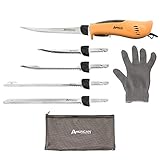
1. American Angler PRO Electric Fillet Knife
A well-known electric fillet knife aimed at anglers who clean many fish. It comes with several interchangeable blades, and the power options differ by version.
Suits: anglers with a big catch to clean. Strengths: speed and a choice of blades. Weaknesses: more parts to clean and store. Skip it if you only fillet a few fish a year.
Best for home kitchens and garages
2. Hamilton Beach Electric Fillet Knife
A household electric knife with a blade built for filleting. It suits users who want a dependable appliance brand.
Suits: home kitchens and garages. Strengths: a familiar brand and simple controls. Weaknesses: corded use limits where you can work. Skip it if you work on a boat.
View Hamilton Beach Electric Fillet Knife on Amazon
Best for anglers who clean large catches
3. Mister Twister Electric Fillet Knife
A corded electric fillet knife sold with several blades. Mister Twister is a fishing brand, and this model is built for cleaning plenty of fish.
Suits: anglers who clean large catches. Strengths: a fishing brand and a multi-blade set. Weaknesses: the contents vary, so check the listing. Skip it if you want cordless freedom.

Best for anglers who want a value knife
4. KastKing Cutter Fillet Knife
A hand fillet knife from a fishing brand with a flexible blade and a sheath. Details differ across the line, so confirm the blade length.
Suits: anglers who want a value knife. Strengths: a sheath and a modern look. Weaknesses: a younger brand than some. Skip it if you want a heritage maker.

Best for hand filleting of mid-size fish
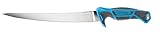
5. Gerber Controller Fillet Knife
A hand fillet knife with a flexible blade and a rubberized handle, from a well-known knife maker. It is made to be easy to control.
Suits: hand filleting of mid-size fish. Strengths: a secure grip and a trusted brand. Weaknesses: check the listing for the length you need. Skip it if you want an electric knife.
Best for anglers who want a hand knife with a firm grip
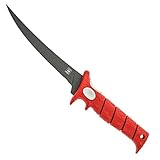
6. Bubba Tapered Flex Fillet Knife
A hand fillet knife with a tapered, flexible blade and a non-slip handle. Bubba is a name many anglers know for fillet and utility knives.
Suits: anglers who want a hand knife with a firm grip. Strengths: a tapered blade and a non-slip handle. Weaknesses: sizes differ, so check which one you are ordering. Skip it if you prefer a classic wooden handle.
Care and Setup
- Rinse the knife with fresh water after use and dry it fully.
- Never submerge the motor housing of an electric knife.
- Store hand knives in a sheath to protect the edge.
- Keep spare electric blades together in the case.
Mistakes to Avoid
- Forcing an electric knife through bone.
- Using a stiff blade for delicate fish.
- Leaving a corded knife near water without care.
- Skipping regular honing on a hand knife.
Electric or Manual: Which Suits Your Fishing
The first decision is whether you want power assistance. Electric fillet knives use a reciprocating blade that does much of the sawing for you, which is useful when you process many fish or work through thick skin and rib areas. They reduce hand fatigue and can make results consistent for beginners. The downsides are dependence on a cord or battery, more parts to clean and the need for care around water.
Manual fillet knives rely on your control. A thin, flexible, sharp blade lets you feel the backbone and ribs, and many experienced anglers prefer that precision. They are quiet, portable and do not need charging. They do require sharpening and a bit of practice, and a long session can tire the hand.
Consider how and where you clean fish. A kitchen with an outlet suits a corded knife. A boat, dock or campsite suits a manual or cordless one. If you fish for small panfish, a manual knife may be more than enough, while a heavy catch of larger fish may justify the motor.
Many anglers end up owning both. They use the electric knife for the bulk of the work and the manual knife for finishing, trimming and skinning. If you can only buy one, pick the style that matches your most common situation, and check the listing for what is included, such as spare blades, a case or a sheath.
Blade Length, Flexibility and Fish Size
Match the blade to the fish you clean most. Longer blades suit large fish because they can run along the backbone in a single pass. Shorter blades give better control on small fish and around curves near the head and tail. A blade that is too long for the fish is awkward, and one that is too short forces repeated strokes that tear the flesh.
Flexibility is the other key trait. A very flexible blade follows the contours of the spine and slides beneath the skin, which suits thin-boned, delicate fish. A stiffer blade offers more power through thick skin and heavier bones, suiting larger or tougher fish. Many makers offer a range of flexibility, so check the listing for descriptions, and remember that the language is the maker’s own.
Blade shape and thickness matter too. Narrow blades are nimble but can feel fragile, while broader ones are sturdier. The tip should be fine enough to pierce but not so delicate that it snaps. Look for a smooth, even edge with no visible nicks.
If you fish a mix of species, a set of blade lengths or a mid-length flexible knife is a practical compromise. Confirm the blade length and the kit contents in the current listing, since versions of the same product can differ. Handle the knife if possible to judge balance before you commit.
Handle Materials and Grip When Wet
Fish cleaning is slippery work, so the handle is as important as the blade. Textured rubber or polymer handles stay secure with water, slime and scales on your hands. Smooth or varnished handles look good but can become dangerous when wet. Wood can feel pleasant but needs care, since it can swell or crack if left damp.
Look for a handle shape that fills your hand without cramping. A guard or finger notch helps prevent your hand sliding forward onto the blade. A hand that fits comfortably can control the blade with less effort, which means cleaner cuts and less fatigue. If you have small or large hands, check handle dimensions or other descriptions, and consider whether you will wear gloves.
Weight and balance play a role. A knife that is too light can feel flimsy, while one that is heavy can tire the wrist. Balance near the handle gives better control for fine work. Check how the knife feels while you hold it in a way similar to cutting.
A sheath is part of the package for hand knives. A good sheath protects the edge, prevents accidents and makes storage easy. A sheath with drainage holes lets water out, and a stiff, well-fitting design stops the blade from poking through. Check whether the sheath is included and how it attaches to a belt or a tackle box.
Technique Tips That Save Meat and Blades
Good technique matters more than the brand of knife. Start with a clean, stable cutting board and chilled fish. Cold flesh is firmer and easier to cut. Make the first cut behind the gills and along the spine, then guide the blade along the backbone with light pressure, letting the edge do the work. Keep the blade angled slightly toward the bone so you leave less meat behind.
To remove skin, hold the tail end and run the blade between the flesh and skin with the edge angled slightly down and forward. A gentle sawing motion helps with a manual knife, while an electric knife glides with little pressure. If the blade catches, back off, adjust the angle and try again rather than forcing it.
Handle pin bones separately. Many fish have pin bones that are best removed with tweezers or pliers rather than a knife. Trim the belly fat or any dark meat according to your preference. Keep your free hand clear of the blade path and consider a cut-resistant glove if you are new to filleting.
Take care of the knife as you work. Wipe the blade between fish to remove slime, and avoid cutting through large bones or hitting the board edge. Pause to touch up a manual knife if it begins to tear instead of slice. A sharp, clean blade produces better fillets and is safer than a dull one.
Sharpening, Storage and Replacement Timing
A fillet knife works best when sharp, and thin flexible blades dull quickly on skin and bone. For a manual knife, use a fine stone, ceramic rod or a guided sharpener designed for thin blades. Keep the angle low and the pressure light so you do not flex or bend the blade. Sharpen little and often. Electric blades are usually replaced rather than sharpened, though you should check the maker’s guidance.
After use, wash with warm soapy water, rinse and dry completely. Salt and fish acid can corrode steel, so do not leave knives damp in a tackle box. Store manual knives in a sheath with drainage, and keep electric blades in their case with a little room between them. A light coat of oil on carbon steel blades helps prevent rust, while stainless blades need less attention.
Check electrical parts too. Inspect cords for cracks, switches for sticking and battery contacts for corrosion. Keep the motor body dry, and let it cool after long sessions.
Replace blades or knives when you see rust pits, bends, chips or a loss of flexibility, or when the blade no longer holds an edge after sharpening. Replace electric units if the motor labors, the cord is damaged or the blade socket is loose. Using a worn or loose tool risks accidents, so retire it when in doubt.
Fish Fillet Knife FAQ
Is an electric fillet knife worth it?
If you clean many fish at once, yes. For a few fish, a hand knife is simpler and easier to maintain.
What length is best?
Match the knife to the size of your usual catch, with shorter blades for smaller fish.
Can hand knives handle thick skin?
Yes, with a sharp edge and patient strokes. Electric knives simply make it faster.
Are cordless models available?
Some are, though battery details vary, so read the listing.
Is a manual fillet knife enough for a beginner?
Yes, a manual knife is fine if you keep it sharp and take your time. An electric knife can make the first attempts easier, but neither is required.
How often should I sharpen a manual fillet knife?
Touch it up whenever it begins to tear instead of slice, often after a few fish. Light, frequent sharpening is better than waiting until it is dull.
What blade flexibility should I choose?
Choose a flexible blade for delicate, thin-boned fish and a stiffer one for large or tough fish. A medium flexibility suits many uses.
Can I use a fillet knife for other kitchen tasks?
You can for slicing and trimming, but avoid bones and hard foods. Keep it dedicated to fish if you want to preserve the edge.
How do I prevent rust?
Wash and dry the blade right after use, then store it dry. Carbon steel benefits from a thin coat of oil. Stainless is more forgiving but not immune.
Do I need a cutting glove?
It is wise for beginners, especially with a wet, slippery fish. Wear a cut-resistant glove on the hand that holds the fish.
What should be in an electric fillet knife kit?
Look for several blade lengths, a case and clear safety instructions. Contents vary, so confirm them on the current listing.
Electric Knife Power Sources, Water and Safety
Three of the knives in this guide, the American Angler PRO, the Hamilton Beach and the Mister Twister, are electric, and the Hamilton Beach and Mister Twister are listed as corded. Mixing mains electricity with fish slime, ice melt and wet hands is the reason to think carefully about where and how you plug in.
Start with the outlet. A ground-fault circuit interrupter outlet, usually marked with test and reset buttons, cuts power quickly if current leaks, which is a significant protection near water. If your garage or cleaning area has a standard outlet, a portable GFCI adapter or extension designed for that purpose is a sensible addition. Keep the cord out of puddles and away from the blade path, and route it behind you rather than across the cutting board.
Next, handling. Never carry a knife by the cord, and unplug it before changing blades, wiping it down or walking away. Do not let the motor housing get wet; wipe it with a damp cloth and keep it away from sinks and hoses. Any blade attached to a motor can move the instant it is switched on, so keep fingers behind the cutting edge and use the off position as the default whenever you pause.
If you often clean fish at a lake or campsite, a corded model is a poor fit unless you have a generator or an inverter, and those bring their own safety rules. Cordless electric or manual knives make more sense there. Check the listing for the power source rather than assuming, since some knife lines come in several versions.
Freshwater and Saltwater Fish: How the Catch Changes the Knife
The fish you clean most should guide your purchase. Small panfish such as bluegill and perch have thin fillets and small bones, so a short, highly flexible blade lets you follow the rib cage and take thin slices of meat. Trout and walleye sit in the middle: a medium flexible blade handles both. Bass and catfish have thicker bodies, and catfish skin is tough, so a longer blade with a bit more backbone helps.
Saltwater species can be larger and more varied. Snapper, redfish and flounder have different bone structures, and bigger fish such as tuna or amberjack need a long blade with a firm spine. Some saltwater anglers carry two hand knives, one flexible for delicate fish and one stiffer for big cuts. A corrosion-resistant steel matters more near salt, and a rinse after every use matters more than the steel choice itself.
- Panfish and small trout: short, flexible hand knife, such as those in the hand knife group in this guide.
- Mixed freshwater catch: a mid-length flexible blade or a multi-blade electric kit.
- Catfish and other tough-skinned fish: a firm blade and gloves, or an electric knife for the skin.
- Large saltwater fish: a longer, firmer blade and a sturdy board.
Whichever type you choose, check the listed blade length and thickness for the exact version you are ordering, since sizes are often sold under the same name.
Setting Up a Cleaning Station That Makes the Knife Work Better
A good knife can be undermined by a poor workspace. A stable, large cutting board, preferably with a groove or clamp to hold the fish, keeps the fish from sliding. Non-slip mats or a damp towel under the board help. Place the board at a comfortable height so you do not hunch, because tired posture leads to slips.
Keep a bucket of clean water nearby for rinsing hands and fillets, and a second container for waste. Separate raw fillets from scraps right away to keep the work area manageable. Ice or a cooler within reach allows you to chill fillets between fish, which protects flesh quality and lets you work at a steady pace instead of rushing.
Good lighting is important as well. A bright, shadow-free surface lets you see pin bones and the lateral line. If you work outdoors in the evening, a headlamp or clamp light costs little and prevents mistakes. Keep your knife on the board or in a sheath between cuts instead of laying it among fish parts where it can be lost under a pile or hit unexpectedly.
Budget Versus Premium: Where the Extra Money Goes
The six knives here cover a range of types, so comparing them by price alone is less useful than asking what extra spending buys. In electric knives, more cost often brings a heavier-duty motor, a better set of blades, a sturdier case and an easier path to replacement blades. A household-brand electric knife may be perfectly suitable for occasional use at home, while a fishing-brand kit may suit repeated large batches.
In hand knives, spending more tends to bring better steel, a more refined blade shape and a handle designed for wet grip. The jump from a basic knife to a better one is noticeable mostly to people who clean many fish and who keep the edge sharp. If you fillet a few fish each season, a modest knife that is properly sharpened will outperform an expensive one that is dull.
Before spending more, check three things: whether replacement blades or a sheath are available, whether the maker states a warranty, and whether the handle suits your hand size. A knife that fits you and stays sharp is a better purchase than one with a premium label.
Frequently Asked Questions
Is it safe to use a corded electric fillet knife near water?
Use caution. Plug it into a ground-fault protected outlet, keep the cord out of puddles, and keep the motor housing dry. Unplug before changing blades or cleaning. If you work in wet conditions or away from power, a hand knife or a cordless model is a safer match.
What fillet knife is best for catfish?
Catfish have thick, tough skin, so many anglers prefer a firm blade, an electric knife or a sharp hand knife with a stiffer spine, plus a cut-resistant glove. Because details vary by model, confirm blade length and thickness on the listing before buying.
Do I need two fillet knives?
Not at the start. One mid-length flexible knife covers most freshwater fish. Anglers who clean both small panfish and large saltwater fish often add a second knife, one flexible for delicate work and one stiffer for big cuts. Buy the second one only if your first leaves gaps.
How should I hold the fish steady while filleting?
Use a large board with a clamp or groove, or place a damp towel underneath to stop slipping. Hold the fish near the head with your free hand, keeping fingers behind the blade path. A glove adds grip and protection, especially for beginners and slimy fish.
The Short Version
For a multi-blade electric knife, the American Angler PRO. For a household brand, the Hamilton Beach. For a fishing-brand electric knife, the Mister Twister. For a value hand knife, the KastKing Cutter. For a rubber grip, the Gerber Controller. For a tapered blade, the Bubba.