Disclosure: As an Amazon Associate, umtsmarttool.com earns from qualifying purchases. Links on this page are affiliate links; they cost you nothing extra. Prices and availability change often, so check the current Amazon listing before you buy.
This levoit lv h134 air purifier review begins with the fact that shapes everything else in it: the LV-H134 tower, one of the machines that built Levoit’s name in large rooms, has stepped back from the front of the catalogue. Current listings through the brand’s official channels centre on its genuine replacement filter and on the successor generations — the Vital and Core lines — rather than on new H134 units, and readers meeting the model today are usually in one of three positions: they own one and want to know how long to keep feeding it, they have been offered one second-hand, or they are comparing it against the machines that replaced it. This review serves all three. It assesses the tower on its merits, as a large-room appliance of its generation; it prices the ownership honestly, through the filter that remains very much on sale; and it maps the successors, so the reader whose H134 has reached its end knows which modern machine inherits which part of its character.
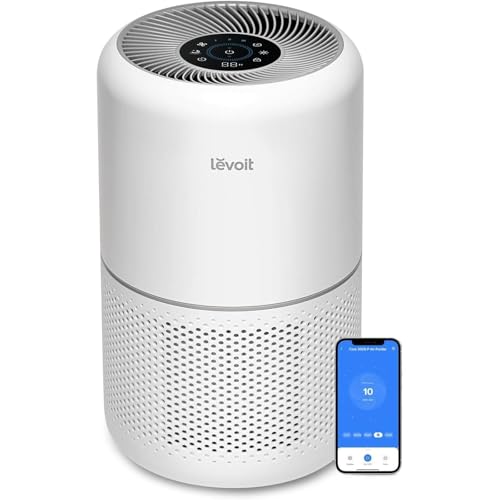
The H134 in its day was Levoit’s answer to a real gap: a tall, floor-standing purifier with a big cartridge and serious airflow ambitions, at a position in the range that undercut the premium towers. It sold in large numbers, which is why its filters remain stocked and its ownership record is deep. A review written now, with that record available, can be more useful than a launch review ever was — it can say how the machine ages, what its owners actually replace it with, and where its design’s compromises showed up across years rather than across a testing week.
Key Takeaways
- The H134 is a previous-generation large-room tower: big combined cartridge, strong airflow for its era, simple controls, no sensor automation.
- New units are no longer the story — the genuine LV-H134 replacement filter is, and its continued availability is what makes existing machines worth keeping.
- Owners should keep a healthy H134 running without hesitation; its consumable supply is its life insurance.
- Second-hand buyers should price it as machine plus an immediate genuine filter, and test the motor with the cartridge removed.
- When replacement day comes, the Vital 200S inherits its large-room role and the Core 400S adds the automation the H134 never had.
In this guide
The Machine Itself: Design and Character
The H134 is a tower in the classic mould: a tall cabinet that draws room air through a large-format combined cartridge — pre-filter, HEPA media and a substantial activated-carbon charge — and returns it upward, with touch controls and a display of its generation’s simplicity. The design’s virtues are scale and straightforwardness. The cartridge is big, which means air resistance per unit of airflow is gentle, working speeds can stay civilised in a large room, and the consumable’s life in ordinary service is measured in the longer spans this class allows. The tower format stands on the floor and behaves like furniture, which in living rooms — the rooms this machine was bought for — is a genuine ergonomic virtue.
Its compromises are equally characteristic of its generation. There is no particle sensor and no automatic mode; the machine runs where its owner sets it, and the owner’s judgement is the automation. There is no app. The display tells you the speed and the filter timer and minds its own business otherwise. Owners raised on the current smart generation sometimes read that list as poverty; owners who have lived with both often read it as peace. The H134 cannot surge mysteriously at bath time, cannot lose a Wi-Fi argument, cannot orphan its controls in a discontinued app. What it can do is move a large room’s air through a big honest cartridge for years, and the ownership record says that is what it has done.
Noise follows the tower pattern: a low, broad rush at working speeds that large rooms absorb easily, and a top speed that is an event tool — for the post-renovation evening, the smoke drift, the party — rather than a residence. In the bedroom-adjacent roles some owners give it, the lower speeds are sleep-compatible in the way of all fixed-speed machines: featureless, constant, easy to habituate to. Our Levoit air purifier problems guide covers the brand-wide symptom catalogue; the H134’s entries in it are the generic ones of age and consumables, which is another way of saying the design had no characteristic vice.
Performance in the Rooms It Was Bought For
Judged without laboratory claims, from the design’s verified characteristics and its long ownership record, the H134’s territory is the large bedroom, the living room and the open-plan floor of a modest flat — rooms where its cartridge’s scale and its airflow let it turn the air over at a rate occupants can perceive in dust behaviour and morning smell. Within that territory its owners’ reports are consistent across years: surfaces dust more slowly, cooking’s evidence clears by morning, pollen seasons are kinder indoors. The machine’s HEPA media handles the particle side of that story and its generous carbon charge — larger than the compact models’ — gives it a longer odour leash than its smaller siblings, though heavy, continuous odour sources will still outrun it, as they outrun everything in this class.
Outside the territory, the familiar physics applies. Stretched across a very large open plan, or asked to serve two rooms through a doorway, the H134 becomes the honourable underperformer its successors were designed to replace — not broken, merely outnumbered by cubic metres. Owners who feel that gap today should read it as the sizing signal it is, and our best tower air purifiers comparison shows how the current tower field states the same rooms’ requirements. The health framing throughout this review stays where our site keeps it: this is a comfort and cleanliness appliance that reduces a room’s particle load, not a medical device, and the evidence discussion lives in scientific benefits of air purifiers.
The Consumable That Decides Everything: The LV-H134 Filter

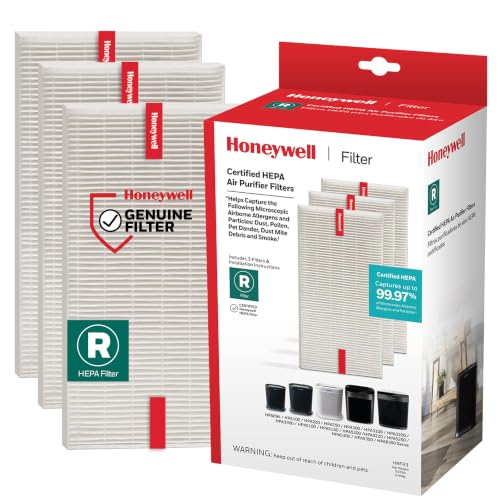
Genuine Levoit LV-H134 Replacement Filter
This cartridge is the reason the review can recommend continued ownership with a straight face. While genuine filters remain stocked — and they are, through the brand’s official listings — an H134 with a healthy motor is a fully supported appliance, whatever its age. The filter follows the family’s combined format, so carbon and HEPA retire together; in large-room service the interval runs to the longer spans, shortened honestly by pets, dust and smoke in the usual proportions. Check price on Amazon
- Format: genuine combined cartridge for the LV-H134 tower
- Strengths: exact fit and seal; keeps a previous-generation machine fully viable; stocked through official channels
- Trade-offs: combined format retires both media together; a previous-generation part whose long-term future should be re-checked yearly
Best for: every H134 owner whose machine passes the motor test. Not suited for: owners of any other model — Levoit cartridges are model-specific. The ownership discipline is the family’s standard one, set out in our brand guide: vacuum the exterior monthly, judge the change by airflow, tone and odour rather than by the timer alone, and keep one spare on the shelf so the change is never hostage to a delivery. Owners should also, once a year, simply confirm the genuine filter is still listed — the day it is not is the day the machine’s remaining life becomes a countdown, and plans are better made in that order.
Keeping, Buying Used, or Replacing: The Three Decisions
For current owners the decision is the simplest in this review. A healthy H134 — motor smooth with the cartridge removed, cabinet sealing, controls alive — should be kept, fed genuine filters, and run without a shadow of apology; its replacement would buy features, not fundamentally cleaner air, and the money is better held against the day the motor or the filter supply gives out. The exception is the household whose room has outgrown it, where the honest move is to reassign the tower to the smaller room it can still master and buy the larger room its own machine.
For second-hand buyers, the assessment is the five-minute one from our brand guide, with this model’s specifics added. Price the machine as unit plus one genuine filter, because the fitted cartridge should be replaced on arrival whatever its claimed age. Run the motor empty and listen. Check the tower’s cabinet for the cracks that tall, light cabinets collect in moves, and confirm the filter is listed and orderable before money changes hands — the entire value of the purchase rests on that listing. A used H134 bought this way is one of the better bargains in the category: a large-room machine whose consumable is current, at a fraction of its successors’ positions. Bought carelessly — untested, unfiltered, its supply unchecked — it is a tall ornament.
For owners at replacement day, the succession maps cleanly. The H134’s large-room, floor-standing role passes to the Vital line; its simplicity passes, in modernised form, to the Core line’s fixed-speed models; and the automation it never had arrives with the S models. The two successors worth a direct look:

Levoit Vital 200S — the large-room heir
Manufacturer-rated for very large rooms, with a washable pre-filter that suits pet-heavy households and sensor-driven auto mode the H134 generation lacked. Choose it when the H134’s room — or a bigger one — is the job. Check price on Amazon
- Strengths: coverage headroom; washable pre-filter stretches the main cartridge; automation that spares filter and power
- Trade-offs: a larger consumable when the day comes; connectivity is a system to maintain
Best for: H134 owners replacing like for larger. Not suited for: small bedrooms.

Levoit Core 300 — the simplicity heir
When an H134 retires from a room that has since been subdivided, shrunk or reassigned — the living room that became a study — the Core 300 inherits the brief at the smaller scale: one cartridge, no drama, the same ownership grammar the H134 taught. Check price on Amazon
- Strengths: the family’s simplest current ownership; filters stocked everywhere
- Trade-offs: a deliberate step down in room scale; no automation in the base model
Best for: downsizing the role, not the standards. Not suited for: the large room the H134 used to serve. Cross-comparisons with the wider current field are in best air purifiers, and the smaller sibling is assessed in our Levoit LV-H132 air purifier review.
How to Choose and How to Live With It
Choosing, for this model, is mostly choosing a relationship with a previous generation. Choose the H134 — used, or kept — when you value a big cartridge, a simple control scheme and a consumable you can still buy, and when your room matches its territory. Choose a successor when you want the machine to sense and respond, when your room has grown, or when the discipline of manual speeds has begun to lose to the household’s actual habits; an unrun purifier cleans nothing, and automation’s deepest virtue is that it runs. Living with an H134 asks the standard rhythm and one addition: the annual supply check. Vacuum monthly, judge the cartridge by evidence, keep a spare, and once a year confirm the genuine filter’s listing as calmly as you would check a smoke alarm’s battery. That small habit converts the model’s one structural risk — its generation — into a managed fact.
Common Mistakes With This Model
Retiring it early, out of a vague sense that its age must matter, while its motor is smooth and its filters are stocked — the most expensive mistake on this page. Buying it used without pricing the immediate filter change, and then reviewing the old cartridge’s performance as the machine’s. Stretching it across a room its generation never claimed, the sizing error in its tower-specific costume. Feeding it compatible cartridges of unknown sealing to save a little on the one part that decides everything — the reference-swap discipline from our problems guide applies with full force. And, at the end, replacing it reflexively with another tower when the household’s real change was not the machine but the room: measure first, and let the measurement choose between the Vital’s headroom and the Core’s simplicity.
Final Recommendation
The LV-H134 earns an unusual verdict: a recommendation to keep, to buy carefully used, and to replace without nostalgia when its two life-signs — motor and filter supply — eventually fail. In its generation it was the right large-room answer for a great many households, and the depth of its ownership record confirms it. Its review closes with the advice that governs every previous-generation appliance worth respecting: maintain it on evidence, verify its consumable yearly, and let it work. When the day comes, its successors are ready, and they are better in the specific ways this review has named — but a healthy H134, tonight, in the room it was bought for, is not an old machine. It is a finished one.
The H134 Across a Decade of Rooms: An Ownership Retrospective
It is worth pausing on what the long record actually shows, because previous-generation reviews are usually written from nostalgia or from spite, and the H134’s record supports neither. The machines that survive in service share a profile: they were bought for rooms that matched them, they were fed genuine cartridges on evidence rather than on panic, and their owners treated the tower’s simplicity as the feature it is. The machines that disappointed share the opposite profile, and the disappointment is legible in every case as a sizing or consumable story rather than a design failure. That is a better legacy than most appliances earn. It also instructs the successors’ buyers: the Vital and Core machines reviewed across this site will succeed or fail in the same two ways, because rooms and cartridges have not changed — only the automation wrapped around them has.
One more retrospective observation belongs to the tower format itself. Tall machines live differently in a house: they are seen, which means they are placed deliberately, which means they are less often exiled to the cupboard that ends so many compact machines’ careers. Visibility is an underrated specification. The H134’s decade owes something to the fact that it stood in the room, looking like furniture, being used — while cleverer, smaller machines were tidied away and forgotten. Buyers choosing between formats today should weigh that honestly: the best purifier is the one that remains in service, and remaining in service is partly a matter of being too present to put away.
Energy, Cost and the Economics of Keeping an Older Machine
The keeping-versus-replacing calculation usually turns on consumables, and the H134’s are straightforward: one combined cartridge on a large-room rhythm, priced in the genuine market, plus electricity in the modest band its class occupies — the landscape is mapped in how much energy does an air purifier use. Against that, a successor’s purchase price buys automation and headroom but restarts the consumable clock at a new model’s prices. The ledger method from how much does an air purifier cost gives the honest comparison, and for a healthy H134 in a matching room it returns the same answer for years in a row: keep. The crossover arrives when the motor tires, when the filter listing thins, or when the room changes — three events, all observable, none of them a date on a calendar. Owners who watch for those three will replace their tower at exactly the right time, neither early out of fashion nor late out of sentiment.
There is an environmental sentence to add, briefly: the greenest purifier is usually the one already manufactured, maintained, and still cleaning its room. Keeping a sound H134 in service is not a compromise dressed as a virtue; it is the virtue and the economy arriving, for once, at the same answer.
Head to Head in Prose: H134 Against the Vital 200S
Owners at replacement day ask the comparison directly, so here it is without a table. On airflow ambition, the Vital is the larger claim, manufacturer-rated for very large rooms, and it carries the headroom principle into territory the H134 should not be stretched to cover. On filtration architecture, the H134’s single large combined cartridge meets the Vital’s staged approach — a washable pre-filter ahead of its main cartridge — and the staged design wins the consumable argument in pet households, where the washable layer absorbs the hair load that would otherwise age the expensive media. On intelligence, there is no contest and no shame: the Vital senses, displays and automates; the H134 obeys. On noise, both are civilised at working speeds, with the Vital’s automation giving it the quieter average across a real week, since it spends the clean hours low. On ownership risk, the H134’s is its generation — a filter supply to be watched — while the Vital’s is the ordinary one of any current model: none worth naming.
The verdict follows the household, as every verdict in this review has. A pet-heavy, large-room household replacing an H134 will feel the Vital as a genuine upgrade in exactly the places its life chafed: the pre-filter, the automation, the headroom. A quiet household in a matching room, replacing a dead H134, may find the Vital more machine than its life requires, and should look honestly at the Core line before spending on capability it will not use. Replacement is the one moment a household gets to re-choose its problems; choose the set that matches the life, not the set that wins the comparison page.
Room by Room: Where the Tower Still Earns Its Floor Space
The living room with a door: the H134’s home fixture, still a yes without qualification, provided the cartridge is young and the room’s volume is the ordinary kind. The large bedroom: yes, on its lower speeds, with the tower placed out of the direct line between bed and door so its working sound sits at the room’s edge rather than its centre. The open-plan kitchen-diner: a qualified answer — the tower will work honestly against the room’s particle load and take the edge off cooking’s aftermath by morning, but a household that cooks seriously and often should read the carbon’s rhythm as the real specification and consider whether the successor generation’s staged carbon suits it better. The rented flat: yes, and a special note — a tower that stands like furniture leaves no mark, needs no installation, and moves house without a van of its own, which is why so many H134s have had three addresses. The home gym or workshop-adjacent room: capable against dust, with the cartridge rhythm compressed by the load; owners should vacuum the exterior weekly there and forgive the consumable its shorter life, since it is spending itself on visible work.
The rooms where the answer is no are the ones this review has already named: the very large open plan, the two-rooms-through-a-doorway ambition, and the heavy continuous odour source. In each case the no is about physics, not about the model’s worth — and in each case the correct response is a machine chosen for that room, with the H134 reassigned to a room on its list, where it will go on being right for years.
What the H134 Taught the Category
Every successful appliance teaches its makers something, and the H134’s lessons are visible in its successors. It taught that a large combined cartridge, honestly sealed, could carry a big room without the staged complexity the premium brands insisted on — the Core and Vital cartridges are that lesson, refined. It taught that a great many households prefer a machine that obeys to a machine that decides, a preference the current range respects by keeping simple models in production beside the smart ones. And it taught that the aftermarket is part of the product: the depth of its filter supply, genuine and compatible alike, is a competitive asset the brand now protects deliberately across the range. A buyer choosing any current Levoit is, in part, buying what the H134’s decade demonstrated — which is the final reason this review of a stepped-back model belongs on a site that mostly reviews the present. The present was built by it.
Troubleshooting the H134 Specifically
The brand’s general catalogue applies, but three presentations belong to this tower in particular. The first is the lean: tall, light cabinets that have been moved often can develop a faint rock on uneven floors, and a rocking tower at speed becomes a buzzing tower. Level it, on a hard surface, before diagnosing anything else — a folded card under a foot has cured more H134 noise complaints than any part. The second is the top-heavy dust pattern: the tower’s height means its upper intake draws from a different stratum of the room’s air than its base, and in dusty houses the cartridge can load unevenly, top first. Rotating the cartridge is not a service procedure — but noting the pattern tells the owner the room’s dust is stratified, usually by a nearby source at height, such as a shelf of books or a textile store, and moving the source or the tower evens the load.
The third is the display’s slow fade, a cosmetic ageing of this generation’s panels that alarms owners out of proportion to its meaning. A dim display on an otherwise healthy machine is a panel ageing, not a system failing; the machine’s obedience to its buttons is the health check, and a tower that responds crisply to a fading display has years in it. Owners should let the filters-out motor test and the cartridge’s evidence make the retirement decision, and treat the display’s complexion the way they treat their own: as information about age, not about worth.
A Week With the Tower: The Ordinary Service It Actually Gives
Monday, the living room after a weekend of visitors: the tower runs a working speed through the evening and the room resets by Tuesday. Wednesday, vacuuming day, it takes its high-speed hour in stride and the cartridge’s exterior shows the week’s collection at its monthly clean. Friday, cooking for friends: the tower is not a kitchen appliance and does not pretend to be, but by Saturday’s breakfast the room has forgotten what Friday’s dinner was, which is the realistic promise of a big carbon charge in a closed room. Sunday, the house quiet, the tower idles at its lowest and is forgotten — the state its owners value most and its designers intended. Nothing in that week is dramatic, and that is the review’s deepest finding about this model: its service is the absence of incident, sustained across years, in rooms full of incident. Appliances that provide that are rarer than appliances that provide features, and the H134’s installed base is the receipt.
Reading the Old Specification Sheet Honestly
Buyers of used units will meet the model’s period marketing, and it deserves a translator. Coverage figures from its era were stated at full speed with the period’s customary air-change assumptions; read them as ceilings and halve them, in your head, for the speeds you will live at — the tower remains a large-room machine after the translation, which is more than many of its contemporaries can say. Filter-life statements assumed the reference household that does not exist; your household’s rhythm will declare itself within the first cartridge, as this review has described. Noise figures were measured under laboratory courtesy; the tower in a hard-floored room will sound more present than the number suggests and in a carpeted, furnished room, less. None of this is deception — it is the period’s dialect, spoken by every brand of the time — and the used buyer who translates it buys the machine that actually exists, which is the only machine worth buying.
Pollen Seasons and Smoke Weeks: The Tower Under Load
A large-room tower earns its keep disproportionately in the hard weeks, and the H134’s record in them is worth stating for owners deciding whether to keep it as their seasonal machine. In pollen season, its pattern is the household pattern this site recommends everywhere: fresh or young cartridge fitted before the peak, the room’s door discipline agreed, a working speed from late afternoon through the night, and a high-speed hour after any cleaning that raises the settled load. The big cartridge’s advantage shows here as stamina — where a compact machine’s small media loads visibly within the peak weeks, the tower’s scale carries it through a season on one consumable in most households, which is a real economy disguised as a specification.
Smoke weeks compress that stamina honestly. The carbon charge, generous as it is, is finite, and a tower run through a bad smoke fortnight will emerge with its cartridge aged by a season. Owners in smoke regions should treat the post-event cartridge inspection as part of the event’s own housekeeping — the pleats’ colour and the machine’s smell at rest will say plainly whether the consumable lived a life in those weeks. If it did, replace it without resentment and record the season on the manual; the tower did, in the hardest weeks of the year, exactly the work it was standing in the room to do.
End of Life, Done Well
When an H134 finally retires — motor gone, panel dead, or the filter listing quietly vanished — it deserves a deliberate ending. A machine with a working motor but a dead panel still has value to the used market’s repairers; a truly dead tower goes to electronics recycling rather than general waste, motor and board included. The spare cartridges in the cupboard should travel onward: the installed base guarantees a neighbour, a colleague or a listing that needs exactly that part, and a cartridge handed on is a small machine’s life extended somewhere else. Owners who close the loop this way complete the ownership pattern this review has recommended throughout — evidence-based, unsentimental, and attentive to the consumable as the thread that runs through the whole story. The H134’s story, for most households, is not over. For those whose is, it ends the way it ran: without drama.
There is a temptation, in writing about a stepped-back model, to treat its story as a decline. The record argues otherwise. A design that holds its consumable supply, its used-market value and its owners’ loyalty years after leaving the catalogue’s front page is not declining; it has simply moved into the long, quiet phase of an appliance’s life where the work is done without announcement. Most of the machines this site reviews will be lucky to reach that phase with this model’s grace. The H134 is already there, and this review’s final judgement is that “already there” — for the households it still serves — is not a consolation. It is the achievement.
Prospective owners who have read this far and still hesitate between keeping faith with the older tower and buying new can settle it with the simplest experiment the category offers: borrow the decision for a week. Run the H134 — yours, or the used one under consideration, with the seller’s agreement — in its intended room, on a fresh cartridge, with the door covenant kept. Judge the room on the seventh morning. Machines of this simplicity either belong in a household’s life or they do not, and a week of evenings will say which, more reliably than any review — including this one — can promise in advance.
The Short Version, for Readers Who Scrolled
Keep a healthy one. Buy a used one only with the motor tested, the cabinet sound and the genuine filter confirmed in stock, priced with an immediate filter change included. Feed the one you have with genuine cartridges judged by evidence, vacuum its exterior monthly, and check its filter supply once a year. When the motor or the supply gives out, replace by role — Vital 200S for the large room, Core line for the smaller or simpler brief — and do not look back. Everything else in this review is the long version of those four sentences, written for the owners who like their decisions the way they like their purifiers: thoroughly filtered, and built to last.
Daily Operation: The Controls Across a Year of Evenings
Because the H134 has no automation to delegate to, its controls are its personality, and a year of evenings reveals their character. The speed steps are spaced for real life rather than for a specification sheet: a lowest setting that can be slept in the same room as, working settings that trade sound for air in honest proportions, and a top that announces itself as an event. Owners settle, within the first month, into a two-speed life — the household’s chosen residence speed and the event speed — and the panel’s other refinements fade into the background, which is the fate of all good controls. The filter timer, reset at each change by the procedure the manual owns, serves as the household’s reminder rather than its judge, in the manner this site’s brand guide describes for the whole family.
Two operational habits distinguish the tower’s happiest owners. The first is the evening advance: switching the machine up a step an hour before the room’s main use — before bed, before the film, before guests — so the room is cleaned ahead of its occupants rather than in their presence at high speed. The second is the door covenant: the household’s agreement that the served room’s door lives mostly closed while the machine works, the single habit that does more for perceived performance than any setting on the panel. Neither habit costs anything. Both are, in effect, the manual automation that this generation of machine asks of its owners, and the owners who supply it report — across a decade of the model’s life — that they never missed the sensor they did not have.
Against Its Era’s Rivals: The Tower Field It Competed In
The H134 did not sell in a vacuum, and a fair retrospective names the field. The GermGuardian towers offered a slimmer cabinet and, in several models, an ultraviolet feature the Levoit declined to chase — a genuine philosophical split, between Levoit’s bigger-cartridge simplicity and a rival’s feature-led pitch, that the market never fully adjudicated because households split by temperament rather than by evidence. The Honeywell towers of the period countered with staged filters and a service network’s reassurance. Against both, the H134’s proposition was the one this review has described: scale of consumable, simplicity of control, and a price position that made large-room purification ordinary. Its sales say the proposition landed. Its survival rate — the share still in service, still fed with genuine filters — says something rarer: that the households who bought it mostly bought it for the rooms it suited, the strongest compliment a sizing-dependent appliance can collect.
Buyers cross-shopping the used market across those era rivals should apply one consistent method: motor test, cabinet test, and above all the consumable test — which of these ageing towers still has its genuine filter on sale today. That single question, asked of each candidate, will sort the used tower field faster and more honestly than any comparison of their period specifications, because a tower is its filter supply, and the rest is furniture.
Three H134 Households, Revisited
The first household bought the tower for a flat’s open living space and has moved twice since; the machine has stood in three rooms across two cities, outlived a sofa and a landlord, and consumed cartridges at the unhurried rhythm of a large media in ordinary service. Its owners’ entire maintenance archive is a series of dates written on cartridge frames, and their verdict, when the household was asked the replacement question, was to ask it back: replace it with what, for doing what better, in a room it already serves? That is the sound of a finished appliance, and it is the commonest sound in this model’s record.
The second household’s tower serves a house with two dogs, and its biography is the consumable’s biography written faster: exteriors vacuumed fortnightly rather than monthly, cartridges judged by the odour test each quarter, one mid-winter change performed on evidence while the timer still showed green. The owners do not experience this as burden; they experience it as the visible price of two dogs, itemised. Their machine’s motor, tested empty at its last change, ran as smoothly as the day the household’s first dog arrived — the filters-out test delivering, once again, the only verdict that matters.
The third household is the cautionary one, and its tower spent two years in a room it could not serve — a double-height open plan — being reviewed nightly as a disappointment before being moved, in a rearrangement, to the large bedroom it now cleans beyond argument. Nothing about the machine changed in the move. Everything about its reputation did. The household’s story is this review’s thesis with the names removed: in this category, the room is the review, and the machine merely signs it.
A Note to Readers Meeting the H134 Through a Listing
Some readers will arrive here from a marketplace listing — a photograph of a tall white tower, a hopeful description, a price — and the review’s advice compresses for them into a sequence. Ask for a video of the machine running on every speed, with the cartridge then removed and the motor run empty; a seller who will not provide it is telling you the motor’s story by omission. Ask the cartridge’s age and disbelieve the answer politely, having already priced its replacement into your offer. Confirm the genuine filter’s listing yourself, on the day, rather than trusting the listing’s assurance. And decide your ceiling before the negotiation, from the comparison that actually matters: a used H134 plus a new genuine cartridge, against the current Core and Vital machines at their live positions. If the used tower, fully costed, still wins for your room, buy it with this review’s blessing. If the arithmetic needs the old cartridge to be “probably fine” to work, it does not work, and the successors are waiting with warranties. That discipline — applied to a model whose entire modern existence is a used-market existence — is worth more than any single fact in the preceding pages.
And if the negotiation succeeds, do the machine one courtesy on its first evening in your home: a full clean, a fresh genuine cartridge, a level floor, and a night of running in its new room before any judgement is formed. Previous-generation machines arrive carrying their previous rooms with them — in the cartridge, in the grille, in the settings — and a fair review, like a fair purchase, begins only after that inheritance has been cleared. The tower that emerges from that first evening is the tower this article has been reviewing: a large-room appliance of a simpler school, ready, in the overwhelming majority of cases, to give its second household the same uneventful decade it gave its first.
The Tower and the Rest of the House’s Air
A last piece of context for owners integrating an H134 into a house with other air machinery. The tower does not ventilate, does not dehumidify, and does not negotiate with the home’s heating or cooling except by sharing its air; households sometimes expect a large purifier to change a room’s stuffiness, and stuffiness — the carbon dioxide of occupied, closed rooms — is ventilation’s department, answered by an open window in ten minutes in a way no cartridge can answer at all. What the tower does, it does to the particles, and a household that understands the division of labour among its appliances will judge each by its own ledger: the window for staleness, the heating for warmth, the tower for the dust and the season. Much of the disappointment recorded against this model across its decade dissolves, on inspection, into a category error of exactly that kind — a good machine indicted for another appliance’s job. The H134, standing in its room tonight, is doing its own job as well as it ever did. Let the record show that this review finds that sufficient.
Frequently Asked Questions
Can I still buy the Levoit LV-H134 new?
Through the brand’s official channels, current listings centre on the genuine replacement filter and on the successor Vital and Core models rather than on new H134 units — the tower has stepped back from the front of the catalogue. Remaining new stock may surface through third-party sellers, but the practical routes to an H134 today are keeping the one you own or buying used with the checks this review describes. Either way, the genuine filter’s continued availability is what makes the model viable.
How long will LV-H134 filters remain available?
No honest review can date it. The installed base is large, the genuine filter is currently stocked through official listings, and that combination usually sustains a consumable for years after a model steps back. The working discipline is the annual check recommended in this review: confirm the listing once a year, keep one spare cartridge in the house, and treat any thinning of supply as the signal to plan a successor calmly rather than urgently.
What should I pay attention to when buying a used LV-H134?
Four things: the motor’s sound with the cartridge removed (smooth or nothing), the cabinet’s integrity (tall towers collect cracks in moves), the panel’s full responsiveness, and — before money moves — the genuine filter’s current listing, since the purchase’s whole value rests on it. Price the machine as unit plus an immediate genuine filter change. A unit that passes all four is one of the category’s better used bargains; a unit that fails the first should be declined at any price.
Which current Levoit replaces the LV-H134?
For the same large-room role, the Vital 200S is the direct heir, adding a washable pre-filter and sensor automation. For households whose room has shrunk or whose taste runs to the H134’s simplicity, the Core 300 carries the same one-cartridge ownership grammar at a smaller scale, and the Core 400S adds the smart layer. The succession is by role rather than by name; measure the room and choose the heir whose territory contains it.
Should I stockpile LV-H134 filters while they are available?
One spare, yes — the standing advice for every machine in this family, converting a due change into a five-minute task. A deep stockpile is a judgement call about the model’s remaining supply, and it cuts both ways: cartridges stored sealed, flat and dry keep well, but a stockpile outlives its usefulness if the machine’s motor retires first, and the household is left holding filters for a tower it no longer owns — though with this installed base, they will find a buyer or a neighbour quickly. The balanced position is one spare in the cupboard, a yearly check on the listing, and a successor chosen in the mind long before it is needed in the room.
My H134 has grown louder with age. Is it dying?
Probably not — gradual loudness in this family is the cartridge’s biography, not the motor’s. Vacuum the cartridge’s exterior, reseat it, and run the filters-out test: a minute with the cartridge removed. If the machine sounds smooth empty, a fresh genuine cartridge is the cure and the machine has years left. A growl or wobble that survives empty is the motor’s own voice, and that — not the calendar — is the retirement signal.
While you are at the machine, complete the minute’s work: level it on a hard floor if it has drifted onto carpet or a rug’s edge, since a tall tower’s rock becomes a buzz at speed, and wipe the intake grille, whose matted dust is the cheapest airflow restriction in the house to remove. A remarkable share of “ageing” in this model is the accumulation of exactly these small, free corrections — which is why the review’s advice to owners has never been to spend first. Spend last, after the level, the seat, the grille and the cartridge have each been acquitted, and you will find, as a decade of owners have, that the spending is rarely required at all.