Disclosure: As an Amazon Associate, umtsmarttool.com earns from qualifying purchases. Links to Amazon on this page are affiliate links; they cost you nothing extra. Prices and availability change often, so check the current Amazon listing before you buy.
Where to buy
Shopping for the best paint sprayer for home use under $50? Start with the HomeRight Finish Max HVLP Paint Sprayer — the most house-friendly sprayer at this price. The full home-use shortlist:
- HomeRight Finish Max HVLP Paint Sprayer (C800766) — Best Overall for Home Use — Check on Amazon
- VONFORN VF803 700W HVLP Paint Sprayer — Best for Bigger Home Projects — Check on Amazon
- NEIKO 31215A HVLP Gravity Feed Spray Gun — Best for a Home Workshop Corner — Check on Amazon
- HomeRight Super Finish Max HVLP Paint Sprayer (C800971) — Best for Kitchen Cabinets — prose-only: street price usually sits a little above this cap
- NEU MASTER N3140 600W HVLP Paint Sprayer — Best for Whole-Room Project Days — prose-only: street price usually sits above this cap
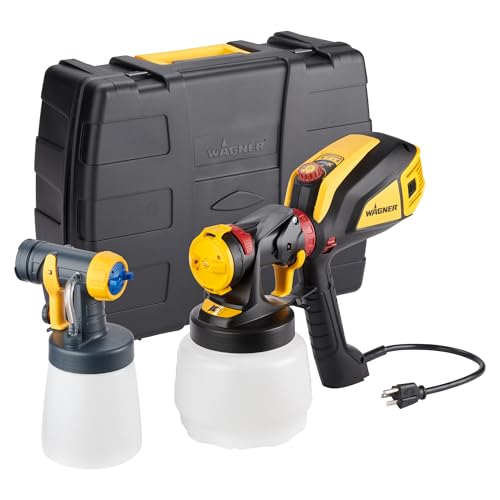
- Wagner Control Spray Double Duty HVLP Stain Sprayer — Best for Indoor-Outdoor Stain Work — prose-only: street price usually sits above this cap
Read the full guide ↓
Best Paint Sprayer for Home Use Under $50: The House Is the Workplace
The best paint sprayer for home use under $50 is judged by a standard no workshop tool faces: it must coexist with the home itself. It will be stored in a closet or a garage corner shared with bicycles and holiday decorations. It will be used ten feet from furniture that is not being painted, in rooms where children and pets re-enter an hour later, on projects — the nursery dresser, the kitchen chairs, the front door — whose results are lived with at close range every single day. Home use is not a smaller version of professional use; it is a different discipline, where low overspray, quick cleanup at a utility sink, compact storage, and forgiving operation matter more than raw throughput.
That is the lens for this guide. The picks were ranked for domestic reality: gentle HVLP atomization that keeps mist manageable, containers sized for furniture and doors rather than buildings, cleanup routines that fit a household sink and a household schedule, and footprints that disappear into home storage. Three picks are linked with verified listings; three are prose-only near-misses whose street prices usually sit just above fifty dollars, flagged plainly. If your home projects run larger — whole rooms regularly, exteriors, long fences — Best Paint Sprayer For Home Use Under $100 widens the field, and Best Paint Sprayer For Home Use Under $200 adds the airless tier. For the classic domestic list — furniture, cabinets, doors, trim, and the occasional deck — this tier is honestly sufficient, and the sections below explain how to get professional-looking results inside a lived-in house.
It is equally worth saying what home use excludes, so the rankings are not misread. These are not tools for spraying a house’s exterior walls, a roof, or a two-story foyer; they are not substitutes for the airless rigs that painters wheel up driveways. They are tools for the interior life of a home and its immediate outdoors — the objects and surfaces a family touches daily. Judged on that territory, they are not the budget compromise of the category; they are its center of gravity, the tools most spraying in America actually gets done with. Buy them for that territory without apology.
In this guide
Quick Picks
| Pick | Badge | Key spec |
|---|---|---|
| HomeRight Finish Max HVLP Paint Sprayer (C800766) | Best Overall for Home Use | Electric handheld HVLP, brass tip, 3 patterns |
| VONFORN VF803 700W HVLP Paint Sprayer | Best for Bigger Home Projects | 700W, 4 nozzles (1.0–3.0 mm), 1200 ml container |
| NEIKO 31215A HVLP Gravity Feed Spray Gun | Best for a Home Workshop Corner | 1.7 mm nozzle, 600 cc cup, regulator included |
| HomeRight Super Finish Max HVLP Paint Sprayer (C800971) | Best for Kitchen Cabinets | 450W, 3 brass tips, 3 patterns |
| NEU MASTER N3140 600W HVLP Paint Sprayer | Best for Whole-Room Project Days | 600W floor turbine, 6 ft air hose |
| Wagner Control Spray Double Duty HVLP Stain Sprayer | Best for Indoor-Outdoor Stain Work | Handheld HVLP for stains and finishes |
How These Picks Were Chosen
This guide is research-led: specifications were verified against manufacturer data and stable product listings, and no hands-on testing is claimed. Home-use criteria led. Overspray gentleness: HVLP’s low pressure keeps the mist plume small and controllable, which is the difference between spraying in a garage and redecorating everything in it. Cleanup at home: parts that rinse at a sink, without solvents beyond what the finish itself requires, and without a parts washer. Storage: total footprint including accessories, and whether the kit keeps itself together in a closet. Domestic materials: the finishes homes actually use — latex and acrylic paints, enamels, stains, sealers, chalk-style paints — weighted over industrial coatings. Household safety and noise: tools that can run on a Saturday morning without declaring war on the household. And the standing rule of this series: picks priced above the cap on most days are prose-only and flagged, never quietly linked. The framework generalizes in Paint Sprayer Buying Guide; this page applies it to the house. A note on evidence: where a pick’s street price straddles the cap — the Finish Max most of all, which has sold both below and above fifty dollars within recent memory — we link only when the product’s typical selling range honestly includes this tier, and we say so. Prices move; the article’s job is to rank tools for a budget, not to freeze a price that will be wrong by the time you read it. Check the listing, as the disclosure above advises, and let the ranking — which does not move — guide the choice.
The 6 Best Paint Sprayers for Home Use Under $50

HomeRight Finish Max HVLP Paint Sprayer (C800766) — Best Overall for Home Use
The Finish Max suits the homeowner whose spraying life is the furniture-and-doors circuit: dressers, nightstands, dining chairs, cabinet doors, the front door’s annual refresh. Everything about it is domestically scaled — a handheld electric HVLP unit with a brass tip, three spray patterns, and adjustable flow, sized for pieces rather than structures. It stores on a shelf, sets up at a workbench or on a drop cloth in the driveway, and cleans under a tap before dinner. HomeRight designed it for exactly this household niche, and its long production run is the market confirming the fit.
- Type: electric handheld HVLP
- Tip: brass spray tip
- Patterns: 3 spray patterns (horizontal, vertical, round)
- Flow: adjustable material flow control
- Best materials: stains, sealers, enamels, chalk-style and thinned paints
Strengths
- The most house-friendly package here: compact, self-contained, shelf-stored
- Fast sink cleanup fits household routines — no shop infrastructure needed
- Brass tip longevity suits a tool that may serve a home for a decade
Trade-offs
- Single nozzle: thicker paints need careful thinning to spray well
- Small container means refills on door sets and larger furniture
- Not a room painter — walls expose its modest flow quickly
The domestic argument runs deeper than size. Home projects are judged at the closest range of any spraying — the dresser is touched daily, the door is seen in morning light at arm’s length — and the Finish Max’s gentle atomization produces the smooth, brush-mark-free surface that makes sprayed furniture look bought rather than painted. Its limitation is equally domestic: throughput. A homeowner who falls in love with spraying and graduates to whole rooms will outgrow its container and flow within a project or two, which is why the VONFORN sits second on this list as the natural companion or successor. As a first and primary home sprayer for the furniture circuit, though, nothing at this price fits the house better.
Best for: Furniture, doors, and cabinets in a typical home / Not suited for: Whole rooms or exterior structures
VONFORN VF803 700W HVLP Paint Sprayer — Best for Bigger Home Projects
The VONFORN VF803 suits the homeowner whose projects keep outgrowing furniture scale: the fence that rings the yard, the shed, the deck furniture set, the bedroom that needs its walls freshened with thinned latex. Its 700W motor and four nozzles — 1.0 through 3.0 mm — give it the broadest material and project range in this guide, and its 1200 ml container matches the rhythm of home projects that run an hour or two rather than fifteen minutes. For a household that wants one sprayer to answer every project the home invents, this is the answer at this price.
- Motor: 700W handheld HVLP turbine
- Nozzles: 4 included — 1.0, 1.5, 2.0, and 3.0 mm
- Patterns: horizontal, vertical, and circular
- Container: 1200 ml detachable container
- Extras: cleaning and blowing joints for fast cleanup
Strengths
- Only pick here that credibly spans furniture through fence and shed work
- Large container cuts refill interruptions on bigger home projects
- Complete kit lowers the household’s total cost of starting
Trade-offs
- Full container is heavy in hand across a long fence run
- Bigger footprint and more parts to store than the Finish Max
- Brand support thinner than HomeRight or Wagner for long-term parts
Think of the VONFORN as the household’s general contractor in a box. Its nozzle for the crib’s enamel, its nozzle for the fence’s stain, its nozzle for the shed’s thinned exterior paint — the home stops generating projects it cannot answer. The trade is domestic elegance: it is more tool to store, more parts to keep together, and more weight to carry than the furniture specialists. Homes with a garage shelf to spare will not notice; apartment dwellers storing tools in a closet should weigh the Finish Max’s compactness seriously. The honest limitation is the same as every handheld’s: true whole-house exterior work remains beyond it, a job for the tiers in Best Paint Sprayer Under $200.
Best for: Homes wanting one sprayer for furniture through fences and sheds / Not suited for: Minimal-storage homes or whole-house exteriors
Check on Amazon

NEIKO 31215A HVLP Gravity Feed Spray Gun — Best for a Home Workshop Corner
The NEIKO suits the home with a workshop corner — the garage bay, basement bench, or shed where a compressor already lives for tires, nailers, and blow guns. In that setting, this pneumatic gravity gun becomes the household’s finest finishing tool: a 1.7 mm nozzle for primer and enamel, a 600 cc aluminum cup, steel construction, and the included regulator that keeps pressure honest. Its finish quality on furniture and built-ins is the highest in this guide, and it asks nothing of the home’s electrical patience or storage beyond a hook on the pegboard.
- Nozzle: 1.7 mm stainless fluid nozzle
- Cup: 600 cc aluminum gravity-feed cup
- Included: air gauge regulator
- Body: all-steel construction
- Requirement: air compressor (not included)
Strengths
- Finest finish in the guide — the furniture pick for compressor homes
- Tiny storage footprint: a gun, a cup, a hook
- No motor to wear; on shop air it sprays as long as the project lasts
Trade-offs
- Only works where the compressor is — the driveway, not the nursery
- Air hose and masking make it the least spontaneous pick here
- Overspray is the most assertive in the guide; a spray corner is mandatory
The home-workshop pattern is real and growing: a bench, a small compressor, and a stream of household projects that deserve better than a brush. For that pattern, the NEIKO’s economics are unbeatable — the expensive infrastructure already exists for other reasons, and the gun converts it into professional-grade finishing for pocket money. The honest limitation is geography: pneumatic spraying happens where the air is, which means furniture travels to the workshop rather than the sprayer traveling to the furniture. Homes that spray in place, room by room, need the electrics.
Best for: Homes with a workshop corner and compressor / Not suited for: Spraying in place inside finished rooms
HomeRight Super Finish Max HVLP Paint Sprayer (C800971) — Best for Kitchen Cabinets
The Super Finish Max suits the homeowner whose signature project is the kitchen cabinet refresh — the single highest-impact spraying project a home offers. Its 450W motor and three brass tips handle the cabinet workflow’s material sequence (degreaser-compatible primers, then enamel topcoats) with a tip for each stage, and its finish quality at arm’s-length inspection — the kitchen standard — is the best of the electric handhelds here. Prose-only because its street price usually sits just above the cap; for cabinet-focused homes it is the recommended stretch.
- Motor: 450W electric handheld HVLP
- Tips: 3 brass spray tips included
- Patterns: 3 spray patterns
- Design: stronger turbine and larger container than the original Finish Max
Strengths
- Tip set matches the primer-to-topcoat cabinet sequence in one tool
- Best close-range finish among the electric handhelds here
- Fast HomeRight cleanup suits a kitchen that must cook again by evening
Trade-offs
- Usually priced above this cap
- A full kitchen of doors will test its container rhythm and your arm
- Still a handheld: whole rooms remain a stretch
Cabinet work deserves its reputation as the home spraying final exam: many pieces, two materials, vertical and flat orientations, and a result inspected daily at close range under kitchen lighting. The Super Finish Max passes that exam more comfortably than any other sub-cap-adjacent tool because its tips remove the thinning compromises that show up as texture in enamel. The honest limitation is stamina — yours and its — across a thirty-door kitchen, where session planning (batches, breaks, flat spraying on horses) matters as much as the tool.
Best for: Kitchen cabinet refreshes and fine furniture finishes / Not suited for: Strict budgets or whole-room work
Prose-only pick — check the current listing; it often sells close to the cap.
NEU MASTER N3140 600W HVLP Paint Sprayer — Best for Whole-Room Project Days
The NEU MASTER N3140 suits the homeowner facing the occasional whole-room day: the bedroom repaint, the rental refresh, the basement finishing push. Its 600W turbine sits on the floor feeding a light gun by a 6 ft hose, which matters enormously by hour two of walls and trim — the gun hand stays fresh while handheld owners are shaking out their wrists. For homes, that endurance, plus power enough for thinned latex, makes it the room-day pick of this guide. Prose-only: street price usually above the cap.
- Motor: 600W turbine in a floor-standing base unit
- Hose: 6 ft air hose between turbine and gun
- Patterns: 3 spray patterns
- Flow: adjustable flow control
Strengths
- Lightest in-hand load — built for the longest home sessions
- 600W gives thinned latex its best chance in this guide
- Floor turbine keeps noise away from the operator’s ear
Trade-offs
- Usually priced above this cap
- Base and hose are more setup than a room’s touch-ups deserve
- Thinner brand support than the big names
Whole-room days at home are rare but decisive — they are the projects guests see and families remember — and they punish tools in a specific way: not with difficulty, but with duration. The N3140’s layout is the only one here designed against duration, and that is its entire case. The honest limitation is that for the other ninety percent of home spraying — the furniture circuit — it is more apparatus than the job wants, and the Finish Max will get used while the turbine waits for room days.
Best for: Occasional whole-room project days at home / Not suited for: Quick furniture jobs or strict budgets
Prose-only pick — street price usually sits above this cap.
Wagner Control Spray Double Duty HVLP Stain Sprayer — Best for Indoor-Outdoor Stain Work
The Control Spray Double Duty suits the home whose staining runs both ways: hardwood-adjacent indoor pieces and banisters inside, deck and fence outside, all in thin materials where a dedicated stain sprayer shines. Wagner built this handheld (model 0518050) for stain-and-finish duty, and the brand’s household ubiquity matters — manuals, parts, and replacements are a hardware-store trip away, which suits a tool that may sit in a home’s closet for years between major projects. Prose-only: street price usually above the cap.
- Type: electric handheld HVLP, model 0518050
- Tuned for: stains, sealers, and thin finishes, indoor and outdoor
- Brand: Wagner Spraytech — full parts and support network
Strengths
- Stain specialization matches the home’s most common spraying material
- Wagner support depth suits a long-lived household tool
- Simple operation for occasional, seasonal users
Trade-offs
- Usually priced above this cap
- Paints and thick enamels are outside its tuning
- Small-project sizing: big decks mean refill rhythm
Homes stain more than they paint, by project count — floors’ edges, furniture, fences, decks, doors — and a tool tuned to that reality earns its closet space even as a second sprayer. The Double Duty’s case is focus plus infrastructure: it does the household’s most frequent spraying job without fuss, backed by the brand least likely to orphan it. The honest limitation is the mirror of its focus: painted projects need another tool, and paint-heavy homes should start with the Finish Max or VONFORN instead.
Best for: Homes whose spraying is mostly stain, inside and out / Not suited for: Paint-heavy project lists or strict budgets
Prose-only pick — street price usually sits above this cap.
Comparison Table
| Pick | Type | Home-use strength | Container | Needs compressor? |
|---|---|---|---|---|
| HomeRight Finish Max (C800766) | Electric handheld HVLP | Furniture circuit; sink cleanup; shelf storage | Attached container | No |
| VONFORN VF803 | Electric handheld HVLP | Biggest project range in the home | 1200 ml | No |
| NEIKO 31215A | Pneumatic HVLP gun | Finest finish in a workshop corner | 600 cc aluminum | Yes |
| HomeRight Super Finish Max (C800971) | Electric handheld HVLP | Kitchen cabinets | Attached container | No |
| NEU MASTER N3140 | Electric turbine HVLP | Whole-room days without arm fatigue | Gun-mounted cup | No |
| Wagner Control Spray Double Duty | Electric handheld HVLP | Stain work inside and out | Attached container | No |
How to Choose a Paint Sprayer for Home Use
Start with where the tool will live. Home storage is a real constraint: a sprayer that fits a shelf bin with its accessories together will be complete on project day; one that sprawls across a garage will be missing a nozzle when it matters. Measure your storage before your projects. The Finish Max’s compactness is a genuine specification in a home, not a consolation prize.
Match the sprayer to the home’s material list. Homes run on latex and acrylic paints, enamels, stains, and sealers — in that order of frequency for most households. A stain specialist (Wagner) serves stain-heavy homes; a multi-nozzle generalist (VONFORN) serves paint-heavy ones; the Finish Max pair serves the furniture middle. The full material framework is in How To Choose A Paint Sprayer.
Plan for the sink, not the shop. Home cleanup happens at a utility or kitchen sink, with household time pressure. Prefer tools whose paint-touching parts are few, tool-free to separate, and rinsable — and be honest about solvent finishes at home: if your projects are water-based, choose a tool optimized for water cleanup and never look back.
Respect the household’s other occupants. Noise, fumes, and schedule are shared resources in a home. HVLP’s gentleness, water-based finishes, and a spray zone in the garage or yard keep a project from becoming a household grievance. The best home sprayer is the one the whole household tolerates gladly — because tolerated tools get used, and used tools get good.
Buy for the home you have, not the renovation show. Television projects are whole-house and contractor-crewed. Home reality is a dresser this month and a door next month. The tools that win at home scale are the ones still being reached for in year three — which is a storage, cleanup, and gentleness contest far more than a power contest.
Spraying Inside a Lived-In Home: The Practical Routine
Key Takeaways
- Move the piece, not the project: spray furniture in the garage or yard whenever it can travel
- Mask like mist is curious — it reaches everything left uncovered within the room
- Ventilate on a schedule: exhaust air during spraying and while the finish cures
- Choose the spray zone: garage, yard, or a room emptied and masked — never a furnished room as-is.
- Lay drop cloths beyond the overspray’s ambitions, and mask adjacent surfaces with film, not hope.
- Set ventilation: door open, fan exhausting outward, household members and pets elsewhere until the finish is dry to touch.
- Strain the finish, set the pattern for the piece, and test on cardboard at the zone’s edge.
- Spray in thin coats, edges first, faces last, with the half-overlap rhythm.
- Move finished pieces to a clean drying corner — a different airspace from the spraying.
- Clean at the sink immediately, while the household still remembers there was a project.
- Ventilate until the finish’s stated cure milestones, not merely until the smell fades.
Problem: A fine dust of paint appears on nearby furniture. → Overspray traveled on room air. Improve masking, reduce pressure or flow, spray closer, and exhaust air away from the room’s contents.
Problem: The finish smells strong hours later. → Ventilation stopped at spraying’s end. Finishes off-gas through curing; keep air moving per the finish manufacturer’s guidance before reoccupying fully.
Problem: Pets or children re-enter too soon. → Make the spray zone a closed door or a yard gate, and schedule spraying when the household’s routine keeps them clear — process, not vigilance.
The Home Project Canon: What These Sprayers Are Really For
Every home generates the same canon of spraying projects, and it is worth naming them because they, not specifications, should drive the purchase. The kitchen cabinet refresh is the canon’s masterpiece — the highest value-per-hour project in home improvement — and it belongs to the Super Finish Max and Finish Max. The front door is the canon’s postcard: one piece, huge curb impact, an afternoon’s work for any pick here. The furniture rescue — thrifted dressers, inherited chairs, the crib — is the canon’s heart, and the reason the furniture-tuned HomeRight pair leads this guide. The fence and deck are the canon’s volume work, where the VONFORN’s container and the Wagner’s stain tuning earn their keep. The nursery and children’s furniture add the canon’s safety chapter: water-based finishes, full cure times respected before small hands return, and ventilation treated as non-negotiable.
The canon also has a rhythm worth respecting: it clusters. Cabinet season follows furniture season; the fence follows the deck; the door gets done when the hallway is painted. Clustering projects by material — everything needing white enamel in one month, everything needing stain in another — multiplies a home sprayer’s efficiency, because setup, thinning knowledge, and cleanup all amortize across pieces. Households that cluster finish more of the canon per year with the same tool, which is the closest thing home spraying has to a professional secret.
Notice what the canon excludes: whole-house siding, roofs of any description, and anything requiring ladders beyond a step stool’s comfort. Home spraying’s genius is that it concentrates on the projects where a homeowner’s labor has the highest value and the lowest risk. A sprayer chosen for the canon will be used monthly and loved; one chosen for the exceptions will be used once and stored with resentment. The badges in this guide are canon rankings — trust them over spec sheets, including ours.
Keeping a Home Sprayer Ready in a Busy Household
Household tools face a unique entropy: they are borrowed by family, stored by whoever had the energy, and needed on the one weekend everything else is also happening. The countermeasures are domestic, not technical. One bin, labeled, containing the sprayer, its nozzles, its manual, a handful of strainers, and the recipe notebook — completeness as a household rule, enforced kindly. A cleaning ritual attached to an existing routine — the sprayer is clean before the project tools are put away, which is before dinner — survives busy seasons better than intentions do. And a household agreement about the spray zone and the respirator keeps the tool a shared asset rather than one person’s mystery machine. Homes that do these three things find their sprayer ready, complete, and welcome for years; the tool’s own durability is rarely the limiting factor in a house that has its systems together. Add one seasonal habit — a spring check, water through the unit and a glance at the seals, before the project season opens — and the household sprayer achieves the highest compliment a domestic tool can earn: it is simply never the reason a project does not happen.
Safety at Home: The Household Standard
Home spraying safety is household safety, and it deserves its own plain statement. The operator wears a fit-tested respirator matched to the finish — cartridge protection for solvents, genuine particulate protection for water-based mist — plus eye protection when spraying overhead or outdoors in any breeze. The space gets ventilation with an exhaust path, not merely an open window across the room. Solvent work keeps its distance from pilot lights, water heaters, and every other ignition source a home contains, and solvent rags go into a sealed metal container outdoors the moment they are used. Children and pets are scheduled out of the spray zone and the drying zone until finishes reach the manufacturer’s safe-handling milestones — not because disaster is likely, but because a home is precisely the place where “probably fine” is not the standard anyone actually wants.
Two household specifics deserve emphasis. First, cure means cure: a finish that is dry to the touch is still curing, still off-gassing, and still soft enough to mark — furniture for children’s rooms especially should complete the finish maker’s full cure guidance before returning to service. Second, storage of materials matters as much as storage of tools: finishes and solvents live in a latched, ventilated spot away from living spaces and small hands, inventoried like the household chemicals they are. None of this is burdensome once systematized, and all of it is the difference between a home that sprays confidently for years and a home that has one story it tells about the time it tried.
Spraying Versus Hiring: The Homeowner’s Ledger
The economic case for a home sprayer is usually made against the wrong baseline. Against a brush, the sprayer wins on time and finish quality but spends more on masking and material. Against spray cans, it wins after two or three real projects. But the baseline that matters for the canon projects is hiring: a professionally sprayed kitchen cabinet set, a refinished furniture suite, a fence stained by a contractor — each of these commonly costs more than this entire guide’s budget several times over, and the homeowner who sprays them owns the tool afterward, with the next decade’s canon still to come. That asymmetry — professional labor priced per project, the tool priced once — is why a fifty-dollar sprayer is among the highest-leverage purchases a home can make, provided it is chosen for the canon and maintained with the sink-side discipline this guide keeps returning to. The ledger flips only when projects turn structural or vast: whole-house siding, multi-story exteriors, and roofs belong to professionals and rentals, and a wise homeowner lets them.
Apartments and Small Homes: Spraying With No Garage at All
Apartment dwellers are often told spraying is not for them, and at this tier that advice is simply wrong — with adaptations. The spray zone becomes a balcony, a parking-space corner on a calm morning, or a bathroom with the exhaust fan running and the door masked, depending on the building and the project. The tool choice narrows to the gentle end of this guide: the Finish Max above all, whose small plume, small container, and sink cleanup were practically designed for homes without infrastructure. Batch discipline matters more: spray everything for a project in one outdoor session rather than dribbling pieces across a week of balcony setups. Storage favors the compact and self-contained; a single bin that slides into a closet is the whole workshop.
Consideration scales down but does not disappear: notify neighbors when balcony spraying might drift, work when breezes are still, and keep sessions short and courteous. Rental agreements deserve a read before spraying anything structural — furniture you own is your business; the landlord’s doors are a conversation. Within those lines, apartment spraying is some of the most satisfying in the category, precisely because the transformation-per-square-foot is highest where the square feet are fewest. A refinished dresser in a small apartment is not a minor project; it is a room changed.
Choosing Finishes for Home Spraying
The sprayer is only half the system; the finish in its container decides the household experience as much as the tool does. Water-based acrylic enamels are the home’s workhorse for furniture and cabinets: low odor, soap-and-water cleanup, fast recoat, and a hard, scrubbable film once cured — spray them thinned modestly and strained, and every pick in this guide handles them gracefully. Chalk-style and milk paints serve the furniture-rescue aesthetic, spray beautifully through mid-size nozzles, and forgive technique because their matte finish hides a multitude of sins. Stains and clear sealers are the easiest spraying of all — thin by nature, fast to clean — and the reason the Wagner and HomeRight stain-capable picks exist.
The finishes to approach carefully at home are the solvent family: oil enamels, lacquers, and shellac spray wonderfully and demand proportionally more — ventilation with intent, cartridge respirators, ignition discipline, and cleanup solvents in the house. Many households reasonably decide that solvent spraying happens outdoors or not at all, and that is a legitimate household policy, not a limitation of courage. Whatever the family of finish, one rule is universal: the manufacturer’s thinning and safety guidance for that specific product outranks every general tip, including ours. Cans are written by the people who warrant the film; sprayers merely deliver it.
Common Buying Mistakes
Buying a workshop tool for a household life. Pro features are wasted if the tool needs infrastructure the home does not have. Match the tool to the sink, the closet, and the Saturday — not to a fantasy workshop.
Underestimating overspray indoors. The mist from even a gentle HVLP unit settles on everything in an unmasked room. Homeowners who mask generously spray happily indoors; those who trust distance learn about paint dust from their curtains.
Ignoring cure times around family life. Dry-to-touch is not cured. Furniture returning to a nursery or a dining room must respect the finish’s full cure guidance — a scheduling fact, planned around, not a detail discovered by a toddler.
Choosing capacity over kindness. The biggest container and strongest motor are rarely the home’s best tool; the gentlest adequate tool, used often and cleaned easily, transforms more of the house per year. The analysis in Is A Paint Sprayer Worth It makes the same point in dollars.
Forgetting the household in the purchase. A sprayer one person loves and everyone else dreads — for its noise, its smell, its sprawl — gets used less every year. Domestic tools are social objects; buy the one the house can live with.
Final Recommendation
For most homes, the HomeRight Finish Max is the best paint sprayer for home use under $50: it fits the furniture-and-doors canon, the closet shelf, and the kitchen sink with equal grace, and its brass-tipped simplicity will still be serving the house in a decade. The runner-up is the VONFORN VF803 for homes whose projects run bigger and more varied, and the pair together — Finish Max for the canon, VONFORN for the exceptions — is the two-tool endgame most households eventually reach. Compressor homes should add the NEIKO for the workshop corner and enjoy the finest finishes in the guide. Choose for the house you live in, spray the canon in order, and let the home improve one well-finished piece at a time. There is a particular satisfaction available nowhere else in home improvement: a room transformed not by purchase but by finish — the same dresser, the same door, the same chairs, made new by an afternoon and a fifty-dollar tool. That satisfaction, repeated across a house over years, is what this category is actually selling, and it is why the gentle, cleanable, shelf-sized tools in this guide outsell their louder cousins in the only market that matters here: homes.
Frequently Asked Questions
Can I use a paint sprayer inside my house?
Yes, with the routine in this guide: a defined spray zone, generous masking, real ventilation, and water-based finishes wherever possible. Most homeowners spray movable pieces in a garage or yard and reserve in-place spraying for fixed items like cabinets and trim, masked thoroughly. The tool is not the hard part; the room discipline is.
Is HVLP or airless better for home use?
HVLP, for most homes. Its low pressure means less overspray, gentler operation, and easier cleanup — the domestic virtues. Airless wins on speed for exteriors and whole-room volume, which is why it appears in the higher tiers of this series (Best Paint Sprayer For Home Use Under $200). For the furniture-cabinet-door canon, HVLP is the right technology.
Will a home-use sprayer work for kitchen cabinets?
Yes — cabinets are the signature home spraying project. Spray doors and drawer fronts flat, off the cabinets, in thin coats; mask the kitchen thoroughly for the boxes or brush those if masking appetite runs out. The Super Finish Max is the cabinet specialist here; the Finish Max and VONFORN handle the project well with thinning discipline.
How do I keep overspray off everything I own?
Move what can move, mask what cannot, and control the air. Spray in a garage or yard when pieces are movable; when spraying in place, masking film over every surface in the room, exhaust ventilation pulling air away from contents, low pressure, and close spraying distance keep the mist where it belongs. Overspray is a planning failure, not a tool property. As a rule of thumb, assume the mist can reach anything within the room that shares its air, plus a margin for the breeze you did not notice — and then mask to that assumption rather than to your optimism. Homeowners who mask to the pessimistic line report that spraying indoors feels almost tidy; the ones who mask to the optimistic line spend the evening with a damp cloth and regrets. Masking film is cheap, comes off in minutes, and protects everything including your enthusiasm for the next project, which is the household resource spraying can least afford to spend on avoidable cleanup after an otherwise successful afternoon of genuinely satisfying, productive work.
Are water-based finishes safer for home spraying?
They are the household default for good reasons: lower odor, water cleanup, and simpler ventilation needs than solvent finishes — while still requiring respirator protection against the mist itself, which is finish particles regardless of the carrier. Follow the specific finish’s safety guidance; “water-based” lowers the burden, it does not eliminate it.
How noisy are these sprayers in a home setting?
Handheld HVLP units sound like a vacuum cleaner at arm’s length — noticeable, not alarming — and turbine models move the motor noise to the floor, which reads quieter to the operator. Pneumatic guns add the compressor’s cycling, the loudest element of any setup here. For household harmony, spray during daytime hours, warn the household, and close the spray zone’s door. None of these tools approaches the noise of an airless rig under load, which is one more reason this tier suits homes.
How should a sprayer be stored in a home?
Clean, dry, complete, and indoors: one labeled bin with the tool, nozzles, manual, strainers, and recipe notes, stored where temperatures stay moderate. Never store a sprayer with finish in it, and never store the parts scattered — household storage discipline is the difference between a tool that is ready and a tool that is archaeology. A two-minute water test at the start of each project season confirms the storage did its job.