A rotary rock tumbler spins a sealed barrel on two rollers, so stones tumble over each other and slowly grind smooth. The method is slow and old-fashioned, but it still produces the classic rounded, glossy pebble. Differences between machines come down to barrel size, motor and how easily you can buy parts.
The six machines below range from compact two-barrel models to larger single-barrel units. We have not used these products ourselves, so confirm barrel capacity, motor details and the included accessories on the current listing before buying. Grit and polish are normally sold separately.
As an Amazon Associate we earn from qualifying purchases. Links below are affiliate links, and they do not change the product information we give.
What to Look For
| Feature | Why it matters |
|---|---|
| Barrel size | Capacity sets how many stones you finish per run |
| Roller drive | Rubber-covered rollers and a sturdy belt give a steady turn |
| Barrel liner | Rubber barrels run quieter and last longer than plastic |
| Spare parts | Replacement belts and barrels keep an old machine going |
| Footprint | Dual-barrel machines need extra bench space |
In this guide
Specs at a Glance
| Tumbler | Barrels | Size class | Notes |
|---|---|---|---|
| Lortone 3A | One | Small | Long-running entry model |
| Lortone 33B | Two | Small | Two stages at once |
| Lortone QT6 | One | Medium | Mid-size single barrel |
| Thumler’s Tumbler A-R1 | One | Small | Popular starter machine |
| Thumler’s Tumbler Model T | One | Medium | Hobby workhorse |
| National Geographic Hobby Rock Tumbler Kit | One | Small | Kit with accessories |
The 6 Best Rotary Rock Tumblers
Top pickBest for first serious machine
1. Lortone 3A Single Barrel Rock Tumbler
A small single-barrel rotary tumbler that has been a standard in hobby shops for years. It is simple, sturdy and easy to service. Check the listing for the exact barrel capacity.
Suits: first serious machine. Strengths: long track record and easy maintenance. Weaknesses: small capacity. Skip it if you tumble in large volumes.
View Lortone 3A Single Barrel Rock Tumbler on Amazon
Best for two-stage workflows
2. Lortone 33B Double Barrel Rock Tumbler
The two-barrel sibling of the 3A, with a similar small footprint. You can grind one batch while polishing another. Each barrel is independent, so a coarse run never contaminates the polish barrel.
Suits: two-stage workflows. Strengths: two barrels in one compact body. Weaknesses: still small per barrel. Skip it if you need a large batch size.
View Lortone 33B Double Barrel Rock Tumbler on Amazon
Best for regular hobbyists
3. Lortone QT6 Rock Tumbler
A medium-size single-barrel machine that holds more stone than the starter models. Check the current listing for the exact capacity. The design is straightforward and uses the same belt-and-roller idea.
Suits: regular hobbyists. Strengths: more capacity than a starter. Weaknesses: one barrel. Skip it if you want two stages at once.
View Lortone QT6 Rock Tumbler on Amazon
Best for beginners who want a durable unit
4. Thumler’s Tumbler A-R1 Rotary Tumbler
A small rotary tumbler from a maker known for rugged builds. It is often recommended as a straightforward first lapidary machine. Belt-driven rollers turn a rubber barrel at a steady pace, and replacement parts are easy to source.
Suits: beginners who want a durable unit. Strengths: a simple, solid design. Weaknesses: limited capacity. Skip it if you want dual barrels.
View Thumler’s Tumbler A-R1 Rotary Tumbler on Amazon
Best for growing hobbyists
5. Thumler’s Tumbler Model T Rotary Tumbler
A medium hobby tumbler that offers a bit more room for larger batches. Serious beginners often step up to a machine in this class. It uses the same rubber barrel and roller principle as the smaller machines, only with a roomier chamber.
Suits: growing hobbyists. Strengths: a roomier barrel. Weaknesses: needs more bench room. Skip it if you only tumble occasionally.
View Thumler’s Tumbler Model T Rotary Tumbler on Amazon
Best for trying the hobby
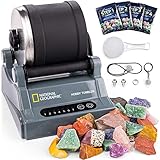
6. National Geographic Hobby Rock Tumbler Kit
A rotary tumbler sold as a kit with some grit and rough stones. It is a lower-commitment way to try the hobby before buying heavier machines.
Suits: trying the hobby. Strengths: a bundled kit. Weaknesses: smaller and lighter build. Skip it if you plan constant heavy use.
Care and Setup
- Check the belt tension now and then, since a slack belt slows the barrel.
- Clean out the barrel completely between grit stages.
- Let the barrel’s internal pressure vent when opening the lid.
- Store grits in labelled, sealed containers.
- Place the machine on a firm shelf or bench so vibration does not walk it across the surface.
Mistakes to Avoid
- Using the wrong ratio of stones to barrel volume.
- Mixing different hardnesses in one load.
- Forgetting to keep the barrel level on the rollers.
- Letting grit dry inside the barrel.
The Roller and Barrel Mechanism in Plain Terms
A rotary tumbler is mechanically simple, and knowing how it works makes buying and troubleshooting easier. A motor turns a belt, the belt drives a pulley connected to a pair of rollers, and the barrel sits across the rollers and turns with them. The rotation lifts the stones part-way up the barrel wall, and gravity makes them slide and tumble back down through the grit and water. This steady sliding action is what grinds and polishes. It is gentle, so it takes time, but it works with a wide range of stones.
Several details affect performance. The rollers are often covered in rubber, which grips the barrel and keeps it turning steadily. If the rollers wear smooth, the barrel can slip. The belt transmits power and can stretch or crack over time. The barrel itself is usually rubber or plastic, and the lid has a seal that keeps slurry in. The speed is set by the machine’s design and is intentionally slow.
Because the barrel rests on the rollers, it must sit level and centered, and its diameter must match the roller spacing. That is why barrels are sold for specific machines, and why replacement barrels should be bought from the maker or from a source that lists compatibility.
- Motor and belt: provide steady power.
- Rubber-covered rollers: grip and turn the barrel.
- Barrel and lid seal: hold stones, grit and water.
Loading Ratios, Media and Slurry Consistency
The tumbling action depends on loading the barrel correctly. As a common guide, fill the barrel about two thirds to three quarters full of stones and media, then add grit and water as the instructions direct. Too little in the barrel causes the stones to drop hard and chip. Too much leaves no room for the sliding motion and the stones barely move. Treat the maker’s guidance as the first reference, and adjust only with care.
Water level is the next factor. The water should generally cover or nearly cover the stones, creating a slurry that carries the grit. Too little water makes the mix stiff and can cause stones to grind unevenly, while too much dilutes the grit and slows the work. After the first day or two, check the slurry. Very thick slurry can be thinned with a little water, as the maker allows. Open the barrel carefully, since pressure can build up, and release it slowly according to the manual.
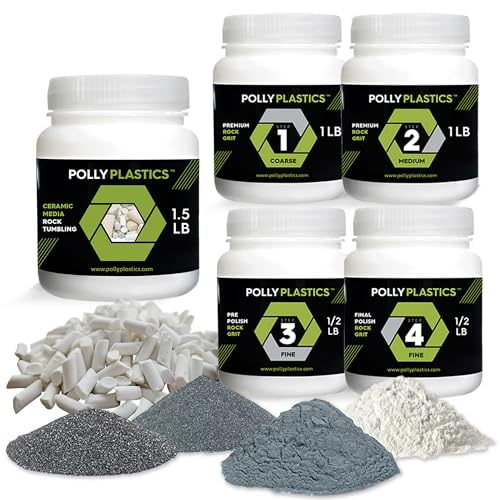
Media, such as ceramic pellets or plastic beads, helps when you do not have enough stones to fill the barrel. It cushions softer stones in the polish stage and helps spread the polish. Use it as the maker advises, and wash it between stages along with the stones.
- Fill to the recommended level.
- Add water so the stones are covered or nearly covered.
- Check the slurry and thin it if it becomes too thick.
- Use filler media only when needed.
Grit Progression and Timing
Rotary tumbling works through a sequence of grits, from coarse to fine, followed by polish. Each stage removes the scratches left by the previous one, so you cannot skip steps without leaving visible marks. A typical sequence starts with a coarse silicon carbide grit for shaping, then a medium grit, then a fine grit and finally a polish such as aluminum oxide or another polishing compound. The names and numbers vary, so follow the instructions that came with your grit.
Timing depends on the stones and the grit, and the best guide is to check progress. The coarse stage may run for a week or more, and later stages typically run for a few days each. Check stones by rinsing a few and examining them. If they are not yet smooth, run the stage longer. If they are ready, move on. Resist the urge to hurry, since a stage that is cut short will not prepare the surface for the next one.
Keep your grit and polish organized. Label each container and use a separate brush and bucket for each stage, or at least rinse thoroughly between uses. Even a small amount of coarse grit carried into the polish stage can ruin the finish. Some hobbyists add a short burnishing run with mild soap at the end.
- Do not skip stages.
- Check the stones before moving on.
- Label and store grits separately.
- Rinse stones, barrel and lid between stages.
Vibration, Leveling and Where to Put the Machine
A rotary tumbler runs around the clock, so how it sits matters. Vibration is a natural by-product, particularly with a loaded barrel, and it can make a machine creep along a shelf or hum through a wall. Choose a firm, level surface such as a workbench, a concrete floor in a garage or a sturdy shelf bolted to a wall. Avoid light shelves, glass surfaces and anything that can amplify the noise. A rubber mat or a non-slip pad underneath reduces vibration and helps keep the machine in place.
Make sure the machine is level, so the barrel sits evenly on the rollers. A barrel that drifts to one side can rub against the frame and wear out. Check the position of the barrel when you first start the machine, and again after a few minutes. If the barrel walks, adjust the machine’s position or the barrel’s placement according to the manual.
Keep the machine clear of items that could fall on it, and keep the cord out of walkways. Place a tray or shallow container under the barrel to catch drips from the seal. Avoid damp areas and keep the motor and cord away from water. If you share a house, think about noise and choose a location that will not disturb others.
- Use a firm, level surface.
- Add a rubber mat for vibration.
- Keep a tray under the barrel.
- Check the barrel position after startup.
Maintenance, Spares and Making a Machine Last
A well-kept rotary tumbler can run for years, and the main task is regular inspection. With the machine unplugged, check the belt for cracks, glazing and proper tension. A belt that is too loose will slip and slow the barrel, while one that is too tight puts stress on bearings. Check the rollers for wear and make sure they turn freely. Wipe away grit and dried slurry, which can build up and cause friction. Examine the barrel for cracks or soft spots, and replace it if the lid no longer seals properly.
Lubrication needs vary, and some machines have sealed bearings while others call for light oil on specific points. Follow the manual rather than guessing, and avoid getting oil on the belt or rollers. Keep spare belts and seals on hand, since failures often come at inconvenient times in the middle of a stage.
Store the machine in a dry place when not in use, and clean the barrels thoroughly before storage to prevent grit from hardening. Keep barrels with their lids slightly open so moisture can escape, and label them by stage if you use more than one.
Signs that a machine may be near the end of its life include repeated belt failures, a motor that struggles, bearings that rumble or rollers worn smooth. At that point, a replacement may be more practical than repair, depending on the availability of parts. Before buying, ask whether the maker sells parts and what support they offer.
- Inspect the belt and rollers regularly.
- Follow the manual for lubrication.
- Keep spare belts and seals.
- Store clean and dry.
Rotary Tumbler FAQ
What is the best fill level?
About two thirds to three quarters full is the common guide. Follow the maker’s instructions for your machine.
Do I need to run it all day?
Rotary tumblers are designed for continuous running over days, so choose a spot where noise and vibration are fine.
Can I tumble glass or metal?
Many people tumble glass, but always follow the maker’s guidance about what the barrel can handle.
Rotary or vibratory?
Rotary is slower and makes rounded pebbles. Vibratory is quicker and keeps stone shape.
Why does my barrel keep drifting to one side?
The machine may not be level, or the rollers may be worn or unevenly spaced. Level the base and check the barrel and roller condition.
How do I know the belt is worn out?
Look for cracks, a glazed surface or slipping that slows the barrel. Replace it with a belt recommended for your model.
Can I run the machine with just a few stones?
It is better to fill the barrel to the recommended level, using media if you lack stones, so the stones do not crash too hard.
Why does the lid sometimes bulge?
Gas can build up in the barrel during tumbling, creating pressure. Open it slowly and carefully, following the maker's instructions.
Should I wash grit down the sink?
No. Slurry can settle and block drains. Let solids settle and dispose of them as local rules permit.
Can I use one barrel for all stages?
It is better to use separate barrels or clean extremely well, since leftover coarse grit can scratch the polish stage.
How loud is a rotary tumbler?
It produces a continuous hum and rumble, and the level varies by machine and barrel material. Place it where the noise is acceptable.
Choosing Barrel Capacity for the Rock You Actually Collect
Capacity is the first number most buyers compare, but it is easy to misjudge. A barrel is only useful when it is roughly two-thirds to three-quarters full of material, so a large barrel run with a small haul either wastes grit or tumbles the rocks too aggressively against each other. Think about how much rough you realistically gather or buy in a month, not the most you could imagine in a good year.
A single barrel, as on the Lortone 3A, suits someone who wants a few polished stones at a time and is happy to run batches back to back. Double-barrel designs like the Lortone 33B let you run two different batches in parallel, which is useful when you keep soft stones like calcite separate from hard agates. Larger machines move more rock per cycle but take more space and more grit to charge. A beginner kit is built around a modest barrel and a fixed set of supplies.
- Count how many different hardness groups you collect. Mixing very soft and very hard stones in one barrel tends to give uneven results, so two barrels can be more useful than one large one.
- Think about the weight of a full barrel. Heavier loads put more strain on the motor, belt and bearings.
- Consider whether you would rather polish one batch quickly or keep two cycles going at once.
Rock Hardness and Shape: Sorting Rough Before You Load
Most failed batches begin before the barrel is closed. Tumbling works by abrasive grit grinding the surface of the stones, so rocks of similar hardness should travel together. On the Mohs scale, many popular tumbling stones such as agate, jasper and quartz fall near the hard end, while stones such as calcite, fluorite and some softer serpentine wear faster and can be ground away by their harder neighbors.
Shape matters too. Flat slabs tend to stick and lift, while very angular pieces can chip neighbors in the early coarse stage. Mixing sizes is helpful, since smaller pieces fill the gaps and cushion the larger ones, but extreme differences can leave the small stones lost under the heap.
Before loading, rinse the rough and discard anything cracked, hollow or crumbly, because those pieces break down into mud that clouds the slurry and contaminates later stages. If you are unsure of a stone, test a few pieces in a small first batch rather than risking a barrel of valuable material.
Noise, Overnight Running and Household Considerations
A rotary tumbler runs for days, so how it fits into daily life affects whether you keep using it. Many people place a machine in a garage, basement or utility room and run it around the clock. Others keep it in a hobby space and accept a steady background hum. The sound is influenced by the rock load, the barrel liner and the surface the machine stands on, so a rubber mat or a solid workbench can make a noticeable difference.
Think about safety for the household too. Grit and slurry are best kept away from children and pets, the machine should have a stable position where it cannot be knocked, and the cord should not cross a walkway. A barrel left running unattended for a week makes a poor fit for a shared kitchen, partly because slurry should never go down a sink drain and partly because spills are easiest to deal with on a floor that can take a hose.
If you live in an apartment or rent, check lease rules about running equipment continuously, and consider a power strip with a switch so you can shut the machine off without reaching behind it.
Cost of Ownership: Grit, Media and Replacement Parts
The machine is rarely the whole expense. Silicon carbide grits in several steps, polish, ceramic or plastic filler pellets, and replacement belts and barrel liners all add up over a year of use. Beginner kits like the National Geographic one are usually sold with starter supplies, which makes the first cycle simple, but heavier users will buy grit in bulk and compare cost per pound across suppliers.
Ask a few practical questions before choosing. Is the belt a standard size you can order from several sellers, or a proprietary part? Are replacement barrels and seals available separately? How easy is it to get a lid gasket? Machines from established makers tend to have parts available for years, which matters more over a decade of hobby use than a small saving at purchase. Without hands-on use, the best evidence you can gather is the manufacturer parts list and a quick look at what other buyers say about wear items.
It also helps to budget a small spares kit from the start: an extra belt, a spare lid seal and a few pounds of the grit you use most. Running out of a stage midway through a cycle is a common reason batches stall for weeks. Keep notes on each batch, including rock type, fill level, grit stage and run time, so you can repeat good results and adjust when something comes out poorly. Over a few months that logbook becomes more valuable than any single feature on the machine, and it shows you whether a larger or second barrel would really save you time.
Finally, think about where you will store supplies. Grit and polish should be sealed and labeled, kept dry, and kept apart from food and from areas where children play. A small shelf near the machine with lidded tubs makes the hobby tidier and lowers the chance of mixing stages.
Frequently Asked Questions
How do I choose between a one-barrel and a two-barrel tumbler?
A single barrel is simpler and cheaper, and works if you run one batch at a time. A double barrel lets you keep two hardness groups or two stages going together, which saves time if you collect varied stones. Consider how many batches you would realistically run in parallel before paying for the extra barrel.
What kinds of rocks are best for a first tumbling batch?
Hard, fairly uniform stones such as agate, jasper and quartz are common starting choices because they take a good polish and tolerate the coarse stage. Avoid mixing them with soft minerals in the same barrel. Start with a modest batch so you can learn timing and slurry consistency before using valuable material.
Can a rotary tumbler be run safely overnight?
Many hobbyists run them continuously, but the setup matters. Use a stable surface, keep the cord clear, avoid flammable clutter nearby, and check the lid and belt before leaving it. Follow the manufacturer guidance for your model, and never leave a machine with a worn belt or leaking barrel running unattended.
Why are my tumbled stones dull after the final polish stage?
Dull results often trace back to leftover coarse grit, a rushed prior stage, or contaminated polish. Wash the barrel and every stone thoroughly between steps, make sure the previous stage actually removed pits, and use fresh polish. Soft or porous stones may also never reach a high shine, regardless of technique.
The Short Version
For a first lapidary machine, the Lortone 3A. For two stages, the 33B. For more room, the QT6. For a rugged start, the Thumler’s A-R1. For growth, the Model T. For trying the hobby, the National Geographic Hobby.