Disclosure: As an Amazon Associate, umtsmarttool.com earns from qualifying purchases. Links on this page are affiliate links; they cost you nothing extra. Prices and availability change often, so check the current Amazon listing before you buy.
The air purifiers vs ionizers debate confuses shoppers for a structural reason: the two are sold in the same aisle, in similar boxes, with similar promises, while working on opposite physical principles, with opposite destinations for everything they remove. A filter purifier physically captures particles in a sealed medium you eventually throw away, full of the grey, visible evidence of its work. An ionizer charges particles electrically so they leave the air by sticking to the room itself — its walls, its furniture, its occupants’ surroundings — cleaning the air by relocating its contents rather than collecting them. This head-to-head compares the two approaches criterion by criterion, with verdicts in each round, an early comparison table, the situations where each genuinely wins, scenario verdicts for the rooms households actually argue about, a home trial any sceptic can run in a fortnight, and three verified machines that show how the modern market has quietly settled the argument: the best-regarded designs are filtration machines, some of which include an ion stage you can switch off — which tells you, in one product decision, how the industry itself scores this contest.
The quick verdict, up front: for a home whose goal is cleaner air and cleaner surfaces, filtration wins, and it is not close. Ionizers retain a narrow case — silence, no filter costs, tiny power draw — that suits a few specific situations this article will name honestly. But as a primary cleaning strategy for bedrooms, nurseries, pet homes, allergy households, and any room where people spend long hours, a HEPA purifier is the defensible choice, and the rest of this article is the evidence, round by round.
Key Takeaways
- Filtration removes particles from the room into a disposable filter; ionization relocates particles from the air onto the room’s surfaces, where they can be resuspended by ordinary activity and still contact skin and lungs — a distinction that sounds technical and turns out, in daily life, to be the entire difference between the two technologies.
- Ionizers do essentially nothing for gases and odors; filtration machines pair HEPA with activated carbon and address both fractions of household air pollution — the particles you can see in a sunbeam and the gases you can only smell.
- Some ionizing devices generate ozone as a by-product — a respiratory irritant — which is why filtration is the default recommendation for bedrooms, nurseries, and asthma households, and why any ionizer that does enter a home should arrive with a recognised low-emission certification rather than a seller’s assurance.
- Ionizers win on silence, size, and zero filter costs; those virtues are real but narrow, and they matter most in low-stakes, low-load rooms — a rarely used guest room, a traveller’s hotel stay, a storage space — rather than in the bedrooms and living rooms where a household’s lungs spend their lives.
- The market’s own answer is the hybrid with an off switch: machines like the Winix 5510 filter first and let you disable the ion stage entirely — a design decision that quietly concedes which technology the industry trusts when a room’s cleanliness is actually measured rather than merely asserted.
In this guide
The Early Comparison Table
| Criterion | HEPA filter purifier | Ionizer | Round winner |
|---|---|---|---|
| Particle removal | Captures and holds particles in a filter | Charges particles so they deposit on surfaces | Filtration |
| Odors and gases | Carbon stage adsorbs them | Essentially no effect | Filtration |
| By-products | None in normal operation | Ozone possible, model-dependent | Filtration |
| Noise | Fan noise, low on sleep modes | Silent or near-silent | Ionizer |
| Running costs | Replacement filters on a cycle | Almost none | Ionizer |
| Proof of work | Visible in the used filter; CADR-verifiable | Invisible; plates and walls collect the evidence | Filtration |
| Allergy and asthma suitability | The standard recommendation | Generally advised against as a primary strategy | Filtration |
Four rounds to filtration, two to the ionizer, one — proof — that matters more than it looks. The sections below argue each round properly, because a table without its reasoning is just an opinion with gridlines.
Round One: What Happens to the Particles
Verdict: filtration, decisively. A HEPA purifier’s story is complete: air enters, particles are intercepted in the media by impaction, interception, and diffusion, and the filter — visibly grey by replacement day — holds the room’s former contents in a form you seal in a bag and throw away. The particles are gone from the household’s ecology. An ionizer’s story stops halfway. Emitted ions attach to airborne particles, the charged particles are attracted to surfaces and to each other, and they leave the air — by landing on walls, upholstery, bedding, electronics, and the floor. The air measures cleaner; the room is dirtier, in a specific and literal sense, and the deposit is not inert: activity resuspends a fraction of it, cleaning disturbs it, and skin contact with settled allergen is one of the exposure routes allergy management exists to interrupt. Ionizer owners also meet the technology’s signature artefact — dark soiling on walls near the device, where deposited particles accumulate visibly. A cleaning method whose evidence is a stain on the room it cleaned has answered its own claim.
Round Two: Odors, Gases, and the Invisible Half of Air
Verdict: filtration, unopposed. Half of what households mean by “air quality” is gaseous — cooking smells, pet odor, litter, off-gassing, smoke’s lingering fraction — and ions do nothing to gas molecules at household scale. A filtration machine answers with activated carbon, in quantities this series has graded from token sheets to deep beds. An ionizer answers with nothing, or with ozone side-effects that attack odors chemically while adding a pollutant of their own. Any household whose complaint includes the word “smell” can end this comparison here: the ionizer is not a contestant in that round, and most real households’ complaints do include it.
Round Three: By-Products and the Ozone Question
Verdict: filtration, on caution. Ion generation can produce ozone — deliberately in ozone generators, incidentally in some ionizing designs — and ozone is a well-established respiratory irritant that health and air-quality authorities advise minimising indoors, particularly around children, the elderly, and anyone with asthma. Modern reputable ionizers are typically designed and certified to keep ozone emissions low, and this article does not claim every ionizer is hazardous; the honest statement is that filtration carries no such question at all. In a comparison, an approach that requires you to verify a by-product’s safety against a standard starts a round behind an approach with no by-product to verify. For bedrooms and nurseries — long hours, small lungs, closed doors — that asymmetry settles the round for most households, and it settles the purchase for this guide’s recommendations.
Round Four: Noise, Size, and the Virtues Ionizers Actually Have
Verdict: ionizer, honestly awarded. A fanless ionizer is silent in a way no fan-driven machine can match, sips power, fits in a handbag’s worth of space, and asks for no filters, ever. In a few genuine situations those virtues lead: a traveller wanting something for a hotel room’s stuffiness, a tiny low-load space where any fan is intrusive, a household that will simply never buy replacement filters and for whom the realistic alternative is not a purifier but nothing. Even here, the modern filtration market has narrowed the gap — sleep modes in the low-twenties decibels, desktop machines the size of a water bottle — but it has not closed it, and this guide awards the round where it belongs. What the round cannot do is outweigh rounds one to three for a primary living or sleeping space; silence is a virtue in service of cleaning, not a substitute for it.
Round Five: Cost Over Three Years
Verdict: ionizer on cash, filtration on value — scored a draw with an asterisk. An ionizer’s three-year cost is its purchase price plus a trickle of electricity; a purifier adds filters on a cycle, and over three years the consumables can rival the machine. If the comparison were between equal cleaning, the ionizer would win the round outright. It is not: the purifier’s filters are purchasing captured particles and adsorbed gases, outcomes the ionizer does not deliver at any point in its cost curve. The honest summary is that ionizers are cheaper because they do less, and households should price the comparison as cost per outcome, not cost per appliance. Scored strictly on money, the round is the ionizer’s; scored on money for results, it returns to filtration.
The Physics, Plainly: Why Charge Moves Particles but Cannot Finish the Job
An ionizer’s science is genuine, and granting it makes the verdict stronger rather than weaker. Air ions are real; charged particles do migrate and deposit; a sensitive instrument in a test room will confirm the air’s particle count falling. The technology’s failure is not physical but architectural: it is a transport mechanism without a destination. Every cleaning system ever devised, from a broom to a cleanroom, is judged by where the contaminant ends up — in a bag, a filter, a drain, a sealed waste stream — because “away from the measurement point” is not the same as “gone.” Ionization’s destination is the room itself, distributed across the surfaces its occupants touch and the bedding they sleep in, in a layer thin enough to be invisible and real enough to resuspend. Filtration’s entire, unglamorous apparatus — fan, seals, media, replacement cycle — exists to provide the destination ionization lacks. That is the whole comparison in one paragraph, and every round scored above is a corollary of it: odor fails because gases have no charge-driven destination either; proof fails because a destination you cannot open and inspect cannot be verified; the by-product round fails because generating ions energetically enough to move particles flirts with generating ozone as the mechanism’s exhaust. Understand the missing destination, and you understand the aisle.
Round Seven: Speed and the Shape of the Effect Over Time
Verdict: filtration, on the curve that matters. Ionizers can post impressive early numbers in a still room — the nearest particles charge and fall quickly — but the effect flattens as the remaining particles disperse and the room’s ordinary air movement re-entrains deposits. Filtration’s curve is the opposite shape: unglamorous, exponential, and relentless, because every pass removes a fixed fraction of what remains, forever, at a rate the CADR states and a particle counter confirms. Over an evening both may look respectable; over a night, a week, a season of closed windows, the compounding technology separates itself from the plateauing one. Households do not live in the first hour of a test; they live in the season, and the season belongs to the machine whose effect does not depend on the room holding still.
The Three Machines That Show How the Market Settled It

Winix 5510 — Filtration First, Ion Stage Optional
Badge: The hybrid answer, with an off switch
- Filtration: True HEPA plus separate high-deodorization carbon filter
- Ion stage: PlasmaWave, which can be switched off entirely
- Pre-filter: washable
- Coverage: large rooms on the listing
The 5510 is this comparison embodied in a product. Its substance is filtration of the most serious kind in this guide — a true HEPA stage and a deep, separate carbon bed — and its PlasmaWave ion technology rides along as an auxiliary that the owner can disable with a button, permanently, without diminishing the machine’s real work. Winix’s own architecture is the verdict: when a manufacturer known for an ion technology builds its flagship around filters and makes the ions optional, the industry has told you which technology it trusts to clean a room. Buyers who like the idea of ionic assistance get it here, on filtration’s terms.
Strengths
- Deepest carbon and true HEPA filtration in this comparison
- Ion stage fully optional — your choice, reversible any time
- Washable pre-filter and auto mode for real households
Trade-offs
- Full-size cabinet and filter costs, like any serious purifier
- The ion feature you may never use is part of what you paid for
- More machine than a small, quiet room needs
Best for: households wanting the strongest filtration with the ion question settled by a switch. Not suited for: anyone whose priority is silence above cleaning.
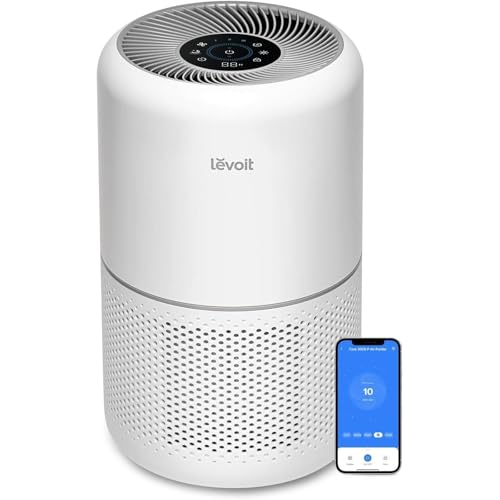
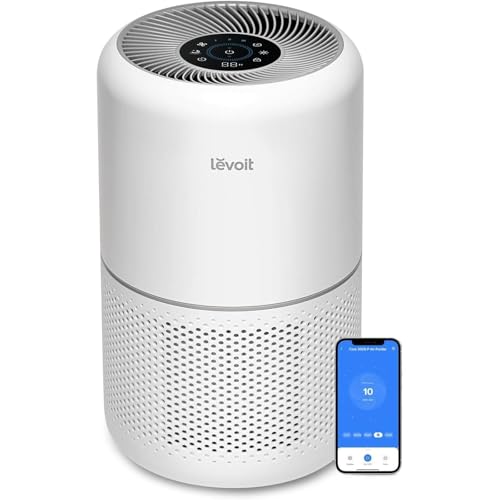
Levoit Core 300S-P — Pure Filtration, Smart Manners
Badge: The filtration-only benchmark for bedrooms
- Filtration: 3-in-1 cartridge with HEPA stage and carbon layer
- Verification: AHAM Verifide room rating on the listing
- Sleep mode: listed at 24 dB
- Controls: app, voice, auto mode
The Core 300S-P represents the mainstream settlement: no ion stage at all, just verified filtration in a quiet, smart, compact cabinet. Its AHAM Verifide rating lets a buyer confirm its room claims independently — the proof-of-work round, won by paperwork. In the bedroom, where the ionizer’s silence once made its strongest case, this machine’s sleep mode at a listed 24 dB has narrowed that case to a sliver, while delivering captured particles, carbon-treated air, and a filter whose grey pleats testify quarterly. For most households asking the question in this article’s title, this is the shape of the answer.
Strengths
- Pure filtration with independently verified ratings
- Quiet sleep mode closes most of the ionizer’s silence advantage
- App control and scheduling at a compact size
Trade-offs
- Cartridge costs on a cycle, as all filtration charges
- Carbon layer is light-duty
- Fan noise, however low, is not the ionizer’s zero
Best for: bedrooms, nurseries, and allergy-aware households. Not suited for: large open spaces. The wider shortlist logic is in the best air purifiers overview.

Blueair Blue 211i Max — The Electrostatic Filtration Middle Path
Badge: Charge-assisted filtration, captured — not deposited
- Filtration: HEPASilent — particles are charged, then captured in a filter
- Coverage: very large rooms on the listing
- Noise: listed from 23 dB
- Pre-filter: washable fabric
Blueair’s design is the intellectually honest middle path, and understanding it dissolves much of the confusion in this comparison. HEPASilent charges particles electrically — the ionizer’s trick — but then captures them in a mechanical filter inside the machine, rather than abandoning them to the room’s surfaces. The charging makes the filter’s job easier, allowing high airflow at low noise; the capture keeps the outcome filtration’s: the particles end up in a disposable medium, not on your walls. It is, in effect, an ionizer whose particles are collected — the one architecture that takes the ionizer’s genuine physical insight and refuses its unacceptable destination.
Strengths
- Charge-assisted capture with filtration’s outcome
- Very high airflow at very low noise for large rooms
- Washable fabric pre-filter
Trade-offs
- Premium pricing and filter costs
- Large footprint
- Carbon capacity trails the Winix for dedicated odor work
Best for: large, quiet, open-plan homes that want the middle path’s benefits. Not suited for: small rooms or tight budgets. See the best Blueair air purifiers family guide for siblings.
Round Six: Maintenance and Daily Life
Verdict: a draw that leans ionizer on effort, filtration on honesty. The ionizer’s maintenance is a wiped collecting plate and nothing else — no orders, no subscriptions, no dates to remember. The purifier asks for pre-filter attention monthly and a filter change on a cycle, and it punishes neglect in the most literal way: a machine with a spent filter is an ornament that blows air. But the maintenance comparison has a second face. The purifier’s chores are the visible receipt of its work — every grey pleat is a room’s worth of captured air — while the ionizer’s effortless ownership is effortless partly because its work product is dispersed into the room, where the household’s ordinary cleaning absorbs it invisibly. Households that know they will not maintain anything should weigh that honestly, as the short list below does; households choosing a primary cleaner should notice that the purifier’s maintenance burden is simply the price of the particles being somewhere you can throw away.
How Each Technology Is Tested — and Why the Numbers Mislead Differently
Filtration lives under a measurement regime: CADR testing in a chamber, AHAM verification, a HEPA standard with a defined particle size and efficiency. Its numbers can be gamed at the margins — coverage bases restated, speeds chosen flatteringly — but the regime exists, and a buyer can verify a claim against an independent directory. Ionization lives under no equivalent regime for its central promise. There is no standard “ion CADR” a shopper can compare across brands, because the mechanism’s effect depends on the room’s surfaces, layout, and furnishings in a way chamber testing cannot settle. What testing exists for ionizers mostly addresses their by-product — ozone emissions against a safety limit — which is a test of what the device adds, not of what it removes. This asymmetry is itself comparison data: one technology submits its core claim to independent measurement, and the other, structurally, cannot. Buyers deciding between them are not merely choosing mechanisms; they are choosing whether the thing they paid for can be checked.
The laboratory claims that do circulate for ionizers deserve the same three questions this series applies everywhere — what was measured, where, and against what. A demonstration that an ionizer clears smoke from a small sealed chamber quickly is usually true and usually omits the sequel: the smoke is now on the chamber’s walls, in a film the camera does not show. A filtration chamber test has no such sequel to omit; its filter can be opened and its contents weighed. When a technology’s best evidence requires the audience not to ask where the dirt went, the audience should ask.
Scenario Verdicts: The Comparison Room by Room
The nursery. Filtration, without a serious contest. Small lungs, long hours, a closed door, and a household standard that tolerates no by-product questions: every round that matters lands the same way, and the ionizer’s silence is matched closely enough by modern sleep modes. The nursery guide in this series, air purifiers for a baby’s nursery, applies the conclusion in detail.
The pet household. Filtration, by the odor round alone — dander is capturable, smell is carbon’s, and an ionizer addresses neither while depositing the dander it does move onto the pet’s own bedding and the household’s soft furnishings. Not close.
The allergy bedroom. Filtration — the scenario the technology was practically invented for, where the destination of every particle is the whole question. Deposited allergen on bedding is the exposure the household is paying to avoid.
The home office. Filtration for most, with the ionizer’s only respectable hearing: a quiet room, one occupant, low load. Even here, a compact purifier’s low speed is rarely audible over a computer’s own fan, and the office’s dust — paper, electronics, the occupant’s own fibres — is better captured than relocated onto the equipment. Filtration, with respect for the runner-up.
The rarely used guest room. The ionizer’s best room. Low occupancy, low stakes, dust suppression between visits, no sleeper’s lungs at risk through the night. If an ionizer is to be bought at all in good conscience, it is bought for this room — or not bought, since a small purifier moved in for guest weeks does the job properly and then returns to service elsewhere.
The smoker’s room and the vaping den. Filtration with carbon, by the logic of the air purifier for vaping guide: a two-fraction problem, particles and gases, of which the ionizer addresses a relocated version of the first and none of the second.
Who Should Still Choose an Ionizer? The Honest Short List
Fairness requires naming the ionizer’s surviving territory precisely. A traveller who wants a silent, pocketable device to take the edge off a hotel room’s recycled air, accepting that particles will settle on the room’s surfaces rather than their own lungs for a night or two, is using the technology within its competence. A nearly unoccupied space — a storage room, a seldom-used guest room — where the goal is dust suppression between visits and nobody breathes the deposit, makes a similar case. And a household that has weighed filter costs and knows itself — that will never, in reality, replace a filter — may rationally prefer a device whose maintenance is a wiped plate to a purifier whose neglected filter quietly becomes furniture. In each case the choice is informed, the stakes are low, and the limitation is accepted with open eyes. What this guide argues against is only the default: the ionizer bought as a primary cleaner for a lived-in, slept-in, breathed-in room, by a household that believed the box’s equivalence. That purchase, this comparison exists to prevent.
Decision Guide: Answer Three Questions
Does anyone in the room have asthma, significant allergies, or a small child’s lungs? If yes, filtration — the round-three reasoning is decisive, and the best air purifiers for allergies guide takes over from here.
Is odor part of the complaint? If yes, filtration with carbon — the ionizer was never in this contest, and the best air purifiers for litter box smell shortlist handles the hardest version of the problem.
Is the room low-load, low-occupancy, and silence-critical? If yes — and only if the first two answers were no — the ionizer’s territory begins, and even there, a compact purifier on a sleep mode deserves a hearing first.
If You Already Own an Ionizer: A Fair Reassessment
This article is not an instruction to throw away a working appliance, and households that own an ionizer deserve a proportionate path rather than a verdict. Start by relocating it down the stakes ladder: out of bedrooms and nurseries, into the low-occupancy roles the short list describes, where its silence and thrift are virtues and its mechanism’s limits matter least. Clean its plates on the manufacturer’s rhythm, since a fouled ionizer’s output falls while its by-product questions remain. Watch the walls near it with informed eyes — the deposit is information now, not a surprise. And when the household next buys for a room that matters, buy filtration, and let the ionizer retire to the guest room with honour. Households that bought an ionizer for a serious room on the strength of equivalence claims were not foolish; they were marketed to by an aisle that profits from confusion, and the correct response is a better-informed next purchase, not regret about the last one.
One reassessment is worth making immediately, though, whatever the room: if anyone in the home has asthma or another respiratory condition and an ionizer is running in their sleeping space, move the machine out tonight and let a filtration purchase, when it comes, be a considered one rather than a panic. The by-product question is the one part of this comparison with a clock on it, and it is answered by relocation, not by shopping.
The Environmental Ledger
A complete comparison should count what each technology discards. Filtration’s waste is visible and honest: a filter every several months, landfilled with its captured load sealed inside — a real cost, reduced by choosing machines whose filters last, whose pre-filters wash rather than replace, and whose capacity matches the room so nothing is oversized into waste. Ionization’s waste is dispersed and deniable: the particle load itself, deposited across the room to be vacuumed, laundered, and wiped into the household’s ordinary waste streams, plus, in some designs, a low continuous addition to indoor chemistry that no bag contains. Neither ledger is spotless; the filtration ledger is at least itemised, and a household can shrink it deliberately — longer-life filters, washable pre-filters, right-sized machines — in a way the ionizer’s dispersed ledger does not permit. Sustainability, like cleanliness, turns out to favour the technology whose outputs you can see.
An Interrogation Script for Any Listing in This Aisle
Carry these questions to any product page in the category, and the aisle’s confusion loses its power. Where do the particles end up — in a filter I replace, or on my room? What does this device do about gases and odors, in grams of carbon or in adjectives? What does it emit besides cleaned air, and against what standard was that measured? Can its core claim be checked against an independent programme — a CADR directory, a HEPA standard — or must I take the box’s word? What will I throw away, and how often, and what will it cost me per year? And if it combines technologies, can each be switched off independently, so that I own the choices rather than renting them? A filtration machine from a reputable brand answers all six in a minute, from its own listing. An ionizer answers the first with a euphemism, the second with silence, the third with a certificate about a by-product, and the rest not at all. The comparison, in the end, is not really between two machines. It is between a technology that can be interrogated and one that can only be believed — and households breathe easier, in every sense, with the kind that answers questions.
A Two-Week Home Trial: Settling It in Your Own Room
If the argument of this article leaves you unconvinced, it can be tested at home for the price of a particle counter and a fortnight — and this guide would rather be checked than believed. Week one, run the ionizer as its maker intends in your test room, and log the particle count morning and evening; then wipe a clean white cloth across the wall and the hard surfaces nearest the device and photograph what it collects. Week two, run a filtration purifier of sensible size in the same room on the same rhythm, log the same counts, and repeat the cloth test on surfaces the room has not had cleaned since. Most households find the air numbers closer than the marketing of either side suggests — and the cloth tells the structural story the numbers cannot: in week one the room’s particles are on the room; in week two they are in a filter you can hold. Add the odor diary if your home has a smell source, noting each morning whether the room greets you neutrally, and the comparison completes itself in the only laboratory whose results you will actually live with. Readers who run the trial and still prefer the ionizer for a low-stakes room have this guide’s blessing; they will have chosen it the way it should be chosen, with the destination of every particle in plain sight.
The Wellness Framing: Negative Ions, Mood, and Other Claims
A second marketing dialect surrounds ionization and deserves its own paragraph, because it reaches beyond air cleaning into wellbeing: negative ions are credited, in various sales literatures, with effects on mood, alertness, and the feeling of freshness associated with waterfalls and storms. The honest summary is that the air after a storm does feel different — for reasons involving rain-washed air, pressure, and scent that a desktop emitter does not reproduce — and that the clinical evidence for mood effects from household ionizers is weak and contested where it exists at all. This guide takes no position on whether an owner enjoys their ionizer’s presence; enjoyment is its own datum. But a purchase justified on air quality should be made on air quality’s evidence, and a purchase justified on mood should be made knowingly, as one buys a candle. Conflating the two justifications is the aisle’s oldest trick, and naming it is the reader’s defence. The filtration side has its own wellness dialect — “sleep better,” “breathe easier” — and the same discipline applies: buy the measurable mechanism, and let any felt benefits arrive as a bonus rather than a promise.
Round Eight: Longevity, Support, and the Decade View
Verdict: filtration, on evidence of survival. A comparison that ends at purchase misses the decade in which these appliances actually live. Filtration’s leading designs have production histories measured in many years, replacement ecosystems stocked globally, and failure modes — a fan bearing, a control board — that announce themselves and can often be repaired or worked around. The category’s knowledge is public: intervals, quirks, and workarounds for every major model are documented by their owners at scale. Ionizers, by contrast, age invisibly: emitter output declines without a sound or a light to report it, leaving the owner with a device whose presence is certified and whose performance is a matter of faith, from brands whose support horizons are frequently shorter. The Coway in this series’ other guides carries a three-year warranty stated on its listing; the Levoit and Winix ecosystems have the depth that comes from volume. None of this is glamorous, and all of it is what ownership actually consists of. A household choosing a technology for the rooms it sleeps in is choosing a decade of support, and the decade belongs to the technology with the ecosystem.
How This Rivalry Got Here: A Short, Instructive History
The ionizer’s popularity was not an accident of physics but of presentation. In the catalogue era, a silent, filterless tower that promised to clean air without consumables was an irresistible proposition, and one famous product line built a substantial business on it — until independent consumer testing measured its clean-air delivery and found it wanting, and regulators and reviewers began asking the destination question in public. The brand’s troubles became the category’s education: sales collapsed under the weight of the cloth test performed at national scale. Filtration’s rise since then has been unglamorous and compounding — verified ratings, quieter fans, better carbon, smarter controls — an annual narrowing of every honest advantage the ionizer once held, until what remains is the short list this article grants: silence, thrift, and smallness, in rooms where little is at stake. The hybrid machines in this comparison are the rivalry’s peace treaty, drafted by engineers: charge if you must, but capture, always, and let the owner hold the switch. A buyer in today’s aisle is the beneficiary of that whole history — provided they know it happened, which is why it is retold here in brief.
One clarification before the final word, because this comparison is sometimes misread as a verdict on electricity itself. Charge is not the villain of this article; destination is. Electrostatic precipitation is a legitimate industrial technology — power stations and factories use it at scale, with collecting plates that are cleaned as part of an engineered waste stream, which is to say, with the destination provided. The domestic ionizer’s flaw is that it borrowed the precipitation and skipped the collection infrastructure, leaving the room to serve as the plate. Where a home product does provide the destination — a washable collecting stage that is actually washed, or Blueair’s capture-after-charge architecture — the objection dissolves, and what remains is a filtration variant to be judged on the ordinary criteria of capacity, noise, and cost. The line this article draws is therefore not between old and new or between simple and clever, but between designs that finish the job and designs that relocate it, and it is a line any future technology in this aisle will be asked to stand on one side of.
It is worth pausing, at the end of a long comparison, on why the question in this article’s title gets asked so often — because the answer explains the aisle better than any specification. Ionizers promise the outcome of cleaning without the apparatus of cleaning: no fan’s hum, no filter’s errands, no machine’s presence beyond a silent tower and a reassuring light. That promise speaks to something real in household life, which is tired of maintenance and hungry for appliances that simply handle things. Filtration’s counter-promise is less poetic and entirely kept: a machine that audibly works, visibly fills with the evidence of its work, and asks to be serviced in proportion to what it has done for you. Between a promise of effortlessness and a record of effort, this guide chooses the record — and notes that the households happiest with their air, across every article in this series, are the ones that made the same choice and then built the small habits that keep the record honest.
A last practical note for households splitting the difference across rooms, as many sensibly do: assign technologies by the room’s stakes, and write the assignment down where the household keeps such things. Filtration owns the bedrooms, the nursery, the pet rooms, and the living room by default. An ionizer, if one is owned or inherited, serves the guest room or the workshop’s far corner, with its plates cleaned and its limits understood. A hybrid, where one is bought, lives in the largest shared space, where its filtration capacity matters most and its optional stage can be experimented with harmlessly. This kind of deliberate assignment — rather than a single technology imposed on every room by a single purchase — is how most real homes actually resolve the comparison, and it has the incidental virtue of matching expenditure to exposure: the money concentrates where the breathing is.
Readers who arrived here from a product page, mid-decision, can compress this entire article into the thirty-second version: if the device throws the dirt at your room, it is not cleaning your home; if it collects the dirt for disposal, it is. Everything else — noise, cost, carbon, apps, warranties — is a refinement of that single distinction, and the refinements have been argued round by round above for the reader with an evening to spend. The reader with thirty seconds needs only the distinction, a listing that states its filtration plainly, and the discipline to walk past any box that will not say where the particles go.
And if the comparison has a single sentence worth carrying into the aisle, it is this: ask of every air-cleaning device, before price, before features, before the reassuring light on its face — where does the dirt go? The device that answers with a filter you can hold has earned the next question. The device that answers with the room has answered the last one.
The comparison also has a forward-looking edge worth one paragraph. Air cleaning is an active field — better media, quieter motors, smarter sensing arrive yearly — and every genuine advance of the last decade has belonged to the capture family: filters that load more before they clog, fans that move rated air at lower decibels, housings that seal better, sensors that run the machine by the room’s actual state. Ionization’s research frontier, by contrast, is mostly about constraining its by-products. A buyer choosing a platform for a decade is choosing which frontier their next machine will benefit from, and the direction of travel in this industry is not ambiguous to anyone who has watched two product cycles.
Final Recommendation
Choose filtration as your home’s cleaning technology, and treat ionization as an optional auxiliary that must never be the mechanism. The Winix 5510 gives you both on filtration’s terms, with the ion stage under your thumb. The Levoit Core 300S-P gives you the pure, verified, quiet mainstream answer for bedrooms. The Blueair 211i Max shows the sophisticated settlement — charge the particles, then capture them properly — at large-room scale. The ionizer’s silence and thrift are real, and this article has awarded them their rounds without reluctance; but a technology that cleans air by dirtying the room has conceded the only argument that matters, and your home’s air — the air your family will breathe tonight, and for the thousands of nights after — deserves the machine that takes its contents away for good.
Frequently Asked Questions
Are ionizers bad for your health?
The concerns are specific rather than sweeping. Some ionizing devices emit ozone, a respiratory irritant, in amounts that vary by design; reputable modern units are built to keep emissions low, but the need to check is itself the point. Separately, deposited particles on surfaces remain in the room’s ecology. For healthy adults in a low-stakes room, a certified low-ozone ionizer is a defensible choice; for bedrooms, nurseries, and asthma households, filtration avoids both questions entirely, which is why this guide defaults to it there.
Do ionizers remove dust and pollen from the air?
They remove them from the air by moving them to the room’s surfaces — the air’s particle count falls, and the dust lands on furniture, bedding, and walls, from where activity can resuspend it. If your goal is air that measures cleaner for a short period, ionization does that. If your goal is a room whose total particle burden falls — the allergy household’s goal — only capture and disposal, which is filtration, achieves it.
Can an ionizer replace a purifier in a bedroom?
For the bedroom’s actual requirements — hours of breathing, allergen control, odor freshness, and no by-product questions through the night — this guide’s answer is no. A compact HEPA purifier on a verified sleep mode now matches the ionizer’s quiet closely enough that the bedroom trade no longer favours ionization, and it wins every other round in this comparison. The bedroom is filtration’s strongest room.
What is PlasmaWave, and should I leave it on?
PlasmaWave is Winix’s name for its ion-based stage, fitted to machines like the 5510 in this guide alongside full HEPA and carbon filtration. Because the filtration does the substantive work, the choice is genuinely yours: the stage can be switched off entirely, and owners who prefer filtration-only operation lose nothing essential. This guide’s view is that an ion stage you control, inside a machine that does not depend on it, is the only form in which the technology earns a place in a serious purifier.
Why do my walls get dark marks near my ionizer?
That is the technology’s mechanism made visible: charged particles deposit preferentially on nearby surfaces, and the accumulated deposit reads as grey-black soiling on light walls. It is not a malfunction — it is the destination the particles were always headed to, concentrated where the field is strongest. Households who find the marks objectionable have understood, empirically, this article’s first round.
My ionizer’s listing says it is ozone-free. Does that settle the health question?
It settles the by-product half, if the claim is backed by a recognised certification rather than the seller’s own assertion — look for the standard’s name on the listing. It does not settle the destination half: an ozone-free ionizer still deposits the room’s particles onto the room, with the resuspension and surface-contact consequences this article describes. Ozone was the sharpest concern, not the only one, and a clean answer to it earns the device a hearing in low-stakes rooms rather than a victory in bedrooms.
Can I run an ionizer and a purifier in the same room?
You can, and in one specific sense the pairing is redundant: the purifier’s fan draws the room’s air — including particles the ionizer has charged — through a filter that captures them regardless of charge. Some owners of combination machines run both stages for exactly this reason. A standalone ionizer beside a purifier adds little the purifier is not already doing properly, and if the ionizer’s output includes any ozone, the pairing imports the by-product question into a room that filtration had kept free of it. The integrated, switchable design remains the tidier answer.
Is a HEPASilent machine an ionizer or a filter?
A filter — with an electrostatic assist. Blueair’s design charges particles and then captures them in a filter medium inside the machine, so the particles’ destination is a disposable filter, not your room. The distinction this whole comparison turns on is not whether charge is involved but where the particles end up, and by that test HEPASilent sits on filtration’s side of the line.
What should I do with an old ionizer I no longer trust?
Stop using it while you decide, rather than running it occasionally just in case it helps. If the machine has a switchable ionic function and a proper filter, turning the ionizer off and using filtration alone is a reasonable middle path described in many manuals. A standalone ionizer with no filter has no comparable fallback mode: unplug it, let any collector plates discharge as the manual directs, and clean the plates before storing or recycling the unit through your local electronics scheme. If you ever noticed a sharp, bleach-like smell while it ran, mention that when you replace it, because that history points you firmly toward sealed HEPA filtration next time.