Disclosure: As an Amazon Associate, umtsmarttool.com earns from qualifying purchases. Links to Amazon on this page are affiliate links; they cost you nothing extra. Prices and availability change often, so check the current Amazon listing before you buy.
Where to buy
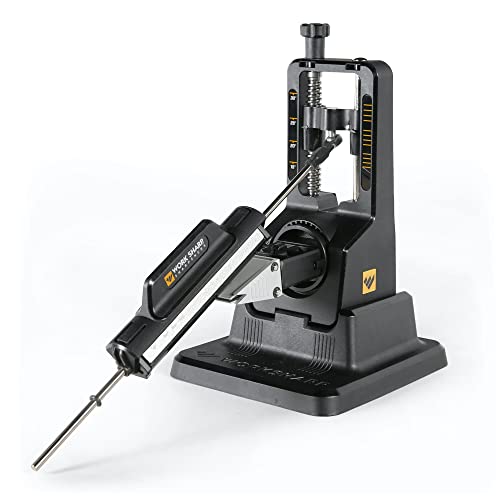
Short on time? These are the six sharpeners this guide recommends, led by our top pick, the Work Sharp Precision Adjust. Every linked pick below says check price on Amazon, because sharpener pricing moves around too much for a printed figure to stay honest for long.
- Work Sharp Precision Adjust Knife Sharpener — Check on Amazon
- Spyderco Tri-Angle Sharpmaker 204MF — Check on Amazon
- Work Sharp Guided Field Sharpener — Check on Amazon
- Lansky 4-Rod Turn Box LCD5D — Check on Amazon
- DMT Diafold Double Sided Sharpener FWEEE — Check on Amazon
- Smith’s PP1 Pocket Pal — Check on Amazon
Read the full guide ↓
A pocket knife is only as good as its edge, and the honest truth is that most folding knives spend most of their lives dull. The steel on a modern folder — whether it is a budget blade in 8Cr13MoV or a premium powder steel — will roll, chip microscopically, and lose its bite on cardboard, rope, zip ties, and wood long before anything is visibly wrong with the knife itself. That is why a search for the best knife sharpeners for pocket knives is really a search for a system you will actually use: something that matches your skill level, your blade steels, and the places you sharpen, from a kitchen counter to a tailgate. If you are still building the knife side of the kit, our roundup of best pocket knives under $50 is a sensible place to start, because an affordable knife plus a good sharpener beats an expensive knife that never gets maintained.
The six sharpeners below were chosen to cover the real situations pocket knife owners face. There is a clamped guided system for people who want repeatable angles without a learning curve, a classic V-rod system that handles serrations and recurves better than almost anything else, a field sharpener built for packs and tackle boxes, a wooden crock-stick box that has been a budget staple for decades, a folding diamond plate for hard modern steels, and a pocket-sized pull-through for emergency touch-ups. Not every sharpener suits every knife: a pull-through that is fine for a beater blade has no business touching a prized folder, and a bench system that excels at home is dead weight on a backpacking trip. This guide explains those trade-offs plainly, then walks through how to choose, how to sharpen step by step, and how to avoid the mistakes that ruin edges.
One more piece of honesty up front: no sharpener on this list will fix a broken tip, reprofile a badly chipped edge in two minutes, or turn a dull knife sharp if you rush the coarse stage. Sharpening is abrasion, and abrasion takes the time it takes. What the best knife sharpeners for pocket knives do is make that process controlled and repeatable, so the edge you get on your tenth knife looks like the edge you got on your first — and so you stop dreading the job and start doing it as routine maintenance, the same way the guides in best sharpening guides for knives approach angle control from the stone side.
In this guide
Quick Picks
| Pick | Badge | Key spec |
|---|---|---|
| Work Sharp Precision Adjust | Best Overall | Adjustable 15–30 degree clamp system with Tri-Brasive rod |
| Spyderco Tri-Angle Sharpmaker 204MF | Best for Serrated and Recurved Blades | Preset 30 and 40 degree inclusive angles, medium and fine ceramic rods |
| Work Sharp Guided Field Sharpener | Best for Field Use | 20 degree sharpen and 25 degree hone guides, diamond, ceramic and leather strop |
| Lansky 4-Rod Turn Box LCD5D | Best Budget Bench Sharpener | Two medium and two fine ceramic rods stored in a hardwood box |
| DMT Diafold Double Sided FWEEE | Best for Hard Steels | Extra-fine and extra-extra-fine diamond surfaces in folding handles |
| Smith’s PP1 Pocket Pal | Best Ultra-Budget Pocket Option | Preset carbide and ceramic slots plus fold-out tapered diamond rod, 1 ounce |
How These Picks Were Chosen
We built this list from manufacturer specifications, established sharpening-system designs with long track records, and the practical requirements of pocket knife geometry. Pocket knives are not kitchen knives: blades are shorter, often thicker behind the edge, frequently recurved or partially serrated, and made from a wider spread of steels, including high-hardness powder steels that laugh at soft abrasives. A sharpener earned its place here only if it could handle at least one of those realities well, and the six together cover all of them.
Four criteria drove the selection. First, angle control: freehand sharpening on a bench stone is a wonderful skill, but most owners searching for the best knife sharpeners for pocket knives want the angle held for them, so guided and preset systems dominate this list. Second, abrasive range: a useful system needs a coarse stage that actually removes metal and a fine stage that refines, because jumping straight to a fine ceramic rod on a dull blade is how people conclude that sharpening “doesn’t work.” Third, blade compatibility: serrations, recurves, and tanto points each rule out some designs, so at least two picks here are rod-based systems that follow curves instead of fighting them. Fourth, carry context: a sharpener that lives in a drawer, one that lives in a pack, and one that lives on a keychain are different tools, and pretending otherwise produces bad recommendations.
We did not invent hands-on testing claims for this guide. The assessments below are research-led: specifications verified against manufacturer and retailer listings, design strengths and weaknesses reasoned from how each system physically works, and known limitations — clamp reach, rod length, abrasive aggression — stated openly in each review. Where a pick is a poor match for a common knife type, we say so in its verdict line rather than burying it.
The 6 Best Knife Sharpeners for Pocket Knives
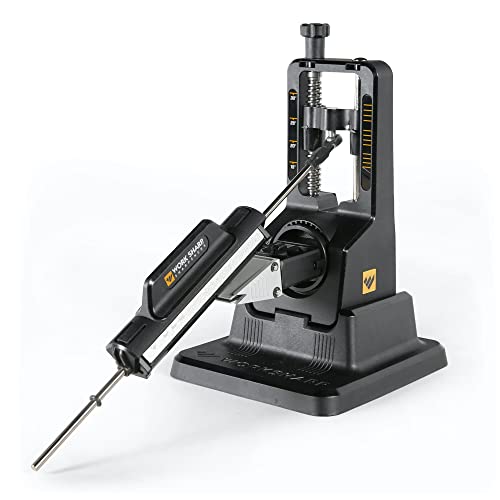
Work Sharp Precision Adjust — Best Overall
The Work Sharp Precision Adjust suits the largest number of pocket knife owners: people who want a genuinely sharp, repeatable edge at home without spending months learning freehand technique. The design clamps the blade in a V-block, sets the angle with a knob, and runs a guided abrasive rod along the bevel, so the two variables that ruin most sharpening attempts — inconsistent angle and uneven pressure — are largely taken out of your hands. If your collection ranges from a slim gentleman’s folder to a hard-use EDC blade like the ones in best folding knives for camping, this is the system that treats all of them the same calm way.
- Adjustable angle from 15 to 30 degrees in 1-degree increments
- Tri-Brasive rod with coarse diamond, fine diamond, and fine ceramic surfaces
- V-block clamp holds the blade for guided rod strokes
- Benchtop base designed for kitchen, pocket, fillet, and hunting knives
Strengths
- Repeatable angles make reprofiling and touch-ups consistent from session to session
- Three abrasive surfaces on one rod cover repair, sharpening, and refining
- Clamp design works with the short blades typical of pocket knives
Trade-offs
- Benchtop system — too bulky for pack or pocket carry
- Clamping and setup take longer than a quick pull-through touch-up
- Very long or very thick blades can test the clamp’s reach
The reason this sharpener tops the list is the angle knob. Pocket knives leave factories with a variety of edge angles, and matching the existing bevel is the difference between a five-minute touch-up and a frustrating half hour. Dialing from 15 to 30 degrees in single-degree steps means you can find the angle a blade already has — using the marker trick described later in this guide — and then maintain exactly that angle every time. The Tri-Brasive rod is the other half of the story: the coarse diamond surface does the real metal removal on a dull edge, the fine diamond cleans up the scratches, and the ceramic leaves a tidy, slicing finish that suits EDC tasks like breaking down boxes and cutting cord.
In practice, the workflow is methodical rather than fast. You clamp, you set, you work one side until a burr forms along the full length, you flip, and you repeat through the abrasives. That rhythm is exactly what beginners need and what experienced sharpeners appreciate when a blade needs a full reprofile rather than a strop. The honest limitation is throughput and portability: this is a sit-down system for the bench or kitchen table, and owners of many knives will find a rhythm of batching sharpening sessions rather than grabbing it for a single quick pass. It also asks you to be sensible with clamp pressure on thin, hollow-ground blades — snug is enough.
Best for: Home sharpening of mixed pocket knife collections with repeatable results / Not suited for: Field touch-ups or anyone who wants a sharpener in a pocket

Spyderco Tri-Angle Sharpmaker 204MF — Best for Serrated and Recurved Blades
The Sharpmaker suits owners whose knives break the rules that flat stones and clamp systems depend on. Its alumina ceramic rods stand in a V at preset angles, and you draw the blade straight down the rod keeping the knife vertical — the rod’s triangular cross-section presents a flat for plain edges and a corner that tracks into serration scallops and recurved bellies. Anyone carrying a partially serrated rescue folder or a hawkbill will find this is one of the few guided systems that sharpens the whole edge instead of the easy two-thirds of it. It is a natural companion to the outdoor blades covered in best bushcraft knives, many of which wear curved profiles.
- Preset 30 and 40 degree inclusive sharpening angles
- Two medium and two fine alumina ceramic rods
- Triangular rods with flats and corners for plain, serrated, and recurved edges
- ABS base doubles as storage case; brass safety rods included
Strengths
- Handles serrations and recurves that defeat flat abrasives
- Vertical stroke technique is easy to learn and hard to get badly wrong
- Rods store inside the base for tidy, portable storage
Trade-offs
- Ceramic is a refining abrasive — very dull or damaged edges restore slowly
- Only two preset angles, so unusual factory bevels get converted over time
- Rods load up with metal and need periodic scrubbing to keep cutting
The Sharpmaker’s genius is that it turns angle control into posture: keep the blade vertical, draw it down and toward you, and the preset rod angle does the geometry. The 40-degree inclusive setting (20 degrees per side) suits hard-use pocket knives; the 30-degree setting refines edges on lighter-duty folders. Because the rods are ceramic, the system is honest about what it is — a maintenance and finishing tool more than a rescue tool. A knife that has been cutting drywall and prying paint cans will need a coarser diamond step first, and Spyderco sells diamond rods separately for exactly that reason; budget for them if your knives live hard lives.
The honest limitation is speed on truly dull edges. Ceramic removes metal slowly by design, which is wonderful for control and terrible for impatience; owners who let edges go completely dead will spend a long session wondering why progress is slow, when the real answer is that this system expects little-and-often maintenance. Kept in that rhythm — a few passes after heavy use — it keeps serrated and curved pocket knives cutting far longer than owners expect, and the technique transfers to scissors, hooks, and other edged tools around the house.
Best for: Serrated, recurved, and hawkbill pocket knives, plus easy maintenance / Not suited for: Fast restoration of very dull or chipped edges

Work Sharp Guided Field Sharpener — Best for Field Use
The Guided Field Sharpener suits campers, hunters, anglers, and anyone whose knives go dull far from a workbench. It packs five sharpening stages into a flat, packable tool: diamond plates for real sharpening, a ceramic rod for honing, and a leather strop for finishing, all framed by fixed angle guides so the geometry stays honest even on a picnic table or a tailgate. It is the sharpener version of the philosophy behind best field knife sharpener picks generally — small, self-contained, and usable with cold hands.
- Built-in 20 degree sharpening guides and 25 degree honing guides
- Coarse and fine diamond plates
- Ceramic hone rod with a groove for fish hooks
- Leather strop for final edge refinement
- Model WSGFS221, compact flat format for pack carry
Strengths
- Complete sharpen-hone-strop sequence in one pocketable tool
- Fixed guides keep angles consistent outdoors
- Diamond plates cut modern stainless steels without water or oil
Trade-offs
- Short abrasive surfaces mean more strokes on long blades
- Fixed 20 degree guide will not match every factory bevel exactly
- Small size demands care to keep fingers clear of the edge path
What makes this field sharpener genuinely useful, rather than a novelty, is that it respects the full sharpening sequence. Most pocket gadgets offer one aggressive slot and call it done, leaving a ragged, foil-like edge that feels sharp for a day. Here you can restore on the coarse diamond, refine on the fine diamond, hone on the ceramic at the slightly steeper guide angle, and finish on the strop — the same progression you would use at home, compressed into something that rides in a pack’s side pocket. The ceramic rod’s fish-hook groove and the broadhead wrench details are small things, but they signal a tool designed by people who actually use knives outdoors.
The honest limitation is scale. The plates are short, so a compact pocket knife is a perfect match while a long fixed blade becomes an exercise in patience and stroke counting. The fixed guides are a blessing for consistency and a compromise for knives beveled at unusual angles — you will slowly convert such an edge to the guide angle over repeated sessions, which is fine as long as you know it is happening. For its intended job — keeping a working folder or a camp knife honest over a week in the field — it is the most complete answer on this list.
Best for: Camp, hunt, and travel kits where a folder must be maintained away from home / Not suited for: High-volume home sharpening of large collections


Lansky 4-Rod Turn Box LCD5D — Best Budget Bench Sharpener
The Lansky Turn Box suits owners who want the V-rod concept at the lowest sensible cost, in a package that stores itself. Four ceramic rods — two medium, two fine — stand in angled holes in a hardwood box, and when you are done they drop into storage slots inside that same box, which becomes the lid. It has been sold in this form for decades because the idea is sound: crock sticks give you guided angle control, two grits, and a stable bench footprint without clamps, rods-on-rails, or anything to assemble wrong.
- Two medium-grit and two fine-grit alumina ceramic rods, 5 inches long
- Hardwood turn box serves as base and rod storage
- Preset rod angles for sharpening and finishing passes
- Model LCD5D
Strengths
- Simple, proven V-rod technique with almost no setup
- Two grits cover maintenance and light restoration
- Self-storing wooden box keeps rods protected in a drawer
Trade-offs
- Ceramic only — no coarse stage for badly dulled edges
- Rod format is slower on long blades than a bench stone
- Preset angles may not match every factory bevel
Using the Turn Box feels like using the Sharpmaker’s ancestor, because it is: draw the blade down the rods, alternating sides, medium first and fine to finish. For pocket knives that get regular attention, that is genuinely all most edges need, and the wooden box sits happily in a kitchen drawer in a way a clamp system never will. Owners stepping up from the options in best knife sharpeners for beginners will find the technique familiar and the results a clear step better, because the longer rods and stable base make each stroke more consistent.
The honest limitation is the same one the Sharpmaker carries, only more so: ceramic is slow. A pocket knife that has been abused into a rounded, light-reflecting edge will take a very long time here, and the correct move is a coarse diamond step first, even if that means a separate inexpensive diamond plate. Treat the Turn Box as the maintenance station it is designed to be — little and often — and it repays the small investment for years; ceramic rods are also easy to clean with a scouring pad and household cleaner when they darken with loaded metal.
Best for: Budget bench maintenance of everyday folders / Not suited for: Rescuing very dull, chipped, or damaged edges

DMT Diafold Double Sided Sharpener FWEEE — Best for Hard Steels
The DMT Diafold FWEEE suits owners of premium pocket knives whose blade steels shrug off ceramic and natural stones. Diamond is the hardest abrasive in common use, and DMT’s monocrystalline diamond surface cuts high-carbide steels — the S30V, S35VN, M390, and MagnaCut class of blades found on many modern folders — at a pace other pocket abrasives cannot match. This FWEEE variant pairs extra-fine and extra-extra-fine surfaces, which makes it a refining and maintenance tool for hard steels rather than a coarse repair plate, and its handles fold over the surface to protect it in a pocket or pack.
- Extra-fine diamond surface, 9 micron / 1200 mesh
- Extra-extra-fine diamond surface, 3 micron / 8000 mesh
- Folding handles protect the abrasive when stored
- Double-sided Diafold format, made in the USA
- Model FWEEE
Strengths
- Diamond abrasive cuts high-hardness, high-carbide steels efficiently
- Two fine grits refine and polish an existing edge to a high standard
- Folding design is genuinely pocketable and protects the surface
- Works dry, with water, anywhere — no soaking or flattening
Trade-offs
- Fine grits only — will not reprofile or repair damage quickly
- Freehand format: you supply the angle consistency yourself
- Diamond plates punish heavy pressure; technique matters
The Diafold’s role in a kit is specific and valuable. Hard steels hold an edge a long time and then resist casual sharpening; a few light strokes on the extra-fine side after a day’s cutting brings them back, and the extra-extra-fine side produces the kind of polished, push-cutting edge that makes fine work — feather sticks, food prep at camp, clean cuts in cordage — noticeably easier. It pairs naturally with the harder blades discussed in best diamond sharpening stones for pocket knives, where diamond’s advantage over conventional abrasives is the whole point.
The honest limitations are skill and scope. This is a freehand tool: nothing holds your angle, so beginners will produce convex, uneven bevels until the muscle memory arrives, and the fine grits mean a truly dull blade should start on a coarser diamond or a guided system first. Pressure discipline matters too — bearing down tears diamond particles from the plate and shortens its life; let the abrasive cut with the weight of a few strokes, not your shoulder. Used correctly, a Diafold lasts for years and becomes the sharpener hard-steel owners reach for first.
Best for: Maintaining and polishing premium hard-steel pocket knives / Not suited for: Beginners wanting angle guidance or anyone repairing damaged edges

Smith’s PP1 Pocket Pal — Best Ultra-Budget Pocket Option
The Pocket Pal suits the knife that lives in a glove box, tackle box, or junk drawer and needs to cut something right now. It is a preset pull-through with crossed carbide blades for coarse work and ceramic stones for finishing, plus a fold-out tapered diamond rod that handles serrations and fish hooks. At 3.5 inches long and about an ounce, it disappears into any kit, and its job is honest: restore a working edge to an everyday blade in under a minute, anywhere.
- Preset crossed carbide blades for coarse sharpening
- Preset ceramic stones for fine finishing
- Fold-out tapered diamond-coated rod for serrated edges and hooks
- 3.5 inches long, about 1 ounce, with lanyard hole
- Model PP1
Strengths
- Small and light enough to live in any bag, box, or pocket
- Carbide stage restores a neglected working edge quickly
- Diamond rod adds serration and hook capability most pull-throughs lack
Trade-offs
- Carbide pull-throughs remove metal aggressively and leave a coarse edge
- Fixed preset angle will not match every blade’s bevel
- Not appropriate for premium, hard, or brittle blade steels
Every sharpening guide needs one pick it recommends with clear eyes, and this is ours. The Pocket Pal is genuinely useful for the beaters of the knife world — the gas-station folder, the boat knife, the loaner — where the alternative is not a guided system but no sharpening at all. A few pulls through the carbide, a few through the ceramic, and a blade that was tearing cardboard is slicing it again. The fold-out diamond rod is a thoughtful extra that earns the tool its place in fishing kits especially.
The honest limitation must be stated plainly: do not run a good knife through the carbide slot. Carbide pull-throughs peel metal in curls, can chip hard or thin edges, and set an angle whether your blade agrees with it or not. Owners of anything in the class of best pocket knives under $50 and above should treat the Pocket Pal as an emergency and beater-knife tool, and use any other pick on this list for knives they care about. Judged on those terms — cheap, tiny, effective first aid for neglected edges — it does its job well.
Best for: Emergency touch-ups and beater knives in glove boxes and tackle kits / Not suited for: Premium blades, hard steels, or anyone’s primary home sharpener

Comparison Table
| Sharpener | System type | Abrasives | Angle control | Best context |
|---|---|---|---|---|
| Work Sharp Precision Adjust | Clamp and guided rod | Diamond coarse/fine, ceramic fine | Adjustable 15–30 degrees | Home bench |
| Spyderco Sharpmaker 204MF | V-rod | Medium and fine ceramic | Preset 30/40 degrees inclusive | Serrated and curved blades |
| Work Sharp Guided Field Sharpener | Guided plates and rod | Diamond, ceramic, leather strop | Fixed 20/25 degree guides | Field and travel |
| Lansky Turn Box LCD5D | V-rod crock sticks | Medium and fine ceramic | Preset rod angles | Budget bench |
| DMT Diafold FWEEE | Folding diamond plate | Extra-fine and extra-extra-fine diamond | Freehand | Hard steels, pocket carry |
| Smith’s PP1 Pocket Pal | Pull-through | Carbide, ceramic, diamond rod | Preset slots | Emergency and beaters |
How to Choose a Knife Sharpener for a Pocket Knife
Start with your blade steels. The steel stamped on your blade decides which abrasives will even work. Simple stainless and carbon steels — 420HC, 8Cr13MoV, 1095, AUS-8 — sharpen happily on ceramic, diamond, or conventional stones. High-carbide powder steels hold an edge longer precisely because their carbide particles resist abrasion, and they repay the favor by resisting your sharpener too; for those blades, diamond abrasives like the Diafold’s are not a luxury but the practical choice. If you do not know your steel, assume a guided diamond-capable system will cover you, because diamond cuts everything ceramic does, only faster.
Decide how much angle control you want to outsource. Angle consistency is the whole game in sharpening. Clamp systems outsource it completely, V-rods outsource it to your posture, guided field sharpeners fix it at one sensible angle, and freehand plates outsource nothing. Be honest about your patience: a freehand tool you use badly loses to a guided tool you use correctly, every single time. Most pocket knife owners are best served by one guided home system and, if they travel with a knife, one guided field tool — the combination the first and third picks on this list provide.
Match the system to your blade shapes. Straight plain edges sharpen on anything. Recurved blades need rods or narrow abrasives that can follow the curve — the Sharpmaker’s corners exist for this. Serrations need a rod that fits the scallops, tapered ideally, which the Sharpmaker and the Pocket Pal’s diamond rod both offer. Tanto points and thick tactical grinds favor clamp systems that hold the blade steady through the angle change at the tip. Buying a flat-only system for a drawer full of curved blades is the most common mismatch we see, and it is avoidable in one minute of looking at your own knives.
Think in stages, not single grits. A working sharpening setup needs a way to remove metal (coarse), a way to refine (fine), and ideally a way to finish (ceramic or strop). Single-stage tools either restore slowly or finish coarsely. Check any candidate against that sequence before buying: the Precision Adjust covers all three stages on one rod, the Guided Field Sharpener covers them across plates, rod, and strop, while the V-rod systems cover the last two stages and expect your edges never to get truly desperate — a reasonable expectation if you maintain little and often.
Consider where the sharpener will live. A bench system that lives assembled gets used; a kit in a box in the garage gets used eventually. Field sharpeners earn their keep only if they actually ride in the pack, which is why flat and folding formats matter more than feature lists outdoors. And a glove-box pull-through, for all its compromises, has saved more fishing trips than any bench system ever will. The broader stone-based approach in best whetstone knife sharpeners suits owners who want one skill that covers kitchen and pocket knives alike — worth considering if your sharpening ambitions extend beyond folders.
Key Takeaways
- Angle consistency matters more than abrasive brand — guided systems exist to provide it.
- Diamond is the safe default for hard modern steels; ceramic refines but restores slowly.
- Rod-based systems are the answer for serrated and recurved pocket knife blades.
- Maintain little and often, and almost any system on this list will keep you sharp.
- Keep pull-through carbide away from good knives; it is first aid, not care.
How to Sharpen a Pocket Knife, Step by Step
- Clean the blade. Wash off tape residue, sap, and grit so abrasives meet steel, not glue. Dry the knife fully.
- Find the existing angle. Color the bevel with a permanent marker, make one light pass, and check where the ink removed — adjust your system until the pass cleans the full bevel.
- Work the coarse stage on one side. Use even strokes from heel to tip until you can feel a burr — a tiny wire of metal — along the entire opposite edge. No burr, no progress; do not switch sides early.
- Repeat on the second side. Match your stroke count and pressure so the edge stays centered.
- Refine through finer abrasives. Repeat the burr process with lighter pressure at each stage, shrinking the burr rather than rebuilding it.
- Remove the burr. Alternate very light single strokes per side on the finest abrasive, then strop on leather or cardboard to polish off the last foil of metal.
- Test honestly. Slice printer paper: a sharp edge cuts cleanly without snagging. Test along the whole edge, not just the sweet spot near the handle.
- Oil the pivot and wipe the blade. Sharpening grit migrates into folding mechanisms; a rinse, dry, and drop of pivot oil keeps the knife’s action clean.
Troubleshooting, in the pattern most owners meet: Problem: the edge feels sharp near the handle but dull at the tip → you are lifting or rushing the stroke’s end; slow down and keep the system guiding the full length. Problem: one side sharpens faster than the other → your stroke counts or pressure differ; count strokes aloud for a session. Problem: the edge shaves, then dulls within a day → the burr was folded over, not removed; return to alternating light strokes and stropping. Problem: scratches climb above the bevel → your angle dropped mid-stroke; reset with the marker test. Problem: a serrated section still tears → switch to a rod that fits the scallops and work each serration individually, from the ground side only.
Maintaining the Edge Between Sharpening Sessions
Sharpening removes metal; maintenance avoids needing to. The owners who sharpen least are, paradoxically, the ones who do something small for their edges most often. A leather strop loaded with a fine polishing compound is the highest-value accessory in this entire topic: ten alternating strokes per side after a day of cutting restores the bite that cardboard and rope stole, without touching a stone. A strop can be a dedicated paddle, an old belt, or even the rough side of a leather sheath — what matters is the motion, edge trailing, at the same angle as the bevel, with light pressure. Owners who strop weekly routinely go months between true sharpening sessions, which is exactly the rhythm the V-rod picks on this list are designed around.
Storage matters more than most owners admit. A pocket knife carried loose in a pocket full of keys and coins is being dulled by its roommates; a knife tossed in a drawer with other tools fares no better. Use the pocket clip as intended, keep a dedicated pocket or sheath for the knife, and never store a folder in a leather sheath long-term in humid conditions, because leather holds moisture against steel. Carbon steel blades deserve a wipe of food-safe oil after wet work; stainless blades mostly ask to be dried before the pocket. None of this is glamorous, and all of it shows up directly in how often you reach for a sharpener.
Cutting habits are the third leg. Cardboard is far more abrasive than it looks — it is full of mineral fillers and grit — and it is the single most common reason EDC knives dull “mysteriously.” Glass and ceramic cutting surfaces destroy edges on contact; cut on wood or plastic. Prying, twisting screwdriver-style, and scraping with the edge are misuse that no sharpener choice can compensate for; use the spine or another tool. Finally, learn the paper test and use it weekly: the moment a blade starts tearing rather than slicing, you are in cheap maintenance territory. Wait until it slides uselessly across tomato skin and you have bought yourself a full restoration session instead.
It is also worth matching maintenance to steel. Hard powder steels respond best to diamond and to stropping on diamond-loaded leather; softer steels hone beautifully on a ceramic rod used like a kitchen steel, a few alternating strokes at the bevel angle. Keeping a small card in your sharpening kit noting each knife’s steel and the angle that matched its bevel — discovered once with the marker test — turns every future session into a repeat performance instead of a fresh investigation. That small habit, more than any single product on this list, is what separates owners whose knives are always sharp from owners whose knives are always almost sharp.
Common Buying Mistakes
Buying a pull-through as your only sharpener. It is the most common and most costly mistake: carbide slots feel miraculous on a dead beater blade, so owners run every knife they own through them, grinding away metal, setting a mediocre angle, and occasionally chipping hard edges. Keep pull-throughs for emergencies and beaters, as this guide’s final pick is framed.
Ignoring blade shape compatibility. A flat plate cannot sharpen a recurve’s belly, and a clamp can struggle with very thick or very short blades. Inventory your knives’ shapes before you inventory sharpener features.
Buying fine-only abrasives for neglected knives. Ceramic rods and fine diamond plates maintain edges; they do not resurrect them in reasonable time. If your knives are truly dull today, your first purchase needs a coarse stage.
Chasing the lowest angle. A 15-degree edge slices beautifully and rolls on the first zip tie if the steel and use do not suit it. Match angle to use: finer for light slicing, sturdier for hard EDC work.
Skipping the strop. Owners buy systems, master them, and still get edges that feel almost sharp — because the last step, burr removal on leather, is missing. A strop is the cheapest performance in all of sharpening.
Final Recommendation
For most pocket knife owners, the Work Sharp Precision Adjust is the right first serious sharpener: its adjustable clamp removes the guesswork, its three abrasives cover the full sequence, and it treats a mixed collection even-handedly. The runner-up is the Spyderco Tri-Angle Sharpmaker 204MF, which we would choose instead — or in addition — for any collection heavy on serrated and recurved blades, and for owners who prefer a two-minute maintenance ritual to a scheduled sharpening session. Add the Guided Field Sharpener when your knives travel, and your edges are covered at home and away.
Frequently Asked Questions
What angle should I sharpen a pocket knife to?
Most factory pocket knife edges sit between 15 and 25 degrees per side. Light slicing knives thrive toward the finer end; hard-use EDC blades are happier and tougher nearer 20 to 25 degrees per side. The practical method is to match the angle your knife already has using the marker test, then change it deliberately only if your use demands it.
Can a sharpener damage a pocket knife?
Yes — aggressive carbide pull-throughs can chip hard steels and remove excess metal, and any system used at the wrong angle will round or uneven a bevel. Guided diamond and ceramic systems used with light pressure are safe for quality blades. When in doubt, practice on a cheap knife first; the beater in your drawer is a tuition-free teacher.
How often should I sharpen a pocket knife?
Maintain before you must restore. A few honing or fine-abrasive passes after heavy use — a day of cardboard, rope, or camp work — keeps an edge in the zone where maintenance takes two minutes. If the blade slides on paper instead of biting, it needs a full coarse-to-fine session. Frequency depends on steel and use, not the calendar.
Do serrated pocket knives need a special sharpener?
They need a rod-shaped abrasive that fits the serration scallops, used on the ground side of the edge. The Sharpmaker’s triangular rods and the Pocket Pal’s tapered diamond rod both do this job. Flat stones and pull-through slots cannot reach into scallops and will gradually round the serration points if forced.
Is diamond or ceramic better for pocket knives?
Diamond cuts faster and handles hard, high-carbide steels that ceramic barely touches, making it the better restoration and hard-steel choice. Ceramic refines gently and leaves a fine finish, making it the better maintenance choice for edges already in decent shape. Many good setups, including several picks here, use both in sequence.
Why does my knife get sharp, then dull almost immediately?
Almost always, an unremoved burr: the wire edge folds over on first use and the blade feels dull again. Finish with alternating feather-light strokes on your finest abrasive and strop both sides. The second cause is an angle too fine for the work — a delicate edge rolling on hard materials — solved by sharpening a few degrees sturdier.
Should I use water or oil on sharpening abrasives?
Follow the abrasive, not habit. The diamond and ceramic systems on this list are designed to work dry or with plain water, and dry is usually cleanest for pocket knife work at a bench. Never use oil on diamond plates or ceramic rods unless the maker says so — oil loads the surface with swarf and slows cutting. If a ceramic rod darkens and starts skating, scrub it with a scouring pad and household cleaner, rinse, and dry; a clean ceramic rod cuts like a fresh one.
Can I sharpen a pocket knife with a kitchen sharpener?
Some kitchen systems work, but many are set at angles and slot widths meant for thin kitchen blades, and pull-through kitchen gadgets carry the same carbide risks as any pull-through. A sharpener designed for pocket knives — shorter blades, thicker stock, varied shapes — is the safer match, which is the entire premise of this guide.