Disclosure: As an Amazon Associate, umtsmarttool.com earns from qualifying purchases. Links to Amazon on this page are affiliate links; they cost you nothing extra. Prices and availability change often, so check the current Amazon listing before you buy.
Where to buy
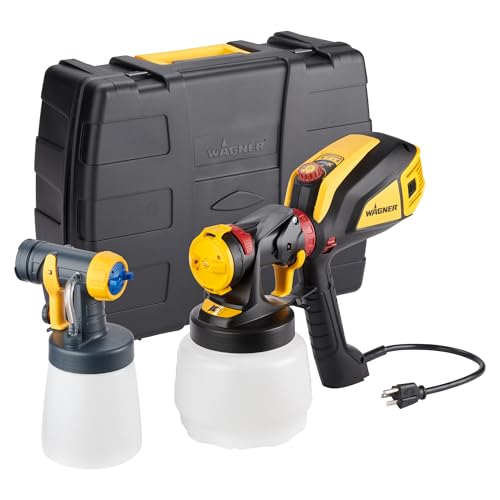
This paint sprayer buying guide ends in a shortlist, and its most-bought member is the Wagner FLEXiO 595 Handheld HVLP Paint Sprayer — the safest single recommendation for alternating work. The guide’s full shortlist, one per technology:
- Wagner FLEXiO 595 Handheld HVLP Paint Sprayer — best all-round — Check on Amazon
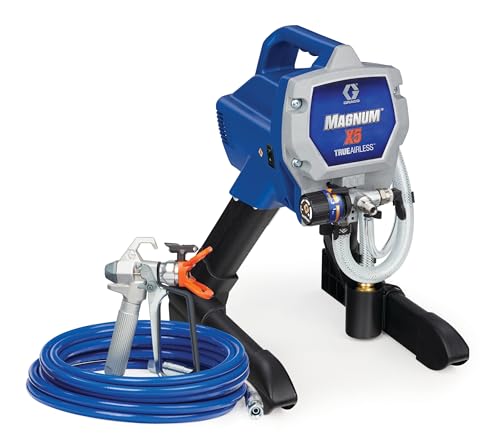
- Graco Magnum X5 Electric True Airless Paint Sprayer — best for property scale — Check on Amazon
- HomeRight Super Finish Max HVLP Paint Sprayer — best for furniture and value — Check on Amazon
- Wagner Control Spray Max HVLP Paint Sprayer — best system for repeatability — Check on Amazon
- VONFORN VF803 700W HVLP Paint Sprayer — best budget start — Check on Amazon
- Earlex Spray Station HV5500 HVLP Sprayer — best pro-leaning finesse station — Check on Amazon
Read the full guide ↓
Paint Sprayer Buying Guide: The Complete Framework
A paint sprayer buying guide has one job: to convert a confusing shelf into a decision procedure the reader can run on their own work. This page is that procedure, written to be used rather than admired. It proceeds in the order decisions actually bind: first the workload (what you will spray, at what scale, how often), then the technology (HVLP, airless, pneumatic — the three physics of spraying), then the format (handheld, turbine station, pump station), then the specifications that actually matter inside a format, then the ownership system (cleaning, parts, support) that decides whether the tool is still working in year five. Worked examples follow — five buyer profiles routed to their tools — and the guide closes with the shortlist above, the mistakes that send buyers back to the store, and the questions readers ask most. Tier-specific rankings live in Best Paint Sprayer Under $100 and Best Paint Sprayer Under $200; single-model depth in Paint Sprayer Review; this page is the map both are drawn from.
In this guide
Step One: Define the Workload Before Any Product
Every failed sprayer purchase in the record began with a product and ended with a workload it did not fit, so the procedure begins with three workload questions, answered in writing. What surfaces? Pieces (furniture, cabinets, doors), planes (walls, ceilings, siding), or both in alternation — the single most predictive fact about the right tool. What materials? Stains and clears, enamels and paints, or heavy coatings — the viscosity spectrum the tool must serve. What rhythm? A project a season, a project a month, or campaigns measured in gallons — the duty the format must survive. Buyers who answer the three questions honestly can be routed by the next two steps in minutes; buyers who skip them will be routed by marketing instead, and the marketing’s answer is always the flagship.
Step Two: Choose the Technology — Three Physics, Three Characters
HVLP moves a high volume of air at low pressure, atomizing finish gently into thin, controllable films. Its character: finesse, low overspray, modest pace, thinning discipline for thick materials in its basic forms. It owns pieces and furniture, serves fences and small planes honorably, and declines whole houses. Airless forces finish through a tiny tip at high pressure, atomizing by force. Its character: pace, unthinned capability, real overspray, masking labor, and a safety discipline (injection hazard) that must be learned once and obeyed forever. It owns planes and properties, serves pieces coarsely, and declines heirlooms. Pneumatic HVLP — the compressor-driven gun — is HVLP’s professional dialect: the finest atomization per dollar, conditional on owning the air infrastructure to feed it. The technology decision is the purchase; everything after it is shopping. Buyers torn between technologies should note the category’s open secret: serious users eventually own two, sequenced by workload, and the first purchase should be the one the workload’s center of gravity names.
Step Three: Choose the Format Inside the Technology
HVLP offers three formats. The handheld carries its turbine in the grip: instant setup, grab-and-go economics, weight on long days — the format of occasional and alternating work. The turbine station floors the motor and lightens the gun, adding (in its better forms) pressure control and documented repeatability — the format of workshops and weekly practice. The pneumatic gun is formatless in comparison — a gun, a cup, a hose to the compressor — and its format decision is really the compressor decision wearing a sprayer’s clothes. Airless offers two: the handheld (cup-fed, liner-systemed in its modern form) for rooms and single elevations, and the station (stand or cart, hose-fed, can-fed) for properties and campaigns. Format errors are the category’s most expensive, because they are felt on every session: the station bought for drizzle work, the handheld bought for a property. The rhythm answer from step one is the format’s elector — trust it.
Step Four: The Specifications That Actually Matter
Inside a format, five specifications carry the decision, and the guide ranks them so the reader can ignore the rest of the sheet. Tip and nozzle system: the range of orifices and the cost of changing them govern the material spectrum more than any motor figure — interchangeable tips are capability. Output matched to format: watts for turbines, GPM and PSI class for airless, CFM appetite for pneumatic — read as “can it sustain my pace,” not as a league table. Container economics: cup size against the workload’s refill rhythm, with liner systems counting as a cleaning specification in disguise. Control surface: flow everywhere, pattern everywhere, pressure on stations — the variables the operator will actually document. Weight in the working configuration: full cup, at arm’s length, at hour two — the specification no sheet prints and every owner feels. Everything else on a typical listing — cord lengths, color, case design — is garnish, and buyers who weight it equally with the five above are shopping for a photograph.
Step Five: The Ownership System
The final step is the one buying guides most often skip and owners most often cite: the system around the tool. Cleaning burden, read in the manual’s own pages before purchase, predicts use frequency better than any performance figure. Parts economics: tips, seals, and filters priced and stocked like parts indicate a tool designed to be maintained; their absence indicates a tool designed to be replaced. Documentation and community: the manual’s clarity and the owner base’s depth are the support the buyer will actually consume at 11 p.m. before a Saturday project. Storage reality: the bin the system lives in, in the space the household actually has. A tool that wins steps two through four and fails step five becomes the category’s most familiar object — the excellent sprayer in the unopened box — and this guide’s rankings across the series weight step five accordingly.
Five Buyer Profiles, Routed
The furniture refinisher (pieces, enamels and clears, monthly rhythm): HVLP handheld with a real tip system — the Super Finish Max pattern — or, with a compressor already owned, the pneumatic gun. The renovator (planes and pieces in alternation, campaign rhythm): the two-nozzle flagship handheld, or the pair — handheld airless for planes, finesse HVLP for pieces — sequenced by the first chapter. The property owner (planes at scale, seasonal campaigns): the stationary airless station, X5 pattern, with the duty rating matched to annual gallons. The workshop practitioner (pieces at production rhythm, repeatability prized): the turbine station with pressure control, Earlex or Wagner Max pattern by finesse-versus-value weighting. The beginner (workload still forming): the guide’s standing advice — buy the workload you can name, at the gentlest tier that serves it, and let the log nominate the second tool; the beginner-specific routing is in How To Choose A Paint Sprayer.
The Shortlist, With Its Logic
| Tool | Technology / format | The buyer it answers |
|---|---|---|
| Wagner FLEXiO 595 | HVLP handheld, two nozzles | Alternating work; the safest single answer |
| Graco Magnum X5 | Airless station | Property scale and campaigns |
| HomeRight Super Finish Max | HVLP handheld | Furniture, finesse, and value |
| Wagner Control Spray Max | HVLP turbine station | Repeatability and workshop practice |
| VONFORN VF803 | HVLP handheld | Budget starts and utility duty |
| Earlex Spray Station HV5500 | HVLP turbine station | Pro-leaning fine finishing |
Technology Deep Dive: HVLP in Full
HVLP rewards a closer examination because it is the technology most buyers will own first and many will own only. Its physics — a river of air at a few PSI — produce its signature virtues mechanically: the air’s gentleness keeps finish on the target (transfer efficiency is the format’s quiet economic triumph), the atomization is fine enough for furniture-grade films, and the operator’s errors are correspondingly gentle — a pass too slow builds a film that can be sanded, not a disaster that must be stripped. Its disciplines are equally mechanical. Thick materials resist the gentle air, hence thinning and tip systems; large planes outlast the operator’s arm and the cup, hence the format’s honest pace ceiling; and the turbine’s air warms across a session, subtly changing viscosity behavior in ways the log exists to record. The 2026 state of the technology, for the guide’s completeness: flagship handhelds have waived thinning for latex without repealing it for finesse, turbine stations have made pressure a documented variable, and the pneumatic dialect remains the finesse benchmark where infrastructure exists. A buyer who understands HVLP at this depth can evaluate any model in the class from its specification sheet alone — which is the literacy this guide exists to transfer.
Technology Deep Dive: Airless in Full
Airless rewards the same candor. Its physics — finish forced through a small orifice at thousands of PSI — produce pace and unthinned capability mechanically, and its costs with equal necessity: a fraction of every gallon becomes overspray because the atomization energy has nowhere else to go; the fan’s coarseness sets a finesse floor no technique repeals; and the pressure that does the work is, in the strictest sense, hazardous, governed by the injection protocol this series repeats in every airless context. The format’s modern mitigations deserve their due: liner systems civilized cleanup and enabled any-angle spraying; variable speed returned a measure of control; HEA tips reduced pressure and overspray for interior work; and the majors’ documentation has professionalized the safety culture. None of the mitigations changes the technology’s identity — a coating instrument of tremendous pace — and the guide’s routing reflects the identity rather than the marketing: planes and properties to airless, pieces to HVLP, and the alternators to the convertible flagship or the honest pair. Buyers who internalize the identity stop asking airless to finesse and HVLP to hurry, which is the moment their purchasing becomes reliably correct.
Materials: The Other Half of Every Decision
No buying guide is complete that treats the sprayer as the whole system, because the material co-determines every outcome. The guide’s material map, in the order households meet them: stains and sealers (thin, forgiving, every technology’s friend — and HVLP’s home ground), primers (the great equalizer, sprayed well by everything and the correct first material for any new tool), enamels (the finesse examination — HVLP’s tips and turbines earn their prices here), latex paints (the volume examination — airless’s kingdom, flagship HVLP’s waiver, basic HVLP’s thinning curriculum), clears (the environment examination — dust discipline matters more than the gun), and heavy coatings (the honesty examination — tip classes and pump sizes state their limits in the specifications, and believing them is a purchasing skill). A buyer whose material list is known can invert this guide’s procedure — start from the hardest material, and let it veto technologies — and arrive at the same shortlist by the other road. The two roads meeting is the guide’s internal consistency check, and readers are encouraged to run both.
The Budget Tiers, Walked Honestly
Money enters the procedure last, as a constraint on the shortlist rather than a substitute for it — but the tiers deserve their own walk, because each has a character. The entry tier (the under-$50 shelf of this series) buys honest HVLP basics: single-nozzle handhelds and house-brand kits that teach the full curriculum at forgiving prices, with support and finesse as the accepted sacrifices. The middle tier (under $100) is the category’s value summit for most households: brass tips, real brands, parts shelves, and enough headroom for a decade of intermittent work — the tier this guide most often lands households in, once the workload is named. The flagship tier (under $200) buys the technology convergence — unthinned latex, variable control, handheld airless — and is justified exactly when the workload invokes those capabilities by name. Above it, stations and carts price duty and volume for production lives. The walk’s lesson is that tiers are answers to rhythm questions, not quality grades: a fifty-dollar tool matched to a gentle workload outperforms, in its owner’s satisfaction, a flagship matched to nothing. The procedure in this guide routes by workload first so that the tier, when it is finally consulted, is merely the price of the correct answer.
Safety: The Buying Guide’s Non-Negotiable Section
A buying guide that omits safety has optimized for the wrong outcome, so the procedure includes it as a purchasing criterion. The universal kit — fit-tested respirator with cartridges matched to the materials, eye protection, ventilation with an exhaust path, ignition discipline with solvents, sealed metal storage for solvent rags — is part of every sprayer’s true price, and budgets that cannot carry it cannot carry the tool. Technology-specific duties price in as well: airless adds the injection protocol and its discipline; pneumatic adds hearing and air-quality management at the compressor; HVLP, the gentlest, adds the least and still requires the universal kit in full. The guide’s routing honors a corollary buyers resist: when the safety system does not fit the budget beside a flagship, the correct purchase is the safety system beside a lesser tool — a sentence that has prevented more harm than any ranking on this page. Sellers will not tell you this. A buying guide must.
Reading a Specification Sheet Like a Reviewer
The procedure’s skills culminate in reading the sheet itself, and the guide teaches it explicitly because listings are written to be admired rather than audited. Read for absences first: a sprayer whose listing omits its tip sizes, its container’s true capacity, or its duty class is telling you where its weaknesses live. Convert every output claim into your workload’s units — gallons per year against your log, hose feet against your property’s diagonal, cup ounces against your median job — because specifications become information only when they collide with a workload. Distrust superlatives and trust enumerations: “professional quality” is weather, while “three brass tips, 1.0 to 2.5 millimeters” is climate. Check the configuration against the manufacturer’s own page, because retail listings bundle and unbundle accessories in ways that quietly change the product. And run the step-five audit on the same screen: the manual’s PDF, the parts diagram, one wear part’s price — three clicks that separate the maintained tools from the disposable ones more reliably than any review, including the ones in this series. A buyer who reads this way needs guides for maps, not for verdicts, which is the graduation this page is written to produce.
Second Tools and Upgrade Paths
The procedure does not end at the first purchase, because the workload evolves and the fleet should evolve by evidence. The upgrade signals are the series’ recurring ones, collected here as the guide’s final routing table. Refill rhythm dominating sessions: the format’s container has been outgrown — answer with capacity or a station, not with frustration. A material class repeatedly refused or grudgingly served: the technology’s spectrum has been outgrown — answer with the neighboring technology as a second tool. Sessions ending in the arm rather than the work: the format’s ergonomics have been outgrown — answer with a floored turbine or a lighter gun. Finishes plateauing below the standard the work deserves: audit environment and discipline first, and let equipment answer last, because it is usually innocent. Each signal, named in the log across multiple sessions, nominates its remedy precisely; each remedy bought without the signal is speculation wearing a tool belt. The guide’s readers who keep the log will find their second purchase the easiest of their lives — the evidence writes the listing for them.
The Spray Corner and the System Budget
The procedure’s last practicality is the space and the system budget, because sprayers are bought into homes and workshops, not into vacuums. The corner — exhaust path, work surface, raking light, curing space, the bin — costs a fraction of any flagship and returns more finished quality than any specification in this guide, because environment is the finesse variable and readiness is the frequency variable. The system budget follows: of the total a buyer commits to spraying, the tool itself should claim only its share, with the bench, the safety system, the consumables (strainers, masking, tips), and the first materials funded in the same decision. A purchase that starves the system to enlarge the tool produces the category’s most expensive photograph: a flagship, idle, in a garage unready for it. The guide’s shortlist was built with system-fit as a silent criterion — every tool on it can be equipped, stored, and maintained inside a normal household’s means — and buyers adapting the procedure to other shelves should apply the same silence as a filter.
Rental, Borrowing, and the Honest Alternatives
A complete buying guide must price the alternatives to buying, because for some workloads they win. Rental owns the true outlier: the once-a-decade whole-house exterior, the single production campaign — workloads whose duty would strand a purchased station in storage for years, and whose rental cost is a fraction of ownership’s first year. Borrowing owns the experiment: a weekend with a neighbor’s handheld teaches more about format preference than any guide, and the category’s sociology (sprayers are lent often, being seasonal) makes the experiment cheap — with the borrower’s duties (return it cleaner, replace what you consume) observed as the price of the education. The brush and roller, finally, own the genuinely small: the single chair, the touch-up, the job whose setup arithmetic never closes — and the guide honors them, because a procedure that cannot say “do not spray this” will eventually say nothing worth hearing. Buying is the answer for recurring workloads at household rhythm; the alternatives govern the edges, and a buyer who knows the edges buys the center with confidence.
Worked Example: Running the Procedure Three Times
Procedures convince by demonstration, so the guide runs itself on three composite buyers drawn from the series’ reader patterns. The first: a new homeowner with a thrift habit — surfaces are pieces, materials are stains and enamels, rhythm is monthly. Technology: HVLP, by finesse and by scale. Format: handheld, by rhythm and by budget’s shape. Specifications: tip system first (the material list demands range), cleanup second (the rhythm will not survive a tax). Shortlist answer: the Super Finish Max pattern — and the procedure, notably, never asked the budget, because the answer’s tier followed from the workload. The second: a renovator couple, one house, eighteen months — surfaces alternate, materials run to latex, rhythm is campaigns. Technology: the fork — and the procedure’s honest output is the pair, sequenced: handheld airless first (the walls are the first chapter), finesse HVLP second (the cabinets are the last), with the flagship convertible as the single-tool alternative if storage or budget forbids two. The third: a landlord, four units, annual turns — planes, latex, gallons. Technology: airless. Format: station, by duty. Answer: the X5 pattern, with the duty rating doing the deciding against its own sibling. Three buyers, three technologies, one procedure — and in each case the deciding step was the workload, exactly as the guide promised at its opening.
Maintenance Literacy: What Ownership Actually Asks
The guide closes its procedure with the literacy that keeps purchases alive, because a buying decision that ignores maintenance is a rental with extra steps. The asks are few and learnable: strain every fill (the cheapest insurance in the category); test-board every new material and setting (the professional’s habit at amateur prices); clean to the manual’s standard the same day (the single variable that predicts a sprayer’s lifespan); store the system complete, dry, and indoors; inspect tips and seals on the calendar the workload implies; and log the recipes, because memory is the only component in the system guaranteed to degrade. None of this requires talent, and all of it compounds: the maintained tool’s fifth year is routinely its best, because its owner’s library of recipes and reflexes has matured around it. Buyers should therefore read a tool’s maintenance demands not as fine print but as the curriculum they are enrolling in — and choose, where two finalists are otherwise equal, the curriculum they will actually complete. The tool kept is the tool that performs; the guide’s rankings have quietly assumed the keeping throughout.
Brands, Ecosystems, and What the Badge Buys
The procedure is brand-agnostic by design, but the guide would be incomplete without stating what, in this category, a major badge actually purchases — because it is not the tool’s first season. Wagner, Graco, and HomeRight sell, alongside the tool, an infrastructure: manuals that teach, parts catalogs that persist, service channels that answer, and owner communities whose accumulated troubleshooting functions as a second documentation set. The infrastructure’s value is back-loaded — it is consumed in years two through ten, at the first worn seal, the first obscure fault, the first 11 p.m. question — which is why first-season comparisons systematically undervalue it and why this guide weights it as a step in the procedure rather than a preference. The anonymous brands’ counter-offer is real: specifications per dollar that embarrass the majors in the first season, for buyers whose discount rate on years two through ten is honestly high. The guide’s position is actuarial rather than tribal: for tools bought as decade infrastructure, the badge is the cheapest component; for tools bought as experiments, it is an unnecessary one — and the workload’s rhythm, once again, knows which purchase this is.
Environmental and Neighborhood Considerations
A modern buying guide should include the externalities, because spraying happens in a world with neighbors, air, and drains. Overspray is the category’s visible externality, and the technology choice governs it: HVLP’s transfer efficiency keeps finish on the work and out of the shared air, airless trades some of that citizenship for pace, and wind discipline — never spraying a fence line into a breeze toward a neighbor’s car — is a purchasing-adjacent skill no tool supplies. Cleanup waste has rules that vary by jurisdiction and material, and the guide’s standing instruction is to learn the local ones before the first session rather than after the first drain. Material choice itself has become an environmental variable, with waterborne finishes now covering most household spectra — a development that quietly favors the technologies (HVLP, modern airless) that spray them best. None of this changes the procedure’s order; it adds a final filter, in which the tool that fits the workload and the neighborhood is preferred, and in close quarters that filter regularly — and legitimately — reverses a ranking.
The Guide’s Method, and How to Argue With It
A framework that cannot be argued with is a slogan, so the guide states its method and its contestable choices plainly. The method is research-led synthesis: specifications verified against manufacturer data and stable listings; performance and ownership characterizations drawn from the documented record at scale; no hands-on testing claimed; prices and ratings excluded by standing rule, because both decay faster than a framework’s useful life. The contestable choices are three. First, the workload-first ordering itself — a reader who believes operator skill dominates equipment fit will weight step five and the curriculum more heavily, and the guide concedes the case for experienced sprayers while holding it for the buyers guides actually serve. Second, the support infrastructure’s weighting, which discounts the anonymous brands’ first-season value — a reader with a genuinely short horizon should re-weight and will reach different, defensible answers. Third, the two-tool future’s framing as normal — a reader committed to single-tool minimalism will read the flagship convertible as the terminus rather than a bridge. The guide’s confidence is not that its weights are universal but that its questions are: workload, technology, format, specifications, system. A reader who answers those five in order, with any honest weights, will buy well — which is the only claim a buying guide should ever make at full volume.
After the Purchase: The First Month With the Procedure’s Answer
The guide’s responsibility extends one month past the purchase, because that is where its answers are kept or lost. Week one belongs to water, the manual, and the test board — the tool’s controls learned at zero stakes, the log opened, the corner assembled. Week two takes the first real project at the curriculum’s level: a forgiving material, a low-visibility surface, the full routine performed slowly enough to be remembered. Weeks three and four widen by one variable at a time — a new material, a larger scale, a vertical surface — each preceded by the test board and followed by the log, because the procedure’s final lesson is that a sprayer is not bought but commissioned, like a system, across its first month. Owners who commission theirs find the second month unrecognizable: sessions start at the standard the first month ended at, and the tool the guide routed them to begins the long, quiet process of disappearing into the work. That disappearance is the procedure’s success criterion, and the guide is content to be judged by it — in the reader’s garage, on the reader’s projects, long after the rankings that opened this page have been forgotten.
Gift, Inheritance, and the Secondhand Market
Sprayers change hands constantly, and a complete guide addresses the three channels honestly. As gifts, sprayers succeed when the giver runs the procedure on the recipient’s workload rather than on their own enthusiasm — the finesse handheld for the refinishing daughter, never the station for the apartment son — and when the gift includes the system (strainers, respirator, the manual’s location) rather than the tool alone. As inheritances and hand-me-downs, the majors’ tools dominate for the infrastructure reason this guide has repeated: a ten-year-old Wagner or Graco with a findable seal is an asset, while an anonymous tool of the same age is an archaeology project — the secondhand buyer should inspect the fluid path, water-test the machine, and price the wear parts before the tool. As used purchases, the class’s legibility is the buyer’s friend: airless wear announces itself in the fan, HVLP decline in the finish, and a seller who kept the log is selling a system rather than a mystery. In all three channels the procedure’s questions still govern — workload first — because a free tool that fits no work is the most expensive kind there is.
The One-Page Version: The Procedure as a Checklist
For the reader standing in the aisle, the guide compresses itself. One: write the workload — surfaces, materials, rhythm — in three lines. Two: let the surfaces choose the technology — pieces to HVLP, planes to airless, alternation to the flagship or the pair. Three: let the rhythm choose the format — drizzle to handheld, practice to turbine, campaigns to station. Four: check the five specifications — tips, output class, container, controls, working weight — against the three lines, not against the shelf. Five: audit the system — cleaning pages read, one wear part priced, the bin imagined in its actual home. Six: carry the safety system in the same budget, in the same trip. Seven: buy the configuration complete — the nozzles and tips that make the tool itself — and the consumables it eats in its first month. Eight: commission it across four weeks, log open, before judging it. A buyer who runs the eight lines will occasionally buy a different tool than this guide’s shortlist names — and will never buy a wrong one, which is the distinction the entire page exists to teach.
Common Buying Mistakes
Starting from the product. The workload questions take ten minutes and govern a decade. Every other mistake in this list is a descendant of skipping them.
Buying the technology for the exceptional project. The once-a-decade exterior does not outrank fifty weeks of furniture. Weight by frequency; rent for outliers.
Confusing specifications with capability. A tip system is capability; a watt figure is a hint. Buy the system that changes what you can spray, not the number that changes how the listing reads.
Skipping the manual test. The cleaning pages and the parts diagram, read before purchase, are the ownership preview. Tools whose previews frighten you will not be cleaned, and uncleaned tools do not survive to be reviewed fondly.
Ignoring the second-tool future. Most serious users own two technologies eventually. Buying the first as if it must be the only — overbuying its range, forcing its physics — is how households end with one resented tool instead of two loved ones. The full mistake catalogue, with its economics, is in Paint Sprayer Pros And Cons.
Frequently Asked Questions
What is the single most important factor in choosing a paint sprayer?
The workload’s shape — pieces, planes, or alternation — because it selects the technology, and the technology is the purchase. Every later decision (format, specifications, brand) is refinement inside that first answer. Buyers who can state their shape in one sentence can be routed by this guide in minutes; buyers who cannot should answer step one’s questions before reading another listing.
HVLP or airless for a first sprayer?
HVLP, for most first buyers: its physics forgive, its overspray is gentle, its safety profile is the mildest, and its curriculum (thinning, tips, films) is the category’s foundation. The exception is principled — the first buyer whose named workload is rooms and exteriors should start with handheld airless and its safety protocol, because buying HVLP for planes teaches resentment, not spraying.
How much should a home user spend?
As much as the workload invoices and no more: the tiers in this series exist because honest answers range from a budget handheld for a season of chairs to a station for a property’s decade. The spending error is symmetric — underbuying forces a second purchase inside a year, overbuying strands capability — and the workload questions, answered in writing, are the only reliable calculator. See Is A Paint Sprayer Worth It for the full arithmetic.
Do I need a compressor for a good sprayer?
No. Pneumatic guns are one dialect of HVLP, excellent where a capable compressor already lives, and unnecessary where it does not — electric handhelds and turbines cover the same physics without the infrastructure. Buy a compressor for a shop’s whole tool ecology if it is warranted; never buy one as a sprayer’s accessory unless the audit of its other duties says yes.

What should I check in the store or listing before buying?
The five specifications from step four — tip system, output class, container economics, controls, working weight — plus the step-five evidence: the manual’s cleaning pages, one wear part’s price and availability, and the configuration’s completeness (both nozzles, the right tips) in the exact listing. Ten minutes of checking prevents the category’s standard regrets, which are almost never about the tool’s spraying and almost always about its system.
Final Recommendation
Run the procedure: name the workload, choose the technology, fit the format, check the five specifications, and audit the ownership system. If the procedure’s answer must be a single name for the alternating majority, it is the Wagner FLEXiO 595; for property scale, the Graco Magnum X5; for furniture and value, the HomeRight Super Finish Max. Every other tool on the shortlist answers a named profile in this guide, and the guide’s real recommendation is the procedure itself — because a buyer who can run it no longer needs a guide’s verdict, only its map. The map’s remaining territories are drawn in Paint Sprayer Reviews and the tier guides; the territory itself, as always, is your own work. A buying guide should be honest about its own shelf life, and this one is: products will be revised, lines will be renamed, a challenger will arrive with a genuine advance, and the shortlist above will age accordingly — but the procedure will not age, because it is built from the workload outward, and workloads change far more slowly than catalogs. The fence will still be a plane, the dresser a piece, the kitchen an examination, and the seasons will still sort owners into rhythms long after every model named here has been succeeded. That is why this page spent its length on questions rather than answers, and why its final recommendation is a method wearing a shortlist as an example. Run the method on your own three lines of workload, and the answer it returns — whatever badge it wears, whatever tier it prices at — will be the right tool in the only sense that survives contact with a garage: matched to the work, equipped as a system, maintained as a practice, and ready, on the first morning it is needed, to disappear into a finish you are proud to sign.
And if the procedure returns an answer that surprises you — a gentler tool than your ambition wanted, a technology your neighbor does not own, a tier below the one you walked in expecting — trust it anyway, and let the first season arbitrate. The workload does not flatter, the log does not exaggerate, and the finish, in the end, does not care what the tool cost or what it is called; it cares whether the physics matched the surface, whether the operator was rested and practiced, whether the material was strained and the board was tested and the cleaning was done while it was still easy. Get those things right, by whatever badge, and the category’s entire marketing apparatus becomes what it should always have been: a shelf of good tools, calmly waiting for the buyers who finally know, in three written lines, exactly what their work is. That knowledge — three lines, honestly written — is the real product this guide has been selling under the cover of a product category, and it costs nothing but the ten minutes the first step asked for at the very beginning. Everything else in these pages, the technologies and formats and shortlists and warnings, is commentary on those three lines. Write them, and the shelf goes quiet; write them, and the decision, at last, is the easy part it always should have been.
The guide leaves its reader where every good procedure leaves its user: not with a purchase to defend, but with a practice to begin — a corner to build, a log to open, a first forgiving project to choose, and a standard to grow into across a season of honest work. The sprayer, whichever one the three lines named, is merely the practice’s first instrument. Choose it by the method, keep it by the calendar, and judge it, a year from now, by the only review that has ever mattered in this category: your own, written in finished work.
Begin, then, with the three lines — surfaces, materials, rhythm — and let everything else in this long guide do what it was written to do: follow from them, quietly and in order, until the right tool is standing in your garage as if it had always belonged there.
That is the whole of it: a workload named, a technology matched, a system kept — and a decade of finishes that need no excuses, in rooms and on furniture that carry your standard quietly, every single day.