Disclosure: As an Amazon Associate, umtsmarttool.com earns from qualifying purchases. Links to Amazon on this page are affiliate links; they cost you nothing extra. Prices and availability change often, so check the current Amazon listing before you buy.
Where to buy
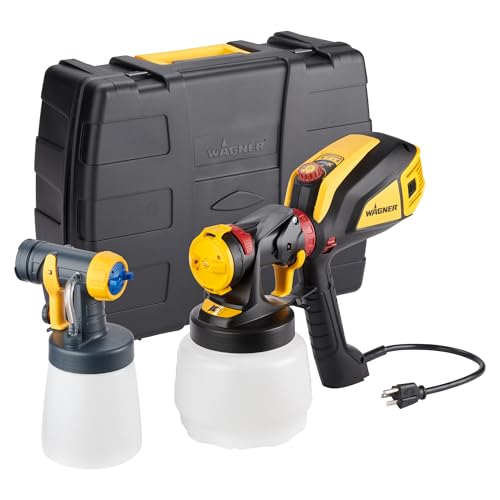
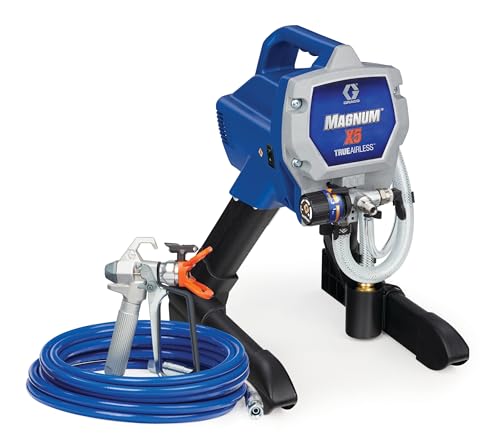
If this analysis ends in a purchase, the three tools it most often justifies are the Wagner FLEXiO 595 Handheld HVLP Paint Sprayer for alternating work, the HomeRight Finish Max for the furniture-only case, and the Graco Magnum X5 for property scale:
- Wagner FLEXiO 595 Handheld HVLP Paint Sprayer — the all-round case — Check on Amazon
- HomeRight Finish Max HVLP Paint Sprayer — the small-budget case — Check on Amazon
- Graco Magnum X5 Electric True Airless Paint Sprayer — the property case — Check on Amazon
Read the full guide ↓
Is a Paint Sprayer Worth It? An Honest Accounting
Is a paint sprayer worth it? The question deserves better than the two answers it usually gets — the enthusiast’s “absolutely” and the skeptic’s “just use a brush” — because the truth is an accounting identity: a sprayer is worth it exactly when the value of what it returns exceeds the full cost of owning it, and both sides of that ledger are computable for a given household. This page computes them. It prices the tool honestly — purchase, system, consumables, cleaning time, the learning curve’s tuition — and it prices the returns honestly: hours returned, contractor quotes avoided, finish quality that brushing cannot reach, furniture rescued instead of replaced, and projects actually finished instead of indefinitely deferred. It then runs the arithmetic on four household profiles and states, for each, a verdict with the numbers visible. The short version, for readers in a hurry: for any household that paints or finishes something most seasons, yes — usually within the first two or three projects. For the household with one project and no forecast, no — rent, borrow, or brush, and this page will show its work for that answer too. The framework generalizes the tier economics in Best Paint Sprayer Under $100 and the selection logic in Paint Sprayer Buying Guide.
In this guide
The Cost Side, Itemized Without Flinching
Honest accounting starts with everything the purchase actually commits. The tool itself spans the category’s tiers — from budget handhelds to stations — and should be entered at the tier the workload names, not the tier the marketing prefers. The system around it: respirator and cartridges, strainers in quantity, masking stock, a work light, storage — a real sum, roughly a fifth to a third of a mid-tier tool’s price, and the line item most first budgets omit. Consumables across ownership: tips and seals as wear dictates, filters, liners where the format uses them — small, recurring, and decisive for the decade view. Material inefficiency: spraying transfers most finish to the work, not all — HVLP keeps the loss modest, airless charges more — so a spraying household buys somewhat more finish per project than a brushing one, partially offset by thinner coats achieving coverage. Time costs that are real: setup and masking minutes, and cleaning minutes after every session, priced at whatever the household’s time is honestly worth. The tuition: the first season’s practice material and one forgiven project — the learning curve is short, but it is not free, and pretending otherwise is how worth-it analyses lose credibility. Entered whole, the first-year cost of a mid-tier household setup is a few hundred dollars all-in; the analysis now turns to what it buys.
The Return Side, Itemized Without Romance
Hours returned is the largest and most certain return. Spraying compresses application time by an order of magnitude on piece work and more on planes: the fence that brushes across two weekends sprays in a day including preparation; the cabinet set that brushes across a week of evenings sprays across a weekend. Households should price returned hours at their own honest rate — even at a conservative valuation, two or three medium projects return the entire first-year cost in time alone. Contractor quotes avoided is the second return, and it is priced in labor: professional finishing quotes are dominated by hours, so the household that sprays its own cabinets, rooms, or exterior captures the labor margin entire — a single kitchen’s professional quote typically exceeds the whole first-year ledger several times over. Finish quality is the third return, harder to price and impossible to dismiss: sprayed films are level, mark-free, and factory-even in a way brushing structurally cannot match, and the difference is visible daily on the furniture and doors a household lives with. Rescue economics is the fourth: the thrifted dresser, the inherited table, the curb-find chairs — pieces whose replacement cost dwarfs the finish that renews them, and which only get renewed when renewal is easy. Completion itself is the fifth and, in the record, the most underreported: households finish more projects when finishing is fast, and the value of a project done — the room actually renewed, the fence actually kept — exceeds the sum of its hours and quotes, because it is paid in daily life rather than in arithmetic.
Four Households, Four Verdicts
The occasional decorator — a room every few years, a piece of furniture occasionally: the ledger is close, and the honest verdict is only at the gentle tiers. A budget or mid-tier handheld, bought against a named project, returns its cost in that project’s hours and then waits, cheaply, for the next; a flagship bought for this rhythm is stranded capital. The active homeowner — seasonal projects, furniture in rotation, a fence on the property: the verdict is an unqualified yes, quickly — the mid-tier tool returns its full ledger inside the first year and then pays rent in hours for a decade. The renovator and the landlord — campaigns, rooms in sequence, gallons in the log: yes, trivially — the station-class tool is recovered inside the first property, and the question inverts to how the work was ever afforded without one. The one-project household — a single fence, a single room, no forecast beyond: no — rent the station for the weekend or borrow the handheld, finish the project beautifully, and let the forecast, if it ever changes, reopen the question. The four verdicts share one structure: the tool’s worth is the workload’s property, never the tool’s — a sentence this page regards as its entire thesis.
The Hidden Variables: Where the Arithmetic Usually Goes Wrong
Worth-it analyses fail in predictable places, and naming them protects the reader’s own computation. Preparation blindness: spraying does not delete preparation — sanding, masking, cleaning the surface — and analyses that credit the sprayer with the whole project’s time overstate its return by the prep share, which on some projects is the majority. The honest credit is the application phase only — and it is still, usually, decisive. Cleaning denial: the session’s quarter-hour is real, recurring, and belongs in the ledger at full price; analyses that omit it flatter the tool and betray the owner in month two. Quality double-counting: the finish’s beauty is a return, but it should be entered once — as satisfaction or as resale or as avoided professional cost — not as all three. The forecast fallacy: projecting a renovator’s workload onto a decorator’s life (or the reverse) corrupts every downstream figure; the forecast is the analysis, and it should be written from the household’s actual history, not its aspirations. Survivorship in reverse: the households for whom spraying failed are disproportionately those who skipped the curriculum — their outcomes price the skipping, not the spraying, and importing their verdicts into a disciplined buyer’s arithmetic is a category error this page declines to make.
The Alternatives, Priced as Competitors
A sprayer competes for the household’s finishing budget against three rivals, and worth-it means beating them, not merely existing. The brush and roller cost almost nothing, demand no system, and lose on time and finish in every comparison beyond the smallest job — their kingdom is the single chair and the touch-up, and inside it they remain, honestly, worth more than any sprayer. The aerosol can wins the true one-off — no cleanup, no system — and loses on unit cost, color range, and waste the moment a second can is opened; households should keep one for its kingdom and recognize the border when they cross it. The professional wins on ceiling and on the customer’s time entire, at labor prices that make the comparison absurd for recurring work and entirely rational for the single heirloom or the season with no weekends in it. The sprayer’s worth, stated against the field, is this: for recurring household finishing, it is the only option that is simultaneously fast, excellent, and cheap per project — and recurring is the load-bearing word in the sentence.
The Time Ledger in Detail: Where the Hours Actually Go
Since hours are the largest return, they deserve an audit rather than an adjective. Take the category’s reference project — a set of kitchen cabinet doors, the workload this series uses as its finesse benchmark. Brushed, the project runs: preparation (shared by both methods, and excluded from the comparison honestly), then application across primer and two topcoats with drying intervals, the brush work itself measured in evenings — doors laid out, each coat a session of careful, mark-managing labor, the total application time reaching well into double-digit hours for a full kitchen. Sprayed, the same coats are sessions measured in tens of minutes of trigger time, wrapped in setup, masking, and cleaning that add perhaps an hour across the whole project. The compression ratio — five-to-one or better on application — is not a marketing figure; it is the physics of a fan against a bristle, and it holds across the category’s workloads with the ratio widening as surfaces flatten and widen. The fence makes the same point at the other pole: brushing a hundred feet of pickets is a sentence; spraying it is a Saturday. Households should run their own reference project through both columns — the arithmetic takes minutes and settles the question more persuasively than any essay, including this one.
Quality as an Economic Quantity
Skeptics of the worth-it case usually concede the hours and contest the quality, so quality deserves its own economic treatment. A sprayed finish’s value enters the ledger through three doors, and the honest analyst picks one per project to avoid the double-counting this page warned against. The first door is replacement avoidance: the furniture, doors, and cabinets whose renewed finish defers a replacement purchase — here the return is the replacement’s price, amortized across the finish’s life, and it routinely dwarfs every other line. The second door is property value at the margin: kitchens and exteriors are the two surfaces buyers and appraisers actually read, and a sprayed-standard renewal in either is among the few household projects whose return at sale can exceed its cost — entered conservatively, as a fraction of the uplift, it still dominates the ledger for the selling household. The third door is daily use value: the unpriced, undeniable return of living with surfaces that look made rather than mended — real, recurring, and properly entered at whatever figure the household’s own honesty assigns, including zero for the reader who prefers hard numbers only. The quality case, in short, does not need romance: through any single door, honestly opened, it pays.
The Decade View: Worth-It Across Ownership’s Real Horizon
Most worth-it analyses stop at the first year, which is the tool’s worst year — the purchase, the system, and the tuition all land in it, while the returns have barely begun. The decade view reverses the picture. Across ten years of seasonal household use, the cost side grows only by consumables and the occasional wear part — a slow trickle against the first year’s flood — while the return side compounds: the fence re-stained twice more at a day each instead of a week, the furniture rotation renewed as fashion and children dictate, the rooms repainted at life events rather than at contractor availability, the rescued pieces accumulating into a household furnished substantially by renewal. Priced across the decade, even the occasional decorator’s gentle tool returns multiples of its ledger, and the active homeowner’s mid-tier purchase becomes, per finished project, one of the cheapest capabilities the household owns — cheaper per use than the ladder, the mower’s engine, or the drill, against which it is never asked to justify itself. The decade view also disciplines the purchase in the other direction: it is the horizon that makes support and parts (the majors’ infrastructure, weighed in Paint Sprayer Buying Guide) worth paying for, because a tool that dies in year three has consumed a first-year ledger and returned a fraction of a decade’s value.
When the Answer Flips: The Four Reversal Cases
An honest analysis names the conditions under which its verdict reverses, and the worth-it case has four. The forecast collapses: the renovator’s plans are cancelled by life — a move, a change, a season that never opens — and the tool’s returns evaporate with the workload; mitigation is the gentle tier for uncertain forecasts, whose small ledger survives a small workload. The discipline fails: the tool is bought but the curriculum and the cleaning are skipped, results disappoint, and the sprayer joins the shelf of resented equipment — the returns were real, but they were conditional, and the condition was the owner’s. The household’s time is priced at zero: for the retiree who enjoys brushing as the hobby itself, the hours “returned” are hours of pleasure removed, and the ledger honestly inverts — spraying is worth it only where time is a cost, and for some households it is a benefit. The work was professionals’ all along: the heirloom, the concours finish, the project whose standard is a master’s — here the sprayer was never the alternative, and pricing it against the professional’s quote was the original error. Each reversal is a workload or temperament fact, knowable in advance, which is the analysis’s final gift: the worth-it question can be answered before the purchase, by the household, with this page’s ledger and their own three lines of forecast — the same three lines that open How To Choose A Paint Sprayer.
Case Files: Three Households From the Record
Composite cases, drawn from the patterns this series’ guides keep meeting, put faces on the arithmetic. The fence household: a quarter-acre lot, a long fence line, a quote for professional staining that priced like a vacation. They bought a mid-tier handheld against the quote’s evidence, sprayed the fence in a weekend — preparation included — and entered the tool as paid-in-full on the first project’s Sunday. Six years on, the same tool has re-stained the fence once more, renewed the deck furniture twice, and sprayed a nursery; its ledger, against quotes alone, stands at several multiples of its cost, and its owner describes it, in the record’s recurring phrase, as the tool that made the house affordable to keep beautiful. The furniture household: a refinisher’s hobby that became a small income — thrifted pieces renewed and sold. Her ledger runs through the rescue door: each piece’s margin is the sprayer’s return, priced weekly, and the flagship she upgraded to in year two was purchased out of the first tool’s earnings, which is the worth-it case in its purest commercial form. The cautionary household: a flagship station bought for a renovation that life postponed; two years idle, sold at a loss that the gentle tier would have shrunk to a shrug. Their case is in this page deliberately — the analysis’s discipline (tier matched to forecast’s certainty, not its size) exists because of households exactly like them, whose error was not buying but believing a forecast they had not written down.
The Environmental and Social Ledger
A complete accounting includes the lines that never reach a receipt. Spraying’s material losses are its environmental debit — overspray is finish that becomes waste — entered honestly, with HVLP’s efficiency as the mitigating choice for the household that weights it. Against it stand the credits: furniture rescued is furniture not landfilled and not manufactured; finishes renewed extend the service life of everything they coat, from fences to cabinets, deferring replacement’s full footprint; and waterborne materials, which the modern category sprays best, have lowered the chemistry’s burden across the board. The social ledger is smaller and real: skills compound in households that make things, tools get lent and knowledge with them, and the neighborhood’s standard quietly rises when one house keeps its fence honest. None of these lines will decide a purchase against the arithmetic of hours and quotes — but an analysis that omits them has understated the case it was built to test, and this page’s standard is the whole ledger or none.
The Psychology of the Payback: Why Owners Feel It Before the Math Proves It
Owners consistently report a sprayer “worth it” earlier than the ledger justifies, and the gap is instructive rather than irrational. The first sprayed project delivers its return in a currency the arithmetic omits: the experience of a finish that looks manufactured, produced by one’s own hand, in an afternoon. That experience reprices the household’s sense of the possible — projects previously filed under “someday” or “professional” migrate to “weekend” — and the migration itself is a return, because the deferred project’s value was being lost continuously, in the daily sight of the worn fence and the dated cabinets, at a rate no one itemized. Psychologists of the household would call it an option value: the tool buys the standing ability to renew any surface in the home at marginal cost, and options are worth something even in the seasons they go unexercised — as the ladder and the generator are worth their shelf space in the years they merely stand ready. The honest analysis acknowledges the option value without leaning on it: it explains the owners’ early verdicts, it justifies keeping a paid-off tool through a quiet year, and it stops well short of justifying a purchase on its own — options, like tools, are worth buying only when the underlying is real.
Worth It, Tier by Tier: A Compressed Verdict
The analysis compresses, finally, into the tier map the series’ readers navigate by. At the budget tier, worth-it is nearly unconditional for any named project: the ledger is so small that a single fence or furniture set closes it, and the tier’s real question is not worth but fit. At the middle tier — the household standard of Best Paint Sprayer For Home Use Under $100 — worth-it is the seasonal household’s arithmetic: two to four projects to payback, a decade of rent thereafter, and the strongest case in the category. At the flagship tier, worth-it becomes conditional in the interesting way: the capabilities (unthinned latex, airless pace, documented pressure) must be invoiced by name, because the premium prices them individually — the buyer who invokes two of the three is whole, the buyer who invokes none has purchased a monument. And at the station tier, worth-it is a duty calculation, gallons against rating, the most actuarial verdict in the series. The compression’s lesson is the page’s thesis at reading distance: there is no tier at which the answer is automatic, and no household for which it is unknowable — the ledger, honestly kept, always knows.
What “Worth It” Misses: The Capability Itself
Every ledger has a line it cannot price, and intellectual honesty requires naming it rather than smuggling it. A household that can spray possesses a capability that reorganizes its relationship to its own environment: surfaces stop being fixed facts and become choices. The dated bathroom vanity is a weekend, not a budget line; the child’s outgrown furniture is next year’s color, not a listing to sell; the house’s exterior is a standard to keep, not a decline to watch. Owners describe this shift with a consistency that suggests it is the purchase’s deepest return — deeper than hours, because it operates in the seasons between projects, as a standing sense that the home is maintainable by its own people. The analysis cannot price it, and this page will not pretend to; it enters the ledger as the final line, marked unquantified, available to any reader whose own experience of ownership tells them what such things are worth. Analyses that omit the line are not wrong, exactly — they are merely incomplete in the direction of understatement, which is the safer direction for a buying guide to err, and the reason this page’s affirmative verdicts can be trusted where they land.
The Skeptic’s Strongest Case, Answered in Good Faith
The worth-it case deserves its strongest opposition stated fairly, because a verdict that survives it is worth more than one that never met it. The skeptic argues: most sprayers are used twice and shelved; the finish a household actually needs is achievable with a good brush and patience; the system’s true cost — storage, maintenance, the mental rent of another machine — never appears in the enthusiasts’ arithmetic; and the projects themselves are often vanity, manufactured by the tool’s presence rather than demanded by the house. Each point lands somewhere real. Shelved sprayers exist in legion — and this page has priced their cause precisely: forecasts unwritten, tiers mismatched, curricula skipped, which are failures of the purchase process the analysis exists to correct, not evidence about the tool. The brush’s adequacy is conceded for the work the brush’s kingdom covers, and the kingdom is smaller than the skeptic’s nostalgia paints it — the cabinet door in raking light is the standing refutation. The mental rent is real and belongs in the ledger, where this page’s system line quietly includes it. And the vanity charge inverts on inspection: the projects were always there — the fence was always weathering — and the tool’s presence did not manufacture them but merely made their doing affordable. The skeptic’s case, fully answered, reduces to a discipline the analysis already teaches: buy against a written forecast, at the matched tier, with the curriculum run. A household that does those three things is not the skeptic’s cautionary tale; it is the case file’s first household, six years in, describing the fence.
Running Your Own Numbers: A Worksheet in Prose
The page’s method, finally, should be portable, so here is the worksheet a household can run in fifteen minutes with a pencil. Line one: the tool, at the tier your workload names — write the tier’s typical figure, not a specific listing’s, because the analysis should survive price motion. Line two: the system, at a quarter of line one for a handheld setup, a third for a station’s. Line three: the first year’s consumables and the tuition — a modest figure, entered generously, because analyses die of optimism in this line. The cost side is done; it is smaller than its reputation. Line four: your next three named projects, each priced two ways — your hours by hand at your honest rate, and the professional quote if one exists or can be estimated from the labor share. Line five: the sprayed hours for the same projects, at a fifth of the hand figure for application, plus setup and cleaning at full count. The difference between lines four and five, summed across three projects, is the payback test: if it exceeds lines one through three, the purchase is worth it on time alone, and every other return in this page is surplus. If it does not, extend the worksheet to the decade’s project list before concluding — the horizon matters, as the decade view showed — and if it still does not close, the analysis has done its other job, and the rental yard has your weekend ready.
The Verdict’s Shelf Life: When to Recompute
Worth-it is a computation with a date, and households should know when to rerun it. Recompute when the forecast changes materially — a house bought or sold, a hobby born or retired, a landlord’s portfolio grown — because the workload is the analysis’s engine and a new engine wants a new answer. Recompute when the tool ages into its second half, and the question inverts from “was it worth buying” to “is it worth keeping, repairing, or replacing” — a computation the parts ledger and the log answer with unusual clarity, since a maintained tool’s keeping cost is its consumables while its returns continue at the first year’s rate. And recompute, once, after the first season regardless: the household’s own hours, honestly logged, replace every estimate in this page with evidence, and the second year’s decisions — the second tool, the tier step, the campaign schedule — deserve evidence rather than inheritance. The worth-it question, treated this way, stops being a purchase’s gate and becomes an ownership practice: the habit of pricing one’s tools against one’s work, which is the habit that separates households that accumulate equipment from households that accumulate capability.
Secondhand and Hand-Me-Down: The Worth-It Shortcut
One route rewrites the ledger so completely that it deserves its own section: acquiring the tool used. The majors’ sprayers hold their function and their parts support across owners, which makes the secondhand market the worth-it analysis’s cheat code — a mid-tier tool at a fraction of its first price, with its decade largely intact, collapses the payback to a single project for almost any workload above the trivial. The route’s disciplines are the ones this series teaches for used tools generally: inspect the fluid path (the tool’s biography is written there), water-test before money moves, price the immediate wear parts into the offer, and prefer the seller who kept the log and the manual, because they are selling a system rather than a mystery. Inherited tools run the same logic at zero acquisition: the father’s turbine, the neighbor’s downsizing gift — their ledgers begin at the system line only, and their worth-it verdicts are affirmative at workloads that would never justify a purchase. The analysis’s completeness requires the section because real households acquire tools through all these channels, and a framework that only prices the retail shelf understates how often, in practice, the answer comes out yes.
The Community Return: Skills, Lending, and the Household’s Standing
The final unpriced line is social, and it is larger than it looks. A spraying household becomes, within a season or two, a node in its street’s informal economy: the tool is borrowed, the knowledge is borrowed more, and the favors bank in the currency neighborhoods actually run on. The skill itself compounds socially — the teenager who learns finishing at home carries a trade-grade competence into their own first household, an intergenerational transfer that no ledger in this page has attempted to price and that owners, asked decades later, rank among the purchase’s real returns. Even the tool’s mere presence disciplines the household’s other decisions: furniture is bought with an eye to refinishability, houses are evaluated partly by their sprayable bones, and the standard of what counts as “worn out” quietly rises, because renewal is cheap when you own the means of it. These are not the reasons to buy — the arithmetic must close first, and this page has insisted on its order throughout — but they are the reasons owners give, unprompted, when the arithmetic is long settled, and an analysis that aspires to completeness should record them in their place: last, unquantified, and real.
The Answer, Restated for the Reader Who Skipped to the End
Every long analysis owes its skimmers a faithful compression, and here is this page’s. A paint sprayer is worth it when the household’s finishing workload is recurring — something most seasons, priced in hours or in quotes — because the tool’s entire first-year ledger is typically recovered inside the first two to four projects, after which the returns continue for a decade against a trickle of consumables. It is not worth it when the workload is a single project with no forecast, because rental and borrowing deliver the same finish without the ownership. Between those poles, the answer is computed, not guessed: the tool at the workload’s tier, the system at a fraction again, the returns at the household’s honest price for its own hours. The three instruments this analysis most often justifies — a flagship handheld for the alternating household, a gentle finesse tool for the furniture household, a station for the property household — are named in the recommendation above, and the tiers between them are mapped across this series for every shade of forecast. What the page asks, in exchange for its arithmetic, is only that the reader run their own before buying in either direction: the enthusiasts and the skeptics are both selling a universal answer, and the truth, as it usually does in a household’s economy, has your address on it specifically.
There is a final, quieter sense in which the question answers itself over time, and the page will end on it because every owner in the record eventually arrives there. Ask a household in its first season whether the sprayer was worth it and they will show you a ledger. Ask them in the fifth year and they will show you the house — the fence standing honest in its stain, the cabinets level in the kitchen light, the rooms renewed at the rhythm of the family’s life rather than the contractor’s calendar — and the ledger will not be mentioned, because it closed long ago and something better replaced it: the standing knowledge that the surfaces of their home are theirs to command. Priced against that, the tool was never really the question. The question was whether the household would finish things — and for the households that do, the sprayer is not merely worth it. It is, within a season or two, simply how things get finished.
Frequently Asked Questions
How many projects does a sprayer take to pay for itself?
At mid-tier prices with the system included, typically two to four medium projects priced in returned hours alone — a fence, a cabinet set, a room or two — and a single project if the alternative was a professional quote. The exact count is the household’s arithmetic to run with this page’s ledger; beware any source that gives a universal number, because the inputs (project size, time’s value, tier chosen) are the household’s own.
Is a cheap sprayer worth it, or only the good ones?
Cheap sprayers are worth it for cheap workloads — a season of chairs, a fence, an experiment in whether spraying suits the household — because their economics forgive both outcomes, outgrown or abandoned. They fail the worth-it test when asked to serve a decade or a campaign, where their support and durability deficits convert the saving into a second purchase. Match the tier to the forecast and both answers are yes; mismatch them and both are no.
Does spraying use more paint than brushing?
Somewhat more, yes — transfer losses are real, modest for HVLP and larger for airless, and the honest ledger in this page charges them. The offset is thinner, more even coats achieving coverage and durability, plus the labor arithmetic that dwarfs the material line in every realistic household computation. Buyers for whom material cost dominates — production shops on expensive coatings — run the numbers in Paint Sprayer Pros And Cons with their own figures.
What if I buy one and hate spraying?
Then the experiment’s cost is the lesson, and the tiers exist to price it kindly: a gentle-tier tool, bought against a named project that needed doing anyway, leaves the household with a finished project and a small, sellable asset. The outcome to avoid is the flagship bought on speculated enthusiasm — which is why this page, like the whole series, keeps returning the reader to the forecast before the purchase.

Is renting better than buying for a whole-house exterior?
For a genuinely once-a-decade exterior with no other spraying in the forecast, yes — rental converts the station’s cost into a weekend’s fee and returns the storage problem to the rental yard. The crossover arrives with the second campaign or the first interior project added to the list, at which point ownership’s arithmetic takes over. The honest household counts its campaigns before choosing, not after.
Final Recommendation
Run your own ledger with this page’s line items — tool at the workload’s tier, system at a fifth to a third again, consumables and cleaning priced honestly, returns counted in hours and avoided quotes at your own rates — and the answer will compute itself. For the great majority of households that finish things seasonally, it computes to yes, quickly and then continuously; the recommended instruments for the three common cases are the Wagner FLEXiO 595 for alternating work, the HomeRight Finish Max for the furniture case, and the Graco Magnum X5 for the property case. And for the household whose ledger honestly computes to no, this page’s recommendation is equally firm: rent, borrow, or brush without a backward glance — the worth-it question, answered honestly in either direction, has done its job.
One practical footnote for the household whose answer is yes: buy the tool a season early rather than a project late. The curriculum — the water session, the test boards, the forgiving first piece — wants a month of low stakes before the fence or the cabinets arrive on a deadline, and households that grant it enter their first real project with the tuition already paid and the ledger already turning. The analysis’s numbers assumed a competent operator; the season of grace is how the operator becomes one, and it costs nothing but calendar, which is the cheapest input in this entire computation.
And a matching footnote for the household whose answer is no, offered without any attempt to reverse it: the project that prompted the question still deserves a good finish. Rent the station for the exterior, borrow the handheld for the fence, hire the professional for the heirloom — and keep the worksheet. Forecasts change, houses change, and the household that ran its numbers honestly once will recognize, without any guide’s prompting, the season when the answer changes with them.
That, finally, is the spirit in which the whole question should be held: not as a verdict on a product, but as a household’s periodic act of self-knowledge — an honest look at the work it actually does, the hours it actually has, and the standard it actually wants to live inside. The sprayer is only ever the instrument of those three facts. Households that know them buy well in every category, spraying included; households that are still learning them could do far worse than to start the education here, with a pencil, a worksheet, and a fence that has been waiting, patiently, for its answer.
Run the numbers, then — not the internet’s, not a neighbor’s, not this page’s composites, but yours, in your own hand, against your own fence and your own calendar. Whatever they say, believe them. They are the only review of this purchase that will still matter in ten years, because they are the only one that was ever really about your house.
And when the numbers say yes — as, for most finishing households, they honestly will — buy the matched tool without lingering, equip its system in the same trip, and go finish something. The ledger will take care of itself from there, one returned weekend at a time.
The first of those weekends is closer than the analysis makes it sound: a Saturday, a fence, a tool that finally asks nothing of you but the work — and a household discovering, by Sunday evening, that the question has quietly answered itself.
That is worth it, by any honest household’s arithmetic, anywhere.