Disclosure: As an Amazon Associate, umtsmarttool.com earns from qualifying purchases. Links on this page are affiliate links; they cost you nothing extra. Prices and availability change often, so check the current Amazon listing before you buy.
The fastest way to sort levoit air purifier problems is to ask when the problem appeared, because Levoit’s machines fail — when they fail at all — on a schedule set by their design. Problems in the first hour are almost always setup problems, and the most famous of them involves a sheet of plastic. Problems in the first month are placement and expectation problems. Problems that arrive with a filter change are consumable problems, including the ones caused by the new filter itself. And problems that creep in across a year are the ordinary physics of a fan pulling air through a loading cartridge, wearing Levoit’s badge but obeying the same laws as every machine in our Honeywell air purifier problems guide. This article works through Levoit’s range — the Core series that fills most bedrooms, the Vital series, and the smart S models with their sensors and app — in that chronological order, so you can enter at the age of your machine and find your symptom described in the company of its real causes.
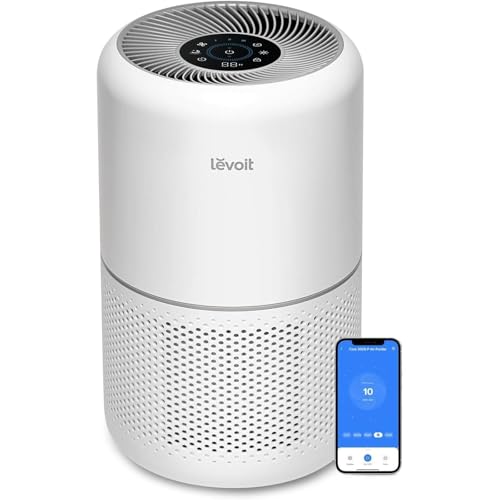
Levoit’s design language differs from the older tower brands in ways that shape its problem list. Most of its machines use a single cylindrical or rectangular cartridge combining pre-filter, HEPA media and activated carbon in one replaceable unit, drawn or pushed by a fan in a compact cabinet, with touch panels rather than knobs and, on the S models, a laser particle sensor driving an automatic mode. Fewer separate parts means fewer fitment problems than the staged-filter brands — and a sharper dependence on the one cartridge being genuine, correctly seated, and, before anything else, unwrapped.
Key Takeaways
- New machine, no airflow improvement, faint plastic smell? Check whether the cartridge’s protective plastic wrapping was removed — the classic first-hour Levoit problem.
- The red filter light is a timer with a reset procedure, not a measurement; judge the cartridge by airflow, noise and odour.
- Smart-model weirdness — speeds that surge, auto mode that seems haunted — usually traces to the particle sensor’s lens or to placement near a source of steam or dust.
- One cartridge does everything, so one cartridge explains most declines: when in doubt, the cartridge is the first suspect and the cheapest test.
- App and Wi-Fi complaints are real but separate from air cleaning; a machine that will not connect may still clean perfectly on its panel controls.
In this guide
First Hour Problems: The Machine Is New and Something Is Wrong
Begin with the legend, because it is true and it is common: Levoit ships many of its cartridges sealed in plastic inside the machine, and a remarkable number of owners install the purifier, admire its quiet hum, and filter nothing at all for days because the cartridge is still wearing its bag. The symptoms are a faint warm-plastic smell, a machine that sounds healthy, and air that stubbornly refuses to improve. The cure takes ninety seconds: unplug, open the cabinet by the model’s method, lift the cartridge out, remove every trace of wrapping, and refit. If you take one fact from this article, take that one — and if you are reading before your machine arrives, you have just been saved the most embarrassingly common support call in the category.
The second first-hour problem is the door or base that will not quite close, holding the machine in a refusal to start or an intermittent cut-out as it warms. On the cylindrical Core models the cartridge seats into the base with a definite engagement; a cartridge resting a few millimetres high leaves the cabinet stressed and the safety switch unconvinced. Remove, reseat with attention to the alignment the moulding suggests, and close the unit on a hard, flat surface rather than in your lap. The third is transport damage and its counterfeit: a machine that rattles from its first switch-on may have a fan unseated by a drop, but may equally have a piece of packaging foam still lodged in the outlet path. Inspect the full air path with a torch before concluding anything about the motor.
Finally, the first-hour expectation problem: a new machine judged within twenty minutes in an open room. Purifiers are slow instruments whose effect accumulates across hours of closed-door running; a bedroom machine should be judged the following morning, by dust on a dark surface and by the room’s smell on entry, not by holding a hand over the outlet and hoping to feel cleanliness. Owners who calibrate that expectation in the first hour rarely develop the suspicion — corrosive to every later judgement — that the machine does nothing at all.
First Month Problems: Placement, Noise Character and the Sensor’s Education
The commonest first-month complaint is noise, and on Levoit machines it divides into the honest kind and the diagnostic kind. The honest kind is expectation: the highest speeds on compact machines move serious air through a small cabinet, and they sound like it. Judge the machine at the speed you will sleep beside — the sleep mode on Core models is engineered to a genuinely low level — and treat turbo as an event tool, for the cooking disaster and the dust storm, rather than as the machine’s personality. The diagnostic kind is a tonal change: a whine, a periodic surge, a rattle at one speed. Those belong to seating, surface and debris, in that order, and the filters-out test from our general troubleshooting method applies unchanged: one minute, filters removed, listen for whether the character survives.
Placement problems announce themselves more subtly in the first month: the machine that cleans the two feet around itself and no more, because it was installed inside a furniture arrangement; the sensor model that surges every evening at bath time, because steam reads to a particle sensor like an invasion; the bedroom unit exiled to a corridor by a partner’s noise sensitivity, cleaning the corridor beautifully. Each is a room problem wearing a machine’s face. Give the unit clear space on all sides, keep it in the room it serves with the door mostly closed, and site sensor models away from bathrooms, humidifiers and the direct line of a hob — the sensor is diligent, and diligence aimed at steam is wasted.
Smart-model owners meet a third first-month family: connectivity. A machine that will not join the Wi-Fi, drops from the app, or answers voice commands intermittently is usually negotiating with a router rather than failing — these models generally prefer the common 2.4 GHz band, struggle with some mesh handovers, and dislike being at the fringe of coverage. The air-cleaning machine underneath the connectivity is unaffected, and the panel controls remain the authority. Treat app problems as a separate, lower-priority project, solved by router placement and band settings, and never let them convince you the purifier itself is broken: unplug the question, run the machine from its panel for a week, and judge the air on its merits.
Filter-Change Problems: The Red Light, the New Cartridge and the Reset
Levoit’s filter indicator is a countdown, and the problems around it are procedural. The light that glows red weeks after a change was not reset at the change — the reset is a deliberate button sequence on most models, detailed in the manual, and the machine cannot detect a new cartridge by itself. The light that demands a change implausibly early in a clean household is the same timer being conservative; the light that stays dark over a grey, labouring cartridge in a dusty one is the timer being optimistic. In all three cases the cartridge’s own evidence outranks the lamp: airflow at the outlet, the fan’s tone, odour breakthrough, and the pleats’ colour against a white surface.
The new cartridge itself causes a recognisable trio of problems. First, the compatible cartridge that fits almost — a whisper of bypass at the seal, a door that needs force, performance that never matches the old genuine one’s last month, let alone its first. The reference swap is the test: one genuine cartridge, run for a week, settles whether the machine or the part is at fault, and it is cheaper than the alternative diagnosis, which is replacing the machine. Second, the genuine cartridge installed with its packaging or its orientation wrong — some cartridges are directional in effect if not in labelling, and a pre-filter layer facing the wrong way ages in days. Third, the aroma and specialty variants: scented or pet-specific cartridges change the carbon blend, and a household that switches variants and notices different odour behaviour has changed the consumable, not broken the machine.
When a cartridge genuinely is spent, fit the genuine article for the Core installed base — the reference part against which all the judgements above are made:

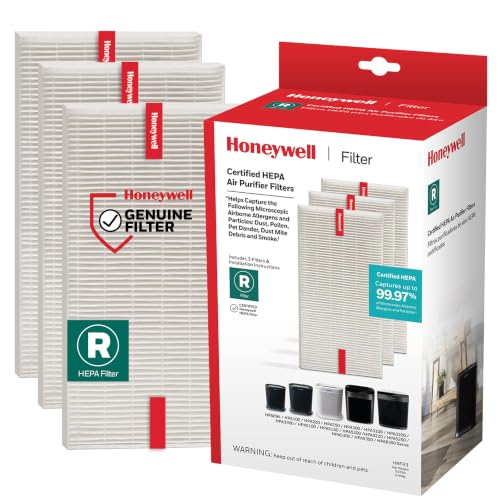
Genuine Levoit Core 300-P Replacement Filter (Core 300-RF)
The known-good cartridge for the Core 300 family. When a Core machine’s behaviour is in question, this is the cartridge that removes the cartridge from the list of suspects.
- Format: 3-in-1 cartridge — pre-filter, HEPA media, activated carbon
- Fit: Core 300, Core 300S and Core P350 models
- Role in this guide: the reference swap for diagnosing compatible-cartridge problems
Strengths
- Seals and dimensions exactly as the cabinet was designed around
- AHAM-verified programme lineage for the Core platform
- Removes all doubt from a diagnosis in one change
Trade-offs
- Priced above the compatible crowd it is used to judge
- Combined format means carbon and HEPA retire together
- One cartridge is a diagnostic expense if the machine proves to be the fault
Best for: Core owners whose machine declined after a filter change or whose cartridge is due. Not suited for: Vital-series machines, which use their own format. Check price on Amazon
One-Year Problems: The Slow Physics of a Loading Cartridge
Across a year, a Levoit machine’s problems become the category’s universal ones, arriving in a predictable order. First the pre-filter layer mats with hair and lint, especially in pet households, and the machine’s tone rises almost imperceptibly — the sound of a fan beginning to work for its air. The cartridge’s outer layer can be vacuumed, and on a monthly rhythm that single habit defers everything downstream. Then the carbon approaches saturation in cooking-heavy or pet-heavy homes, and odour control fades while dust control holds — the signature, described in our do air purifiers help with bad smells explainer, of a consumable expiring on schedule rather than a machine failing early.
Then, if the cartridge is pushed beyond its life, the compound symptoms arrive together: airflow down, noise up, dust returning to surfaces, and an owner concluding that the machine has “lost power”. It has not; it has lost its filter, which is a different and much cheaper bereavement. The discipline that prevents the whole sequence is a rhythm rather than a date: vacuum the cartridge’s exterior monthly, run the odour test quarterly, and let the machine’s behaviour — not the lamp, not the calendar — call the change. Households in the best air purifiers for pets pattern should expect the rhythm to run faster and budget accordingly, without resentment: the cartridge is doing, visibly, the job it was bought for.
One Levoit-specific year-mark deserves its own note: the touch panel. Capacitive panels on compact machines can grow less responsive in steamy or greasy environments, and a panel that needs a firmer or repeated touch is usually wearing a film rather than failing. A wipe with a barely damp cloth, power off, restores most of them. A panel that lights but does not respond in one region, or that activates itself in an empty room, has crossed from housekeeping into fault — and a machine still in warranty should be described to the manufacturer in exactly those terms, with a video, before any other spending.
Smart-Model Problems in Depth: Sensors, Auto Mode and Strange Surges
The S models — Core 300S, Core 400S, Vital 200S and their kin — add a particle sensor and an automatic mode, and with them a family of behaviours that alarm owners unnecessarily. A machine that surges to high speed when a door opens, when bedding is shaken, when a candle is lit or when the shower runs is not malfunctioning; it is reporting, accurately, that the air changed. The surge is the feature. What deserves suspicion is a machine that lives at high speed in a quiet, closed room — that pattern points to a fouled sensor lens reading its own dust as the room’s, or to a continuous source the owner has not found: a scented candle’s perpetual plume, an ultrasonic humidifier’s mineral mist, a litter tray’s ambient contribution.
The sensor lens, where the manual shows its location, cleans with a dry cotton bud and thirty seconds of patience; it is the cheapest fix in this entire article after the plastic wrapping. Humidifier placement is the second fix: mineral mist from an ultrasonic humidifier is, to a particle sensor, indistinguishable from pollution, and two appliances can spend years arguing with each other across a bedroom — the purifier surging against the humidifier’s output, the owner convinced both are broken. Separate them by rooms or by metres, and the argument ends. Our review of the sensor-driven end of the range in best air purifiers discusses which households genuinely benefit from automation and which are buying a referee for a match they do not play.
Display and app disagreements form the last smart family: the machine’s screen, the app’s figure and a cheap standalone monitor giving three different accounts of the room. None of them is lying in a way that matters — they sample different air, at different heights, with different sensitivities, and the numbers are indices rather than laboratory readings. Judge the machine by trends and by the room’s evidence, not by decimal places. A household that wants a referee should place the purifier’s own display at the centre of its trust, because that is the sensor the machine itself obeys.
When the Machine Is the Problem: Retirement Signs and Successors
Levoit machines retire the way all small fan appliances retire: a motor that growls or wobbles with the cartridge removed, power that interrupts, a panel that dies by regions, or a cabinet cracked enough to unseal the air path. The filters-out test remains the court of appeal — one minute, empty cabinet, and a healthy motor’s smooth sound acquits everything downstream. When the verdict is replacement, the current range maps cleanly onto the old: the Core 300 remains the bedroom reference, the Core 400S its smart larger sibling, and the Vital 200S the family’s answer for big rooms with pet ambitions.

Levoit Core 300
The current form of the bedroom staple: single 3-in-1 cartridge, sleep mode engineered for night use, and the simplest ownership pattern in the range. Check price on Amazon
- Strengths: predictable consumable; compact; vast filter availability
- Trade-offs: no sensor automation; modest room ceiling
Best for: replacing a retired small-room machine like for like. Not suited for: open-plan spaces.

Levoit Core 400S
The smart step up, manufacturer-rated for large rooms, whose auto mode converts the sensor problems described above into the sensor benefits they were designed to be. Check price on Amazon
- Strengths: automation that spares filter and electricity; air-quality display
- Trade-offs: larger cartridge cost; connectivity is one more thing to maintain
Best for: living rooms where the machine runs daily for years. Not suited for: buyers who distrust automation on principle.

Levoit Vital 200S
The large-room, pet-oriented sibling, manufacturer-rated for very large spaces, with a washable pre-filter layer that suits the hair-heavy households whose cartridges age fastest. Check price on Amazon
- Strengths: washable pre-filter extends cartridge life; serious coverage headroom
- Trade-offs: a bigger cabinet and a bigger consumable when the day comes
Best for: pet households replacing a mid-size machine. Not suited for: small bedrooms. Households cross-shopping the other big troubleshooting brands will find parallel guidance in Alen air purifier problems and Dyson air purifier problems.
A Levoit Maintenance Rhythm, Tuned by Model Family
Monthly, for every model: vacuum the cartridge’s exterior or the washable pre-filter, wipe the intake, and glance at the cabinet’s seating. Quarterly: the odour test, the sensor-lens wipe on smart models, and an honest listen — record the machine’s sound on your phone each quarter and you own a diagnostic archive no memory can fake. At cartridge change: unwrapped, seated, reset performed, date written on the frame. That is the whole liturgy, and it prevents — by the estimate of every symptom in this article — the overwhelming majority of Levoit problems from ever being experienced as problems. What remains after the liturgy is a short list of genuine faults, each with a clear next step: warranty conversation while the warranty lives, and a successor from the same range when it does not, chosen by room size from best air purifiers for bedroom or budget air purifiers as the household’s pattern dictates.
One refinement for multi-machine households: stagger the rhythms. Cartridges that all fall due in the same month create a single expensive, annoying weekend and a temptation to defer — and deferred cartridges are how the slow-physics symptoms get their start. Bought and changed on staggered cycles, the fleet’s maintenance becomes a small monthly constant, each machine’s sound recording joins a growing archive, and no room in the house ever hosts a machine running on a bank it should have retired in spring. Fleet owners should also keep one genuine spare cartridge per format in the house; the spare converts a midnight red light from a crisis into a five-minute task, and it guarantees that the reference swap — this article’s master diagnostic — is always available on the day it is needed.
The Older LV Models: H132 and H134 Ownership Notes
Many Levoit problems reported today belong not to the current Core line but to the long-serving LV-H132 desktop and the LV-H134 tower, machines with enormous installed bases and their own habits. The H132’s compact cartridge loads quickly in dusty rooms precisely because it is small — its owners meet the slow-physics symptoms of the previous sections on a compressed schedule, and should run the monthly vacuum rhythm without exception. Its night-light and single-button simplicity also mean fewer panel problems, a fair trade across a long life. Our dedicated Levoit LV-H132 air purifier review covers that machine on its own terms.
The H134 tower adds height, a larger cartridge and a more ambitious airflow claim, and its characteristic complaint is the gap between the room it was bought for and the room its owner later moved it to. Towers invite relocation — they look at home anywhere — and each relocation deserves the sizing question asked afresh. Its filter availability remains good through the genuine channel, which is the main reason these older machines stay worth maintaining; the day a model’s genuine cartridge disappears is the day its remaining life should be priced as finite. The companion Levoit LV-H134 air purifier review assesses whether that day is near for the H134 and what its owners should plan.
Smells, Aroma Pads and the New-Cartridge Week
A new Levoit cartridge can carry a faint, sweetish manufacturing smell for its first days of running — carbon and media settling in — and the correct response is ventilation and patience: run the machine in the room with a window open for the first sessions if the smell bothers you, and judge it at a week, not an hour. A smell that strengthens, turns chemical-hot, or arrives with any electrical character is a different matter entirely and belongs to the stop-and-unplug family described in every troubleshooting guide we publish. Between those poles sits the aroma feature: several Levoit models include a fragrance pad or sponge near the outlet, and a machine that suddenly smells strongly of a scent nobody remembers adding usually has an old, saturated pad announcing itself. Remove it, run the machine clean for a day, and let the room reset before blaming the cartridge.
Essential oils deserve a caution of their own: oils belong on the designated pad only, never in the cartridge, never on the pre-filter, and households with birds or small pets should research any scent before using the feature at all — the purifier will distribute whatever it is given with great efficiency. A machine whose odour problems began the week a scented routine began has told you its diagnosis plainly, and the cure is subtraction.
Households With Children: Locks, Tip-Overs and Curious Fingers
A compact purifier at floor level is, to a toddler, furniture with buttons that light up. The child-lock on equipped models exists for exactly this and should be engaged before it is needed; a machine whose settings change mysteriously in a house with small children is usually being reprogrammed at knee height. Tip-over behaviour matters too: a machine knocked flat may stop — by design on models with tilt switches — or may run oddly with its cartridge shifted. After any fall, reseat the cartridge and run the filters-out listen before assuming damage. And the intake grille’s fascination for small fingers and deposited toys makes the monthly inspection, in such households, a retrieval exercise as often as a cleaning one: the rattle that began on Tuesday is frequently a crayon keeping time with the fan.
None of this is a defect in the machines; it is the ordinary physics of sharing a home. The households that fare best treat the purifier’s placement as a small act of interior strategy — out of the toddler’s main circuit, clear of the teenager’s laundry volcano, within the room it serves — and revisit that placement as the household changes, which it does faster than any filter wears out.
Blinking, Beeping and Other Small Signals
Levoit machines communicate in a limited vocabulary: indicator lamps, panel icons, occasional beeps on some models. Without inventing codes the manuals own, the reading method is consistent. A signal that appears with a behaviour change — noise, airflow, smell — is describing that change’s family, and the sections above, entered by the machine’s age, will contain it. A signal that appears alone, with the machine performing perfectly, is usually procedural: a reset owed, a lock engaged, a timer expiring. The manual’s signal table, consulted with the machine’s age in mind, resolves those in minutes. The error is treating every lamp as an emergency or every lamp as a lie; the lamp is a sentence in a small language, and this article has been, in large part, a grammar for it.
Keep the manual. That sounds too simple to print, and yet the single commonest reason a Levoit problem becomes a Levoit saga is that the reset sequence, the sensor location and the signal table live in a booklet that left the house with the box. Photograph its key pages on the day the machine arrives. Future you, standing in front of a red light at midnight, will be grateful with an intensity out of all proportion to the effort.
Three Households, Three Problems, Worked End to End
The first household’s Core 300S surged every evening at seven and fell silent by nine, and its owners had begun to distrust the sensor entirely. The pattern’s clockwork regularity was the clue: seven o’clock was bath time, and the machine stood in the hall outside the bathroom, drinking steam twice a day and reporting it faithfully. Relocated into the bedroom it served, away from the bathroom door, it became the calmest appliance in the house within a day. The lesson generalises beyond Levoit: a sensor machine’s behaviour is a diary of its placement, and reading the diary by the clock usually finds the entry that matters.
The second household’s Vital machine lost its odour control in its second winter while its dust control stayed strong, and the owner — who had read enough to fear a failing machine — priced a replacement before performing the odour test. The cartridge’s carbon had saturated on a winter of closed windows and nightly cooking; the HEPA media behind it was still pale and serviceable. The combined cartridge had to be replaced whole, which is the format’s honest trade-off, but the machine was acquitted, the replacement cartridge restored the kitchen’s evenings, and the owner’s rhythm changed: a mid-winter odour test is now a calendar entry, performed before the carbon’s failure can masquerade as the machine’s.
The third household inherited a Core machine with a flat, and with it a buzz at the second speed that two occupants independently described as “probably the motor going”. The filters-out test — performed on a kitchen table in five minutes, to general scepticism — produced a silent, smooth machine. The buzz belonged to a compatible cartridge a fraction too deep for its seat, bowing the base. A genuine cartridge ended the noise and, incidentally, the household’s plans to replace a healthy machine. Three households, three different families of cause, one shared moral: on these machines, the expensive conclusion is nearly always available immediately, and the correct one is nearly always a test away.
Problems Levoit Owners Mostly Do Not Have
Fairness to the design requires listing the troubles the single-cartridge architecture spares its owners. There are no multi-bank fitment puzzles, no separate carbon sheets to forget, no filter doors under uneven pressure from three frames at once. There is no washable-HEPA ambiguity, because nothing in the cartridge invites washing. The parts count is low, the consumable is one, and the diagnosis “it is probably the cartridge” — correct an unusual share of the time — is available to any owner without tools or training. Set against the staged-filter brands, whose owners gain finer consumable control at the price of more numerous small problems, Levoit’s bargain is simplicity, and this article’s length should not be read as an indictment: most of its pages describe problems of setup, placement and time that every brand shares, wearing Levoit’s clothes.
The corresponding honesty: the same simplicity means the cartridge is a single point of failure and of expense, and a household that burns carbon quickly pays for HEPA it has not used up, every time. Owners for whom that trade chafes should read the staged-filter alternatives with the same care they brought to this guide — the problems are different there, not absent, and choosing a machine is partly choosing which family of problems you would rather have.
Buying a Used Levoit: The Five-Minute Assessment
The range’s popularity means a deep second-hand market, and the assessment mirrors the article’s structure. Run every speed; a smooth filters-out minute is the whole motor question answered. Open the cabinet and judge the cartridge’s state — then price the machine as though a genuine cartridge must be bought immediately, because on hygiene grounds it should be, whatever the seller says about the fitted one’s age. Check the panel across its whole surface, the lock, and on smart models a fresh app pairing in your own account’s presence, since a machine still bound to a stranger’s account is a connectivity problem you would be buying deliberately. Smell the machine running: sweet-hot or chemical notes end the negotiation.
A used Levoit that passes is a genuinely good buy, because its consumable is standardised, current and sold everywhere — the machine’s remaining life is limited by its motor, not by its supply chain. The ones that fail the five minutes fail cheaply, in the seller’s hallway, rather than expensively in your bedroom a month later. Bring this article’s chronology with you: ask the machine’s age, ask after its symptoms in that order, and let the seller’s answers tell you which section you are standing in.
Seasonal Levoit Problems: A Calendar of Predictable Surprises
Spring loads the cartridge’s outer layer with pollen-season dust at a rate winter never matches, and owners who set their rhythm by winter find the machine labouring by May — the rhythm, not the machine, needs adjusting. Summer’s humidity produces the damp-start smell in machines that sat idle through a holiday, cured by a day’s running in a ventilated room and by storing the machine clean and dry thereafter. Autumn, in smoke regions, ages carbon in weeks; the household that waits for the indicator lamp to notice will spend the season wondering why the machine underperforms, while the household that treats carbon as a seasonal consumable will not. Winter closes the house, concentrates cooking odour, and exposes every tired cartridge in the country simultaneously — which is why the mid-winter odour test appears in this guide’s rhythm, and why filter stock runs short in January for owners who shop reactively.
None of these are malfunctions, and all of them arrive dressed as ones. The experienced owner’s advantage is not knowledge of the machines so much as knowledge of their own house’s year. Write your household’s four seasonal notes on the manual’s back page — pollen load, holiday storage, smoke weeks, closed-house winter — and the machine’s behaviour will never surprise you again, because you will have predicted it in writing.
The Spare Room Problem: Machines That Sit
A purifier in a guest room lives a strange duty: idle for weeks, then expected to perform perfectly for a visitor’s three nights. Idle machines gather their own issues — a cartridge that has absorbed the closed room’s staleness and announces it on the first evening’s run, a sensor fouled by undisturbed dust, settings forgotten by everyone including the owner. The cure is a small ritual performed when the visit is announced, not when the guest arrives: run the machine for an afternoon with the door closed, vacuum its exterior, wipe the sensor, and let it clear both the room and itself. A machine maintained in this light-touch way will serve a spare room for years on a single cartridge, its consumable aging by calendar rather than by load — the one case where the indicator lamp’s guess and reality roughly agree.
The nursery is the opposite pattern — continuous, scrutinised, and intolerant of noise — and its Levoit problems are mostly the new-parent versions of this article’s themes: a machine judged hourly instead of nightly, a cartridge whose wrapping a sleep-deprived household forgot, a sensor model surging at every nappy change and being blamed for diligence. The remedies are the same remedies, administered with more forgiveness. Set the machine up before the baby arrives, unwrap everything in daylight, and let the first month’s judgements wait until the household’s own sensors have recovered.
Warranty and Support: Making the Conversation Short
When a genuine fault does arrive inside the warranty period, the households that resolve it fastest share a method: they describe the symptom in the article’s own terms — the machine’s age, the family of the problem, the tests already performed — and they attach the recording or video that proves it. A support agent reading “growling noise with cartridge removed, present from month nine, video attached” can act in one exchange; an agent reading “it’s making a weird sound” cannot. Keep the purchase record with the photographed manual pages, note the cartridge changes with their dates, and the warranty, if you ever need it, becomes an administrative event rather than an argument.
Out of warranty, the ledger logic from our cost guide applies unchanged: a smooth motor and an available genuine cartridge justify maintenance almost indefinitely on machines this simple, while a dead panel or a growling motor converts the next cartridge’s price into a down payment on a successor. What owners should not do is the slow bleed — cartridge after cartridge bought on hope for a machine whose filters-out test failed months ago. Run the test, believe the test, and spend once in the right direction.
When Two Problems Arrive Together
Real machines rarely read the guide and present one symptom at a time. The commonest compound case is the year-two machine that is simultaneously louder, weaker and smellier — which sounds like systemic failure and is almost always one cartridge at the end of its life expressing itself through every channel at once, since airflow, noise and odour all pass through the same consumable. The discipline for compound cases is to resist compound conclusions: change the single variable that touches all the symptoms, run the machine for a full day, and let the compound dissolve or declare its remainder. A symptom that survives a genuine new cartridge has earned individual attention; most do not survive.
The second compound case pairs a real fault with a procedural ghost — a genuinely fouled sensor, say, keeping a machine at high speed, alongside an unreset indicator lamp making the owner believe the cartridge is also condemned. Treat the ghost first, because it is free: resets, lens wipes, reseats and lock checks cost nothing but minutes, and clearing them shrinks the problem to its true size. Owners who spend money before performing the free procedures are, statistically, the owners who replace good cartridges and then meet the real fault with an empty budget and a diminished patience. Sequence is the whole art: free before cheap, cheap before dear, one variable at a time, a day of running between changes. That sequence, applied to any Levoit in this article, converts nearly every saga back into the short story it should have been.
Core 300 Versus Core 300S: Why the Letter Changes the Problem List
Owners comparing notes across the Core family sometimes confuse each other, because the S model’s extra letter carries an extra system. The plain Core 300’s problems are the mechanical and consumable ones: cartridge, seating, surface, placement. The 300S adds the sensor, the display and the radio, and with them the entire smart family — surges, lens fouling, connectivity, app disagreements. Advice given for one does not always transfer to the other, and the first question in any Core troubleshooting conversation should be which machine is actually on the floor. The same applies, with the volume turned up, to the Vital and Everest-class models at the range’s top: more airflow, more automation, more systems to keep clean, and correspondingly more of this article’s later sections applying to them.
There is a purchase lesson folded into that observation. A household that dreads the smart family of problems should buy the plain machine without a flicker of shame — it gives up automation and keeps everything else, and its problem list is the shortest in this article. A household that wants the automation should buy it knowing the lens wipe and the router negotiation are part of the price. Problems, in this category, are largely chosen at purchase; the wise buyer chooses the set they are temperamentally suited to solve.
A Final Word on Expectations: What a Healthy Levoit Sounds and Feels Like
Every diagnosis in this article rests on a baseline, so it is worth stating the baseline plainly. A healthy Levoit, on its sleep setting, is a presence you notice by its absence of annoyance — a soft, even rush at the edge of hearing. On its working speeds it is an honest fan sound, louder in proportion to the air it moves, without tone, tick, surge or wobble. At the outlet, a healthy machine moves air you can feel across the back of a hand at arm’s length on its higher settings. In the room, across a closed-door night, it leaves surfaces slower to dust and air that smells of nothing in particular. Deviations from that description — in sound, in airflow, in the room’s evidence — are the symptoms this guide has catalogued, and each has a family, a test and, in the overwhelming majority of cases, a cure that costs minutes or a cartridge rather than a machine. Keep the baseline in mind, keep the manual photographed, keep the rhythm monthly, and a Levoit will give you the uneventful years it was designed to give.
It is worth closing on the proportion this article opened with. The Levoit problem literature — forums, reviews, support threads — reads as a catalogue of woe only because nobody posts about the machine that has cleaned a bedroom, unremarked, for four years. Those machines are the overwhelming majority, and their owners’ entire maintenance history is a handful of cartridges and a few minutes with a vacuum. Read the problems above as what they are: a map of the minority of cases, drawn so that if your machine ever joins that minority, you will know its family’s name, its cheapest test, and its honest cure — and will be back in the silent majority by the weekend.
Frequently Asked Questions
Why is my new Levoit purifier not improving the air?
Check the cartridge’s plastic wrapping first — Levoit ships many cartridges sealed inside the machine, and an unwrapped-in-error unit will hum happily while filtering nothing. Then check the room: door mostly closed, clear space around the cabinet, and a full night of running before judgement, because purifiers accumulate their effect over hours. If both are right and the room still shows no change in dust or smell by the second morning, reseat the cartridge, confirm the fan audibly changes with speed, and treat it as a support conversation while the return window is open.
Why does my Levoit keep showing the red filter light after a change?
Because the indicator is a timer that must be reset manually; the machine cannot see the new cartridge. Perform the reset sequence for your model from the manual. If the light returns implausibly soon after a correct reset, judge the cartridge by evidence — airflow, tone, odour — rather than by the lamp, and remember that hard-working households genuinely do age cartridges faster than the timer assumes, in which case the light is early but the cartridge may still be honestly tired.
Why does my Levoit surge to high speed for no reason?
On sensor models there is almost always a reason: a door opened to a dustier hall, bedding shaken, steam from a shower, a candle, or an ultrasonic humidifier’s mineral mist, all of which a particle sensor reads as pollution. If surges happen in a closed, quiet room with none of those present, clean the sensor lens with a dry cotton bud as the manual directs. A machine that still lives at high speed afterwards may have a genuine sensor fault — document it with a video for the manufacturer if it is in warranty.
Can I wash my Levoit cartridge to extend its life?
No — the combined HEPA and carbon cartridge is not washable, and water damages the fine media and ruins the carbon. What you can do is vacuum the cartridge’s outer pre-filter layer monthly, which removes the coarse load and genuinely extends the cartridge’s useful life. Models in the Vital line add a washable pre-filter; that layer may be washed and must be dried completely before refitting. When airflow, noise and odour together say the cartridge is spent, replacement is the answer.
Is it worth repairing a Levoit that is out of warranty?
Apply the filters-out test and the availability test. If the motor runs smooth and silent with the cartridge removed, and a genuine cartridge for the model is still sold — true across the Core and Vital lines — then the machine’s remaining faults are almost certainly consumable or procedural, and maintenance is worth it. If the motor growls, the panel is dying by regions, or the model’s cartridge has left the genuine market, the honest answer is replacement, and the same range’s current models map onto the old ones closely enough that the household’s habits, rhythms and spare cartridges mostly transfer with it.
My Levoit will not connect to Wi-Fi. Is it broken?
Almost certainly not — the air cleaner and the radio are separate systems sharing a cabinet. These models generally prefer the 2.4 GHz band and can struggle at the fringe of coverage or with some mesh handovers; the panel controls remain fully functional meanwhile. Run the machine from its panel, judge the air on its merits, and treat connectivity as a router-side project: band settings, placement, and a fresh pairing attempt close to the router solve most cases.