A hook knife is the tool that hollows the bowl of a carved wooden spoon. Its curved blade scoops out wood with a pulling stroke, leaving a smooth cup that a straight knife cannot reach. Choosing a good one makes bowl carving cleaner, safer and a lot more relaxing.
The six hook knives below include single-edge and double-edge designs, with sizes for spoons and small scoops. We have not used these tools ourselves, so please confirm the handedness, blade radius, steel and handle on the current listing before buying. Most makers sell both right and left-handed versions.
As an Amazon Associate we earn from qualifying purchases. Links below are affiliate links, and they do not change the product information we give.
What to Look For
| Feature | Why it matters |
|---|---|
| Edge type | Single-edge blades are easier to control; double-edge blades suit either direction |
| Blade radius | A tighter curve cuts small bowls; a wider curve removes more wood |
| Handedness | Choose the version made for your dominant hand |
| Steel | Carbon steel takes a keen edge; stainless is lower maintenance |
| Handle | A comfortable handle reduces fatigue on long sessions |
In this guide
Specs at a Glance
| Knife | Edge | Handle | Notes |
|---|---|---|---|
| Morakniv 164 | Single edge | Birch wood | Right and left versions |
| Morakniv 162 | Double edge | Birch wood | Works in either direction |
| Flexcut hook knife | Single edge | Ash handle | Check the exact model |
| BeaverCraft SK1 | Single edge | Wood | Beginner-focused brand |
| Kirschen hook knife | Single edge | Wood | Traditional tool maker |
| Pinewood Forge hook knife | Single edge | Wood | Check the listing |
The 6 Best Hook Knives for Spoon Carving
Top pickBest for first hook knife
1. Morakniv Wood Carving Hook Knife 164
A single-edge hook knife with a birch handle from a Swedish maker known for carving tools. It comes in right and left versions, and many spoon carvers start here.
Suits: first hook knife. Strengths: a well-known, reliable shape. Weaknesses: you may want a finer edge. Skip it if you need a double edge.

Best for flexible cutting
2. Morakniv Wood Carving Hook Knife 162
The double-edge sibling of the 164, cutting on both sides of the curve. This lets you pull in either direction, which suits those who like to switch hands or work across the grain.
Suits: flexible cutting. Strengths: works in either direction. Weaknesses: more exposed edge to manage. Skip it if you prefer a single edge.

Best for a ready-to-use edge
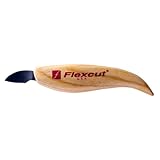
3. Flexcut Hook Knife
Flexcut is an American carving tool maker known for sharp, ready-to-use edges. Its hook knife has a comfortable handle and is aimed at spoon and small bowl work.
Suits: a ready-to-use edge. Strengths: a trusted carving brand. Weaknesses: check which model you are buying. Skip it if you want the lowest cost.
Best for newcomers
4. BeaverCraft SK1 Spoon Carving Hook Knife
BeaverCraft sells beginner-friendly carving tools, and its hook knife is made for scooping spoon bowls. It often ships with a leather guard for safe storage.
Suits: newcomers. Strengths: a friendly tool for learning. Weaknesses: you may sharpen it before use. Skip it if you want a premium blade.

Best for serious carvers
5. Kirschen Hook Knife
Kirschen is a German tool maker whose carving knives are in the European traditional style. The hook knife is a hand-forged-style tool with a wood handle, aimed at serious hobbyists.
Suits: serious carvers. Strengths: a traditional European tool. Weaknesses: fewer beginner extras. Skip it if you need a starter kit.
View Kirschen Hook Knife on Amazon
Best for a craft-made feel
6. Pinewood Forge Hook Knife
Pinewood Forge sells hand-forged carving tools, including hook knives, often in several handedness and size options. Confirm the exact version on the listing.
Suits: a craft-made feel. Strengths: a hand-made look. Weaknesses: availability varies. Skip it if you want a mass-market tool.
View Pinewood Forge Hook Knife on Amazon
Care and Setup
- Strop the inside of the curve often with a loaded round strop.
- Keep a sheath or guard on the blade when not in use.
- Wipe the steel dry and add a light oil film for storage.
- Use a carving glove on your holding hand.
Mistakes to Avoid
- Pulling the blade toward your thumb or wrist.
- Cutting against the grain with too much force.
- Buying the wrong handedness.
- Skipping honing until the edge drags.
Single Edge or Double Edge: Which Suits You
The biggest design choice in a spoon hook knife is whether the blade has one cutting edge or two. A single-edge hook cuts on the inside of the curve only, and the outside is a smooth, rounded back that you can rest a finger or thumb against. That makes it the safer, more controllable choice for beginners, and it is why most teaching guides start there. The Morakniv 164 in this guide is the single-edge example.
A double-edge hook, like the Morakniv 162, cuts on both sides of the curve. That lets you pull the knife toward you with either edge, which can save you from changing hands or turning the work. It helps when you shape the transition between the bowl and the handle, or when you work in awkward grain. The drawback is that the second edge is always exposed, so a careless pull can catch your thumb or your holding hand.
Think about how you carve. If you work slowly and carefully and want a calm learning curve, a single edge is the better start. If you already feel confident and want flexibility, a double edge can be worth adding. Many carvers eventually own both and reach for the one that suits the task.
- Single edge: steadier, easier to guide, good for first knives.
- Double edge: flexible, quick direction changes, more exposed blade.
Whichever you pick, match it to your dominant hand where the listing offers a choice.
Blade Radius and Spoon Size
The radius of the curve controls what size of bowl you can cut cleanly. A tight curve scoops small cavities, such as a coffee scoop or a baby spoon, because it can turn inside a narrow space. A wider curve removes more wood per pull and gives a broader, shallower bowl, which suits serving spoons and ladles. A blade that is too wide for a small bowl will not fit, and one that is too tight for a big bowl will feel slow and tiring.
The post suggests that a medium radius suits most spoons, and that advice holds for a first knife. A medium curve lets you carve eating spoons, cooking spoons and small scoops while you learn the stroke. Later you might add a second knife with a different radius, though it is not required.
Look at the listing for the blade dimensions rather than the name. Some makers describe the radius or width in millimeters. If the page gives no dimensions, check the photos with a known object for scale, or ask the seller.
Handle length also affects control. A longer handle gives you leverage and lets you press with the palm, while a short handle gives finer control at the cost of power. Many people hold the knife with the handle against the palm and the thumb along the back for support, so make sure the handle shape suits that hold.
Think about the spoons you want to make most often and buy for that first.
Handle and Grip Comfort for Long Sessions
Hook knife work involves repeated pulling strokes, so the handle has a real effect on how long you can carve comfortably. A good handle fills the palm, lets you wrap your fingers around it, and has a shape that keeps the blade oriented without a tight grip. Handles that are too thin or too slick cause hand cramps and encourage clamping down, which reduces control.
Wood handles are common, warm in the hand and easy to modify. Many carvers reshape them with a knife or sandpaper to suit their grip. Check that the finish is smooth and that the handle is firmly attached to the blade, because a loose tang is a safety risk. Handles made from other materials may be more durable, but check that they offer enough texture for a secure hold when your hands are damp with sweat or wood moisture.
Orientation matters too. Some handles have a flat or an oval cross-section that helps you feel the position of the cutting edge without looking. This is useful when the blade is buried inside a bowl and you cannot see it.
- Try to match handle thickness to your hand size.
- Round off any sharp edges or splinters before you carve.
- Keep the handle clean and dry; wipe off sap and oil.
If you carve for long periods, take breaks and stretch your hands. A knife that feels comfortable for ten minutes may become tiring after an hour. A handle you can adjust, or a slightly larger size, can make a clear difference.
Sharpening and Stropping the Inside Curve
A hook knife does its best work when it is truly sharp, and the curve makes sharpening feel unfamiliar at first. The cutting edge is on the inside, so you need a tool that reaches it. A small round slip stone or a tapered ceramic or diamond rod follows the curve, and a loaded strop on a round dowel polishes it. A flat stone cannot reach, which is why the post recommends a round slip stone and a loaded strop.
The routine is simple. Hold the knife steady, place the stone against the bevel on the inside of the curve, and stroke along the edge with the same light angle each time. Work through a few strokes, check for a thin burr on the outside, and then strop to remove it. Many carvers strop often during a session, before the edge feels dull, because a few passes are quicker than a full sharpening.
New knives may need some attention before first use. Factory edges vary, so test yours on a scrap of wood. It should cut clean, thin shavings, not tear or crush the fibers. If it does not, sharpen and strop first.
- Keep the angle consistent to preserve the bevel shape.
- Do not use heavy pressure on the stone.
- Protect the stone and strop from dust and grit.
- Wipe the blade clean before storage.
A sharp knife is a safer knife, because it cuts with less force and slips less.
Safe Holds and Protective Gear
Hook knives cut with a pulling motion toward your body, so safe technique is essential. The most common injuries come from the blade slipping out of the wood and catching the thumb, wrist or the hand that holds the spoon. A few habits greatly reduce that risk.
First, brace the spoon. Rest it against a stable surface such as your chest, a bench or your thigh, and place your thumb on the back of the blade so the edge cannot jump forward. Second, keep your holding hand out of the line of the blade, and cut with the edge facing away from tender spots. Third, take shallow cuts, especially near the rim of the bowl where the wood is thin.
A cut-resistant glove on the holding hand, as the post suggests, adds a safety margin. A thumb guard or a leather pad can also protect the spot that carries the most pressure. Wear gloves that fit snugly so they do not catch on the blade.
- Never carve toward your holding hand or wrist.
- Stop and rest if your hands feel tired or sweaty.
- Keep a guard or sheath on the blade between sessions.
- Work in good light with a stable seat.
Store the knife where children cannot reach it. If the blade is damaged, the handle is loose or the edge is chipped, retire or repair the knife before carving again.
Hook Knife for Spoon Carving FAQ
Do I need a left-handed hook knife?
If you are left-handed, yes. The curve and the cutting edge are made for one hand.
What size is best for spoons?
A medium radius suits most spoons. Smaller curves work for tiny scoops. Check the listing for sizes.
How do I sharpen one?
Use a small round slip stone on the inside and a loaded strop to finish.
Which wood is easiest to start on?
Green, freshly cut hardwoods such as birch or alder cut cleanly and are gentle on the edge. Dry wood is harder, so wait on it until your technique and your sharpening feel confident.
Should my first hook knife be single or double edge?
A single edge is usually easier for beginners because the back of the blade gives you something safe to rest against. A double edge is more flexible but exposes more steel, so it suits carvers who already feel steady.
How do I know which radius I need?
A medium radius covers most eating and cooking spoons. A tighter curve suits small scoops and a wider one suits larger bowls. Check the listing for blade dimensions rather than relying on the name.
How often should I strop a hook knife?
Strop whenever you notice the knife tearing the wood or needing more pressure. Many carvers strop every ten to twenty minutes of work. A few light strokes are usually enough if you do it often.
Can I use a hook knife on dry wood?
You can, but dry wood is harder and dulls the edge faster. Start with green wood to learn the stroke, and keep the knife sharp when you move to drier or denser pieces.
Do I need a carving glove?
It is strongly advisable on the holding hand. A glove is not a substitute for good technique, but it can prevent a minor slip from becoming a serious cut.
How do I store a hook knife safely?
Keep a guard or sheath over the blade, dry the steel, and add a thin film of oil if the steel is carbon. Store it where children cannot reach it and where the edge will not rub other tools.
Can I reshape the handle?
Many carvers do, using a knife, rasp or sandpaper to fit the grip. Check that the tang stays secure and that the handle remains smooth, and remove only a little material at a time.
Budget vs Premium: Where the Money Goes
Hook knives look simple, yet small differences in steel, grinding and handle shape separate a tool you enjoy from one you fight. Entry-level knives can carve a perfectly good spoon. What extra money usually buys is a more consistent bevel, a cleaner finish on the inside of the curve, and steel that is hardened more carefully so it keeps a polished edge through a whole session.
The cost of an uneven factory edge is mostly time. If the inside of the hook has machining marks or a flat spot, you spend your first hour stropping and honing before the knife slices cleanly. Some people enjoy that work and treat it as part of learning the craft. Others want to carve right away, and for them a knife that arrives in better shape is worth paying for.
Handles also matter more than the price tag suggests. A comfortable, well-shaped handle lets you keep a relaxed grip, which reduces fatigue and improves control. Keep in mind that a hook knife is an inexpensive tool compared to the time you will put into learning it. Choose the best edge you can reasonably afford, then plan to keep it sharp, because even the most expensive blade turns frustrating when it is dull.
Choosing a First Knife for Your Hand and Wood
Your hand and your wood should guide the decision more than brand names do. If you carve mostly green, wet wood such as birch, willow or basswood, almost any sharp hook knife performs well, because soft fibers cut easily and forgive a modest edge. Harder or drier species demand a sharper, better-polished edge and a shape that clears shavings without jamming.
Hand size and grip habits come next. Small hands may prefer a slimmer handle that can be wrapped fully, while larger hands often want more girth to avoid cramping. Left-handed carvers should check whether the bevel and curve are designed for their pulling direction, since a hook knife cuts on a draw stroke toward the body and the orientation matters.
It is also reasonable to start with one knife and add a second later. Many carvers eventually own a larger radius for bowls and big spoons, and a tighter one for fine work. Buying a versatile mid-sized knife first lets you learn your preferences before you invest in a second tool, and you will understand what you actually need once you have a few spoons behind you.
Questions to Ask Before You Order
Spoon carving tools are used close to the body, so a few checks before buying pay off. Ask what the product listing actually states, and treat gaps as questions rather than assumptions.
- Is the knife listed for right-handed use, left-handed use, or both?
- Does the listing mention a sheath or guard? Storing an exposed hook edge loose in a drawer is a common way to get cut.
- Is the edge described as sharpened, or will it need honing before first use?
- What is the handle made of, and does it look comfortable for a long grip?
- Does the seller explain how to care for the steel, especially if it is carbon steel?
It also helps to read the lowest-rated customer feedback and look for patterns. A single complaint about a rough edge means little, but several people describing the same finish problem suggests a quality-control issue worth weighing. Finally, plan for the supplies you will need alongside the knife: a leather strop, a polishing compound and a cut-resistant glove.
Setting Up a Safe, Comfortable Carving Space
Where and how you carve shapes your results as much as the tool. Sit on a stable seat with your forearms supported, and keep the work at a comfortable height so you do not hunch. Good light helps you see grain direction, which determines whether the blade cuts smoothly or tears.
Hook knives work by drawing the blade toward you with the thumb braced on the workpiece or another stable point. That means a slip lands near your hand, so a protective glove on the holding hand is a sensible habit. Keep the blade pointed away from your torso and never carve with a loose, unbraced grip.
Tidy habits matter too. Brush shavings off the floor so they do not become a slip hazard, keep a strop within reach and give the blade a few passes whenever the cut starts to feel rough. A dull knife makes you push harder, and pushing harder is exactly when accidents happen. Cover or sheath the knife whenever you set it down, even for a moment.
Take breaks, too. Fatigue shows up in the hands first, and tired hands lose the fine control that hollowing a spoon requires. Short sessions with rest pauses produce cleaner work than one long push, and they leave you with a safer margin when the blade is working inside a tight curve.
Frequently Asked Questions
How much does a hook knife cost to use and maintain?
Beyond the knife itself, ongoing costs are small. You will want a leather strop, a bit of polishing compound and possibly a cut-resistant glove. The knife does not need regular replacement if you keep the edge polished. Most of the real investment is practice time rather than money.
Can beginners learn spoon carving with just a hook knife?
You can do some work with only a hook knife, but most beginners also use a straight knife or axe to rough out the shape. The hook knife is mainly for hollowing the bowl of the spoon. Many learners start with a straight knife for shaping and add the hook knife once the form is ready.
Why does my hook knife tear the wood instead of cutting?
Tearing usually means the edge is dull or you are cutting against the grain. Strop the inside of the curve, then try rotating the workpiece so you cut downhill with the grain. Wet or green wood also cuts cleaner than dry wood, so softening the blank can help.
Should I wear a glove when using a hook knife?
Wearing a cut-resistant glove on the hand holding the workpiece is a widely recommended precaution. The hook knife pulls toward your body, so slips can land on the holding hand or thumb. A glove will not make carving risk-free, but it adds a useful layer of protection.
The Short Version
For a first knife, the Morakniv 164. For a double edge, the Morakniv 162. For a ready edge, the Flexcut. For beginners, the BeaverCraft SK1. For a traditional tool, the Kirschen. For a craft look, the Pinewood Forge.