Disclosure: As an Amazon Associate, umtsmarttool.com earns from qualifying purchases. Links on this page are affiliate links; they cost you nothing extra. Prices and availability change often, so check the current Amazon listing before you buy.
The short answer to are air purifiers safe for pets is yes — with the qualifications doing the real work, as they usually do when animals are involved, and with those qualifications set out plainly enough in the next few pages that any pet owner can apply them in an afternoon. A standard filtration purifier — a fan, a HEPA filter, some activated carbon — is one of the safest appliances in a pet home: it adds nothing to the air but cleanliness, it is the same technology used in veterinary and shelter settings, and for most dogs and cats it is simply furniture that hums. The qualifications concern the extras some machines carry and the physical realities of living with animals: ionizing stages and ozone, which deserve a deliberate choice rather than a default; ultraviolet lamps, harmless inside a sealed cabinet but never a reason to buy; scented features, which serve human noses at the expense of far more sensitive animal ones; and the unglamorous physical list — cords, stability, intake grilles at whisker height, and filters that a determined pet should not be able to reach. This guide works through each of those properly, species by species — dogs, cats, birds, and the small-animal kingdom — and finishes with three verified machines chosen for pet households precisely because their designs keep the qualifications simple and their safety questions easy to answer.
One framing note before the detail begins, because pet safety questions in general attract both complacency and alarm, and neither serves the animals particularly well. Nothing here is veterinary advice, and an animal showing respiratory distress, lethargy, or a sudden behaviour change needs a vet — promptly, and in the case of birds and small mammals urgently — not an appliance guide, however carefully that guide has been researched and written. What this article can do — and what it sets out to do, carefully and completely — is remove the appliance from the list of suspects in a healthy home — by explaining, in plain terms, which technologies are benign, which deserve a switch left permanently off, and which ordinary household habits around any machine keep animals safe, comfortable, and entirely unbothered by its presence. Read in that spirit, the answer to the title’s question is reassuring without being careless: choose a filtration machine, set it up with an animal’s curiosity in mind, and the purifier becomes one of the few household purchases that is good for the pets as well as for the people allergic to them — a rare appliance whose safety case rests not on a manufacturer’s assurance but on the simple fact that it has no way to hurt anyone.
Key Takeaways
- Plain filtration purifiers — fan, HEPA, carbon — are safe around dogs and cats; they remove particles from the air and add nothing back.
- The technology to choose deliberately is ionization: some ionizing designs emit ozone, and the cautious pet household buys filtration-only machines or models whose ion stage switches off, such as the Winix profiled below.
- Birds are the exception that proves the rule — their respiratory systems are exceptionally sensitive, so bird homes should use filtration-only machines, avoid any ozone-emitting device entirely, and place machines thoughtfully.
- Skip scented features in pet homes: fragrance sponges, scented cartridges, and diffusers load the air with compounds animals did not volunteer for, at nose height they cannot escape.
- Physical safety is a setup discipline — cords out of chewing reach, a stable machine that cannot be toppled onto a pet, intakes and filters positioned with paws and beaks in mind, and introductions handled gradually so the animal files the machine under furniture rather than under threats.
In this guide
The Core Technology: Why Filtration Is Benign
Begin, then, with what a filtration purifier actually does to a room, step by step, because the entire safety answer lives inside that simple process. It draws the room’s ordinary air in, and passes it through a series of screens and media — a pre-filter for hair and coarse dust, a HEPA element for fine particles including the dander your guests react to, and usually an activated carbon layer for odors — and then returns exactly the same air to the room, minus what the media caught along the way. Quite simply, nothing is generated: no gas, no fragrance, no electrical by-product, no residue. The air’s chemistry is unchanged except by subtraction. For an animal sharing the room, the experience is of slightly cleaner air and a steady, low sound — which is why purifiers of this design are unremarkable fixtures in shelters, catteries, kennels, and veterinary waiting rooms, environments professionally obliged to think about animal airways all day.
The benefits run in the pets’ direction too, and are worth stating without inflating them. A purifier reduces the household’s airborne dust and dander load, which matters most to the humans — but animals with their own sensitivities live in the same air, and a home that runs a purifier is a home with less airborne dust settling on bedding, food bowls, and fur. The claim should stay modest: a purifier is not a treatment for any animal condition, and a pet with respiratory symptoms needs a diagnosis, not a filtration upgrade. But as background environmental hygiene, the machine is on the animals’ side.
One further reassurance belongs in this section, aimed at the owner who has read alarming things online at 2 a.m.: the filtration purifier’s safety does not rest on any manufacturer’s promise. It rests on the absence of a mechanism for harm. The machine contains a motor, a fan, and passive media; it manufactures nothing, emits nothing, and heats nothing beyond a motor’s ordinary warmth. Technologies with genuine question marks announce themselves by having a mechanism — a discharge that can generate a gas, a lamp that radiates, a reservoir that aerosolises. Audit any future appliance by that standard — what could it possibly emit, and by what mechanism — and you will sort the household’s air equipment into the benign and the questionable faster than any review site, with this article’s conclusions waiting for you at the end of the exercise.
The Ionizer and Ozone Question, Answered Carefully
This is the section the title’s question usually means, so it gets the fullest treatment. Some air-cleaning devices clean by ionization — charging particles so they deposit on surfaces — and some ionizing designs, particularly older ones, dedicated ozone generators, and cheap unbranded units, emit ozone as a by-product. Ozone is a respiratory irritant for humans and animals alike; air-quality authorities advise against intentionally generating it in occupied spaces, and the caution doubles for animals, which are smaller, breathe faster relative to their size, and cannot report that the air feels sharp. The modern, reputable end of the market manages this carefully: combination machines from established brands build their ion stages to low-emission standards and — the detail that matters — let you switch the stage off.
The practical rule for pet households is therefore simple and complete. Default to filtration. If a machine you otherwise want includes an ion or plasma stage, buy only the kind that can be disabled, and run it disabled in the animals’ rooms; you lose nothing the machine’s filters were not already doing. Never run a dedicated ozone generator in a home with pets — a category that should not be run in occupied homes at all. And treat any unbranded device whose listing boasts about ozone, “activated oxygen,” or similar language as disqualified, whatever its price. The do ionizer air purifiers work investigation in this series works through the evidence for these stages in full, and the air purifiers vs ionizers comparison scores the technologies head-to-head.
Species by Species: Dogs, Cats, Birds, and the Small Ones
Dogs. The easiest case. A filtration purifier presents a healthy dog with no hazard beyond the physical — a cord to be kept from a chewing puppy, a lightweight machine to be placed where a boisterous tail and a running start cannot topple it onto anyone. Dogs’ noses are famously sensitive, which argues for the scent rule below rather than against the machine: run the purifier plain, and let it remove smells instead of adding them. Older dogs and flat-faced breeds with compromised airways benefit from the same caution as any sensitive breather — filtration yes, ozone never — and from a machine quiet enough not to disturb the long sleeps of old age.
Cats. Nearly as easy, with two feline footnotes. Cats are fastidious about their air and their territory, and a new machine is an event: introduce it switched off, let it be investigated, and start it on a low speed, because a cat that files the purifier under “threat” may file the room’s litter box under the same heading, with consequences addressed in the air purifiers for litter box smell guide. The second footnote is grooming: cats ingest what settles on their fur, which is one more argument for capture-and-dispose filtration over ionizers that relocate particles onto every surface a cat will later lick clean. A filtration machine reduces what settles; an ionizer increases it. For a cat household, that sentence is the whole comparison.
Birds. The serious case, and the one this guide will not soften. Birds’ respiratory systems are extraordinarily efficient and correspondingly vulnerable — the reason canaries historically went down mines — and avian keepers rightly treat air quality as a life-safety topic. For bird homes: filtration-only machines, full stop; no ionizers, no ozone in any form, no scented anything, and equal care with the household’s other air hazards, of which overheated non-stick cookware fumes are the notorious example far beyond this article’s scope. Place the purifier to serve the room without blasting the cage with its output stream, keep its pre-filter clean — bird dust and feather dander are prodigious — and regard the machine as one layer in an avian air discipline whose first rule is that nothing questionable is ever aerosolised near the cage.
Small mammals, reptiles, and fish. Rabbits, guinea pigs, and other small mammals are dust-sensitive hay-eaters whose environments benefit from exactly what a HEPA machine does, placed so its intake is not beside the hay rack it will otherwise inhale as a lifestyle. Reptile enclosures have their own microclimates that a room purifier neither enters nor disturbs. Fish experience the room’s air only through their water’s surface and their keeper’s habits; a purifier is irrelevant to them except as it reduces the dust settling on the tank. Across the small-animal kingdom, the pattern repeats: filtration benign, ionization a choice to decline, scent a choice to refuse.
The household with several species under one roof — the common dog-cat-small-mammal menagerie, or the rarer house that adds birds — should simply govern itself by its most sensitive resident. The bird rules (filtration only, no scent, no exceptions) are also perfectly good rules for the dog; the dog rules would not be good enough for the bird. Governing by the most delicate airway in the house costs the other animals nothing and simplifies every purchase to a single standard, which is why multi-species keepers tend to be the most relaxed purifier owners of all: their discipline was decided once, at the strictest level, and never needs renegotiating species by species.
The Scent Rule: Why Pet Homes Run Purifiers Plain
A surprising share of pet-air anxiety traces back not to purifiers but to what owners add around them. Fragrance sponges built into some compact machines, scented replacement cartridges, plug-in diffusers near the pet’s bed, essential-oil devices marketed as natural — all of these load the air with volatile compounds at concentrations a human finds pleasant, in rooms where an animal with a nose orders of magnitude more sensitive lives at floor level, unable to leave. Some essential oils are specifically hazardous to cats and birds. The rule that dissolves the whole category of worry is simple: in a pet home, a purifier’s job is subtraction. Run it with plain filters, leave fragrance features empty and unused, and let “smells of nothing” be the household’s definition of fresh — for the animals’ sake, and, most owners discover, eventually for their own.
Physical Safety: The Setup Checklist for Animal Households
Cords. Route every cord behind furniture, flat to the wall, out of the chewing radius of puppies, kittens, rabbits, and any animal with a cable hobby. A cord is the one part of a purifier that can genuinely hurt a pet, and it is entirely managed by placement. Check the route at every growth milestone and every furniture rearrangement, because the setup that was safe in spring migrates by autumn, and a cord that was behind the sofa in March may be crossing open floor by the holidays.
Stability. Place the machine where it cannot be toppled onto or by an animal: low, stable models on the floor for large-dog homes; a secured shelf or dresser position for small machines in cat territory, remembering that a cat will treat any elevated machine as a throne and its warmth as an invitation. A machine a cat sleeps on is a machine whose intakes are furred — amusing, and a maintenance note rather than a danger, provided the machine cannot be pushed off its perch by the cat’s departure.
Intakes, outputs, and curious anatomy. Keep a reasonable standoff between the machine and the places animals press their faces — beds, cages, the water bowl — not because filtered air is harmful but because a constant stream at whisker range is an annoyance animals will vote against by avoiding the area, which may be their bed or their box. Filters themselves should be inaccessible to paws that would shred media; every machine in the shortlist below keeps its filter behind a closed cabinet, which is the correct design for this readership.
Noise and introduction. Animals habituate to steady sound and startle at change. Introduce any machine gradually, at low speed, in daylight, with the animal free to leave — and prefer models whose working speeds are calm, because a machine an animal avoids is a machine whose room gets abandoned. The picks below were screened for sleep-mode-class quiet for exactly this reason.
Three Machines Chosen for Pet Households
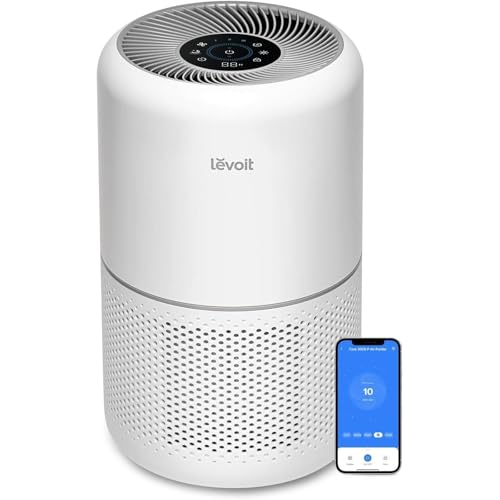
Levoit Core 300S-P — Filtration Only, Nothing to Switch Off
Badge: Simplest safe answer
- Technology: filtration only — 3-in-1 cartridge with HEPA stage
- Verification: AHAM Verifide rating on the listing
- Sleep mode: listed at 24 dB
- Controls: app and voice, auto mode
The Core 300S-P earns its place in a pet-safety article by what it lacks: there is no ion stage to research, no plasma feature to adjudicate, nothing between the household and a clean conscience but a fan and a filter. Its verified ratings make its cleaning claims checkable, its sleep mode respects animal ears as well as human ones, and its cartridge ecosystem includes pet-focused variants for homes whose problem is the animals’ own dander and odor. Place it with the checklist’s discipline and it is, for most dog and cat households, the complete answer to this article’s title.
Strengths
- Pure filtration — the safety question answers itself
- Quiet, compact, and stable in small-room service
- Pet-variant cartridges in the same ecosystem
Trade-offs
- Light carbon stage for serious odor loads
- Cartridge replaced as one unit
- Small-room capacity only
Best for: most pet households, bedrooms, and nurseries with animals. Not suited for: large open spaces or heavy odor duty. See the best air purifiers for pets roundup for the wider pet-focused field.

Winix 5510 — The Ion Stage You Control
Badge: Best for odor-heavy pet homes, on your terms
- Filtration: True HEPA plus separate high-deodorization carbon filter
- Ion stage: PlasmaWave — can be switched off entirely
- Pre-filter: washable
- Coverage: large rooms on the listing
The 5510 is included to demonstrate the correct way a combination machine should behave in a pet home: its substance is filtration of the strongest kind in this series — a true HEPA stage and a deep carbon bed that handles the pet household’s odor load — while its PlasmaWave ion stage sits under the owner’s thumb, available or disabled as the household decides. This guide’s advice for pet rooms is to run it disabled and let the filters work; the machine loses nothing essential, and the household gains the strongest pet-odor filtration in this article with the safety question settled by a switch rather than by trust.
Strengths
- Deepest carbon for pet odor of any pick here
- Ion stage fully optional and reversible
- Washable pre-filter suits hair-heavy air
Trade-offs
- Large cabinet for small rooms
- Two substantial filters to budget for
- The discipline of the switch is the owner’s
Best for: multi-pet homes, litter rooms, and odor-led problems. Not suited for: bird rooms, where this guide recommends filtration-only machines without exception.
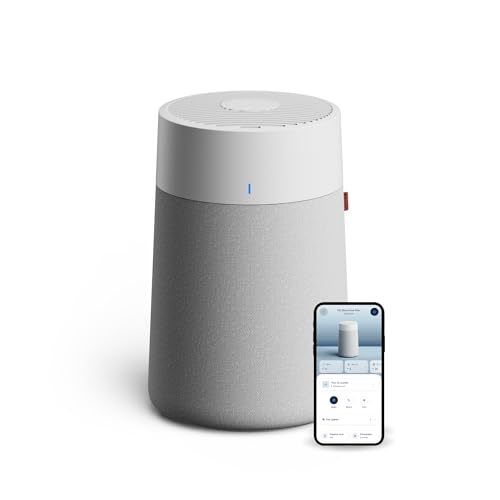
Blueair Blue Pure 511i Max — Quiet Filtration for Sensitive Sleepers
Badge: Best for noise-sensitive animals and owners
- Filtration: HEPASilent particle and light-gas filtration
- Noise: night mode listed at 19 dB
- Coverage: rooms up to about 1,138 sq ft on the listing
- Controls: app, auto mode, 360-degree intake
Some animals — elderly cats, nervous rescues, small mammals in the bedroom — experience a purifier primarily as a sound, and the 511i Max’s night mode, listed at 19 dB, is the quietest working answer in this series. Its HEPASilent design captures particles in a filter inside the machine — the destination this guide’s philosophy requires — and its fabric pre-filter vacuums clean of the hair that pet rooms generate. For a household whose safety question is mostly about stress rather than chemistry, this is the machine whose manners settle it.
Strengths
- Exceptionally quiet night operation
- Particles captured in a filter, never relocated to surfaces
- App control avoids entering the animals’ room to adjust it
Trade-offs
- Premium pricing and filter costs
- More capacity than small rooms need
- Carbon is a combined-filter stage, not a deep bed
Best for: sensitive animals, shared bedrooms, and quiet-first households. Not suited for: the heaviest pet odor loads, where the Winix’s carbon leads.
Reading Your Pet’s Verdict: Behaviour as the Safety Instrument
Certifications and specifications answer the chemistry questions, but the daily safety of a machine in an animal’s home is ultimately read off the animal. A pet that has accepted a purifier behaves as though it were furniture — sleeps near it, ignores its speed changes, files its sound with the refrigerator’s, and occasionally, in the case of cats, claims its top as a warm and faintly vibrating throne, which the household may take as the final certificate of acceptance. A pet that has not accepted it shows you, in a vocabulary worth learning: avoiding the room since the machine arrived, startling at its auto-mode surges, sleeping as far from it as the room allows, or, in cats, the eloquent sanction of avoiding a litter box that now stands beside a humming stranger. None of these is a toxicity signal; all of them are welfare information, and the responses are the setup disciplines already given — gradual introduction, a fixed calm speed instead of a surging auto mode in the animal’s room, relocation a few feet further from the bed or box, and time. Animals habituate to steady, predictable appliances almost without exception when the introduction is handled at their pace. The household that watches for the verdict, rather than assuming it, will get the purifier’s benefits without spending the animal’s comfort to buy them — which is, in the end, the whole subject of this article stated as a habit.
The Wider Air Picture: The Hazards That Actually Surround Pets
Perspective is a safety feature too, and pet owners researching purifiers sometimes worry about the safest appliance in the room while the genuine hazards sit elsewhere in the home’s air. The list that avian and veterinary sources repeat — overheated non-stick cookware fumes, cigarette and vape smoke, aerosol sprays used at animal height, scented candles and incense in closed rooms, strong cleaning chemicals in unventilated spaces, and the dust of certain litters — shares a profile the purifier conspicuously lacks: each adds something to the air. A filtration purifier’s role in that landscape is partly remedial, since it reduces the airborne fraction of several of those loads after the fact, and partly symbolic: a household that has thought carefully enough to ask this article’s question is a household ready to audit the rest of its air with the same care. Do that audit — ventilation during cleaning, sprays kept from animal rooms, smoking and vaping moved outdoors or to the carbon-filtered room of the air purifier for vaping guide — and the purifier becomes what it should be: the finishing layer of an air discipline whose main acts are subtraction and fresh air, in a home whose animals breathe easier for reasons larger than any single purchase.
Travel, Boarding, and the Second Home
Pet air questions travel. In boarding kennels and catteries, professional-grade filtration is standard practice and a healthy sign to look for on a tour — a facility that manages its air is managing its disease background and its odor with the same equipment this guide recommends for homes. In holiday rentals and second homes, the portable end of the filtration market earns its keep for allergic households travelling with animals, with the checklist disciplines compressed: cord safe, machine stable, run it plain, and introduce it to the animal in the new room as patiently as at home, because novelty compounds novelty for a travelling pet. In the car itself, a purifier is generally the wrong tool — the vehicle’s own ventilation and a window’s crack do the work at speed — and a loose appliance in a moving vehicle is a physical hazard out of all proportion to its air benefit. The pattern across all three settings is the article’s thesis in miniature: filtration is welcome wherever animals breathe indoors, provided the setup respects the animal, and the questions worth asking are always the same short list — what does it emit, where is its cord, and can the animal leave its presence if it wishes.
The Very Young, the Very Old, and the Recently Adopted
Puppies and kittens meet the purifier as they meet everything: with their mouths and at floor level. The checklist’s cord discipline is at its most serious here, and so is stability — a machine that survives an adult cat’s disdain may not survive a litter of kittens treating it as a climbing frame with a warm top. Run the machine, by all means, since young animals produce dander and accidents at championship rates, but site it like baby-proofing, because that is what it is. Senior animals invert the concerns: the hazards fade — no senior dog is chewing a cord — and the comforts lead, with quiet at the head of the list, since old animals sleep long and lightly and a calm machine respects the household’s true prime directive. Newly adopted and rescue animals deserve the gradual introduction doubled: an animal learning a new home’s map should not have to learn a new sound in its safe room on the same night, and the household that stages the purifier’s arrival a week after the animal’s will never know which stress it spared them both. Across all three groups the technology answer never changes — plain filtration — which is the deep reassurance of this article: the safety work is in the setup and the timing, where the owner controls everything, and not in the machine’s chemistry, where they would control nothing.
A Buyer’s Safety Checklist: Reading a Listing Like a Pet Owner
Before any purifier joins a pet home, run its listing through these five questions. One: is the cleaning technology filtration — HEPA and carbon named plainly — or does the headline belong to ionization, ozone, or a trademarked stage whose emissions you would have to research? Two: if an ion or plasma stage exists, can it be switched off completely, in the listing’s own words? Three: does the machine carry fragrance features — a sponge, scented cartridges, an aroma mode — and can they simply be left unused, or is scent integral to its operation? Four: is the filter enclosed in a closed cabinet, the cabinet stable and weighty enough for your animals, and the cord long enough to reach a safe route rather than a tempting one? Five: are its working speeds quiet — a sleep mode in the low-to-mid twenties of decibels or better — so the machine can be accepted as furniture by the room’s true residents? A machine that answers all five cleanly, as the three picks in this article do, can be bought without a residue of worry; a machine that fails the first or second should not be bought for an animal’s room at any discount, because the discount is being paid out of the animal’s air.
Maintenance in a Pet Home: Filters, Hair, and Hygiene
The pet home’s purifier works harder than any other household’s, and its maintenance is a pet-safety topic in its own right, because a neglected machine in an animal’s room is a dusty, odorous box at animal height. Hair is the headline: pre-filters in pet homes load at several times the ordinary rate, and the household that rinses or vacuums them monthly — weekly in shedding season — protects both the main filter’s life and the machine’s manners. Filter changes should happen with the animals elsewhere, not because the used filter is dangerous but because changing one releases a small weather system of accumulated dust at exactly pet height, and there is no reason for the cat to attend. Dispose of used filters bagged, wash hands after, and the ritual is complete. The machine’s exterior wants a wipe on the same rhythm, because animals rub against furniture and a purifier is furniture; a clean cabinet is part of the room’s hygiene rather than a cosmetic preference. And the scent rule returns at maintenance time in its final form: never “refresh” a filter or a machine with sprays, oils, or scented cleaners whose residues the machine will then distribute faithfully through the animals’ air for weeks. Soap, water, a vacuum, and a genuine plain filter are the entire pharmacopoeia of purifier care in a pet home — which is as it should be, in the house of creatures who experience the world nose-first.
Both Directions of Benefit: The Allergic Owner and the Animal
Most purifiers in pet homes are bought by a human who is allergic to the animal they love, and the safety question is sometimes shadowed by a worry in the opposite direction — that a machine strong enough to help the human might somehow be too much for the pet. It is worth dissolving that worry explicitly. The machine does not dose the room with anything; it subtracts, gently and continuously, and the animal breathes the same air as the owner, minus a share of the particles both were breathing before. There is no intensity setting at which subtraction becomes an exposure. The allergic owner’s correct specification — verified HEPA, sized generously, run continuously in the bedroom — is simultaneously the pet’s correct environment, which is why the best air purifiers for allergies strategy and this article’s safety guidance never conflict: one machine, honestly filtered, serves both ends of the leash. Households sometimes ask whether the animal should be kept from the purifier’s room for the machine to “work on the dander”; the opposite is true, since the machine cleans the air where the animal actually lives, and a pet exiled from its own room has been given a worse home in exchange for a cleaner one nobody occupies.
Four Pet-Air Myths, Retired
“The purifier’s hum will stress my pet out.” Steady sound is the easiest environmental feature for animals to habituate to — the household is already full of it, from refrigerators to heating systems — and a consistent low hum typically disappears from an animal’s attention within days. What animals dislike is unpredictability: surging fans, beeps, and novelty. Choose quiet, set a fixed calm speed, and the myth dissolves into the introduction discipline this guide already prescribes.
“HEPA filters trap germs, so the filter is a hazard near pets.” A used filter is household dust concentrated, and it deserves the ordinary respect of any dusty object — changed with the animals out of the room, bagged, hands washed. It is not a biohazard, and its contents are the same dust the household was previously distributing across every surface the animals touch. Capture and disposal is the hygienic direction, for pets most of all.
“If ionizers were risky, they would not be sold.” The market sells many things whose use requires judgment, and combination machines from reputable brands manage their ion stages to published low-emission standards — which is precisely why this guide’s advice is a switch discipline rather than a panic. The genuinely unsold-in-good-stores category is the dedicated ozone generator for occupied rooms; its absence from reputable shelves is the market working as it should.
“Natural scents are safe scents.” Natural is not a safety category for animals: several essential oils are hazardous to cats, whose livers process certain compounds poorly, and to birds, whose airways forgive almost nothing. The plain-air rule is not a preference for the synthetic; it is a refusal of airborne fragrance altogether in animal rooms, from whichever side of the garden it arrives.
It is worth pausing on the evidentiary shape of this whole subject, because pet owners deserve to know what kind of knowledge they are holding. There are no large clinical trials of purifiers on household pets, and there never will be; the safety case is built instead from mechanism, from emissions standards, from veterinary and shelter practice accumulated over decades, and from the absence of a plausible pathway between a fan-and-filter box and an animal’s harm. That is a strong structure — the same structure, in fact, on which most household safety judgments rest — but it explains the shape of this guide’s advice: absolute where mechanism is absolute (ozone, fragrance chemistry, cords), and managerial where the risks are managerial (placement, noise, introduction). An article that pretended to laboratory certainty on either side of that line would be less trustworthy than this one, and the animals are better served by the distinction.
Notice what the five questions have in common: none of them is about cleaning performance. That separation is the mature way to buy in this category. Performance — CADR, coverage, filter depth — decides whether the machine will help your air, and the roundups in this series exist to judge it. Safety decides whether the machine belongs in an animal’s room at all, and it is judged by an entirely different list, on which raw power scores no points. Households go wrong when the lists are merged — when the strongest machine is assumed to be the most serious and therefore the safest, or when a gentle machine is trusted with an ion stage it should never have been given. Keep the lists separate, pass the safety list first, and only then let performance choose among the survivors; that order of operations is the whole of this article compressed into a shopping habit.
When to Ask a Vet Instead of a Guide
This article’s reassurance has a boundary, and it should be drawn brightly. A purifier is environmental hygiene; it is not a diagnostic instrument or a treatment. An animal that is coughing, wheezing, breathing with effort, suddenly lethargic, or off its food needs a veterinarian promptly, and no change of appliance settings is a substitute — respiratory signs in birds and small mammals are particular emergencies, measured in hours rather than days. Equally, if a household suspects an appliance in an animal’s illness — a new device, a strange smell, a change that coincides with symptoms — switch it off, ventilate the room, and have the conversation with the vet with the device available to describe. The overwhelming majority of pet homes will never need that paragraph; it exists so that the minority who do, act at veterinary speed rather than at search-engine speed.
A last scenario, because it arrives in this guide’s mail more than any other: the pet that has lived happily with a purifier for years and the household that is now adding a second species — a kitten joining the dog, a bird joining the cats, a baby, eventually, joining everyone. Nothing about the machine needs re-litigating; the checklist needs re-walking. Cords re-routed for the new animal’s size and habits, stability re-tested against the new animal’s ambitions, the strictest-airway rule re-applied to the new resident’s species, and introductions staged for the newcomer exactly as they were for the original. Safety in a changing household is not a purchase but a practice, and the practice is short: five checklist questions, asked again whenever the household changes. The machine, patiently filtering through every chapter of the family’s life, will not be the variable that lets anyone down.
And the cheapest safety device in the entire article costs nothing and is rarely mentioned: the closed door, used knowingly. A purifier serving a room can serve it with the animal elsewhere for an hour — during a filter change, during the machine’s first high-speed run in a new home, during the deep-clean afternoon when sprays are briefly in the air — and animals, unlike air, can simply be somewhere else while a room is made right for them. Sequencing the household’s activities so that no animal is present for the few genuinely questionable air events of domestic life is the oldest form of pet safety there is, older than any appliance, and it pairs with the purifier rather than competing with it: the machine handles the continuous background, the closed door handles the exceptions, and the animals breathe the benefit of both.
So the complete answer, assembled, is this: the technology at the heart of the modern purifier is one of the safest in the home; the technologies at its fringes deserve a deliberate, informed choice; the scents some owners add around it deserve refusal; and the machine itself deserves the same placement sense you would give a heater or a fan in a house with animals. Households that hold those four lines can stop worrying about the purifier and get on with enjoying the reason it was bought — a home that smells of nothing, in which every creature in it, on two legs or four, breathes a little easier.
Final Recommendation
Choose filtration, and the safety question mostly answers itself: a fan and a HEPA filter harm no animal in your home, and the Levoit Core 300S-P delivers exactly that with nothing left to adjudicate. Where odor demands more, the Winix 5510’s deep carbon does the work with its ion stage under your control — off, in the animals’ rooms, by this guide’s advice. Where quiet is the welfare issue, the Blueair 511i Max’s night mode is the gentlest machine in the series. Set whichever you choose up by the checklist — cords hidden, cabinet stable, scent features empty, introductions gradual — and the purifier takes its place among the household’s genuinely pet-friendly purchases: the one that cleans the air your animals breathe, and asks nothing of them at all.
Frequently Asked Questions
Can I run a purifier in the same room as my pet’s food and water?
Yes, with ordinary placement sense. Keep a few feet between the machine and the bowls so its intake is not drawing the dust of the feeding corner directly and its output is not blowing across open food and water, and the arrangement is unremarkable. Many owners find the feeding corner stays fresher with the machine nearby rather than beside it — proximity for the room, distance for the bowls.
My pet is scared of the new purifier. What should I do?
Slow the introduction down rather than forcing the acquaintance. Move the machine a little further from the animal’s bed or box, run it only at its lowest speed while you are present, and let days pass with it simply standing there between runs. Almost all animals file a steady, quiet machine under furniture within a week or two. If avoidance persists, relocate the machine to serve the room from its least socially important corner — the animal’s map of the room outranks the airflow diagram.
Are air purifiers safe for dogs and cats?
Yes — standard filtration purifiers are safe around healthy dogs and cats, and are routine equipment in shelters and veterinary settings. The cautions are about extras and setup rather than the core technology: choose filtration over ionization for the animals’ rooms, run machines plain without fragrance features, manage cords out of chewing reach, and place the unit where it cannot be toppled. An animal with respiratory symptoms needs a vet regardless of what appliance is or is not running.
Is the ionizer in my purifier dangerous for my pet?
The concern is ozone, which some ionizing designs emit in varying amounts, and which is a respiratory irritant for animals as for people. Reputable modern combination machines keep emissions low and let you switch the stage off — and switching it off in pet rooms is this guide’s standing advice, since the filters do the substantive cleaning anyway. Dedicated ozone generators are a different category: they should not be run in occupied homes with or without pets.
Are air purifiers safe for birds?
Filtration-only purifiers, yes, with care — and bird homes should hold the strictest line in this article: no ionizers, no ozone-emitting devices of any kind, no scented products, because avian respiratory systems are exceptionally sensitive. A plain HEPA machine, placed so its output does not blast the cage and its pre-filter kept clean of feather dust, is a genuinely useful part of a bird room’s air discipline.
Can a purifier help my pet’s allergies or breathing?
A purifier reduces the airborne dust and dander load in a home, which improves the environment for every breather in it, animals included. It is not a treatment for any animal’s condition, and a pet with breathing difficulty, persistent sneezing, or discharge needs veterinary diagnosis — the cause may be infection, anatomy, or an irritant a filter cannot address. Think of the machine as hygiene that supports health, never as healthcare.
Should I use the fragrance feature in my purifier around pets?
No. Run the machine plain. Fragrance sponges, scented cartridges, and diffusers add volatile compounds to air that animals — with far more sensitive noses, living at floor level — cannot choose to leave, and some scented oils are specifically hazardous to cats and birds. A pet home’s definition of fresh air should be air that smells of nothing, which is also the state a good carbon filter works toward.
Where should I place a purifier in a home with pets?
In the room’s circulation, a few feet from beds, bowls, and litter boxes rather than directly at them, with the cord routed behind furniture out of reach, on a stable surface or floor position the animals cannot topple. Introduce it switched off, start it low, and let the animals file it under furniture at their own pace — acceptance arranged this way is permanent, while a machine imposed at full speed on day one can become a household controversy with whiskers.
What should I watch for during a pet’s first week with a purifier?
Treat the first week as an introduction rather than a test the animal can fail. Let your pet investigate the switched-off machine first, secure the power cord out of chewing reach, and place the unit where it cannot be knocked over by an excited dog or used as a climbing step by a cat. Watch for changes that matter: unusual hiding, loss of appetite, watery eyes, sneezing that was not there before, or, in birds, any change in breathing or activity, which deserves a prompt call to your vet rather than a wait-and-see approach. Most healthy dogs and cats settle within days; if yours does not, move the purifier to another room and seek professional advice.

